
 Worksheets
Revolution, Absolutism, and Enlightenment
Total questions: 88
Worksheet time: 56mins
Which estate(s) didn't pay the taille?
First Estate
Second Estate
Third Estate
What did the revolutionary government do with the Church?
They reformed it
They replaced the Clergy
They seized its lands and sold them
They stormed it
Who makes up the First Estate?
Clerics
Nobles
The clergy
Who was the king of France at the time of the French Revolution?
(a)
Which of these is one of the main demands of the Declaration of Rights of Man?
The constitution is to be rewritten every 4 years
The First and Second estates should be imprisoned
Public jobs should be based on talent not rank
Nobles: Had land and wealth. Held leading positions in the government.
1st Estate
2nd Estate
3rd Estate
Estates General
Middle class, urban workers, rural peasants. Made up 98% of the population. Had to pay ALL the taxes
1st Estate
2nd Estate
3rd Estate
Estate System
The document that increased the rights of all French citizens
Declaration of the Rights of Man and the Citizen
Declaration of Independence
Tennis Court Oath
Constitution
France was deep in debt because
money spent on the American Revolution
the 1st and 2nd estates did not pay taxes
the queen's and king's lavish spending
all of the above
What oath did the National Assembly swear on the tennis court?
Never to separate until they established a constitution.
To reconcile with the First and Second Estate.
Always pay taxes.
Worship Louis XVI and Marie Antoinette.
What were the people looking for when they stormed the Bastille?
Food
Louis XVI
Weapons
Money
Which government was created by the 3rd Estate at that start of the Revolution?
National Assembly
National Convention
Directory
Committee of Public Safety
What name was given to the time when peasant rebellions dominated the streets?
The Days of Fear
The French Panic
The Reign of Terror
The Great Fear
The Bourgeoisie owned 20 to 30% of the land.
True
False
About how much did the nobility number in France?
130,000
350,000
2,000,000
380,000
What is the taille?
Harvest taxes
Healthcare taxes
Property and land taxes
Who made up the bourgeoisie?
Professional people
Peasants
Merchants
Industrialists
Generals
The king of France accepted the National Assembly's decrees right away.
True
False
Thousands of women marched to _____ to force the king to accept the decrees.
Versailles
Paris
Marseille
Toulouse
About how many Parisians stormed Bastille?
300
500
900
1,350

Both John Locke and Thomas Jefferson wrote about the natural rights of man. In what document are these "unalienable rights" specifically mentioned?
Articles of Confederation
Declaration of Independence
Bill of Rights
United States Constitution

The Articles of Confederation represented the Americans' distrust of
the British
states rights
any governing authority
a strong central government

How did the Stamp Act, the Tea Act, and the Intolerable Acts encourage American colonists to consider revolution against British rule?
by representing an effort in Britain to end the slave trade in the colonies
by increasing conflict between the colonists and neighboring Indian tribes.
by revealing the British plan to expand the American colonies farther west on the continent
by raising taxes in the American colonies without granting the colonies any representation in Parliament

The French-Indian/Seven Years War is often viewed by historians as being a factor in causing the American Revolution. Which of these BEST explains why this might be the case?
The Indians believed the colonists would return seized lands to them
The British were able to defeat the French in North America, Asia, and at sea
The high cost of the war meant Parliament had to create new taxes in the American colonies
The French were never truly expelled and played a large role in stirring-up colonial discontent

Why were Colonists angered by the new taxes placed on the colonies following the French and Indian War
They believed their taxes were being wasted by King George III
They felt that they should have representation in Parliament
The issue of taxing colonists had never before been raised
The British policy of Salutary Neglect was being enforced

The Articles of Confederation was important MAINLY because they
named the country "The United States of America."
protected the rights and liberties of American citizens.
forbade states to enter into treaties without approval from Congress.
held the country together prior to the implementation of the Constitution

Who served as a Lieutenant Colonel of the Georgia militia and played a key role in the Battle of Kettle Creek?
Elijah Clarke
Austin Dabney
George Walton
Button Gwinnett

In addition to Button Gwinnett and Lyman Hall, which other Georgian signed the Declaration of Independence?
George Walton
Daniel Stewart
William Pierce
Abraham Bladwin

During the French and Indian War, Georgia was MOST vulnerable to
French attacks out of Louisiana.
French invasion of Savannah by sea.
raids by the Creek and Cherokee Indian nations.
full scale invasion from Spain through Florida.

Why was it hard to get laws passed under the Articles of Confederation
To pass a law, all states needed to agree
The President could veto a law before it was passed.
The Supreme Court could rule any law unconstitutional.
To pass a law, 9 of 13 states needed to agree.

We hold these truths to be self-evident, that all men are created equal..
Which statement BEST explains the underlined portion of the quote from the Declaration of Independence?
Thomas Jefferson believed all people should be in government
Citizens have the same rights as political leaders.
George Washington did not believe in slavery.
People are free to have any job they want.

A Patriot in North America in the 1770s would have MOST LIKELY supported which of these?
supporting the "Coercive Acts"
boycotting British-made goods
remaining a part of Great Britain
becoming a member of the "red coats"

Who was responsible for creating the Articles of Confederation?
The Albany Plan of Union
The Constitutional Convention
The first Continental Congress
The second Continental Congress

After winning the French & Indian War, Great Britain passed the Proclamation of 1763 which made the colonists angry because
it took away their representation in Parliament.
it forced colonists to house and feed British soldiers.
it passed a tax on items such as newspapers, wills and contracts.
it did not allow them to settle on land west of the Appalachian mountains

Which of these is a right found in the Declaration of Independence?
right to free speech
right to health care
live long and propser
pursuit of happiness

The Declaration of Independence was approved by the Second Continental Congress on
July 4, 1776
December 25, 1776
September 17, 1787
September 25, 1792
Which of these BEST describes the significance of the Battle of Kettle Creek (February 1779)?
The Patriot victory convinced France to support the Patriots.
The British victory there solidified their control of the state.
The British victory there prevents the Patriots from retaking Savannah
The Patriot victory there raised the morale of all Georgia Patriots

How was the Stamp Act different from earlier taxes imposed on the British colonies?
The Stamp Act was only enforced in the southern colonies; northern colonies were not affected by the taxes
Revenue collected under the Stamp Act was given to the colonial governments instead of the British government.
Representatives from the colonies were elected to Parliament so that colonial interests could be addressed in the debate over passage of the Stamp Act.
The Stamp Act directly affected the colonists, taxes prior to the stamp act were indirect taxes, paid only by merchants

The first government of the United States was the
Constitution
Mayflower Compact
Articles of Confederation
Declaration of Independence

Britain responded to the Boston Tea Party by
enacting a new set of taxes known as the Townshend Acts.
"tarring and feathering" the colonial leaders of Boston.
rounding up suspected participants and sending them to Australia
enacting a series of restrictive measures known as the Intolerable Acts

a time of rebirth
a time when science ruled
a time with people used reason and logic to explain the world
a time when technology ruled

Enlightenment philosopher who did not agree with censorship.
Voltaire
Denis Diderot
Mary Wollstonecraft
Adam Smith

Voltaire
Jane Addams
Mary Wollstonecraft
Abigail Smith

Voltaire
Denis Diderot
Rousseau
Adam Smith

“The state of nature has a law of nature to govern it. . . no one ought to harm another in his life, health, liberty, or possessions. . .” --Two Treatises on Government, 1690
Who wrote the passage from Two Treatises on Government?
John Locke
Montesquieu
Rousseau
Voltaire




a natural law
checks and balances
a social contract
laissez-faire

Philosophers
Democracy
Social Contract
Divine Right of Kings

Father of Capitalism
Adam Smith
Adam Samson
Smith Adam
John Locke

“A prince ought not to deem it beneath his dignity to state that he considers it his duty not to dictate anything to his subjects in religious matters, but to leave them complete freedom.”
--From What is Enlightenment by Imanuel Kant 1784
What political doctrine does Kant’s support for religious freedom contrast with?
absolutism
popular sovereignty
democracy
natural rights
Governments are instituted among Men, deriving their just powers from the consent of the governed.--That whenever any Form of Government becomes destructive of these ends, it is the Right of the People to alter or to abolish it, and to institute new Government.... Thomas Jefferson (Declaration of Independence)
1. The excerpt above illustrates which key Enlightenment idea?
Natural Rights
Due Process
Social Contract
Separation of power

The idea that the power to rule comes from the people is known as
right to rebel
natural rights
popular sovereignty
The rights of life, liberty, and property are called:
Unalienable Rights
Essential Rights
Natural Rights
Original Rights
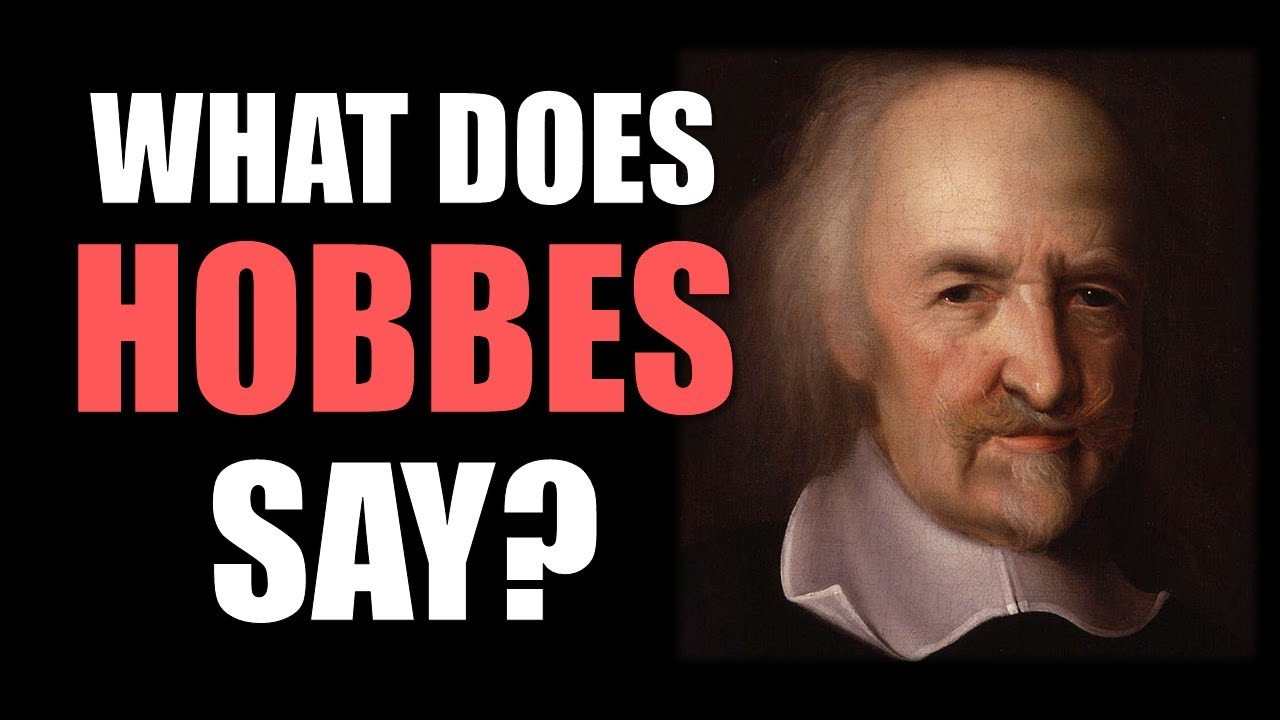
Which Enlightenment thinker wrote the Leviathan and was a founder of the social contract theory?
Locke
Rousseau
Hobbes
Voltaire
This Enlightenment thinker believed in freedom of speech
John Locke
Rousseau
Machiavelli
Voltaire
Which Enlightenment thinker believed in the separation of powers (3 branches)
John Locke
Rousseau
Montesqueieu
Hobbes
Which Enlightenment thinker believed in free elections and direct democracy?
John Locke
Rousseau
Voltaire
Wollstonecraft

The painting shows Catherine the Great in the Russian national costume, circa 1780. The Empress became a patron of women’s education in Russia throughout the 18th century and created separate boarding schools for both boys and girls.
Which Enlightenment thinker protested for equal education for girls and boys?
A. John Locke
B. Montesquieu
C. Mary Wollstonecraft
D. Jean-Jacques Rousseau

The graphic shows the three branches that divide the functions and powers of government in the United States.
Which Enlightenment philosopher proposed separation of powers as the best way to protect liberty?
A. Voltaire
B. Montesquieu
C. Mary Wollstonecraft
D. Jean-Jacques Rousseau
Salons helped to spread
the geocentric theory.
only the ideas of the philosophes.
only the ideas of political scientists.
Enlightenment thinking.
With ideas like the Separation of Powers, Baron de Montesquieu influenced this American document.
The Declaration of Independence
The Bill of Rights
The Magna Carta
The Constitution
Montesquieu argued that the 3 branches of government should have power over each other and stop a branch if it got too powerful. This is known as ____________.
Checks and Balances
Liberty
Separation of Powers
Checks of Power
Which Enlightenment thinker believed in free elections and direct democracy?
John Locke
Rousseau
Voltaire
Wollstonecraft

If government fails to protect natural rights, what do the people have a right to do?
People have no rights
Elect a new dictator
People have the right to overthrow the government and get a new one
Have no government: anarchy.

Enlightenment thinkers such as John Locke and Baron de Montesquieu
argued that people are born with certain rights that no one can take away.
thought that to keep any one person from becoming too powerful, the government should be divided into 3 separate branches.
thought that if a government does not treat its citizens fairly, it can get get rid of that government and get a new one.
All of these possible answers.
During the Age of Absolutism, European monarchs looked to
Develop better relations with muslim rulers
Centralize political power in their nations
Encourage the growth of political farms
Increase human rights for citizens
Who was Louis XIV?
This man promoted Westernization campaigns to make his country more European
This man demonstrated absolutism by building Versailles as a way of distracting the French nobility
This man believed that humans were naturally good and would not need a large government to rule over them.
This man did not believe that the average person was intelligent enough to participate in government, which led him to believe that an enlightened monarchy was best.
Who was Peter the Great?
This man promoted Westernization campaigns to make his country more European
This man demonstrated absolutism by building the city Versailles as a way of distracting the French nobility
This man didn't believe that the average person was intelligent enough to participate in government, which led him to believe that enlightened monarchy was best
This man thought that humans were naturally greedy and chaotic and would need a large government to control them
Louis XIV built this massive, ornate palace -- largely funded by the taxpayers of his country.
Windsor Castle
Versailles
St. Petersburg
Fontainebleau

