
 Worksheets
FA-6.1-6.3,6.7: Investing Review
Total questions: 44
Worksheet time: 25mins
Who manages a passively manged fund?
A computer
A person
Who manages an actively managed fund?
A computer
A person
Fees are generally ____ in a passively managed fund.
higher
lower
Fees are generally ____ in an actively managed fund.
higher
lower
The goal of passive investing is to ____.
match the market
outperform the market
The goal of active investing is to ____.
match the market
outperform the market
The type of fund for passive investing is ____.
Index Fund
Actively Managed Mutual Fund
The type of fund for active investing is ____.
Index Fund
Actively Managed Mutual Fund
The individual assets contained in an actively mutual fund are selected by…
The pool of investors
The investor who owns the most shares of the fund
An automated computer program
A professional fund manager
Which is the best description of an index fund?
A mutual fund that tracks the performance of a specific market benchmark
A retirement fund for employees over age 50
An index made up exclusively of government bonds
A safe investment product that guarantees a high rate of return
One downside of active investing is that…
You must have a license, certification, or college degree to make these types of investments
You must buy and sell each day in order for it to work correctly
You are paying a fund manager who charges fees that will eat into your potential returns
You cannot diversify your portfolio using this strategy
All of the following are true about target date funds (TDFs), EXCEPT…
TDFs automatically reallocate your investments over time
TDFs are a good investment option for hands-off investors
TDFs track the performance of a particular market index
TDFs are invested in primarily in stocks when the target date is far in the future
How is an exchange traded fund (ETF) different from a mutual fund?
An ETF can be traded throughout the day and bought from other investors, like a stock
An ETF can only be bought at the end of the day from the fund provider
An ETF is usually actively traded and has higher expense ratios
An ETF is a pooled investment that uses funds from many different investors
What is a robo-advisor?
A security algorithm used by some fund managers to protect your investments
An investment management service that uses a computer program to manage assets
A financial manager who provides specialized advice about technology funds
A popular type of exchange traded fund (ETF) with a low minimum investment
Which list below contains four financial sources you can use to fund your retirement?
Social Security, Medicare, mutual fund, 401(k)
Social Security, Pension, IRA, 401(k)
Pension, traditional, Roth, investment manager
Traditional IRA, Roth IRA, 501(c)(3), income taxes
What is the key difference between a 401(k) and an IRA?
401(k)s incur taxes, but IRAs do not
401(k)s are offered through an employer, but individuals set up IRAs themselves
401(k)s are only available to high income earners, but IRAs can be used by anyone
401(k)s are available to teens, but IRAs are not
Which strategy is most effective to ensure you have enough money for retirement?
Put large amounts of money, monthly, into a savings account with a low interest rate
Invest every month, starting at a young age, in an investment retirement account
Retire as early as possible so you can maximize your Social Security benefits
Invest every month in well performing stocks, starting 10-15 years before your retirement date
With which fund can you trade just like a stock?
Mutual Fund
ETF
This fund usually aims to track a specific index and provide its average return.
Mutual Fund
ETF
Investors buy or sell their shares directly from other investors, like an individual stock.
Mutual Fund
ETF
This fund is traded at the end of the day.
Mutual Fund
ETF
Of the two funds, this type has more total assets under management.
Mutual Fund
ETF
In 2002, there was $102 billion under management by ETFs in the US. ETF assets have grown approximately 25% annually since then.
What is f(14)? What does that represent in this context?
(a)
A Target Date Fund is based off the year you start working.
True
False
Leon is 55 years old and plans to contribute $19,500 to his retirement account
this year. About how much of this money should Leon allocate to stocks if he
is using the Rule of 110?
(a)
Marco is 23 years old and plans to invest $5,500 into his newly opened retirement
account.
Write an equation and use it to determine how much of Marco’s $5,500 should go
towards stocks based on the Rule of 110.
(a)
Jerry bought a brand new car at the dealership one year ago for $35,000. The value of his car depreciates and is worth 20% less each year.
Write the exponential equation that models the value of his car.
(a)
Jerry bought a brand new car at the dealership one year ago for $35,000. The value of his car depreciates and is worth 20% less each year.
What is the value of the car after 5 years?
(a)
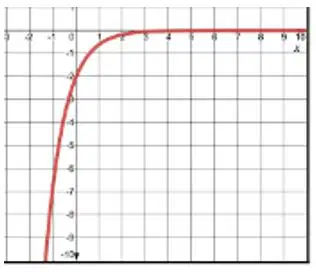
As x gets large, y → ___.
0
∞
-3
3
−∞
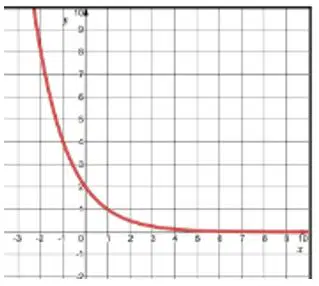
As x gets small, y → ___.
0
∞
-3
3
−∞
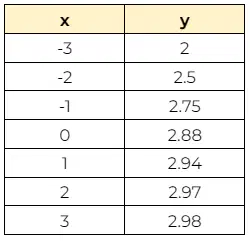
asymptote: y = ___
0
∞
-3
3
−∞
As x gets small, y → ___.
0
∞
-3
3
−∞
asymptote: y = ___
0
∞
-3
3
−∞
asymptote: y = ___
0
∞
-3
3
−∞
As x gets large, y → ___.
0
∞
-3
3
−∞
As x gets large, y → ___
0
∞
-3
3
−∞
As x gets small, y → ___
0
∞
-3
3
−∞
A 401(k) plan is a ___.
special type of business plan
bank account specifically for entrepreneurs
benefit for workers making $401,000 or less
benefit that helps workers invest for retirement
About how much more does money grow when it’s invested rather than deposited in a traditional savings account?
About 10 times more
About 50 times more
About 100 times more
About 500 times more
How can you invest for retirement if your employer does not offer a 401(k) plan?
You simply wouldn’t be able to invest
Open a 401(k) from a relative’s employer
Open an Individual Retirement Account (IRA)
Open a 501(c)(3) instead
What is one example of a service offered by a brokerage?
Offering certificate of deposit accounts
Offering high yield savings accounts
Allowing customers to buy/sell stocks
Allowing customers to sell goods online
How much of your income do experts recommend investing in a 401(k) account?
5%
7%
10%
12%
One difference between a Roth IRA and a traditional IRA is ___.
Roth: pay the taxes up front
Traditonal: pay the taxes when you withdraw
Roth: pay the taxes when you withdraw
Traditional: pay the taxes up front
One difference between a Roth IRA and a traditional IRA is ___.
Roth: has a lower allowable limit you can put in each year.
Traditional: has a lower allowable limit you can put in each year.

