
 Worksheets
Week 1: ECG Interpretation
Total questions: 10
Worksheet time: 50mins
Identify the segments of an ECG complex
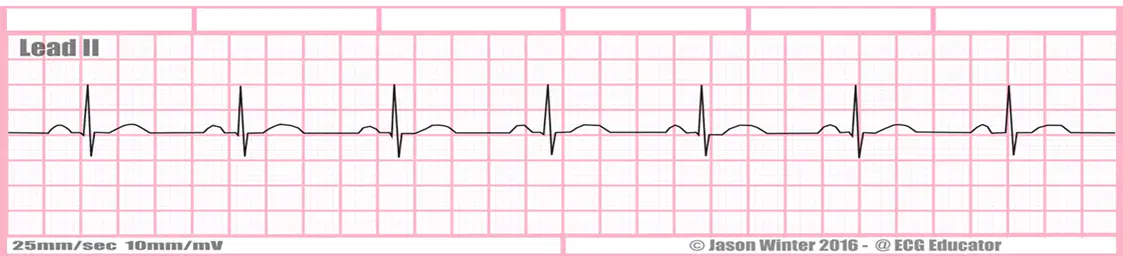
Based on this strip, the nurse can assume which part of the heart is working as the pacemaker?
AV Node
Bundle of His
SA Node
Tricuspid Valve
Place the following actions in the order in which they occur:
Atrial depolarization
Ventricular depolarization
Atrial repolarization
Ventricular repolarization
Absolute refractory
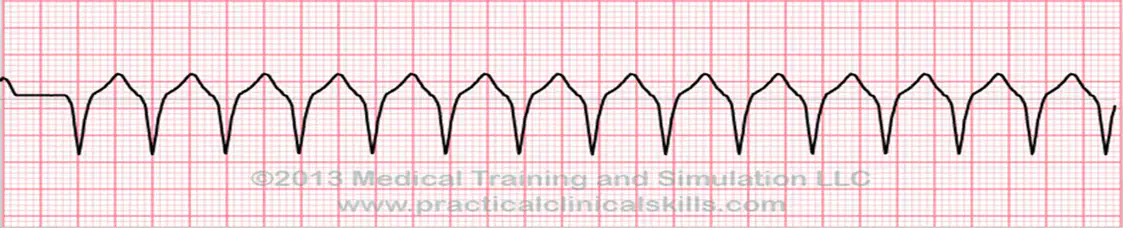
Based on this strip, the nurse can assume which part of the heart is working as the pacemaker?
AV Node
Bundle of His
Ventricle
Tricuspid Valve
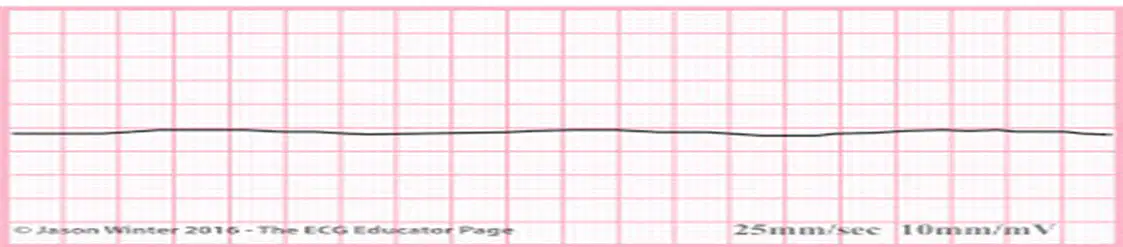
The nurse sees this rhythm on the monitor, what is the priority action?
Silence the alarm
Check the patient
Document the finding in the chart
Call Rapid Response
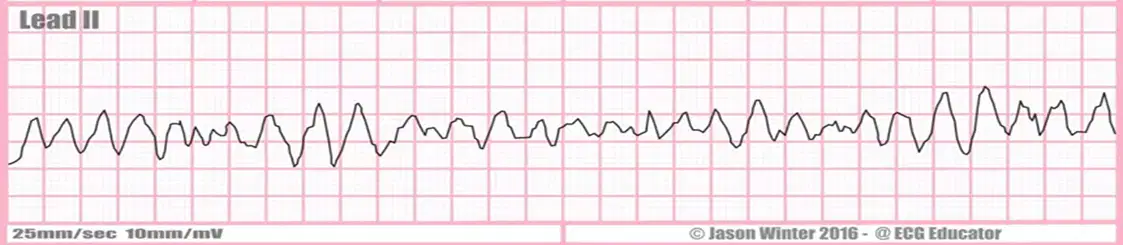
The nurse notices this rhythm on the monitor. Place the following actions in the correct order.
Check the patient
Assess for a pulse
Begin chest compressions
Apply defibrillation pads
Prepare to defibrillate
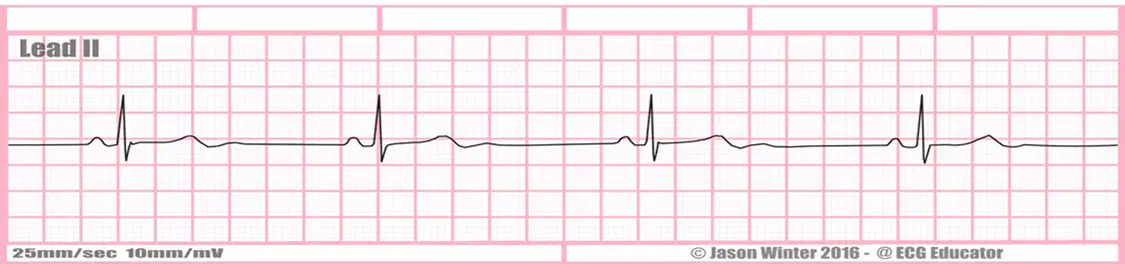
The nurse notices this rhythm on the monitor and assesses the patient to be pale and slow to respond. Which intervention should the nurse anticipate as priority?
Administer epinephrine
Administer NS bolus
Administer atropine
Prepare the patient for CT
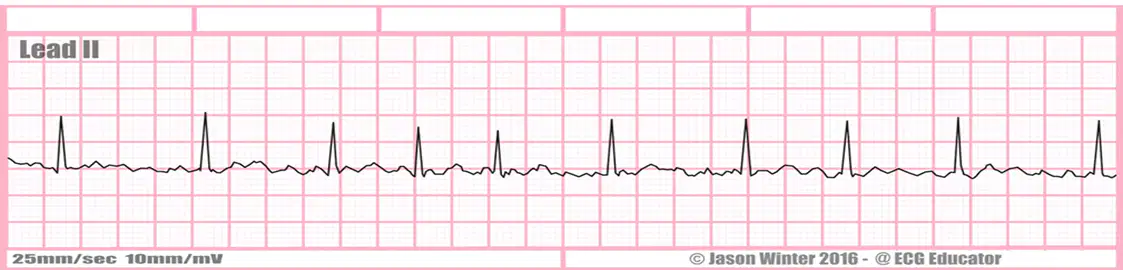
The nurse notices this rhythm on the monitor. What medication class would the nurse anticipate the patient being prescribed?
Antiplatelet
Diuretic
Antihypertensive
Thrombolytic

The nurse sees this rhythm on the monitor, what is the priority action?
Silence the alarm
Check the patient
Document the finding in the chart
Call Rapid Response
Following an excellent lab on cardiac rhythm interpretation, the nursing student now remembers the first step of CPR is:
Assess a pulse
Auscultate lung sounds
Scene safety
Begin chest compressions

