
 Worksheets
Acid and base
Total questions: 129
Worksheet time: 2hrs 33mins
Which of the following products are formed when a metal carbonate reacts with an acid?
Salt
Water
Carbon dioxide
Acid
Base
Which of the following products are formed when a metal hydroxide reacts with an acid?
Salt
Water
Carbon dioxide
Acid
Base
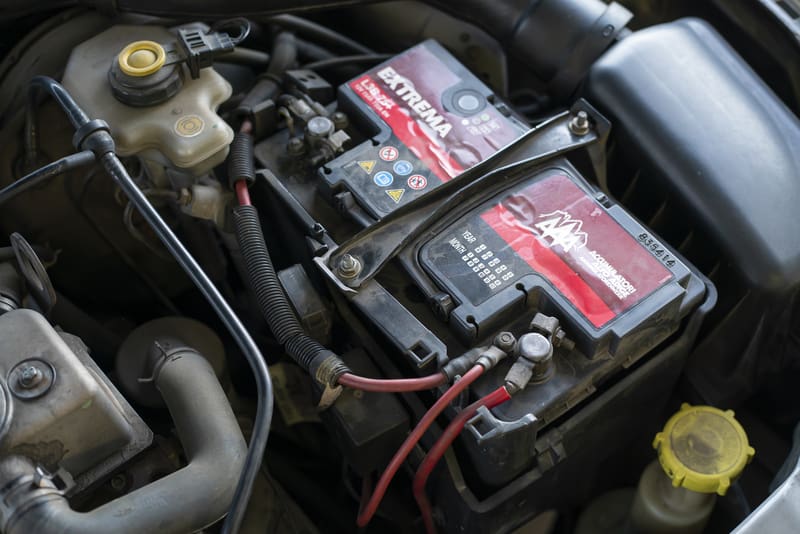
Which acid can be found in Batteries?
Sulfuric Acid
Hydrochloric Acid
Phosphoric Acid
Acetic Acid

Which represents an acid with the smallest Ka value?
HX
HY
HZ

Which two species would be identified as Bronsted-Lowry bases?
HF and F-
NH3 and F-
NH3 and NH4+
NH4+ and F-
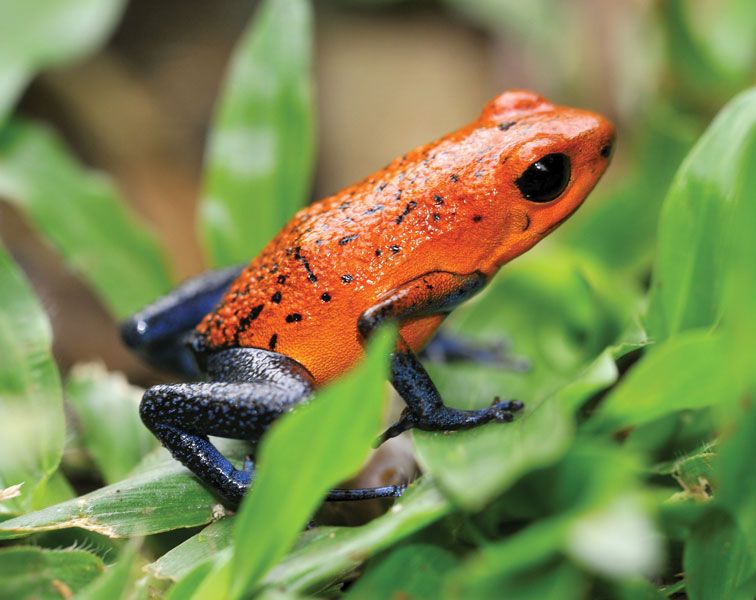
What is the term for a substance that can react as both an Acid or a Base?
Amphoteric
Amphitheater
Amphibian
Ambidextrous

Barium Hydroxide is a strong base.
True
False
Why must we conduct standardization?
determine the true molarity of a substance
to find out the concentration of an unknown acid we are titrating
because it is a fun lab
to find the neutral point of combining an acid and base
The pH scale is used to know what?
Your temperature
Know one knows
The colors of acids and bases
The strength of acids and bases

The following table shows the tests a student did on substance V and the conclusions made
from the observations. Complete the table by describing these observations for (c) i and ii

Which of the following is NOT an acid?
HCl
CH3COOH
C2H6
H2SO4
When a reaction reaches neutralization and you can physically see a change in color from the indicator, this is called the
stoichiometric point
endpoint
equivalence point
neutral point

Which solution can turn phenolphthalein pink?
NaOH(aq)
CH3COOH(aq)
CH2OH(aq)
HCl(aq)
Phenolphthalein has a pink color in a solution that has a pH of
5
11
1
7
Which solution would turn litmus blue?
HCl(aq)
CH3COOH(aq)
H2SO3(aq)
NH3(aq)
Which indicators would cause a solution with a pH of 2 to turn red?
Bromthymol blue and thymol blue
Bromcresol green and litmus
Litmus and methyl orange
Methyl orange and phenolphthalein
To neutralize a solution of HCl(aq), what solution should be added?
NaOH(aq)
H3PO4(aq)
HNO3(aq)
C12H22O11(aq)
A sour taste is a characteristic of:
acids
bases
neutral
pH scale
Which is a characteristic of a base?
tastes sour
found mostly in foods
feels slippery
turn litmus paper red
According to Arrhenius, what is the definition of an ACID?
a substance that contains hydroxide and ionizes to produce OH-
a substance that contains hydrogen and ionizes to produce H+
a substance that contains hydrogen and ionizes to produce OH-
a substance that contains hydroxide and ionizes to produce H+
NaOH is:
an Arrhenius base
an Arrhenius acid
neither an acid nor a base
both an acid and a base
Which of the following will conduct electricity? Select all that apply
Acidic solutions
Basic solutions
Ionic solutions
Neutral covalent solutions
Neutralization is the process of an acid and a base reacting to form what? Select all that apply
An ionic salt
Hydronium ions
NaCl
Water
When using the Arrhenius model, what types of ions indicate that a compound is a base?
H+1
OH-1
A Bronsted Lowry acid:
donates H+ to another substance
accepts H+ from another substance
produces H+
produces OH-
A Bronsted Lowry base:
donates H+ to another substance
accepts H+ from another substance
produces H+
produces OH-
In the equation below, what is the Bronsted Lowry acid (donates H+)?
HCl + NH3 → Cl- + NH4+
HCl
NH3
Cl-
NH4+
In the equation below, what is the Bronsted Lowry base (accepts H+)?
HCl + NH3 → Cl- + NH4+
HCl
NH3
Cl-
NH4+
Which reactant in the following equation is a Bronsted Lowry acid?
H2O + HCl → H3O+ + Cl-
Water
Hydrogen chloride
Hydronium
Chloride
Which product in the following equation is a conjugate base?
H2O + HCl → H3O+ + Cl-
Water
Hydrogen chloride
Hydronium
Chloride
What is the Bronsted Lowry base in the following equation?
PO4-3 + HNO3 → NO3- + HPO4-2
PO43-
HNO3
NO3-
HPO42-
What is the conjugate base in the following reaction?
HCO3- + HCl → H2CO3 + Cl-
HCO3-
HCl
H2CO3
Cl-
HSO4- + H2O → H3O+ +SO42-
Identify the Bronsted Lowry Acid in the above reaction.
HSO4-
H2O
H3O+
SO42-
CO32- + H2O → HCO3- + OH-
Using the above reaction, which compound is the conjugate base?
CO32-
H2O
HCO3-
OH-
The Acid-Base classification system that defined any chemical species that accepts a pair of electrons as an acid, and a base is a chemical species that donates a pair of electrons.
Bronsted-Lowry
Arrhenius acid-base
Lewis acid-base
Monoprotic and Polyprotic Acids
What is the range of the pH scale?
(a)
Which of the following will conduct electricity? Select all that apply
Acidic solutions
Basic solutions
Ionic solutions
Neutral covalent solutions
If a solution has a pH of 1 what is the pOH? Is it an acid or base? (pick 2)
acid
base
13
15
neutral
Which one of the following is NOT a property of acids.
Tastes sour
Corrodes metals
Conduct electricity
Turns red litmus paper blue
If the pH of a solution is 4.0, what is the pOH?
4.0
10.0
1.0 x 10 -4
cannot be determined from the information
If the [H3O+] of a solution is 6.8 x 10⁻⁸ M, the pH is
7.17
3.2 x 10⁻⁵
7.2
7.62
If the [H3O+] of a solution is 1 x 10⁻³ M, the pH is
11
-3
3
1
Acids have a pH of _______________.
below 7
above 7
exactly 7
The current pH of Earth's oceans is....
less than 7
equal to 7
greater than 7

Accepts a pair of electrons
Lewis Acid
Lewis Base
Bronsted Lowry Acid
Arrhenius Base
Neutral solutions have a pH of _______________.
below 7
above 7
exactly 7
According to Arrhenius, what is the definition of an ACID?
a substance that contains hydroxide and ionizes to produce OH-
a substance that contains hydrogen and ionizes to produce H+
a substance that contains hydrogen and ionizes to produce OH-
a substance that contains hydroxide and ionizes to produce H+

When a water molecule loses a hydrogen ion, or proton, it becomes ___
a hydronium ion, H3O+
a hydroxide ion, OH-
a hydronium ion, OH-
a hydroxide ion, H3O+
All bases have a sour taste.
True
False
If a solution is basic which ion will be more present?
H+
K+
OH-
H-


The objects within this image can be classified as....
Acids
Bases
Neutral Substances
Kitchen acids

Which of the following is a property of a base?
bitter taste
reacts with metals
salty
sour taste

What is the meaning of the above hazard warning symbol?
Corrosive
Explosive
Toxic
Radioactive
Weaker bases have a pH closer to...
8
14
0
4
pH is the measure of the concentration of ______.
Acids
H+ ion
OH- ion
Base

What is the reaction/equation for this Kc expression
2N2 + O2 ⇌ 2NO
N2 + O2 ⇌ NO
NO ⇌ 2NO
N2 + O2 ⇌ 2NO

What is the equation/reaction for this Kc expression?
O3 ⇌ 3O2
2O3 ⇌ 3O2
2O3 ⇌ O2
3O2 ⇌ 2O3
The Kc expression for the reaction 2NH3 ⇌ N2 + 3H2


Kc = ?
products / reactants
reactants /products
Molarity is measured in _____.
moles per gram
moles per liter
moles per millimeter
moles per milliliter
The _____ is the substance that is being dissolved.
solute
solvent
What is a solvent?
The substance that does the dissolving in a solution.
The substance that is being dissolved in a solution.
The mixing of different substances.
The process in which neutral molecules lose or gain electrons.
Which represents the unit for molarity?
M
m
ML
Mr
Molarity measures the _______ of a solution.
concentration
molar mass
atomic weight
ionic charge
The square brackets in a Kc expression represent ?
concentration
concentration in mol L-1
concentration in g L-1
the same as round brackets
Nitric acid
H2NO3
HNO3
HNO2
H2NO2


Which solution can turn phenolphthalein pink?
NaOH(aq)
CH3COOH(aq)
CH2OH(aq)
HCl(aq)
Which solution would turn litmus red?
KOH(aq)
NaCl(aq)
HCl(aq)
NH3(aq)
Which solution would turn litmus blue?
HCl(aq)
CH3COOH(aq)
H2SO3(aq)
NH3(aq)
To neutralize a solution of HCl(aq), what solution should be added?
NaOH(aq)
H3PO4(aq)
HNO3(aq)
C12H22O11(aq)

What would be the best way to determine if a substance is an acid or a base?
Drop some on your skin.
Taste it.
Use an indicator such as litmus or universal indicator.
Add it to some metal and test any gas that evolves.
Which solution can turn phenolphthalein pink?
Sodium hydroxide
Vinegar
Tomato
Hydrochloric acid
Which solution would turn litmus red?
Potassium hydroxide
Sodium chloride
HNO3
Ammonia

What is the nature of the solution present in the beaker?
Alkali
Acidic
Neutral
Water

Which of the set of pH paper depicts that the dipped solution is highly acidic?
(compare with the pH scale and find out)


Which solution would turn litmus blue?
HCl(aq)
CH3COOH(aq)
H2SO3(aq)
NH3(aq)



