
 Worksheets
Cycle 3 Practice for Science & Technology Exam
Total questions: 178
Worksheet time: 4hrs 10mins

What does reflect mean?
Bouncing Light
Bending Light
What does refract mean?
bouncing light
bending light
___________ travels in a straight line until something changes its path
Medium
Refract
Reflect
Light

What is happening in this picture?
Reflection
Refraction

The following image is an example of ______.
Refraction
Reflection
This is the example of dispersion of light
sky looks bright orange in the evening
shadow
Pool seems shallower
rainbow
When is a rainbow mostly formed?
mostly after rainfall
mostly after a cloudy day
mostly when its a foggy day
mostly when it is a bright sunny day
A place where light comes from is called . . . .
beam
reflect
light source
ray
Beam is . . . .
a band of light
the action of bouncing off a surface
a place where light comes
an object
Our main source of light is . . . .
star
a lamp
moon
sun
Light enters the eyes through the________
pupil
cornea
iris
retina
The _____ turns the signals into the images you see.
brain
pupil
cornea
lens
Which precautions can people take to protect themselves from the harmful rays of the sun?
Wear sunglasses/ sunscreen
Looking directly at the source
Staying in the shade
Standing behind a transparent object
Your eyes are a bit like a _________that captures images of the world.
camera
telescope
microscope
sungalasses
The _____ is the transparent structure inside the eye.
iris
cornea
pulip
lens
The amount of light passing through your eye is controlled by the______.
cornea
iris
pupil
optic nerve
An eye and a camera both have _____ and light-sensitive surfaces.
a strap
on/off button
lenses
an iris
Retinas, film, and imaging sensor chips all have one other thing in common. They all receive an inverted or _________ version of the image.
inside-out
downside-up
upside-down
outside-in
You don’t see images upside-down because the _______ steps in to help your eye.
brain
senses
mouth
nose
Digital cameras do not need help to turn images rightside-up, they are programmed to make the correction on their own..
True
False
Photographers change lenses, depending on ______ an object.
what the color is of
the shape of
the weight of
how far away they are from
Your retinas contain two types of photoreceptors: rods and ________.
caps
cones
craters
chips
_____ allow you to see in low light. They aren’t useful for colour vision.
Rods
Cones
Caps
Bases
_________ let you see in colour.
Rods
Cones
Caps
Bases
Which of the following statement is TRUE?
a. Light does not travel.
b. Light travels in a curve line.
c. Light travels in a straight line.
d. Light reflects in opaque materials.
2. Light is a form of ___________ that is needed to support life on
Earth.
a. compression
b. energy
c. motion
d. vibration
What evidence/s show/s that light travels in a straight line.
a. Shadows are not formed.
b. Light passes through the holes which are aligned together.
c. Rays of light are made of straight lines moving outwardly in all
directions.
d. All of these
4. What happens when you focus a pen light through a hole of a thick
cloth?
a. Light becomes brighter.
b. Light changes direction.
c. Light passes through the hole.
d. Light is blocked or obstructed.
5. Which of these describes how light travels through an empty space?
a. It travels in a straight line without stopping.
b. It comes to a stop after it travels a certain distance.
c. It changes direction often even if there are no objects.
d. It travels straight but may change direction to avoid objects.
6. What kind of path does light take?
a. It bounces off in all objects.
b. It goes through in all objects.
c. It curves around in all objects.
d. It travels in a straight line until it hits something or goes through
it.
7. Which word best describes how light moves?
a. in circles
b. straight line
c. slowly
d. faster through opaque objects
8. What do we call the direction that light travels through
a. air
b. medium
c. path
d. water
10. You see a flash of lightening before you hear thesound of thunder. Based on this statement, which of the following is true?
a. Sound travels faster than light.
b. Light travels faster than sound.
c. Light travels at the same speed with sound.
d. Light and sound do not travel in any medium.
Light travels through which material?
Glass
Wood
Metal
Cardboard
Some objects like _________ can block light from coming through.
Wood
Windows
Clear glass
Eye glasses
Light travels in _______________________.
All directions
One direction
Zero directions
Opposite directions
What do mirrors do?
Absorb all incoming light
Create its own bright light
Record the amount of light
Change the direction of light
Which one of these materials lets some light through?
Metal
Mirrors
Curtains
Wood
What is a Transparent material?
Materials which allow light through them
Materials which allow no light through them
Materials that allow little light through them
Which one of the following is a translucent material?
Glass cup
frosted glass
Wall
Book
What is a Translucent material?
Materials that let light through
Materials that don't let light through
Materials that let little light through


Which type of light is used to see broken bones?
Infrared light
X-rays
Ultraviolet light
Bends as it passes through the mirror
Bounces back at a random angle
Reflects back at the same angle it strikes the mirror at


what is the correct order of the visible light spectrum?
red, yellow, green, orange, blue, violet and indigo
indigo, blue, violet, orange, yellow, green and red
violet, blue, indigo, green, yellow, orange and red
red, orange, yellow, green, blue, indigo and violet

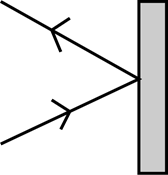
In the illustration, the light ray striking the object is-
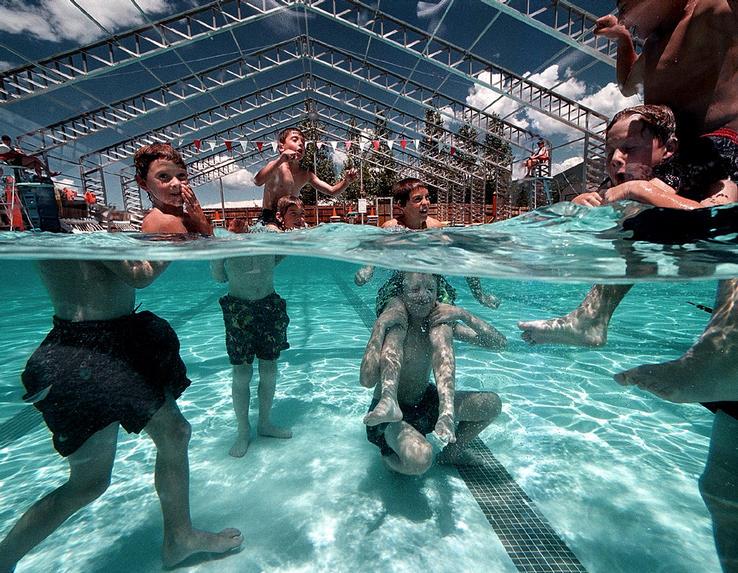

Why do we see the color white?
All colors are being absorbed.
All colors are being reflected.
All colors except for white are being reflected.
An objects color is determined by the color it:
Reflects
Refracts
Absorbs
produces


The image shows an object that is __________.
transparent
translucent
opaque

What happens when light passes through a prism?
The light separates into different colors.
The light mixes together.
The light gets brighter.
The light stays the same.
A shadow is created when...
an object blocks the light
an object lets light pass thru
an object is above light
Shadows are shortest ...
at night
in the morning
in the middle of the day
in the evening

When the sun gets higher in the sky, shadows get ______.
longer
gone
shorter
darker
Shadows are longest during _______.
morning and evening
noon
night
When the Sun is behind you, your shadow is ...
behind you
in front of you
at the side of you
not there
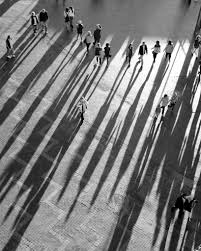
When was this picture most likely taken?
(Hint: think about the shadow's length)
morning
night
evening

When was this picture most likely taken?
(Hint: think about the shadow's length)
morning or evening
night
noon

Where will the tree's shadow be?
A
B
C

You could make the shadow of the puppets bigger if you....(choose 2 correct answers)
Move the puppet closer to the screen
Move the puppet away from the screen
Move the lamp away from the puppet
Move the lamp closer to the puppet
A transparent object does not make any shadow as light passes straight through it.
True
False
A transparent object does not make any shadow as light passes straight through it.
True
False
Opaque objects form clear dark shadows. it.
True
False
Translucent objects create _____ shadows as light is able to pass only partially through them.
dark
faint
no
A long time ago, people observed the way shadows were formed by the sun and utilized this principle in making the world’s most primitive ______, the sundials.
thermometer
flashlights
clocks
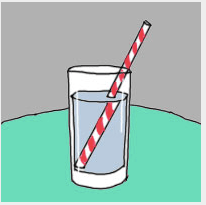
Why does the straw appear to be bent?
light is reflected
light is absorbed
light is turned
light is refracted
In the illustration, the light ray striking the object is-

What might explain why light travels in a straight line?
If there is nothing to interfere with light waves, they should travel in a straight line.
Light waves will always travel in a straight line, even if they come into contact with another object.
Light waves don't travel in a straight line.
Light waves travel in a straight line because sound waves travel in a straight line.
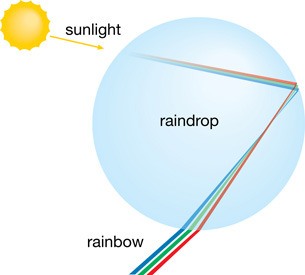


The bouncing of light off an object
basketball
refraction
reflection
echo
What do you see when you look at a smooth shiny surface , like a mirror?
Your reflection bending off of the glass.
Your reflection bouncing off of the glass
What does reflect mean?
Bouncing Light
Bending Light
What does refract mean?
bouncing light
bending light
True or Flase: Refraction can cause an object to look bent or broken.
True
Flase

What is this an example of?
reflection
refraction

What is this a picture of?
reflection
refraction
___________ travels in a straight line until something changes its path
Medium
Refract
Reflect
Light

What is happening in this picture?
Reflection
Refraction
What is happening in this picture?
Reflection
Refraction
The following image is an example of ______.
Refraction
Reflection
This is the example of dispersion of light
sky looks bright orange in the evening
shadow
Pool seems shallower
rainbow
When is a rainbow mostly formed?
mostly after rainfall
mostly after a cloudy day
mostly when its a foggy day
mostly when it is a bright sunny day
An eye and a camera both have _____ and light-sensitive surfaces.
a strap
on/off button
lenses
an iris
Retinas, film, and imaging sensor chips all have one other thing in common. They all receive an inverted or _________ version of the image.
inside-out
downside-up
upside-down
outside-in
The lens in both an eye and a camera is convex, or curved _____.
outwards
inwards
sideway
When _____hits a convex object, it refracts.
air
light
water
moisture
You don’t see images upside-down because the _______ steps in to help your eye.
brain
senses
mouth
nose
Digital cameras do not need help to turn images rightside-up, they are programmed to make the correction on their own..
True
False
The lenses in your eyes do not change shape to stay focused on a moving object.
True
False
The lenses in your eyes change shape to stay focused on a moving object. A camera lens can do this too.
True
False
Photographers change lenses, depending on ______ an object.
what the color is of
the shape of
the weight of
how far away they are from
Your retinas contain two types of photoreceptors: rods and ________.
caps
cones
craters
chips
_____ allow you to see in low light. They aren’t useful for colour vision.
Rods
Cones
Caps
Bases
_________ let you see in colour.
Rods
Cones
Caps
Bases
Cameras respond to____, ____ and ____ light using filters placed on top of their photoreceptors.
red, blue and green
yellow, pink and orange
black, white and violet
blue, black and yellow
Because a camera has photoreceptors all over its lens, it always sees a “_____” picture.
half
full
75%
25%
Your eyes, on the other hand, have a blind spot.
True
False


Online safety is:
giving out your password to friends
e-mailing friends
is signing up for websites without an adult's permission
is being reponsible online
How can you build a positive Digital Footprint?
by being careful what you post
by not posting unkind things
by not disclosing your personal information
all of the above
True or false? Things you post online, like a selfie, can affect your identity.
True
False
Which of the following situations is an example of oversharing?
Abby submits her poem to an online poetry contest.
John streams live video of his piano recital.
Denise posts a photo of herself making a rude gesture.
Carla uploads a slide show of her paintings.
How do you keep a positive digital footprint?
Don't overshare
Use privacy settings
Only post things that you would want everyone to see
All of the above
OKAY or NO WAY?
OKAY or NO WAY?
Cats can have long hair or short hair, they can be lots of different colors, and "they can even have blue eyes," says Julia Nelson in her book called Cats are Amazing Animals.
OKAY or NO WAY?
OKAY or NO WAY?
OKAY or NO WAY?
OKAY or NO WAY?
OKAY or NO WAY?
OKAY or NO WAY?
OKAY or NO WAY?
OKAY or NO WAY?
What is plagiarism?
to use your own work.
to steal and pass off (the ideas or words of another) as one's own : use (another's production) without crediting the source
to paraphrase
to write original work
What does "paraphrase" mean?
a statement that says something that another person has said or written in a different way.
Copying information directly into your paper or presentation.
Writing information exactly from a resource without giving credit where you received the information.
a statement that says something that another person has said or written in the exact way.
When are you allowed to use the words or ideas of other people without giving them credit?
once
twice
sometimes
never
Does the rule of plagiarism apply to all subjects?
YES!
NO
sometimes
hardly ever applies to all subjects
When you are doing a Science Project, a book report or even making a piece of art, remember
you can sometimes use the words or ideas of other people without giving them credit.
you're never allowed to use the words or ideas of other people without giving them credit.
If you copy and paste some of the text from a website,
that is acceptable to use in your paper.
that is sometimes acceptable to use in your paper.
that is a clear violation of plagiarism.
that is not a clear violation of plagiarism.
Plagiarism someone's work is like ....
not cheating.
acceptable in Science and Social Studies but not English.
cheating off of them on a test.
acceptable in all subjects.
If you use someone else's work, verbatim, that is plagiarism. What does verbatim mean?
in not exact words
to summarize information from someone esle's work
in the exact words : word for word
to condense information to a shorter format
To paraphrase information means to ....
put in your own words.
write verbatim what you've read in any resource.
to collaborate ideas.
is to negotiate the art of the deal.
Which of the following makes it easy to plagiarize?
deadlines
assignments feeling overwhelming
poor planning
all of the above
Running out of time and forgetting to cite your source is an acceptable excuse for plagiarism
True
False
You find a paper online that answers your assignment instructions exactly and submit it as your work. Is this considered as plagiarism?
Yes
No

