
 Worksheets
Joshua Revision
Total questions: 183
Worksheet time: 5hrs 1mins

What is the unit of energy?
joules
watts
grams
metres


What type of energy decreased when you hit the brakes?

Which form of energy is mostly produced in this conversion? (It's a solar cell against the window)
Electrical
Kinetic
Thermal
Sound

Which form of energy is mostly produced in this conversion?
Electrical
Kinetic
Thermal
Sound

This tool's purpose is to generate which form of energy?
Electrical
Light
Kinetic
Sound

Which form of energy is mostly produced in this conversion?
Electrical
Kinetic
Thermal
Sound

Which form of energy is NOT present in this conversion?
Electrical
Kinetic
Light
Sound

Which form of energy is wasted in this device?
Electrical
Light
Sound
Thermal

This tool's purpose is to produce which form of energy?
Electrical
Kinetic
Sound
Thermal

Sun Bathing
Conduction
Convection
Radiation

Mantle
Conduction
Convection
Radiation
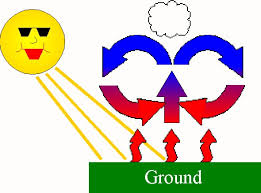
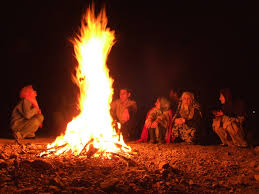
When you eat fruits and vegetables, chemical bonds are releasing stored energy, this is...
a. thermal energy
b. sound energy
c. electrical energy
d. chemical energy

What is the unit of energy
N
kg
J
W
When a force is applied to an object it can change its...
(a)
When we apply a force to an object to change its shape, what is this called?
Extension
Deformation
Squashing
Stretching
Which materials will return back to their original shape when they have been stretched?
Plastic
Elastic
Inelastic
Metals
What is extension?
The original length of the spring.
The amount of length the spring has increased by.
More time to complete the question.
The new length of the spring.
The original length of a spring is 10cm, its extended length is 30cm. What is the extension?
10
20
30
40
What happens when a spring reaches its elastic limit?
The force applied to the spring is equal to its elongation.
Hooke's law ceases to be valid.
The spring constant increases.
The spring can be stretched out but will revert back to its original shape.
Who created Hooke's law?
Robert Hooke
Isaac Newton
Albert Einstein
Dmitri Mendeleev
What is Hooke's Law?
The force applied to the spring is proportional to its extension.
The fore applied to the spring is equal to its extension.
The force applied is equal to the spring constant.
The spring constant is equal to the extension.
If F is force, k is spring constant and x is extension, Hooke's Law tells us that:
F=k/x
x=Fk
k=Fx
F=kx
A graph of extension against force for an elastic material is:
A downward curve
An upward curve
A straight line from the origin
A straight line from any point on the x and y axis
A spring has a spring constant of 450 N/m. How far is the spring compressed if 150 N of force are used?
2.2 m
3m
5.0 m
0.3 m
A force of F=500 N is applied to extend a spring. What is the displacement x of the spring if its spring constant is k= 500 N/m?
0.1 m
1 m
1000 m
100m
A net force of 1400 N acts to stretch an extension spring. How far will the spring stretch if its spring constant is 700 N/m?
1.0
0.5m
1.5 m
2.0 m


What is mass?
The amount of matter in a body
The amount of water in a body
The amount of fat in a body
The amount of jellybeans in a body
What is the SI unit for mass?
newton
kilogramme
metres
joules
What is weight?
The magnetic force acting on the body
The electric force acting on the body
The gravity acting on the body
The gravitational force acting on the body
What is the SI Unit for weight?
newton
kilogramme
metres
ampere
What is the approximate value of gravitational field strength on Earth?
10 N/kg
20 N/kg
100 N/kg
1000 N/kg
What is the formula for mass and weight?
w = m/g
w = m - g
w = mg
w = m + g
What do you use to measure mass?
Newton Meter
Spring Balance
Weighing Scale
Beam Balance
What do you use to measure weight?
Spring Balance
Measuring Tape
Beam Balance
Ruler
Which statement is true?
Inertia is dependent on the shape of the object.
Inertia is dependent on the mass of the object.
Inertia is dependent on the size of the object.
Inertia is dependent on the colour of the object.
Which statement is true?
The larger the mass, the smaller the inertia.
The inertia is the same for all objects.
The larger the mass, the larger the inertia.
There is no such thing as inertia.
What is the formula for density?
density = mass / volume
density = volume / mass
density = mass x volume
density = mass + volume
What is the SI Unit for Density?
g / cm3
g / m3
kg / m2
kg / m3
What do substances less dense than water do?
Sink in water
Float on water
Dissolve in water
Freeze in water

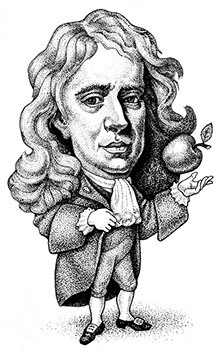
The scientist who is most famous his work on forces
Albert Einstein
Stephen Hawking
Sir Isaac Newton
Galileo Galilei


In this force diagram, which arrow is representing Friction?
A
B
C
D


A pull moves things _______ .
Close to you
Away from you

A push moves things _______ .
Close to you
Away from you

What happens when you PUSH a ball?
It moves away
It moves closer
Which of the following is a contact force?
Magnetic
Friction
Electrical
Gravitational

Which of the forces in this image is the smallest?
A
B
C
D
E

What type of force is needed to unlock a door?
Pull
Push
Twist
Jump

What is the force pair when using a spring balance?
Weight pulling up and gravity pulling down
Hand pulling up and spring pulling down
Spring pulling up and weight pulling down
Hand pulling down and weight pulling down

What tool is used to measure weight or force?
Newton meter
balance
hand lens
tape measure

What is this?
Balance
Meter Stick
Newton meter
Stopwatch
The solar system is made up of _ planets.
8
9
10
11
What is a solar system?
I'm not sure
A planet that is orbited by a moon
A system where there is a sun and objects that orbit it
A planet that is made up mostly of ice
Why does day and night occur?
I need a recap
Because the Earth rotates on it's axis, meaning that when the part of the Earth that we live on is facing the sun, it is day time and when the part of the earth that we live on faces away from the sun, it is night time.
Because the Earth orbits the sun and therefore the Earth isn't always in the same place.
Because the distance between the Earth and the Sun changes. When it's further away, it's night time and when it's closer, it's day time.
How many phases of the moon are there?
8
10
9
7
Which of these are phases of the moon?
Gibbous
Crescent
Full Moon
New Moon
All of these are phases of the moon
Why is it not the same time as the UK in a different country such as Australia?
Because the moon lights up the Earth, which means that day time occurs at different times for many countries. If a country is facing the moon, it is night time because there is no light.
I'm not too sure
Because the Earth orbits the Sun, which means that day time occurs at different times for many countries. If a country is close to the the sun, it is night time because there is no light.
Because Earth rotates on it's axis, which means that day time occurs at different times for many countries. If a country is facing away from the sun, it is night time because there is no light.
Why does the moon appear to change shape on different days?
The moon doesn't emit (give off) any light at all. As the Moon orbits the Earth, the Sun lights up different parts of it, making it seem as if the Moon is changing shape.
Some days, the moon emits more light than others and therefore it appears to change shape.
When it is day time, the moon emits less light than at night time, when it is dark on Earth.
I need a recap
Planets are...
Spherical
Circular
Triangular
Square
Which best describes how the planets orbit the sun?
Round
Straight
Elliptically
Circular motion
Choose the answer that shows the planets in the correct order from the sun
I'm not sure
Mercury, Venus, Earth, Mars, Jupiter, Saturn, Uranus and Neptune
Mars, Venus, Earth, Mercury, Jupiter, Saturn, Uranus and Neptune
Mercury, Neptune, Venus, Mars, Earth, Jupiter, Saturn and Uranus
Which of the below used to be a planet but is now recognised as a dwarf planet?
Uranus
Pluto
Neptune
Mars
The sun is...
A star
All of these options are correct
Extremely hot
A ball of gas
What is the center of our Solar System?
Earth
the moon
the sun
All of the objects in our Solar System orbit the sun.
True
False
How many planets are in our Solar System?
7
8
9
The inner planets (Mercury, Venus, Earth, and Mars) are made of--
rocks
gas
helium
The outer planets (Jupiter, Saturn, Uranus, Neptune) are made of --
gas
rocks
water
What is the third planet from the Sun?
Mercury
Venus
Earth

The Sun is a....
Planet
Star
Asteroid
Dwarf Planet
The Sun and the Moon are the same size...
True
False
The moon provides Earth with light...
True
False
The eight planets in our solar system are different in many ways. Which is one thing all planets in our solar system have in common?
They all have oceans.
They all orbit the sun.
They are all gas planets.
They are all the same size.
the path an object takes as it revolves around a star, planet, or moon
revolve
orbit
rotate
space probe


What time did Emma begin her journey?
7:00 am
7:30 am
8:00 am
12 noon
How far from home was Emma at 9am?
40 miles
20 miles
30 miles
50 miles
How far from home was Emma at 11am?
40 miles
20 miles
30 miles
50 miles
What time did Emma start her journey home?
9:00 am
10:00 am
11:00 am
12:00 noon
How long did Emma stop for?
2 hours
1 hour 30 minutes
3 hours
2 hours 30 minutes

This graph shows the journey of a train.
How far does it travel before reaching the first station?
80 miles
120 miles
160 miles
240 miles
This graph shows the journey of a train.
For how long does it stop at the station?
30 minutes
60 minutes
15 minutes
45 minutes
This graph shows the journey of a train.
How far does it travel in total?
80 miles
120 miles
160 miles
240 miles

Work out Ben's speed for the first part of his journey
30 km/h
60 km/h
15 km/h
45 km/h
Work out Ben's speed for the final part of his journey
30 km/h
15 km/h
20 km/h
40 km/h
How long does Ben stop for?
30 mins
60 mins
90 mins
2 hours

How far did Laura cycle in total?
4km
8km
6km
0km
Which of the graphs shows that one of runners started 10 yards further ahead of the
other?


In which of the following graphs below are both runners moving at the same speed?


Match the description to the graph:
"The car is stopped."


Match the description to the graph:
"The car is traveling at a constant speed."
Match the description to the graph:
"The speed of the car is decreasing."
Match the description to the graph:
"The car is coming back."

Segment O-A The bus is _________________.
at rest
returning (to original position)
moving forward
Segment A-B The bus is _________________.
at rest
returning (to original position)
moving forward
Segment B-C The bus is _________________.
at rest
returning (to original position)
moving forward
Segment C-D The bus is _________________.
at rest
returning (to original position)
moving forward
Segment D-E The bus is _________________.
at rest
returning (to original position)
moving forward
Segment E-F The bus is _________________.
at rest
returning (to original position)
moving forward

Which runner won the race?
Albert
Bob
Charlie
Which runner stopped for a rest?
Albert
Bob
Charlie
How long did Charlie stop for a rest?
2.5 seconds
2 seconds
3 seconds
5 seconds
How long did Bob take to complete the race?
17 seconds
12 seconds
14 seconds
15 seconds
Calculate Albert's average speed for the 100-meter race.
8.33 m/s
5 m/s
7.14 m/s
5.88 m/s
Which of the graphs shows that one of runners started in the same place?
Which of the graphs shows that one of runners ended the race 10 yards ahead of the other?
In which of the following graphs below did one runner overtake (run past) the other?
If a student ran 300 m in 30 seconds, what was her average speed?
0.10 m/s
10 m/s
270 m/s
100 m/s
You are traveling at 100 km/hr to make it to work on time. You have to be to work in .25 hours or you will be late. You have 16 km to travel. Will you make it to work on time?
Yes
No
A rocket is launched from the launch pad at a speed of 700 km/hr. How far will the rocket have traveled after 1.0 hour?
699 km
700 km
350 km
700 hours
What is the speed of a jet plane that flies 7200 km in 9 hours ( in km/hr)
800 km/hr
80 km/hr
800 hrs
64,800 km/hr
What two measurements are necessary for calculating speed?
Mass and time
Temperature and mass
Mass and distance
Distance and time
Nathaniel needs to reach his job in 2 hours. He needs to travel a distance of 95 miles. How fast does he need to drive?
190 mph
97 mph
47.5 mph
42.5 mph
Mr. Parker decided to go for a long drive in the country. He drove for three hours before stopping. His odometer said that he'd driven 210 miles. What was his average speed on the trip?
630 mph
80 mph
70 mph
105 mph
If a robot chases you down at a speed of 900 m/s for a distance of 200 m. How long has the robot been chasing you?
0.22 s
4.5 s
180000 s

What is the speed of a cheetah that travels 112.0 m in 4.0 s?
0.0357 m/s
28 m/s
0.036 m/s
28.0 m/s

Avery likes to walk 30 feet in 10 seconds. What is her speed?
3 feet/sec
6 feet/sec
10 feet/sec
2 feet/sec

Reese rides her bike 10 miles in 5 hours.
Avery rides her bike 15 miles in 5 hours. Which girl rides her bike faster?
Reese
Avery

Reese can run 10 meters in 5 seconds. What is her speed?
5 meters/sec
2 meters/sec
5 miles/hour
2 miles/hour
A car travels a distance of 150 km in 3 hours. What is its average speed?
50km/h
45km/h
55km/h
60km/h
If a cyclist covers a distance of 90 meters in 15 seconds, what is the speed of the cyclist?
6m/s
5m/s
4m/s
3m/s
A train travels at a speed of 80 km/h for 2.5 hours. How far does it travel?
200km
180km
160km
150km

