
 Worksheets
Bell 1 Science 2nd Semester Exam Review
Total questions: 178
Worksheet time: 15hrs 50mins
Motion Diagram
A model of an object that graphs it's motion
A model of how an object moves by showing its position at various equally spaced amounts of time
The starting point you choose to describe the location/postion and motion of an object in comparison to; sometimes referred to a reference frame
The total path an object has traveled given its ending position
Reference Point
Radioactive particle made of two Protons and two Neutrons repelled by other positively charged particles
A model of how an object moves by showing its position at various equally spaced amounts of time
The starting point you choose to describe the location/position and motion of an object in comparison to; sometimes referred to a reference frame
The weighted average mass of naturally occurring isotopes of each element
Position (x)
An object’s distance in a certain direction from a reference point
The center of an atom that contains Protons and Neutrons has the most mass of the entire atom
The total path an object has traveled given its ending position
The starting point you choose to describe the location/postion and motion of an object in comparison to; sometimes referred to a reference frame
Distance (d)
The total path an object has traveled given its ending position
First to widely recognize the periodic table
Arranged by atomic mass and properties
Observed and measured the x-rays of metal crystals
Found that you could determine the number of Protons in an element
November 23, 1887 - August 10, 1915
The starting point you choose to describe the location/postion and motion of an object in comparison to; sometimes referred to a reference frame
Displacement (∆d)
Each element has a different number of protons
Determine the type of element
An object’s distance in a certain direction from a reference point
A model of how an object moves by showing its position at various equally spaced amounts of time
The distance between the initial position and the final position of an object; the distance and direction an object has moved
Scalars
The rate at which an object moves; the distance traveled over a certain amount of time
Quantities that can be described by a magnitude (or numerical value) alone
Quantities that need to be described by BOTH a magnitude and direction
An object’s distance in a certain direction from a reference point
vectors
quantities that need to be described by BOTH a magnitude and direction
quantities that can be described by a magnitude (or numerical value) alone
the rate at which an object moves; the distance traveled over a certain amount of time
the force of attraction between all objects in the universe; a natural phenomenon by which all things with mass are brought toward one another
speed (s)
the rate at which an object moves; the distance traveled over a certain amount of time
a quantity, amount, or degree of something measured per unit of something else; written as a fraction
the speed of an object in a specific direction; the displacement of an object over a certain amount of time
a relationship between variables where an increase in one quantity leads to a corresponding increase in the other; makes a straight line on a graph
Rate
a quantity, amount, or degree of something measured per unit of something else; written as a fraction
the rate at which an object moves; the distance traveled over a certain amount of time
the force of attraction between all objects in the universe; a natural phenomenon by which all things with mass are brought toward one another
the speed of an object in a specific direction; the displacement of an object over a certain amount of time
Velocity (v)
the speed of an object in a specific direction; the displacement of an object over a certain amount of time
the rate at which an object moves; the distance traveled over a certain amount of time
a quantity, amount, or degree of something measured per unit of something else; written as a fraction
the force of attraction between all objects in the universe; a natural phenomenon by which all things with mass are brought toward one another

What is occurring on this graph?
speeding up in the negative direction
slowing down in the negative direction
speeding up in the positive direction
slowing down in the positive direction
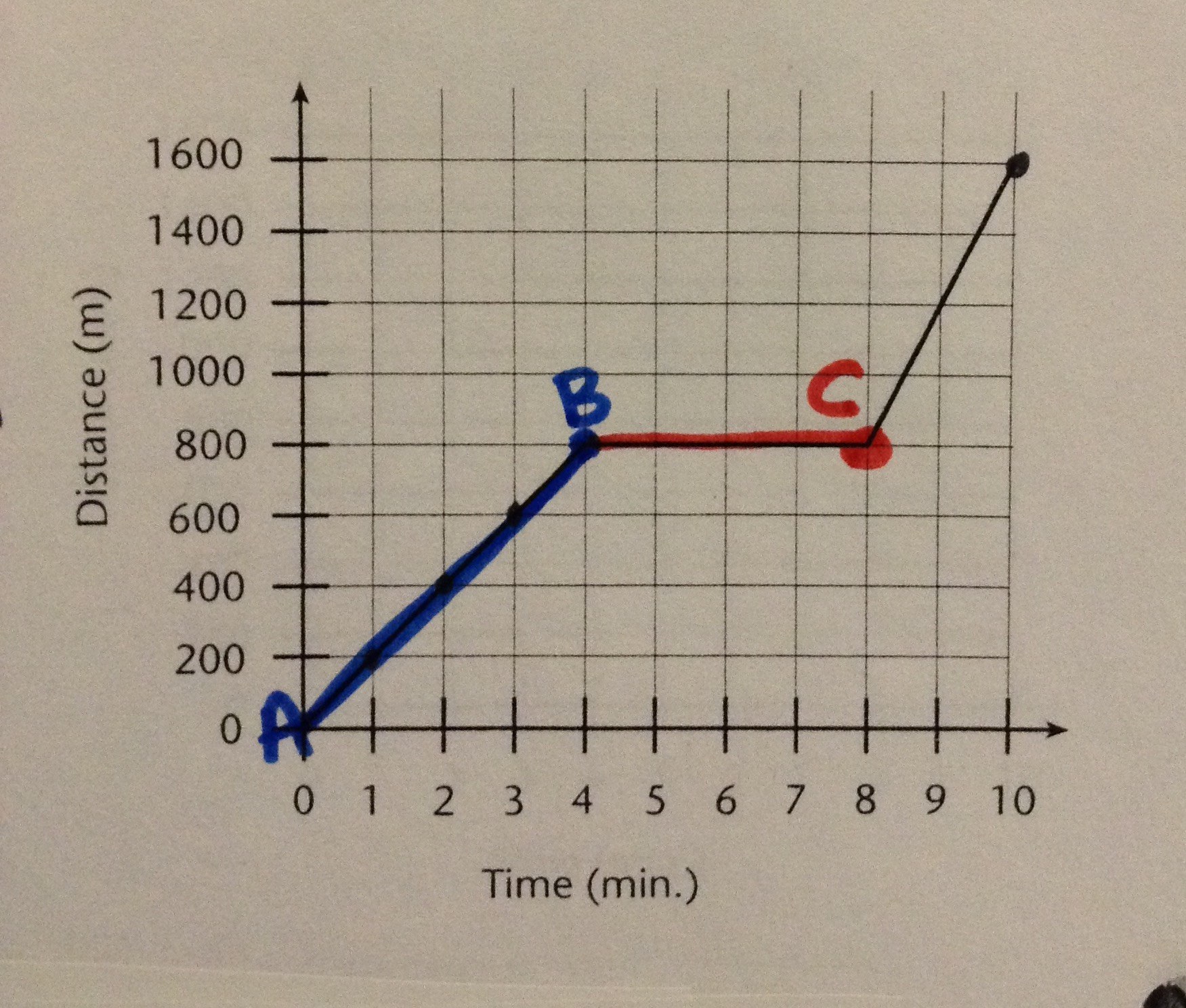
What was occurring from point B to point C?

Categorize the following data:
25 m/s northwest
Distance
Displacement
Speed
Velocity
A bicycle travels a total of 75 meters in 15 seconds. What is its speed?
5 m/s
5 mi/hr
0.2 m/s
0.2 mi/hr
Gravity
the force of attraction between all objects in the universe; a natural phenomenon by which all things with mass are brought toward one another
the speed of an object in a specific direction; the displacement of an object over a certain amount of time
the rate at which velocity changes; the change in velocity over a certain amount of time; includes both changes in speed and changes in direction
a relationship between variables where an increase in one quantity leads to a corresponding increase in the other; makes a straight line on a graph

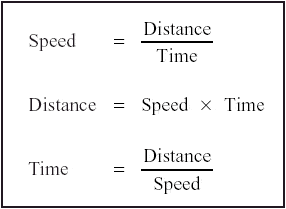
A change in speed and/or direction...
Speed
Velocity
Acceleration
Force

Is this a speed or acceleration graph?
speed
acceleration

a push or a pull that can change the motion of an object
Force
Velocity
Exert
Mass


a force between an object and the surface it is moving over
Friction
Kinetic Energy
Collision
Speed
Free Fall
when an object is accelerating towards Earth’s (or another planet’s) surface and the only force acting on the object is the gravitational force
a push or a pull; any action that has the ability to cause a change in motion
the force of attraction between all objects in the universe; a natural phenomenon by which all things with mass are brought toward one another
the act of an object being thrown in the air
What is the formula to calculate velocity/speed?
v = d/t
s = d x t
t = d/v
v = v/t
A freely falling object starts from rest. After falling for 6 seconds, it will have a speed of about:
6m/s
36m/s
60m/s
12m/s
Which of the following is a unit of time?
Seconds
Kilometres
Metres
m/s
Newtons 1st Law
an object in motion stays in motion at a constant speed in a straight line and an object at rest stays at rest unless acted upon by an unbalanced force
the acceleration of an object depends on the mass of the object and amount of force applied
whenever one object exerts a force on a second object, the second object exerts an equal and opposite force on the first
Newtons 2nd Law
whenever one object exerts a force on a second object, the second object exerts an equal and opposite force on the first
the acceleration of an object depends on the mass of the object and amount of force applied
an object in motion stays in motion at a constant speed in a straight line and an object at rest stays at rest unless acted upon by an unbalanced force
Newtons 3rd law
the acceleration of an object depends on the mass of the object and amount of force applied
whenever one object exerts a force on a second object, the second object exerts an equal and opposite force on the first
an object in motion stays in motion at a constant speed in a straight line and an object at rest stays at rest unless acted upon by an unbalanced force
The acceleration of an object depends on both the mass of the object and the force acting on it.
Newton's First Law
Newton's Second Law
Newton's Third Law
An object in motion will stay in motion and an object at rest will stay at rest unless acted upon by an outside force. Which law does this describe
2nd law
1st law
3rd law
What object has the MOST inertia?


If the net force (Fnet) is 0, _____
the forces are balanced.
All of these are correct!
the object maintains its same speed and direction.
the object maintains its velocity.
the object does not speed up, slow down, or turn.
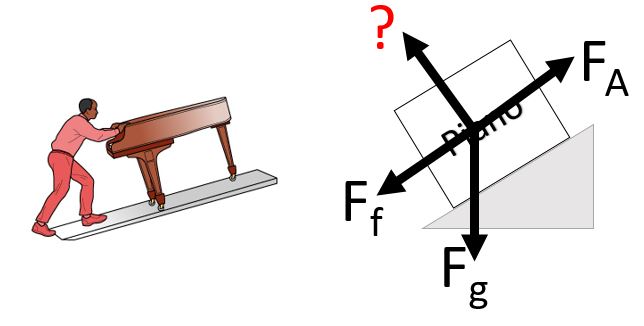
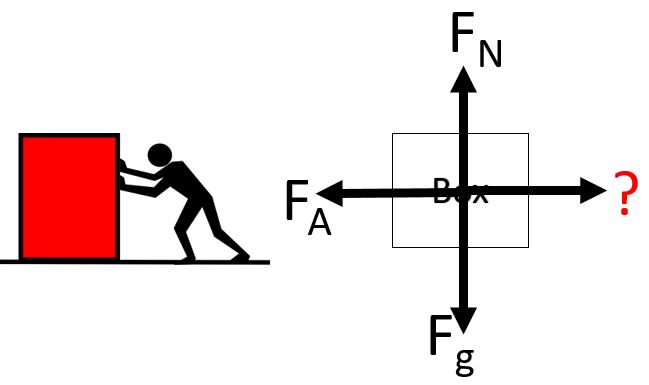

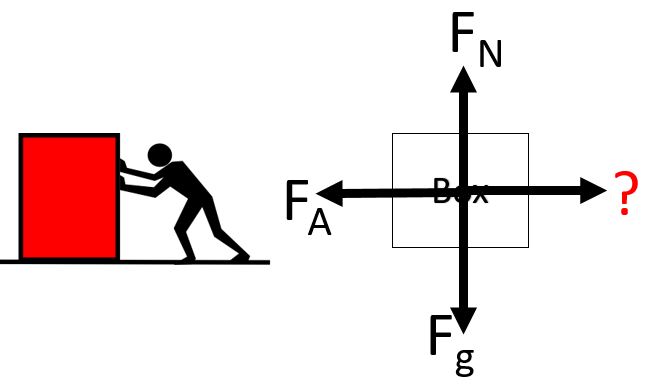
Besides gravity, what other type of force is present here?
Applied Force
Normal Force
Air Resistance
Tension
What is more than likely always going to be a force present on a free body diagram?
Normal Force
Gravity
Friction
Applied Force

A person stands on a scale in an elevator. If the elevator accelerates upward, what happens to what the scale reads (i.e. the normal force)?
It increases.
It stays the same.
It decreases.
It changes to a negative value.

A box is being pushed up a ramp at constant velocity into a moving truck. Which of these statements correctly describes the free-body diagram for the box?
The weight is pulling straight down, and the normal force is directed straight up. Since it is moving at a constant velocity, there are no forces acting along the ramp.
The weight is pulling straight down, and the normal force is directed perpendicular to the surface. Since it is moving at a constant velocity, there are no forces acting along the ramp.
The weight is pulling straight down, and the normal force is directed straight up. Since it is moving at a constant velocity, there are equal and opposite forces acting along the ramp.
The weight is pulling straight down, and the normal force is directed perpendicular to the surface. Since it is moving at a constant velocity, there are equal and opposite forces acting along the ramp.
Which of the following are examples of Types of Friction?
Static
Balanced
Sliding
Unbalanced
Rolling
You fly to Venus and research if life can exist there. Your mass is 100 kg and have a weight of 90 N what is the Gravitational strength of Venus?
900 N/kg
9 N/kg
0.9 N/kg
9000 N/ kg
Forces acting on an object in different directions that are NOT equal are known as?
Net Force
Balanced Forces
Unbalanced Forces
Friction
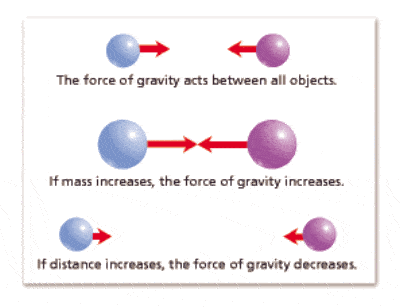
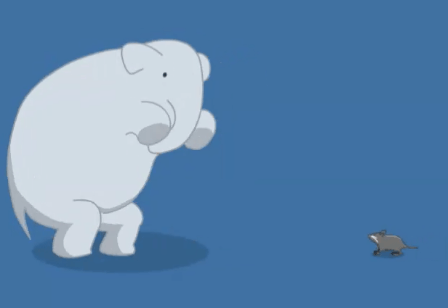
What is the formula for weight?
(a)

What is the name of this tool?
spring balance / force meter
scale
measuring cylinder
thermometer
Newton's First Law: An object in motion will stay in motion and an object at rest will stay at (a) unless acted on by an outside force.

The upward force acting on the parachute is called ______________.
Force of friction
Force of gravity
Normal force
Air resistance
A Newton is a unit of ______.
Acceleration
Inertia
Force
Velocity
The sum of all forces acting on an object and direction is called the
Balanced Force
Net Force
Unbalanced Force
Contact Force

The sky diver is currently accelerating due to gravity, what is the other force at work?
Normal Force
Friction
Air Resistance
Applied Force
Inertia refers to ___________
(select all the apply)
the tendency of moving objects to remain in motion
the force which keeps moving objects in motion with a constant velocity
the force that keeps stationary objects at rest
the tendency of stationary objects to remain at rest
"The rate of change of velocity" is the definition of what?
Acceleration
Momentum
Inertia
Speed
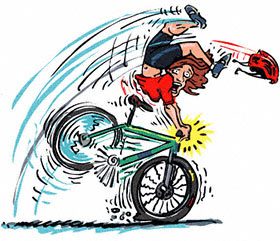
When Sean was riding his bike and braked suddenly, he kept moving forward due to
gravity
friction
inertia
weight

A force that opposes motion between any surfaces that are in contact.
gravity
acceleration
friction
direction

What does the strength of the force depend on? Check the answers that apply.
The types of surfaces
The weather
How hard the surfaces push together
motion

Which boy A or B will slide down faster
A
B
A and B
Which two factors does speed depend on?
distance and direction
direction and time
distance and time
distance, time and direction


A runner races in the 100 meter dash. It takes her 10 seconds to finish. What is her average speed?
10 m/s
1000 m/s
100 seconds
10 seconds
_____________ friction acts on objects that are not moving.
sliding
rolling
static
fluid

Which type of friction is shown in the picture?
rolling
fluid
static
sliding
You use _____ friction when you leave marks on paper with a pencil “lead.”
static friction.
sliding friction.
rolling friction.

Air resistance is a type of fluid friction.
True
False

Which type of friction is shown in the picture?
rolling
static
fluid
sliding
Fluid friction happens with objects moving through ______________ or ___________________.
gases or liquids
solids or liquids
gases or solids

When you put on the brakes of your bike, the wheels stop turning. Then friction between the wheels and the road slows your bike to a stop. Which type of friction is this?
static friction.
sliding friction.
rolling friction.
all of the above
A bow & arrow is streched
Kinetic
Gravitational Potential
Elastic Potential
Thermal
Electrical
According to the law of conservation of energy, energy can change _____, but it cannot be created or destroyed under ordinary conditions.
form
size
speed
time
A 50 kg ball rolls north down the street at 5 m/s. Calculate the momentum of the ball. (Hint: Use the momentum formula!)
250 kg•m/s north
10 kg•m/s north
45 kg•m/s north
55 kg•m/s north

What does Delta mean?
the sum of
change in
average
does not exist

Which of the following contains chemical potential energy?
food
fuel
rubber band

At which point(s) does the pendulum bob have the greatest speed?
(a)
The mathematical formula to find the amount of kinetic energy is....
mass x speed2 x 21
mass x speed ÷ 2
2 x mass x speed2
2 x mass x speed
Which of the following persons has done the most work?
A boy weighing 50 kg climbing 1 m up a tree.
A weight lifter holding onto a 500 N weight.
A man dropping a 100 N rock 10 m into a pit.
A man lifting a 10 N book up onto a table 1 m high.

Where would this tossed baseball have the least amount of kinetic energy?
point W
point X
point y
point z


What are two things required for work to be done? Check all that apply.
Force
Distance
Constant Speed
Momentum

What is the GPE at point F?
500,000 J
250,000 J
300,000 J
0 J

Which point has the most kinetic energy?
Ball G
Ball F
Ball E
Ball D
Ball A

What kind of energy does an object possess when it's resting on top of the hill?
Potential Energy
Chemical Energy
Kinetic Energy
All of the above

Energy is:
The ability to do work
The amount of power
Movement
Causing things to happen

What energy transformations are occurring in this picture?
gravitational potential --> sound --> thermal
chemical potential --> mechanical --> elastic potential --> gravitational
electrical --> sound --> thermal --> radiant
chemical potential --> radiant --> thermal
Which forms of energy can be categorized as potential energy? Select all that apply.
Chemical Energy
Nuclear Energy
Gravitational Energy
Kinetic Energy
Thermal Energy
To overcome an opposing force, or to change the motion of an object, is the definition of . . .
Work
Energy
Chemical Reaction
Combustion
Temperature
Potential energy contained in the nuclei (aka centers) of atoms is known as . . .
Chemical Energy
Nuclear Energy
Thermal Energy
Elastic Energy
Electromagnetic Energy

This picture shows _____ energy.
mechanical
chemical
thermal
electrical
electromagnetic
This term refers to the amount of matter contained in an object.
Joules
Matter
Energy
Mass


How much gravitational potential energy does a 100kg (220lb.) skydiver have if they jump from 4000 meters?
3920000 J
294 J
180000 J
1225 J

What happens if you rub a balloon on a wool sweater?
The friction causes some of the protons to rub off the sweater and onto the balloon.
The friction causes some of the electrons to rub off the balloon and onto the sweater.
The friction causes some of the electrons to rub off of the sweater and onto the balloon.
The friction causes some of the protons to rub off of the balloon and onto the sweater.

What is the net charge of the balloon in the picture?
-1
+1
-2
0

What is the net charge of the balloon?
-1
+1
0
+2
A student is provided with four objects-
A) A plastic comb B) A copper rod C) A rubber balloon D) A woollen cloth
The object, that can be easily charged by rubbing, is the object labelled as-
A
B
C
D
Dry wood is an example of...
an insulator
a conductor
An object that loses electrons has a
Positive Charge
Neutral Charge
Negative Charge
A material through which electrons (and therefore charge) move easily.
insulator
conductor
static electricity
ions
Charging by induction happens when...
two neutral objects are rubbed together.
a charged object is touched to another object.
a charged object is brought near another object, causing its charges to rearrange.
To charge an electroscope positively, by conduction, you use a ____________ rod and a ground wire.
positively charged
negatively charged
neutral
positively or negatively charged
Static discharge is when _____ jump from a charged object to one that is differently charaged
Protons
Neutrons
Electrons
If two charges repel each other, the two charges must be?
Positive & Positive
Positive & Neutral
Negative & Negative
Positive and Negative
The accumulation of excess electric charge on an object is called
Static Electricity
Electric Discharge
Resistance
Current Electricity
Charging by ____ occurs when electrons are transferred from one object to another by DIRECT contact.
conduction
induction
friction
Which of the following is an example of a CONDUCTOR
A metal tube
A cotton shirt
A rubber tire
A wooden bucket
A thermos reduces which types of energy transfer?
conduction
convection
radiation
none of these

Bubble wrap is this type of material:
Conductor
Insulator
The only heat transfer that can occur through empty space. It travels through electromagnetic waves.
Conduction
Convection
Radiation
Conductors are made of what kind of material?
metals
plastics
rubber
cloth

A material that prevents heat or an electric current from flowing
Conductor
Insulator
Magnetism
Electric Circuit

In the model, what does the lightbulb represent?
electricity
current
voltage
resistance
What voltage is needed to cause a 50 A current flow through a 10 Ω resistor?
15V
500V
500 kV
0.2V

What is the formula for voltage?
V = (I x R) / 2
V = I / R
V = R / I
V = I x R

Based on the graph, which of the following would be true regarding the relationship of voltage and current?
As voltage increases, current decreases.
Voltage will not affect current.
As voltage decreases, current increases.
As voltage increases, current also increases.

Based on the table, which of the following is true regarding the relationship of voltage, resistance and current?
If resistance remains constant while voltage increases, current will decrease.
If current remains constant while resistance increases, voltage will increase.
If voltage remains constant while resistance increases, current will decrease.
If resistance remains constant while current is increasing, voltage will decrease.
Which of the following are examples of conductors?
Copper
Plastic
Glass
Aluminum foil
Pencil lead


Is the symbol for _____.
Light bulb
Resistor
Battery
Switch

What would best complete this circuit in order for the bulb to work?
A wire
A switch
A battery
A light bulb
A parallel circuit
has only one path for current to travel
has more than one path for current to travel
does not allow electricity to travel through it
has magnets that cause electric current

In a parallel circuit if one of the light bulbs burns out the rest _________.
stop the flow of electricity
will go out
can still light up

Which of the following represents the potential difference between two points, measured in volts?
voltage
current
electricity
resistance

Simple, Series, or Parallel?
Simple
Series Circuit
Parallel Circuit

If an electric ceramic brush has a current of 0.3 amps and a voltage of 120 volts, what is the resistance?
18Ω
36Ω
200Ω
400Ω
What is the formula for voltage?
V = (I x R) / 2
V = I / R
V = R / I
V = I x R
What do all waves transfer?
(a)

Mrs. Yarbrough produced many sound waves while playing the piano. Which diagram shows the sound wave that she produced with the LONGEST wavelength?


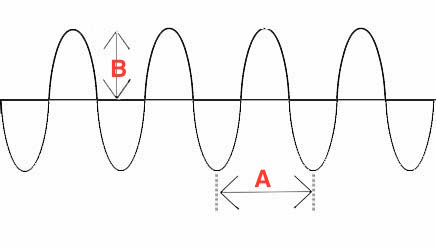

The measurement of highest point (or lowest point) in a wave when compared to resting position.
medium
transverse wave
crest
amplitude
The amount of waves that pass by a given point is referred to as the wave's...
amplitude
energy
frequency
wavelength
The distance between waves is referred to as the wave's...
amplitude
energy
frequency
wavelength
The place where a longitudinal wave is close together.
Crest
Trough
Compression
Rarefaction
This is the example of dispersion of light
sky looks bright orange in the evening
shadow
Pool seems shallower
rainbow

Which image represents a longitudinal wave?
A
B
Waves have mass.
True
False

What type of interference is represented in this diagram?
Constructive
Destructive
The low point of a transverse wave.
Crest
Trough
Compression
Rarefaction
Which is NOT true about longitudinal waves?
A sound wave is an example of this type of wave.
Particles transmitting this wave will have parallel motion to the wave.
They require a medium to travel through (don't travel in space).
A light wave is an example of this type of wave.

What is the wavelength of the wave?
1 cm
2 cm
4 cm
6 cm
8 cm

The car below emits sound waves, represented by red circles, that are heard by an observer. Based on the pattern of sound waves, what is the direction and speed of the car?
toward the observer, faster than the speed of sound
toward the observer, slower than the speed of sound
away from the observer, faster than the speed of sound
away from the observer, slower than the speed of sound
Sound waves require a __________ to travel through.
medium
person
transverse
Slinky
a wave that appears to stay in one place and does not seem to move through a medium
Standing wave
Sound wave
resonance
decibel
What type of interference is represented in this diagram?
Constructive
Destructive

the interaction among two or more waves in which displacements combine to produce a wave with a smaller displacement
Doppler effect
Constructive interference
Destructive interference
Sonar

The four diagrams represent electromagnetic waves. Which wave transmits the MOST energy?
A
B
C
D
Which electromagnetic wave has the lowest energy?
gamma rays
infrared radiation
radio waves
visible light
Which electromagnetic wave has the highest frequency?
gamma rays
infrared radiation
radio waves
visible light
The distance between two tops of waves or the two bottoms of waves.
frequency
wavelength
longitudinal wave
amplitude
trough


The material through which a wave travels
wave
medium
energy
none of these

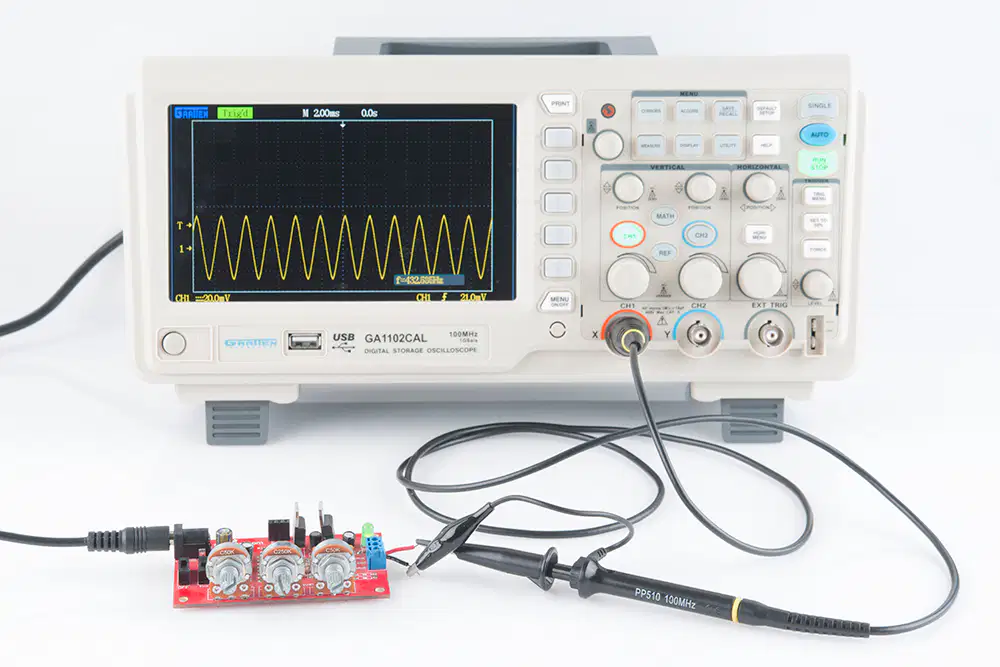
What is an oscilloscope
An electronic test instrument that displays and analyzes electrical signals
A device for measuring the frequency of sound waves
An instrument for measuring the intensity of light
A tool for detecting and measuring radio waves
What is resonance?
A phenomenon in which an object or system vibrates at its natural frequency when subjected to an external force at the same frequency
The process of canceling out sound waves by producing an opposite wave
The transfer of energy between two objects due to their close proximity
The ability of an object to absorb energy from its surroundings and store it
What is reflection?
The bouncing back of light, sound, or heat waves when they hit a surface that does not absorb them
The bending of light as it passes through a transparent medium with a different refractive index
The process of absorbing and re-emitting light by a substance
The transmission of light through a medium without being scattered or absorbed
What is refraction?
The bending of light as it passes through different media with different refractive indices.
The reflection of light off a surface.
The absorption of light by a material.
The scattering of light in all directions.
What is diffraction?
The bending of light waves around obstacles or through small openings
The reflection of light waves off a surface
The splitting of white light into its component colors
The interference of light waves resulting in bright and dark patterns
What is superposition?
The principle that states that the total wave function of a system is the sum of the individual wave functions of its components.
The process of a particle occupying multiple positions simultaneously.
The phenomenon of light behaving as both a wave and a particle.
The ability of a quantum system to exist in multiple states at once until measured.

