wayground logo

Free Printable Worksheets

Font size

S
M
L
XL
Worksheets

Animal

Total questions: 79

Worksheet time: 20hrs 45mins

Name
Class
Date
1.

What does it mean to CAMOUFLAGE?

a)

when a weak animal copies a stronger animal to warn of predators

b)

when an animal is able to change colors to survive in an enviornment

c)

when an animal hibernates during the winter.

2.

What is HIBERNATION?

a)

when a weak animal copies stronger animal to warn off predators.

b)

when an animal hides in the cold winter and sleeps until the spring

c)

when a larger animal eats its prey

3.

Which is NOT a physical adaptation?

a)

a bear hibernating in the winter

b)

a bird with a sharp beak

c)

a fish with scales on its body

4.

Why would a bunnies fur be brown in the summer and white in the winter?

a)

The rabbit likes to change fur color

b)

The bunny learned it from his parents

c)

The changing of fur color help the bunny blend in with it's surroundings.

5.

Birds flying south 800 miles to find food and to escape cold winters is an example of

a)

Hibernating

b)

Migrating

c)

Camouflage

6.

A green snake blends in so predators can NOT find it. This is an example of?

a)

Hibernation

b)

Mimicry

c)

Migration

d)

Camouflauge

7.

What is Migration?

a)

When animals eat what they want

b)

When animals travel from one place to another to eat or get away from the cold weather.

c)

When animals are taught how to do something.

8.
What does adaptation mean? 
a)
It's what helps a living thing grow and survive.
b)
a biome that gets very little rain
c)
a trait that it inherits from its parents
d)
an area that is covered mostly by water
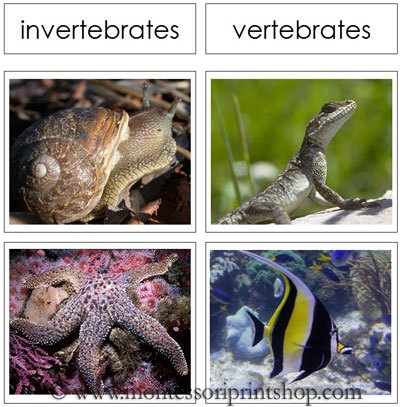
9.

This animal is vertebrate or invertebrate?

a)

Vertebrate

b)

invertebrate

10.

This animal is vertebrate or invertebrate?

a)

Vertebrate

b)

Invertebrate

11.

This animal is vertebrate or invertebrate?

a)

Invertebrate

b)

Vertebrate

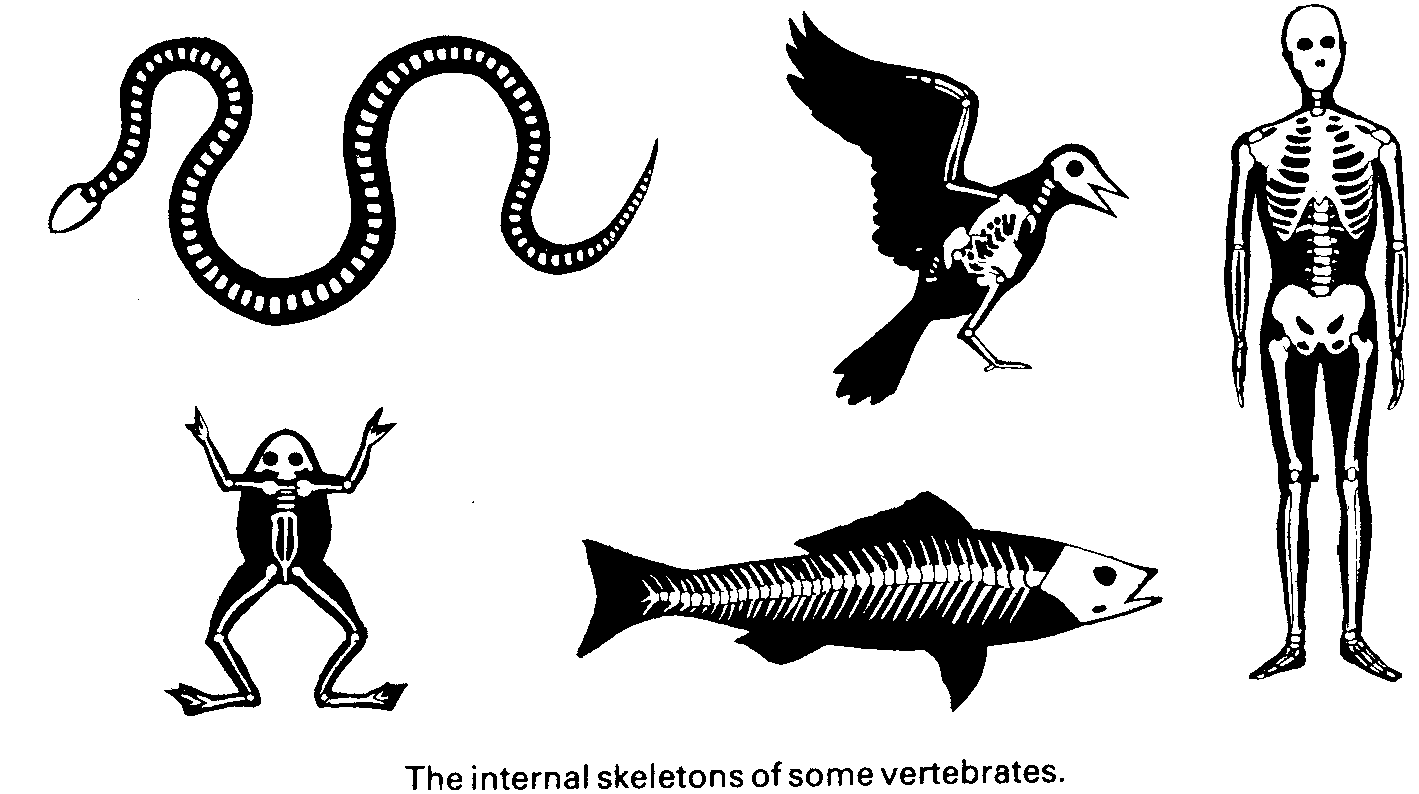
12.
All vertebrates have a ___________.
a)
last name
b)
tail
c)
backbone
d)
neck
13.
What is the major difference between vertebrates and invertebrates?
a)
Vertebrates are always smaller than invertebrates.
b)
Invertebrates always live in the water.
c)
Vertebrates have a backbone but invertebrates do not.
d)
Vertebrates and invertebrates are the same.
14.
How do adaptations help animals?
a)
To escape animals
b)
to hunt for food
c)
to survive in their habitats
d)
All of these are correct
15.
Why do animals use camouflage?
a)
To look pretty
b)
To stay safe
c)
To play Hide and Go Seek
d)
To eat food
16.

What is a behavioral adaptation?

a)

Something an animal does to survive

b)

How an animal looks

c)

A structure that an animal has

d)

A bear's thick fur

17.

What is a structural adaptation?

a)

Something an animal does to survive

b)

The physical features of an organism that help it survive

c)

A woodchuck hibernating in winter

d)

A function an animal has

18.

Arthropods are warm blooded.

a)

True

b)

False

19.

Birds legs are covered in scales.

a)

True

b)

False

20.

Arthropods are __________.

a)

Vertebrates

b)

Invertebrates

21.

Adult mammals leave their young the day after they are born.

a)

True

b)

False

22.

Which group of fish is an example of cartilaginous fish?

a)

rays, lampreys, and goldfish

b)

rays, skates, and sunfish

c)

lampreys, sharks, and goldfish

d)

sharks, rays, and skates

23.

Mammals have a skeleton inside of their bodies.

a)

True

b)

False

24.

Reptiles are ___________ blooded.

a)

warm

b)

cold

25.

Which animal groups have lungs?

a)

reptiles, birds, and fish

b)

reptiles, mammals, and birds

c)

reptiles, fish, and amphibians

26.

Amphibians take in oxygen with their lungs and through their skin.

a)

True

b)

False

27.

How can a cold blooded animal cool its body temperature?

a)

Seek shade, mud, or water

b)

Lay in the sun

c)

Eat a taco

d)

Sit next to another animal

28.

Reptiles mostly live in ___________ environments.

a)

warm

b)

cold

29.

Fish breathe with ____________.

a)

Lungs

b)

Gills

30.

Arthropods have an exoskeleton, which is ________________.

a)

a hard skeleton on the outside of their body.

b)

a hard skeleton on the inside of their body.

c)

a soft skeleton on the inside and outside of their body.

31.

Which animal has the largest eyes of any land mammal?

a)

elephant

b)

horse

c)

hippo

d)

whale

32.

Which animal's teeth never stop growing?

a)

Capybara

b)

Cougar

c)

Beaver

d)

Whale

33.

Which animal is the only known mammal to smell underwater?

a)

Sharks

b)

Star nosed mole

c)

Sea otter

d)

Chinese water deer

34.

There are no land predators for this animal.

a)

Bluebird

b)

Field Mouse

c)

Emperor penguin

d)

Seal

35.

Choose all the animals that are bears.

a)

Polar

b)

Grizzly

c)

Koala

d)

Brown

36.

Which animal will sink in quicksand?

a)

Donkey

b)

Mule

37.

Talk about having a thick skin! A pig's skin is thickest on it's...

a)

belly

b)

back

c)

legs

d)

sides

38.

Like fingerprints, this animal's spots are unique.

a)

Dalmatian

b)

Cow

c)

Horse

39.

What makes a flamingo pink?

a)

They're born that way.

b)

The water they drink.

c)

The shrimp they eat.

40.

What was the first domesticated bird?

a)

Parrot

b)

Canary

c)

Chicken

41.

Giraffe's live in the wild on this continent only...

a)

Asia

b)

South America

c)

Africa

42.

What is a group of wolves called?

a)

pack

b)

herd

c)

litter

43.

Where is a shrimp's heart?

a)

tail

b)

stomach

c)

head

44.

How many toes does a cat have on each back paw?

a)

4

b)

5

c)

3

45.

Why do frogs close their eyes when they swallow?

a)

It taste's so good!

b)

That's just how their bodies work.

c)

To help them swallow.

46.

The color of an owl's eyes determine when it hunts it's prey.

a)

True

b)

False

47.

Choose all the animals that mate for life.

a)

Seahorse

b)

Snake

c)

Penguin

d)

Goose

e)

Dog

48.

All living things are made of?

a)

things

b)

plants

c)

cells

d)

stuff

49.
What type of animal spends its entire life under water, has fins, and breathes using gills
a)
amphibian
b)
fish
c)
bird
d)
reptile
50.
What type of animal has dry scaly skin and lays its eggs on land?
a)
fish
b)
amphibian
c)
reptile
d)
mammal
51.
What is the only type of animal that has feathers?
a)
bird
b)
mammal
c)
amphibian
d)
reptiles
52.
What type of animal has fur and feeds its young with milk?
a)
birds
b)
reptiles
c)
amphibians
d)
mammals
53.
What type of animal spends part of its life in water and part on land and lays its eggs in water?
a)
amphibians
b)
reptiles
c)
birds
d)
fish
54.
Which type of animal goes through a metamorphosis (body change)? 
a)
bird
b)
mammal
c)
reptile
d)
amphibian
55.
What classification of animals do humans belong to?
a)
fish
b)
mammals
c)
reptiles
d)
amphibians
56.
What classification of animals are  vertebrae (have a backbone)?
a)
birds only
b)
reptiles only
c)
reptiles and birds but not mammals and fish
d)
mammals, fish, reptiles, amphibians, and birds
57.
Which animal is warm blooded?
a)
reptiles
b)
fish
c)
mammals 
d)
amphibians
58.
Cold blooded animals
a)
Make their own heat
b)
Are the temperature of their surroundings
c)
Have blue blood
d)
Are a type of plant
59.

Animals with a backbone are called

a)

vertebrates

b)

invertebrates

c)

fish

d)

reptiles

60.

animals without a backbone are called

a)

vertebrates

b)

invertebrates

c)

mammals

d)

fish

61.

Fish take in ____________ to breathe under water.

a)

water

b)

carbon dioxide

c)

oxygen

62.
Scientists classify animals by their...
a)
Color
b)
Size
c)
Characteristics
d)
Sound
63.
How are vertebrates and invertebrates alike?
a)
They fly
b)
They have backbones
c)
They don't have backbones
d)
They reproduce
64.

Which animals are NOT classified as vertebrates?

a)

birds

b)

reptiles

c)

arthropods

d)

mammals

65.

Which statement about pigs and bats is TRUE?

a)

Pigs and bats feed their young milk,.

b)

Pigs are mammals, but bats are birds.

c)

Pigs are warm blooded, but bats are cold-blooded.

d)

Pigs give live birth, but bats lay eggs.

66.
What animal adaptation is helping this animal increase its chance of survival?
a)
camouflage
b)
mimicry
c)
emitting smells
67.
This zebra's fur pattern helps the zebra to:
a)
hide from predators
b)
attract a mate
c)
obtain food
68.
What do these 2 animals have in common?
a)
they are both warm blooded
b)
they are both cold blooded
c)
they are both amphibians
69.
Which of the following are both invertebrates?
a)
sponges and worms
b)
reptiles and arthropods
c)
fish and mollusks
70.
Which of the following are both vertebrates?
a)
sponges and worms
b)
reptiles and arthropods
c)
fish and amphibians
71.
All mammals
a)
are cold blooded
b)
have hair or fur
c)
hibernate in the winter
72.
All of the animals in the picture are:
a)
echinoderms
b)
arthropods
c)
mollusks
73.
Why do dogs pant?
a)
to cool down
b)
to heat up 
c)
he is hungry
74.
Why do mammals shiver?
a)
to heat up 
b)
to cool down
c)
to hibernate
75.
Has to eat more food to maintain a constant body temperature
a)
echinoderms and mollusks
b)
reptiles and amphibians
c)
mammals and birds
76.
What will happen if you leave a pet snake outside in the snow?
a)
will shiver to stay warm
b)
the body temperature will drop
c)
will eat more to conserve energy
77.
Sleep, hunger and thirst are all:
a)
internal stimuli
b)
external stimuli
c)
external responses
78.
Why do these birds migrate to warmer temperatures in the winter?
a)
to hide form prey
b)
to hibernate during the winter
c)
to find food
79.
Why do these birds have different shaped beaks?
a)
to fight off different predators
b)
to obtain different food
c)
to hide from different prey