wayground logo

Free Printable Worksheets

NEW

Font size

S
M
L
XL
Worksheets

Ecology Quiz

Total questions: 80

Worksheet time: 1hrs 29mins

Name
Class
Date
1.
What term is given by scientists to the living parts of an ecosystem?
a)
Biotic Factors
b)
Abiotic Factors
c)
Community
d)
Population
2.
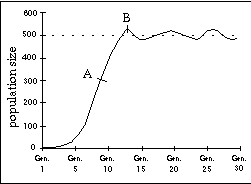
What is the carrying capacity of the following graph?
a)
1000
b)
8000
c)
800
d)
600
3.
What is the carrying capacity of the graph?
a)
around 500
b)
more than 500
c)
less than 500
d)
around 600
4.
Will competition increase/decrease the carrying capacity of an ecosystem for the animal in competition?
a)
Decrease
b)
Increase
5.
When a population grows past the ecosystem's carrying capacity, what happens to the population?
a)
Continues to grow
b)
The population starts to die off to return to carrying capcity
c)
The population will go extinct due to lack of resources
d)
The population grows then finds a new carrying capacity
6.
If a disease destroying barley plants in a field swept through an ecosystem, what would happen to the barley eating bird population in the the field ?
a)
The bird population would stay the same
b)
The bird population would infinitely increase
c)
The bird population would decrease
7.
If the amount of food or resources available increases, the carrying capacity for an animal:
a)
Stays the same
b)
Increases
c)
Decreases
d)
Fluctuates
8.
In a forest ecosystem, which of the following is the best example of a limiting factor for a rabbit population?
a)
Squirrel Population
b)
Sunlight
c)
Grass available
9.
If the carrying capacity of a predator decreases, what will happen to the carrying capacity of the prey?
a)
Will Increase
b)
Will Decrease
c)
Will stay the same
d)
Will fluctuate
10.
The parasitic wasp injects its larvae into caterpillars . Acid rain has destroyed the caterpillar population. What will happen to the wasp population?
a)
Stay the same
b)
Increase
c)
Decrease
11.
The largest number of individuals in a species that an environment can support long term
a)
carrying capacity
b)
emigration
c)
immigration
d)
population density
12.
Any thing or organism that regulates the size of a population is known as __________.
a)
a limiting measure
b)
a limiting factor
c)
carrying capacity
d)
biodiversity
13.
Which of the following would INCREASE the carrying capacity of an ecosystem?
a)
increase in predators
b)
disease
c)
increase in available food
d)
drought
14.
Limiting factors are sometimes helpful because they can keep the population from getting to large.
a)
True
b)
False
15.
Temperature, light, air, water, and soil are all  _____  parts of the environment
a)
alive
b)
biotic 
c)
abiotic
d)
living
16.
The people in this picture represent which level of environmental organization. 
a)
Organisms 
b)
Community
c)
Biosphere
d)
Population 
17.
Abiotic factors are parts of the environment that are...
a)
Nonliving 
b)
Living
c)
Populations
d)
Vegetation
18.
This biome is found around the equator and is home to a large amount of biodiversity.
a)
Deserts
b)
Tropical Rain Forests
c)
Savannas
d)
Chaparral 
19.
What kind of animals live in an estuary?
a)
elephants and birds
b)
cats and dogs
c)
hamsters and rats 
d)
Fish and shell fish
20.
A living or once-living organisms in an ecosystem is a
a)
population
b)
biotic factor
c)
abiotic factor
d)
community
21.
Which of the following is not an abiotic factor?
a)
sun
b)
temperature
c)
soil
d)
grass
22.
A nonliving element in an ecosystem is an 
a)
animal
b)
abiotic factor
c)
biotic factor
d)
organism
23.
The prefix bio means
a)
life
b)
science
c)
story
d)
not
24.
The prefix a- in abiotic means 
a)
life
b)
science
c)
not or without
d)
one
25.
Which of the following is not a biotic factor?
a)
mushroom
b)
air
c)
elephant
d)
coyote
26.
Which of the following is not a biotic factor that limits other organisms in its environment?
a)
Competition
b)
Predator-prey relationships
c)
Temperature
d)
Disease
27.
Lizards and cacti are biotic factors in a desert ecosystem that would rely on which abiotic factors?
a)
insects and sun
b)
water and insects
c)
snakes and temperature
d)
water and soil
28.
Which of the following correctly lists the levels of organization from least complex to most complex?
a)
Community, Biome, Organism, Population, Ecosystem
b)
Biome, Population, Community, Ecosystem, Organism
c)
Organism, Population, Community, Ecosystem, Biome
d)
Ecosystem, Population, Organism, Biome, Community
29.
Which organizational level of the ecosystem does a pack of wolves represent?
a)
Community
b)
Ecosystem
c)
Population
d)
Organism
30.
Which level of organization within an ecosystem includes abiotic and biotic factors?
a)
Organism
b)
Ecosystem
c)
Community
d)
Population
31.
Biodiversity is the variety of ________ in a community.
a)
genes
b)
population
c)
species
d)
community
32.
Where does photosynthesis happen?
a)
cells in the leaf act like nature's solar panels to collect light
b)
chloroplasts are structures (aka organelles) inside the leaf cells where photosynthesis occurs
c)
cholorphyll pigment inside the chloroplast absorbs light
d)
all of these answers are correct descriptions of where photosynthesis occurs
33.
Why is photosynthesis important?
a)
creates oxygen for animals to breath
b)
creates energy for heterotrophs to use
c)
creates food for plants to use
d)
all of these are correct
34.
Which of the following is NOT a level of organization in ecosystems?
a)
community
b)
species
c)
population
d)
organism
35.
The  number of individuals a habitat can sustain with the resources it has available
a)
Carrying capacity
b)
Limiting factors
c)
Resources
d)
Population
36.
A supply of materials in a habitat
a)
Resources
b)
Biomes
c)
Organisms
d)
Groceries
37.
Which of the following is an EXAMPLE of a limiting factor?
a)
Water
b)
Disease
c)
Migration
d)
Thick fur
38.
What is a producer?
a)
Organism that makes its own energy
b)
Organism that breaks down dead organisms
c)
Organism that eats other organisms for food & energy
39.
Grass: Producer, consumer or decomposer?
a)
Producer
b)
Consumer
c)
Decomposer
40.
One individual living thing
a)
Species
b)
Organism
c)
Population
d)
Community
41.
All members of the same species that live in one area.  
a)
Population
b)
Community
c)
Biome
d)
Organism
42.
Different populations that live  together in an area.
a)
Community
b)
Ecosystem
c)
Population
d)
Biosphere
43.
A community of organisms interacting with each other & with their environment 
a)
Ecosystem
b)
Biome
c)
Community
d)
Population
44.
A group of ecosystems with  the same climate and  communities (desert, grassland, rainforest)
a)
Biosphere
b)
Ecosystem
c)
Biome
d)
Community
45.
Which of the following is an example of a biotic factor?
a)
Air
b)
Sunlight
c)
Grass
d)
Sand
46.
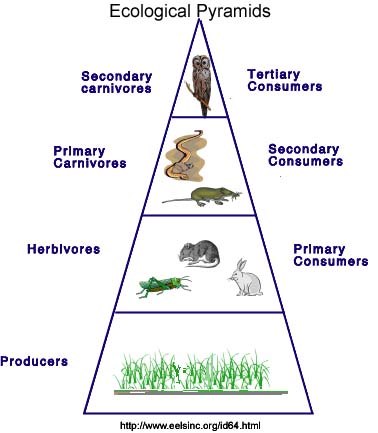
In the energy pyramid here, which organisms have the most energy available?
a)
Producers
b)
Carnivores
c)
Herbivores
d)
Top Predator
47.
In the energy pyramid below, which organism has the least amount of energy available?
a)
Producers
b)
Herbivores
c)
Carnivores
d)
Top Predator
48.
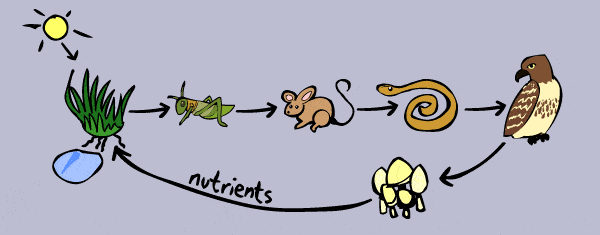
This diagram shows the amount of energy that moves from one feeding level to another in a food web.
a)
Energy Pyramid
b)
Food Web
c)
Ecosystem
d)
Food Chain
49.
In the energy pyramid here, how much of the energy in the producers gets passed to the herbivores?
a)
10%
b)
20%
c)
80%
d)
90%
50.
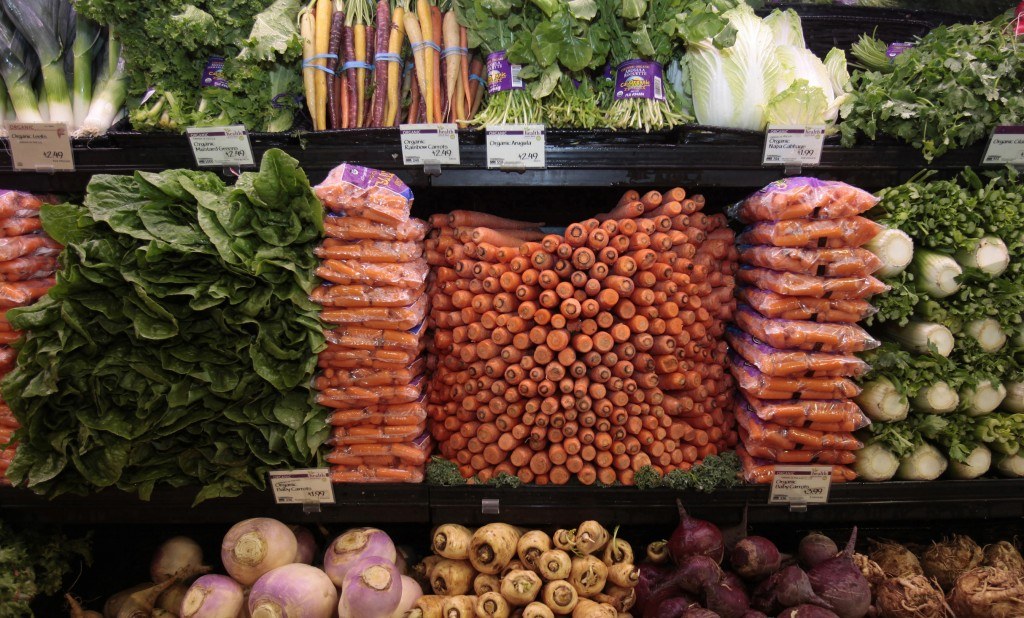
If these organisms were arranged in a food pyramid, which organism would have the least amount of total energy available?
a)
coyote
b)
insect
c)
lizard
d)
shrub
51.
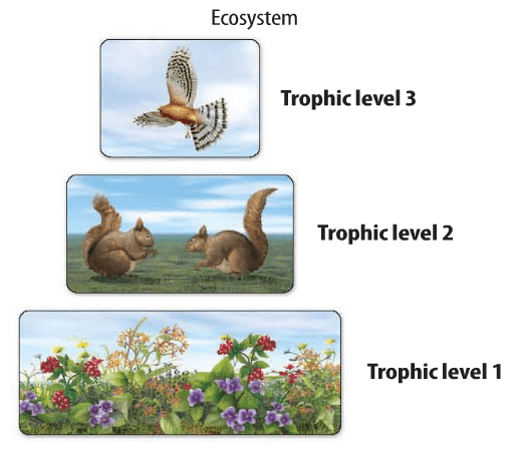
The diagram represents a pyramid of energy in an ecosystem.  Which level would most likely contain members of the plant kingdom?
a)
A
b)
B
c)
C
d)
D
52.
Which organism recieves the least amount of energy from the producer?
a)
Owl
b)
Grasshopper
c)
Lilypad
d)
Mouse
53.
Which level will contain plants?
a)
A
b)
B
c)
C
d)
D
54.
The largest group of organisms found in a food web would be:
a)
Primary Consumers
b)
Producers
c)
Decomposers
d)
Tertiary Consumers
55.
A food pyramid represent the relative amount of energy in trophic levels. Which of the following correctly shows a food pyramid?
a)
A
b)
B
c)
C
d)
D
56.
A third-level consumer has to be which type?
a)
Carnivore.
b)
Decomposer.
c)
Producer.
d)
Herbivore.
57.
A secondary consumer 
a)
eats primary consumers
b)
eats producers
c)
eats plants
58.
Position that an organism occupies based on what it eats
a)
biomass
b)
autotroph
c)
trophic level
d)
carnivore
59.
The direction of the flow of energy in a food web is represented by ___.
a)
Light bulbs
b)
Dotted Lines
c)
Arrows
d)
Bubbles
60.
Which of these is an example of an autotroph?
a)
Sunflower
b)
Krill
c)
Leopard
d)
Hummingbird
61.
Consumer that eats plants
a)
heterotroph
b)
herbivore
c)
producer
d)
community
62.
Energy increases as you move up the food pyramid (from bottom to top).
a)
True 
b)
False
63.
Which of the following is NOT a consumer
a)
grass
b)
dog
c)
shark
d)
fish
64.
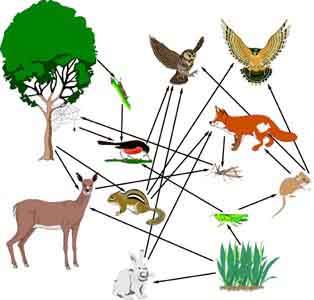
A connection of food chains with many food energy paths in an ecosystem is a ____________
a)
ecosystem
b)
food web
c)
environment
65.
What percentage of energy is passed on to each tropic level?
a)
10%
b)
50%
c)
90%
d)
100%
66.
An organism that needs to eat other organisms to obtain energy is known as a:
a)
Autotroph
b)
Producer
c)
Consumer
d)
Mutualist
67.
All energy on Earth ultimately comes from what source?
a)
Water
b)
Sun
c)
Consumers
d)
Oxygen
68.
What does a food chain represent?
a)
How all living organisms within a habitat are connected.
b)
All of the things that a particular animal eats.
c)
How plants create their own food.
d)
A single path of energy transfer within a habitat.
69.
What does a food web represent?
a)
All connections of energy flow throughout all organisms in a habitat.
b)
The specific ways that mutualism is carried out.
c)
A single pathway or energy flow between organisms. 
d)
How carnivores get their food. 
70.
The arrows in a food chain or web represents what?
a)
They point to the organism that is being eaten.
b)
It shows how sunlight flows within an ecosystem.
c)
They show what direction the energy is flowing between organisms. 
d)
They represent how water is transferred within a habitat.
71.

What is the problem with the lionfish being in the atlantic oceans?

a)

They are making Mr. Kern mad

b)

The other fish think that lion fish are bullies

c)

They are eating to many other fish and causing and inbalance in the ecosytem.

d)

They eat to much

72.

Lionfish are...

a)

plants

b)

A producer

c)

An invasive species

d)

humans

73.

What hapened in florida to lower lionfish population.

a)

Loinfish eating contest

b)

Lionfish catching contest

c)

lionfish wrestling

74.

Lion fish can grow to be...

a)

18 feet long

b)

10,999,999 yards long

c)

bigger than an elephant

d)

18 inces long

75.

Which major Key is John Pennekamp State Park located off of?

a)

Key Largo

b)

Marathon

c)

Islamorada

d)

Key West

76.

Which Key is closer to Cuba than to Miami?

a)

Key Largo

b)

Islamorada

c)

Big Pine

d)

Key West

77.

Which Key is about halfway through the chain of islands known as the Florida Keys?

a)

Key Largo

b)

Islamorada

c)

Marathon

d)

Key West

78.

Which Key is closest to the Tortugas National Park?

a)

Key Largo

b)

Islamorada

c)

Big Pine

d)

Key West

79.

What is the name of the National Park located just north of the Florida Keys?

a)

Everglades National Park

b)

Biscayne State Park

c)

Florida Bay National Park

d)

John Pennekamp State Park

80.

This was the name of Dusty Muleman's casino boat in Flush

a)

Conch Queen

b)

Coral Princess

c)

Coral Queen

d)

Conch Princess