
 Worksheets
LS - 1a Unit Test STUDY GUIDE - Intro to Life Science
Total questions: 75
Worksheet time: 19hrs 45mins
The study of plants fits in which branch of science?
Earth Science
Life Science
Physical Science
Studying the difference between a rock and a mineral would fall under which branch of science?
Earth Science
Life Science
How many main branches of Science are there?
3
1
9
6
Which branch of Science studies animals?
Botany
Geology
Zoology
Chemistry
What is the study of plants?
(a)
Which science includes the study of stars?
meteorology
geology
astronomy
oceanography
Things that you can touch are
intangible objects.
tangible objects.
Match the following: Biology, Earth Science, Physical Science
Biology
life
Earth Science
geology
Physical Science
chemistry
What is science?
study of nature
study of all questions
random guesses
using opinions to guide decisions
Most scientists are ____.
organized
disorganized
from the United States
studying everything
Match the following: science, renewable resource, nonrenewable resource
based on fact, not opinion or preferences
science
fossil fuels
nonrenewable resource
solar
renewable resource
What are the typical science classes for Washburn Junior High and High School Students?
7th grade
Life science
8th grade
Earth science
9th grade
Physical Science
10th grade
Biology
11th & 12th grade
Chemistry, Anatomy & Physiology, Horticulture, Physics
(a) is the study of life.
**This answer is one word and begins with the letter "B".
Jill is testing the effect of caffeine on the breathing rate of betta fish. She sets up two fish tanks with identical conditions. She places 10 betta fish in each tank. She adds caffeine to one tank and nothing to the other tank. She then counts the operculum plate movement per minute for the fish in each tank.
What scientific question is the above experiment attempting to answer?
What effect does caffeine have on betta fish?
Will caffeine affect the heart rate of betta fish?
Does caffeine affect the breathing rate of betta fish?
Is the amount of caffeine affected by the betta fish?
John believes the water plant Elodea will produce more oxygen when placed closer to a light source. He places four Elodea plants of the same height at varying distances from a lamp: 1 meter, 2 meters, 3 meters, and 4 meters. The plants are in identical aquariums with a beaker placed over each plant. The oxygen content inside the beaker is measured after each plant sits for 8 hours.
Which question best describes John's experiment?
Does the amount of oxygen affect the amount of light needed by the plant?
Does a plant produce more oxygen when it is placed closer to a light source?
How does the type of plant affect the oxygen produced when placed by a lamp?
Will the light affect how much the Elodea plant grows when placed in the light?
Does food coloring affect how big a bubble is when blown?
scientific question
not scientific question
How does talking to a plant affect a plant’s growth height?
scientific question
not scientific question
Which planet is the most interesting one to study?
scientific question
not scientific question
Do flying saucers and aliens in other universes really exist?
scientific question
not scientific question
Do larger seeds grow taller flowers?
testable
not testable
Check all that apply!
Which of these sentence starters are used for scientific questions?
Who are the best ...?
How does _____ affect _______?
When is the nicest...?
What would happen if...?
What are the 3 major branches of science?
Physical, Earth, (a)
List the missing one.
Which term describes one who is not aware of or not concerned about what is happening around him/her?
Horrified
Organized
Humble
Oblivious
Are all questions scientific?
yes
no
Which is an important process used to study the natural world?
scientific inquiry
parliamentary procedure
assembly line
tik tok

Choose 2 inferences about this picture.
Today is the dog's birthday.
There is a candle on the cake.
The dog has a tag on the collar.
The dog will eat the cake.


Scenario: You are shopping at Coles and then you hear glass breaking, someone yelling and you smell pickle juice. Which of these is/are inferences?
You smell pickle juice

Which of these statements is an inference about this picture?

Which of the following statements is an inference about the picture

What is an objective observation for this picture?
The man is scared
The man is going to get eaten
There is a man in a kayak
The man is paddling fast

Which statement is a subjective observation about this picture?
The van is tan.
The van ran into KFC.
The driver was hungry.
An ambulance may be on the way.
Can be influenced by personal experiences and background knowledge
Subjective Observation
Objective Observation
When you use your 5 senses to gather information, you are making a/an
Observation
Inference
Argument
Opinion
a way of doing something
model
empirical
method
modify
to repeat, to copy, or to duplicate
experiment
observable
empirical
replicate
to change or amend
modify
model
method
replicate
7th Graders were asked to do an experiment on which type of food their three pet turtles like best. The turtles were fed at 8am and at 3pm everyday. First they fed each turtle the same type of food for a week, and measured hw much food was left over the next day. Then they fed each turtle a different type of food ofr a week and would measure how much food was left over the next day.
What question are 7th graders trying to answer?
How to increase the size of turtles
What type of food turtles like best
What time of day do turtles like to eat at
How many different types of turtle food exist

Which of these is an observation?
The dog is 4 years old.
The dog is wearing a hat.

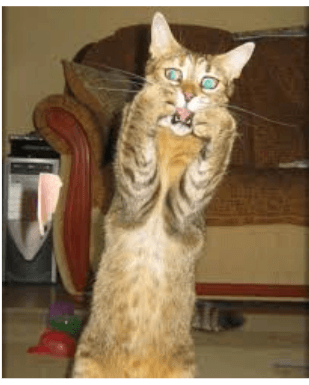
Observation or Inference: The cat is scared.
Observation
Inference
How many steps are in the scientific method?
2
8
6
10
What is the first step in the scientific method?
Form a hypothesis
Make an observation and ask a question about it
Research your topic
Record and analyze data
Which answer choice has the correct order of the scientific method?
1. Hypothesis
2. Research
3. Experiment
4. Observation/Question
4.Analyze Data
5. Conclusion
1.Observation/Question
2. Research
3. Hypothesis
4. Experiment
5. Analyze Data
6. Conclusion
1. Observation/Question
2. Hypothesis
3. Research
4. Analyze Data
5. Experiment
6. Conclusion
1. Research
2. Observation/Question
3. Hypothesis
4. Experiment
5. Analyze
6. Conclusion
Which of these is an observation that could be used to form a testable question for a scientific investigation?
My dog seems sad.
Dogs have four legs and a tail.
White mice make good pets.
Dogs think about people all the time.
A series of steps designed to help you solve problems and answer questions
SCIENTIFIC METHOD
MANIPULATIVE SKILLS
SCIENCE SKILLS
A student planted the same number of pea seeds in four pots with the same type of soil in each. He put the pots in a sunny window and gave each one different amounts of water every 3 days. This experiment is probably testing whether ___.
soil is needed for peas to grow
the amount of water given affects how fast peas grow
sunlight is needed for the peas to grow

Select the observation.
This cat just took a bath.
This cat doesn’t like baths.
This cat is wet and wrapped in a towel.
This cat will probably get a treat for taking a bath.
What two words should be in your hypothesis?
I think
If ...then...
It will
No idea
When is a hypothesis written?
before you decide on a question
after the experiment
before the experiment
after the conclusion
Choose the correctly written hypothesis for "What is the effect of putting Pam Cooking Spray on the bottom of a sled?"
I think the sled will slide faster.
If I put Pam Cooking Spray on the bottom of my sled, then I will win the race."
If I put Pam Cooking Spray on the bottom of my sled, then I will slide faster.
Science deals with the _______ world only.
Natural
Supernatural
Both
Every hypothesis needs to be written in a way that it can:
Be tested using experiments to collect evidence.
Be proven wrong.
Provide yes or no answers.
And ____
provide measurable results
be correct
answer all questions
become theory
New information about the natural world is a result of ______.
guessing things
copying work from other people
opinions mostly
scientific investigations
After drawing a conclusion, what do scientists do?
communicate results
lock up the results in a vault
make up better results
ignore data that doesn't agree with the hypothesis
Science studies natural phenomena. This is anything that is testable/measurable, like forces, energy, & matter.
Do phenomena have to be phenomenal?
yes
no
Some organisms have just one cell and some are made of many cells. Is this natural phenomenon?
yes
no
The idea that some places are better, more beautiful, and more interesting than other places. Is this natural phenomenon?
yes
no
Phenomena that can be observed at one scale may NOT be ______ at another.
observable
science
phenomena
What is the relative size of an object?
object
scale
relative size
excellent


What type of diagram is shown to the right of the arrow?
scaled-up diagram
scaled-down diagram

What type of diagram is shown to the right of the arrow?
scaled-up diagram
scaled-down diagram
When researching existing knowledge about an observation and question, scientists focus on finding out what is already known about _________.
everything
the observation and question
what google says
opinions of everyone
What TWO subjects fall under the branch: life science?
physics
engineering
biology
anatomy and physiology
(Select ALL that Apply) Which subjects fall under the branch: physical science?
physics
botany
chemistry
zoology
The work of scientists generally begins with
analyzing results
drawing conclusions
asking questions
testing a hypothesis

