
 Worksheets
Semester 1 2025 Hardy Biology
Total questions: 75
Worksheet time: 2hrs 26mins



Robert Hooke
Matthias Schleiden

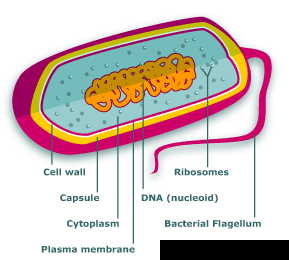
A cell without a true nucleus
Prokaryotic
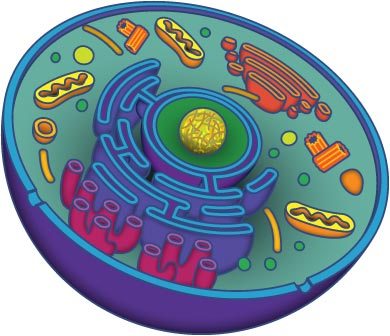
Eukaryotic
A cell that has a true nucleus
Prokaryotic
Eukaryotic


What is biotechnology mainly about?
Painting pictures with new colors
Changing organisms to meet human needs
Building bridges and tall buildings
Biotechnology can help improve products and reduce diseases. Which sentence best explains why this helps people?
It turns deserts into snowy mountains
It makes the oceans deeper and bluer
It can make daily life safer and healthier
Kids in a science club must pick one project that shows biotechnology solving a global problem. Which project is the best choice?
Practicing dances for a school show
Coloring posters with new crayons
Designing crops that grow with less water
Medical (red) biotechnology mainly focuses on human health and creates new medicines to treat and prevent illnesses.
It focuses on human health
It makes sports equipment
It grows crops for food
Agricultural biotechnology is connected with the color?
Red
Green
Orange
Pink
A farmer wants to raise animals for food and use techniques that are kind to nature. Which biotechnology category should the farmer explore?
Agricultural (green) biotechnology
Industrial (white) biotechnology
Medical (red) biotechnology
Marine, or blue, biotechnology focuses on using organisms found in which place?
Desert dunes
City parks
Mountain caves
The sea and oceans
Which is true of NEW biotechnology?
It never affects the environment
Everyone agrees it is perfect
New materials might harm humans
Agricultural (green) biotechnology aims to create more ______ farming solutions.
electronics
enviornmentally friendly
solar power
What is the main goal of medical (red) biotechnology?
To design new sports equipment
To build taller buildings
To create new medicines and treatments
Which field uses biotechnology to discover new medicines from OCEAN life?
Marine biotechnology (Blue)
Agricultural biotechnology (Green)
Industrial biotechnology (White)
Which is a charateristic of living things?
They all have cells
They all breathe air
They all eat
Which of the following is a characteristic of all living things?
They all reproduce
They all eat food
They all need sunshine
Which of the following is a characteristic of all living things?
They all grow and mature
They all need water
They all need food
Which of the following is a characteristic of all living things?
They use energy
They all need water
They all need food
Which of the following is a characteristic of all living things?
They all grow
They all need sunshine
They all need food
What did all livingthings need to survive?
Water, air, food, and shelter
To grow, mature, and sunshine
Cells, energy, and to respond to change
What nutrients need from food?
Carbohydrates, lipids, and proteins
Water, vitamins, and minerals
A producer is a living things that_______________________.
makes its own food
eats other living things
breaks down dead living things into nutrients
A consumer is a living things that_______________________.
makes its own food
eats other living things
breaks down dead living things into nutrients
A decomposer is a living things that_______________________.
makes its own food
eats other living things
breaks down dead living things into nutrients
Mushooms and other fungi are examples of__________________.
producers
consumers
decomposers
Lions and tigers are examples of__________________.
producers
consumers
decomposers
Apple trees and carnations are examples of__________________.
producers
consumers
decomposers
What is an adaptation?
Characteristics of all living things
Changes living things go through to help them survive
The information you collect while doing your experiment is called
conclusions
data
hypotheses
procedures
Something that you keep the same in an experiment is called a(n) _________________________.
variable
control
procedure
conclusion

What is the first step in the scientific method?
Identify the problem
Conclusion
Form a hypothesis
The one thing you CHANGE in an experiment is the
A hypothesis is...
not important when conducting an experiment.
a statement of expectation or prediction that will be tested by research.
should never be use to prove an outcome.
is a made up word.
A series of steps used by scientists to solve a problem or answer a question.
Scientific method
Hypothesis
Experiment
Data collection
The information you collect while doing your experiment is called ___
procedures
data
hypotheses
conclusions
The one thing that a scientist changes in their investigation
Variable
Independent variable
data
Hypothesis
All the things the scientist keeps the same in their experiment.
Control variables
Dependent variable
Data
Hypothesis
Select the question below that is a testable question.
What helps a plant grow best?
Does changing the amount of light a plant gets affect how fast is grows?
How does a plant grow?
What does a plant need?
A testable question should include what two things?
A hypothesis and question
A question and a dependent variable
An independent variable but no dependent variable
An independent variable and a dependent variable

What is the process scientists use when planning an experiment?
Scientific Questioning
Scientific Method
They just guess
Scientific Plan
A hypothesis is a....
educated guess
problem
experiment
lesson

What is the DEPENDENT variable (effect) in this experiment?
"Does eating breakfast improve test scores?"
eating breakfast or not
the grade you got on the test
what time you get up in the morning
how tasty the breakfast is
The variable that is measured. It is the result of the experiment.
Controlled Variable
Dependent Variable
Independent Variable
How many independent variables should you have in an experiment?
two
as many as possible
four
one
A student changes how much water they give to a bean plant. After 4 weeks, they measure how many leaves each plant has. They kept the amount of sunlight and the soil the plants grew in the same.
What is a control variable?
The amount of sunlight.
The amount of water
How many leaves on each plant
How many beans on each plant
A student changes how much water they give to a bean plant. After 4 weeks, they measure how many leaves each plant has. They kept the amount of sunlight and the soil the plants grew in the same.
What is the independent variable?
The amount of sunlight
The amount of water
How many leaves on each plant
How many beans on each plant
Are you ready for the test on Monday?
Yes!!!!!!!!
I am not sure!!
I need to study for the test.
I feel confident!!

