
 Worksheets
Benchmark Review
Total questions: 78
Worksheet time: 1hrs 16mins
Name
Class
Date
1.
As the moon's shape appears to get smaller, we say that the moon is _.
a)
swelling
b)
waxing
c)
waning
d)
disappearing
2.
About how long does it take the moon to make one complete cycle around the earth?
a)
65 days
b)
8 days
c)
365 days
d)
28 days
3.
Which moon phase is when you can't see the moon at all?
a)
Waning crescent
b)
Full moon
c)
Waxing gibbous
d)
New moon
4.
What causes the phase of the Moon to change each night?
a)
The Moon changes its acutal shape throughout the course of the month.
b)
The alignment between the Earth, Moon, and Sun determines the amount of light reflected by the Moon.
c)
The season of the year determines the phase of the Moon.
d)
The closer the Moon is to Earth, the more light the Moon reflects.
5.
Phases of the moon in which the moon appears to be getting larger are referred to as _.
a)
waxing
b)
waning
c)
new
d)
eclipse
6.
Which of the following words describe the phases of the moon?
a)
none, quarter, half, three quarters, full
b)
new, crescent, quarter, gibbous, full
c)
dark, light, half, quarter, blue
d)
first quarter, second quarter, third quarter, fourth quarter
7.

Approximately how much time passes between the new moon and full moon?
a)
one month
b)
two weeks
c)
3 days
d)
24 hours�
8.

When the Earth is between the moon and sun, it is most likely a:
a)
new moon
b)
full moon
c)
waxing crescent
d)
waxing gibbous
9.

What is the formula to calculate speed?
a)
S = t/d
b)
S = d/t
c)
S = d x t
d)
S = t x d
10.

What does this graph represent?
a)
Constant Speed
b)
Acceleration
c)
Deacceleration
d)
Not moving
11.

What is happening at A?
a)
Stationary
b)
Accelerating
c)
Slower steady speed; moving away from the starting position
d)
Steady speed; returning to start position
12.

A runner races in the 100 meter dash. It takes her 10 seconds to finish. What is her average speed?
a)
10 m/s
b)
1000 m/s
c)
100 seconds
d)
10 seconds
13.

Alan travels 100 km in 5hrs. Find his average speed in km/h
a)
5km/hr
b)
10km/hr
c)
50km/hr
d)
20km/hr
14.
It takes 20 N of force to move a box a distance of 10 m. How much work is done on the box in Joules?
a)
200 J
b)
20.0J
c)
100 J
d)
10 J
15.
Two factors that determine work are
a)
size of the force, and distance
b)
size of the force, and type of force
c)
mass, and distance
16.
if you push a cart with a force of 60 N for 2 m... how much work have you done
a)
120 J
b)
30 J
c)
120 N
d)
30 N
17.
You apply a force of 18 N to a dresser and move it 3.0 m. How much work did you do on the dresser?
a)
54 J
b)
6.0 J
c)
21 J
d)
27 J
18.
Ms. McDonald holds a desk perfectly still above her head. If she holds the desk at a height of 0.5 meters above her head, and applis 68 Newtons of force to do so, how much work has she done?
a)
34 Joules
b)
0 Joules
19.
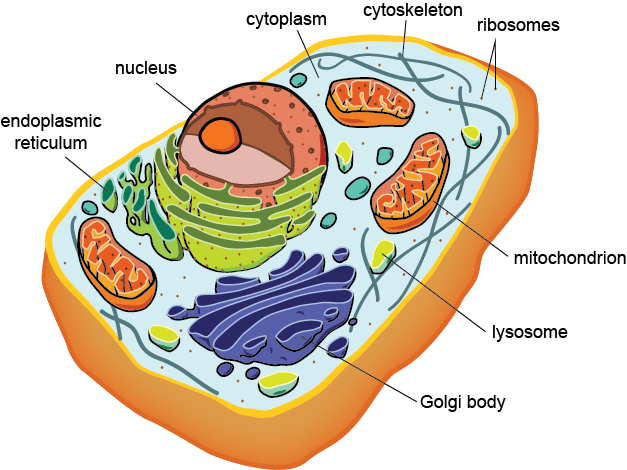
Which of the following statements is not part of the cell theory?
a)
Cells are the basic unit of structure and function in all living things.
b)
All cells are produced from other cells.
c)
Only animal cells are composed of cells.
d)
All living things are composed of cells.
20.

What is one way in which all living things on Earth are alike?
a)
All living things have hair.
b)
All living things are made of cells and come from other cells.
c)
The cells of all living things have chloroplast.
d)
All living things can move.
21.
The ____________ regulates what enters and leaves the cell.
a)
mitochondria
b)
cell membrane
c)
golgi bodies
d)
cytoplasm
22.
The _________ holds the dna for the cell
a)
vacuole
b)
smooth ER
c)
rough ER
d)
nucleus
23.
Jelly-like material that makes up most of the cell
a)
cytoskeleton
b)
cytoplasm
c)
cyclops
d)
cytoliquid
24.
This organelle is stores food, water and waste.
a)
Ribosome
b)
Cytoplasm
c)
Vacuole
d)
Mitochondria
25.
This organelle creates the energy for the cell
a)
mitochondria
b)
cell membrane
c)
ribosome
d)
endoplasmic reticulum
26.

Look at the picture of a ball rolling down a hill into a valley, then rolling up another hill on the other side. Which letter represents the ball with the MOST potential energy?
a)
D
b)
G
c)
A
d)
B
27.

What type of energy is in this picture?
a)
Kinetic
b)
Potential
c)
Chemical
d)
Sound
28.

What kind of energy is represented in the picture?
a)
Thermal
b)
Chemical
c)
Sound
d)
Nuclear
29.

As a baseball flies through the air after being hit, it is in the air and is moving. Which of the following best describes what type of energy it has?
a)
potential energy
b)
kinetic energy
c)
chemical energy
d)
nuclear energy
30.

The difference between kinetic and potential energy is that __________.
a)
objects with potential energy are moving
b)
objects with kinetic energy are moving
c)
objects with potential energy have a lot of heat
d)
there is no difference between the two type of energy.
31.

Which 2 letters have the most kinetic energy
a)
W & Y
b)
X & Z
32.

which point has the most potential energy
a)
G
b)
f
c)
b
d)
a
33.

If a man is pulling a wagon up a hill, describe what is occurring in terms of energy.
a)
Decreasing Potential energy, Increasing Kinetic energy
b)
Increasing Potential energy, Decreasing Kinetic energy
c)
Both potential and kinetic are increasing
d)
Both potential and kinetic are decreasing
34.
All of the mass of an atom comes from what location?
a)
nucleus
b)
electron cloud
35.
The two subatomic particles that make up the mass of the atom are the _____ and the _____.
a)
proton, neutron
b)
proton, electron
c)
neutron, electron
d)
electron, energy levels
36.

What is the subatomic particle for box B?
a)
proton
b)
neutron
c)
electron
37.
What is the subatomic particle for box A?
a)
proton
b)
neutron
c)
electron
38.
How many protons are in Boron (B) ?
a)
3
b)
5
c)
10
d)
11
39.
How many electrons are in Manganese (Mn) ?
a)
12
b)
25
c)
55
d)
30
40.
How many neutrons are in Phosphorus (P) ?
a)
15
b)
31
c)
16
d)
14
41.
Requires two parents
a)
sexual
b)
asexual
42.
creates genetically different offspring
a)
sexual
b)
asexual
43.
Requires only one parent
a)
sexual
b)
asexual
44.

Which process increases the variability of genetic information?
a)
Mitosis
b)
Meiosis
45.

If two organisms reproduce sexually, then their offspring will exhibit a genetic makeup that is -
a)
identical to only one parent
b)
identical to all of its siblings
c)
a unique combination of traits
d)
the recessive traits of each parent
46.
When a starfish grows a new body off a broken arm, what kind of reproduction is this?
a)
Sexual
b)
Differentiation
c)
Asexual
d)
Specialization
47.
What is velocity?
a)
the quickness of an object
b)
the location of an object
c)
acceleration
d)
speed in a specific direction
48.
F=MA
An object of mass 10 kg is accelerated upward at 2 m/s2. What force is required?
An object of mass 10 kg is accelerated upward at 2 m/s2. What force is required?
a)
20 N
b)
2 N
c)
5 N
d)
0 N
49.
A 20 kg bike accelerates at 10 m/s2. what was the force?
a)
25 Newtons
b)
20 Newtons
c)
200 Newtons
d)
10 Newtons
50.
Organic Compounds are made of these two elements:
a)
helium and carbon
b)
neon and cobalt
c)
hydrogen and carbon
d)
carbon and calcium
51.

Sand Andreas Fault formed at this type of boundary-
a)
Transform Boundary
b)
Convergent Boundary
c)
Divergent Boundary
d)
Hot Spot
52.

Mid Ocean Ridge forms at type of boundary-
a)
Transform Boundary
b)
Convergent Boundary
c)
Divergent Boundary
d)
Hot Spot
53.

Himilayan Mountains
a)
converging continent to continent
b)
earthquake in subduction zone
c)
converging ocean to continent
d)
transformational
54.

This is an example of -
a)
convergent
b)
divergent
c)
transform
55.

This is an example of -
a)
convergent
b)
divergent
c)
transform
56.

This is an example of -
a)
convergent
b)
divergent
c)
transform
57.
Come together
a)
convergent
b)
divergent
c)
transform
58.
What is the goal of the pioneer species in Primary Succession?
a)
To kill the dead materials after a disaster
b)
To rebuild soil
c)
To feed Johnny
d)
To put fresh oxygen into the air
59.
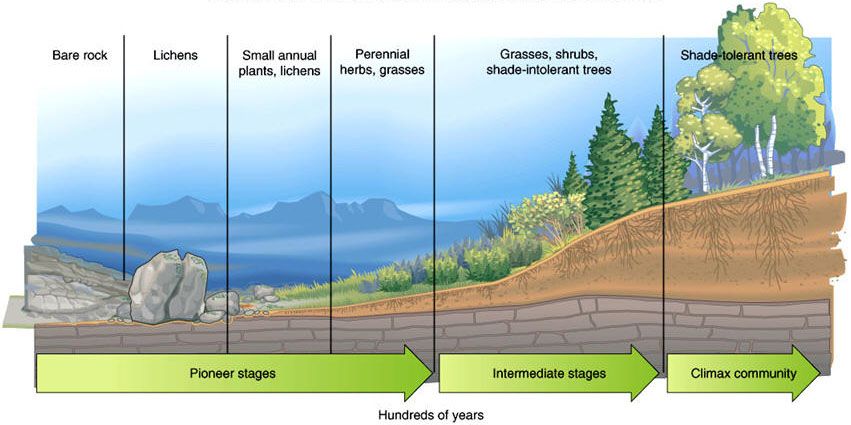
The picture shows what type of succession?
a)
primary
b)
secondary
c)
tertiary
d)
quadanary
60.
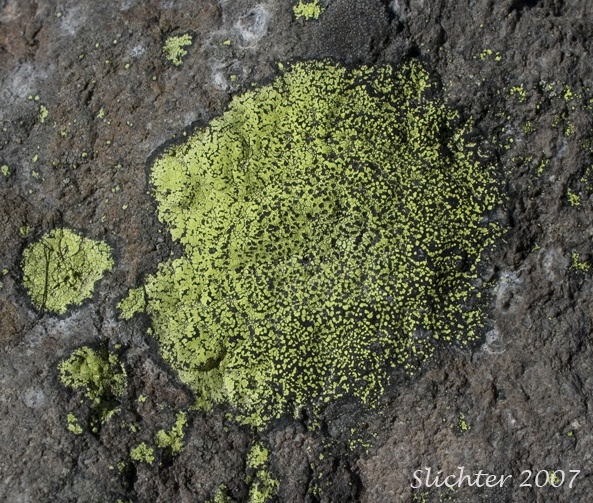
What is the name given to lichen or algae after a primary succession?
a)
pioneer species
b)
volunteer species
c)
founder species
d)
conqueror species
61.
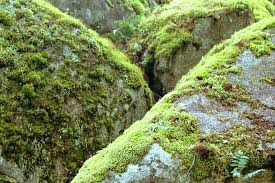
What are examples of pioneer species in a primary succession?
a)
Bushes and Shrubs
b)
Oak trees
c)
Mossess and Lichens
d)
A rose Bush
62.
After a volcanic eruption, lava covers the land. What is the order that plants grow to repopulate the area?
a)
Lichens → Shrubs → Grasses → Trees
b)
Lichens → tree → shrubs→Grasses
c)
Grasses → Lichens → Shrubs → Trees
d)
Lichens → Grasses → Shrubs → Trees
63.
Find the net force: 15 N to the right, and another 15 newtons to the right.
a)
0 N Right
b)
0 N Left
c)
30 N Left
d)
30 N Right
64.
8 N to the left , and 4 N to the right. Find the net force. Is this balanced
a)
12 N Right No
b)
4 N Left No
c)
12 N Right Yes
d)
4 N Left Yes
65.
You and your dad are moving the couch from one side to another. Your dad pushes with a force of 35 N to the right and you push with a force of 25 N right. What is the net force on the couch?
a)
60 N right
b)
10 N left
c)
60 n right
d)
50 N left
66.

What is the net force?
a)
5000 N right
b)
4000 N right
c)
40 N left
d)
4000 N left
67.

Which organism do the owl and the weasel compete for in the food web?
a)
Hawk
b)
Spider
c)
Grasshopper
d)
Shrew
68.

How many carnivores are shown in this food web?
a)
6
b)
4
c)
5
d)
3
69.
What might happen if you remove a primary consumer from the ecosystem?
a)
There would be more food for secondary consumers.
b)
The number of primary consumers would increase.
c)
The number of plants would increase.
d)
The number of secondary consumers would increase.
70.

Which of the following would be the most likely effect, if there were a sudden increase in the cricket population?
a)
There would be a decrease in the small bird population.
b)
There would be a decrease in the grass/flowers population.
c)
There would be a decrease in the mice population.
d)
There would be an increase in the grass/flowers population.
71.

Which of the following best describes the small bird in the food web above?
a)
primary and secondary consumer
b)
secondary and tertiary consumer
c)
primary consumer only
d)
secondary consumer only
72.
A frog eats a fly. The frog and fly are demonstrating ________.
a)
mutualism
b)
competition
c)
predator/prey
d)
parasitism
73.
A tapeworm inside a dog is
a)
competition
b)
predation
c)
commensalism
d)
parasitism
74.
What system breaks food down into energy for the body?
a)
Stomach
b)
Digestive System
c)
Respiratory system
d)
Lungs
75.
What system receives oxygen and gets rid of carbon dioxide?
a)
Heart
b)
Muscular System
c)
Veins
d)
Respiratory System
76.
Which body system transports oxygen and nutrients through out the body?
a)
Muscular System
b)
Nervous System
c)
Digestive System
d)
Circulatory System
77.
What system controls voluntary and involuntary life functions?
a)
Nervous System
b)
Skeletal System
c)
Digestive System
d)
Respiratory System
78.
What is the body system that sends and recieves electrical signals from the brain?
a)
Skeletal System
b)
Nervous System
c)
Muscular System
d)
Digestive System
100 %

