
 Worksheets
Waves
Total questions: 79
Worksheet time: 1hrs 5mins

Which of the following will increase when you increase the frequency of the vibrations that produce a wave.
wavelength
energy
speed
amplitude

Which change does not change the speed of a wave?
changing the density of the material (ex. sending the waves through thin strings or thick strings on a guitar)
changing the temperature of the material (ex sending sound waves through warm air or cold air)
changing the frequency of the vibration in the material (ex plucking a string faster or slower)
changing the friction that opposes the waves motion (ex ocean waves moving through deep water or waves moving through shallow water)

What does a wave carry from place to place?
energy
matter
people
particles

If the wavelength of a wave increased, what would happen to the frequency?
decrease
increase
stay the same

A wave that can travel through matter and empty space is a:
electromagnetic wave
longitudinal wavy
transverse wave
mechanical
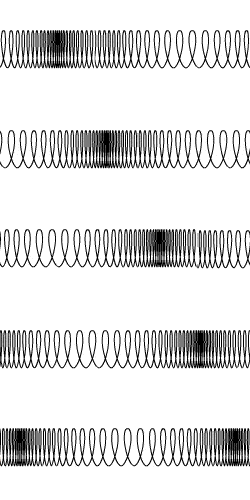
What type of wave is this?
Longitudinal
Transverse
Electromagnetic
x ray

What happens when you increase the amplitude of a sound?
it makes the sound louder
it makes the sound travel faster
it increases the wavelength of the sound
it increases the frequency of the sound
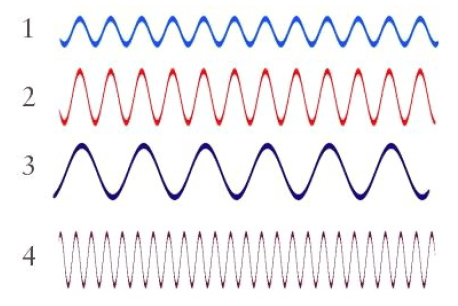
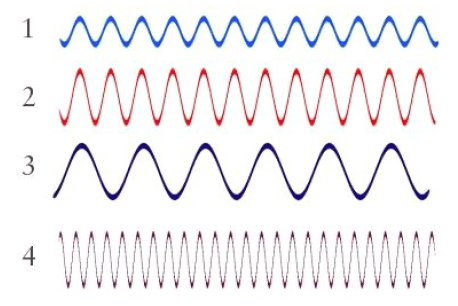
Amplitude is the distance between
the crest and the trough
each wave
the middle point of a wave and the clouds
the crest or trough and the middle point of the wave


In what type of wave does the medium move perpendicular (at a right angle) to the movement of the wave?
Transverse
Longitudinal
Electromagnetic
Radio

What do water waves, seismic waves and sound waves have in common?
They're mechanical waves
They're electromagnetic waves
They're phonetic waves
They're permanent waves

How many antinodes does this standing wave have?
5
6
7
8

Sound waves travel as ________ waves.
Transverse
Longitudinal
Surface
Electromagnetic
What happens to the frequency of a wave when the amplitude is tripled?
the frequency is tripled
the frequency is a third of what it was
amplitude does not affect frequency
Which diagram best represents the shape and direction of a series of wave fronts after they have diffracted through a small opening in a barrier?
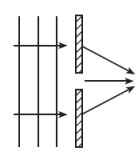
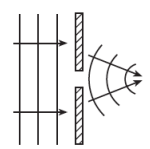
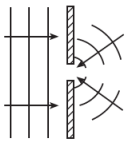
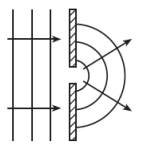

This behavior is caused by
Reflection
Refraction
Interference
Diffraction
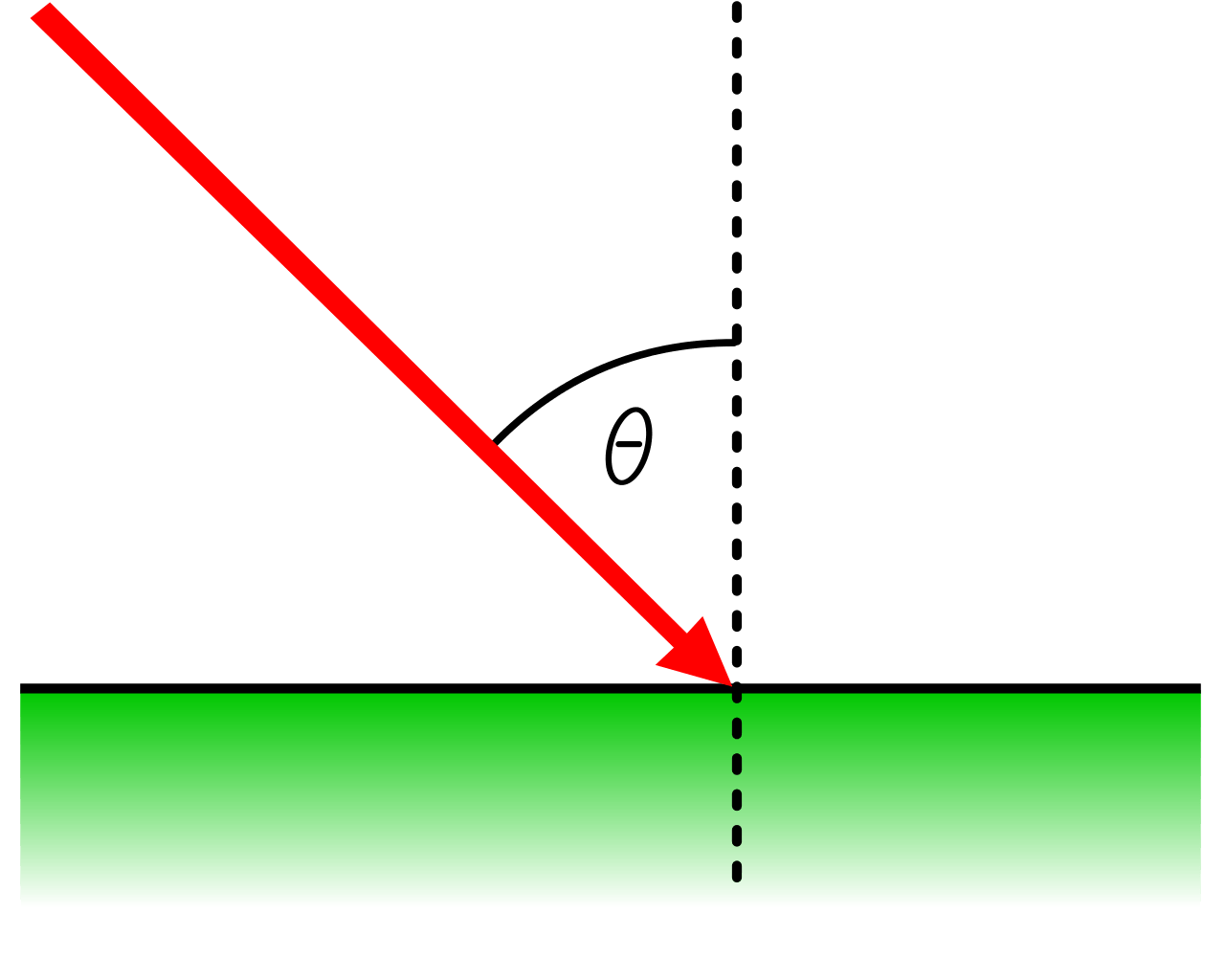

Refraction is when waves__________.
Is bounced by an object or material.
Changes speed which causes bending.
When light speeds up to over 300,000 km/s
If 3 complete wavelengths pass a fixed point in 2 seconds What is the frequency of the wave?
2 Hz
1.5 Hz
3 Hz
6 Hz

Which part of the wave is shown at letter A?
trough
crest
wavelength
amplitude
A wave has frequency of 50 Hz and a wavelength of 10 m. What is the speed of the wave?
500 m/s
50 m/s
5 m/s
0.5 m/s
A wave has frequency of 5 Hz and a speed of 25 m/s. What is the wavelength of the wave?
25 m
125 m
5 m
25 m/s

Sound waves in musical instruments or tubes create standing waves that enhance which type of interference to make louder sounds?
Constructive
Destructive
When 2 waves temporarily interfere with each other then resume their course of movement, which of the following is true?
They take on and keep a new amplitude based on the result of the interference until the end of the movement.
They are not affected by the interference and maintain their original amplitude throughout the movement.
Both waves are always counteracted and cease to exist.
They temporarily take on a new amplitude due to the interference but resume their original amplitude until the end of the movement.

What type of interference is being shown in the picture?
Constructive
Destructive

What type of interference is occurring in the picture?
Constructive
Destructive

All stars are composed of a mixture of elements. When these elements are heated they emit specific amounts of electromagnetic radiation, known as an emission spectrum. Each element emits a unique, identifiable, spectrum.
Using the Bright-line emission spectrum chart below, identify the elements present in this modeled star (found in the line labeled “mixture”).
Lithium and cadmium are in the mixture. Strontium is not in the mixture.
Lithium and strontium are in the mixture. Cadmium is not in the mixture
Cadmium and strontium are in the mixture. Lithium is not in the mixture
All of the shown elements are present in the mixture.
Infrared rays have a higher frequency and shorter wavelength than
Ultraviolet ray.
X-rays.
radar waves.
gamma rays

What color of light has the greatest energy per photon?
Red
Green
Blue
Violet

The photoelectric effect only occurs if the light shining on the metal is:
coherent.
above a minimum intensity.
above a minimum frequency.
above a minimum wavelength.

Is Galaxy A moving
Away
Towards
Stationary

Light Intensity: As one gets further from a light source, the intensity of light....
Increases
Decreases
Gets brighter
Gets more luminous

A student did an investigation on light brightness. She measured the light intensity with a light meter at different distances from a flashlight.
A graph of her data is shown below.
What is the best claim she can make from the data in her investigation?
As the distance from the flash light increases the light intensity increases.
As the distance from the flash light increases the light intensity remains the same.
As the distance from the flash light decreases the light intensity increases.
As the distance from the flash light decreases the light intensity remains the same.
A student observes two stars at night. Star A appears much brighter than star B.
What is the best claim she can make from the evidence she observed?
Star A gives off more light than star B.
Star A is closer than star B.
Star B is closer than star A.
Star A may give off more light or it may be closer.

The picture below shows white light being shined through two glass prisms.
Which of the claims below is best supported by the evidence in the picture?
The glass contains different colors of light.
The glass changes the light into different forms of energy.
White light contains different colors of light.
White light changes into different forms of energy when it bends.

A student drew the model below to help explain what happens when a person sees a red shirt.
Which of the following best explains the model?
Red light is reflected, and the other colors are absorbed.
Red light is absorbed, and the other colors are reflected.
White light is refracted, and red light is absorbed.
White light is absorbed, and red light is refracted.
Waves that do NOT require matter to carry the energy are called
mechanical waves
water waves
sound waves
electromagnetic waves
Waves that require matter to carry the energy are called
mechanical waves
light waves
electromagnetic waves
radio waves
If a wave has more amplitude
it has less energy
it has more energy
energy isn't affected
the sound is quieter
A low pitched sound has
has a high frequency
has a wide wavelength
has a low wavelength
has a low frequency
The number of waves that pass by in 1 second is called
wavelength
frequency
amplitude
the wave's crest

The initial explosion that resulted in the formation and expansion of the universe is called __________________.
the Big Bang
static state
cosmic radiation
dark matter
The element ___________makes up 74% of the detectable universe.
Hydrogen
Helium
Nitrogen
Carbon

What can you tell about this object's motion?
Moving upward.
Moving downward.
Moving to the left.
Moving to the right.


How does light behave as it enters a more dense medium?
continue its path as straight line.
bends toward the normal
bends away from the normal
reflects
The ray of light that strikes a surface is called ________.
incident ray
reflected ray
normal ray
none of the above
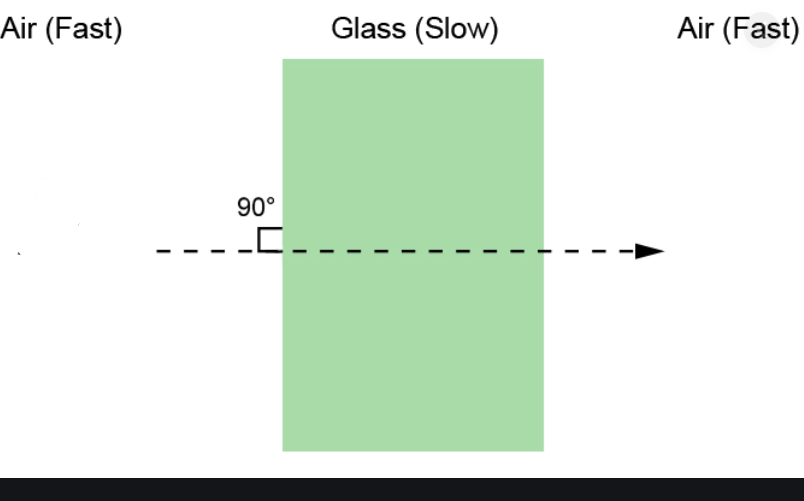
The line 90 degress through the refracting or reflecting surface is called?
Medium
Normal
Incidence
Reflection
How does the sun produce energy?
By burning sulfur
By making carbon from water and oxygen
By fusing hydrogen into helium
By the fission of uranium atoms
With regard to a star's life cycle, all stars begin as what thing?
A nebula
A red giant
A supernova
Ashes
Only high mass stars can have this in their life cycle.
A red giant
A nebula
A white dwarf
A supernova
A low mass star life cycle will end as ___.
a supernova
a white dwarf
a neutron star
a black hole
Which of the following describes the sun's place in its life cycle?
It is a nebula
It is a white dwarf
It is a red giant
It is a yellow main sequence star
Main sequence stars have what in common?
They are primarily fusing hydrogen into helium
They are red in color
They are larger than most other stars
They are the hottest stars

What color are the hottest stars?
yellow
orange
red
blue
Which of the following actions will change the speed that energy is transmitted by a wave?
changing the amplitude of the vibrations
changing the frequency of the vibrations
changing the matter (medium) the waves travel through
changing the wavelength of the waves
Which of the following is an advantage of analog signals
Less prone to interference
Requires less power
Travels Farther
Can carry more detailed information


What type of voltage signal is shown?
Digital
Analog
Neither
Could be both

What is happening in the experiment above?
The light beam is reflected in two directions when it hits the barrier
The light beam is refracted in two directions when it hits the barrier
The light beam is reflected from the dense medium and refracted into the dense medium

