Wayground logo

Free Printable Worksheets

Font size

S
M
L
XL
Worksheets

Mass Society and Democracy. 1870-1914

Total questions: 58

Worksheet time: 29mins

Name
Class
Date
1.
Which of the following was created or used during the Second Industrialization?
a)
Railroads
b)
Iron
c)
Textiles
d)
Electricity
2.
Which of the following was created or used during the Second Industrialization?
a)
Railroads
b)
Iron
c)
Textiles
d)
Electricity
3.
Karl Marx and Frederick Engels wrote which of the following books in 1848?
a)
The Principles of Communism
b)
The Communist Manifesto
c)
Socialism: Utopian and Scientific 
d)
Wage-Labor and Capital
4.
What type of government did Germany have?
a)
A dynastic monarchy under the Romanov Dynasty
b)
A two party, parliamentary system led by the Prime Minister
c)
A representative democracy with two governing bodies of elected officials
d)
Two governing bodies led by the Chancellor, second only to the Kaiser
5.
Which two oceans did the United States gain colonies in from 1887 – 1898?
a)
Indian and Artic Oceans
b)
Pacific and Artic Oceans
c)
Caribbean and Pacific Oceans
d)
Atlantic and Indian Oceans
6.
The Triple Entente was an alliance between what three countries?
a)
Britain, France, and Russia
b)
Poland, Italy, and Serbia
c)
France, Britain, and The Netherlands
d)
Austria-Hungary, Spain, and Russia
7.
Which island was taken by force and later annexed to the United States when American citizens overthrew the local monarchy?
a)
The Philippines
b)
Guam
c)
Puerto Rico
d)
Hawaii
8.
What two social classes made up this Industrialized society in the minds of Karl Marx and Frederich Engels?
a)
The Aristocracy and the Working Classes
b)
The Proletariat and the Bourgeoisie
c)
The Upper Class and the Poor 
d)
The Nobility and the Lower Class 
9.
Austria-Hungary and Serbia almost began a war over what area in Eastern Europe in 1908?
a)
The Arabian Peninsula
b)
The Iberian Peninsula
c)
The Balkan Peninsula
d)
The Indian Peninsula
10.
What is the name given to the time period in U.S. History from 1865 – 1877?
a)
The Civil War
b)
The Reconstruction Era
c)
The Civil War
d)
The Industrialization Era
11.
Which of the following countries make up the Triple Alliance?
a)
Britain, France, and Belgium
b)
Serbia, Russia, and Poland
c)
Portugal, Denmark, and the Ottoman Empire
d)
Germany, Austria-Hungary, and Italy
12.
What was the cause for the Balkan Crisis in 1908 between Serbia and Austria-Hungary?
a)
Austria-Hungary expanded into the peninsula, leading Serbia to prepare for war to take those lands away from Austria-Hungary
b)
Serbia sought to expand their nation to unite the Balkans, but German annexation of those lands led Austria-Hungary to defend Germany against Serbia
c)
Italy sought control of the Balkans forcing their colony, Serbia, to prepare for war against Austria-Hungary
d)
Great Britain demanded for Austria-Hungary to invade Serbia so that its armies could conquer the Balkan Peninsula
13.
Who was the oppressed working class, according to Karl Marx?
a)
bourgeoisie
b)
new elite
c)
proletariat
d)
burghers
14.
What group bettered the working and living conditions of workers?
a)
new elite
b)
trade unions
c)
socialists
d)
bourgeoisie
15.
People who work with their hands are called...
a)
white collar
b)
blue collar
16.
This picture represents which class in industrializing Europe
a)
The Laboring Classes 
b)
Not Apart of Industrializing Europe 
c)
The British Aristocracy
d)
The Middle Classes 
17.
What happened to the middle class women in the late 19th century?
a)
Killed off by the Black Plague 
b)
Entered teaching, clerical and nursing professions.  
c)
Started working in the factories
d)
Stayed home maintaining the household and child-rearing responsibilities. 
18.
The Industrial Revolution began...
a)
United States
b)
Great Britain
c)
France
d)
Germany
19.
Responses to the Industrial Revolution
a)
Socialism, Women's Rights, Communism, Living and Working Conditions
b)
Less Food Supply, Decrease in Population, Decrease in Population
c)
Less Textiles, Less Food, Increase in Disease
d)
Increase in Unemployment, Increase in Wages, Increase in Starvation
20.
The Industrial Revolution spread fast because of
a)
Capitalism
b)
Communism
c)
Individualism
d)
Socialism
21.
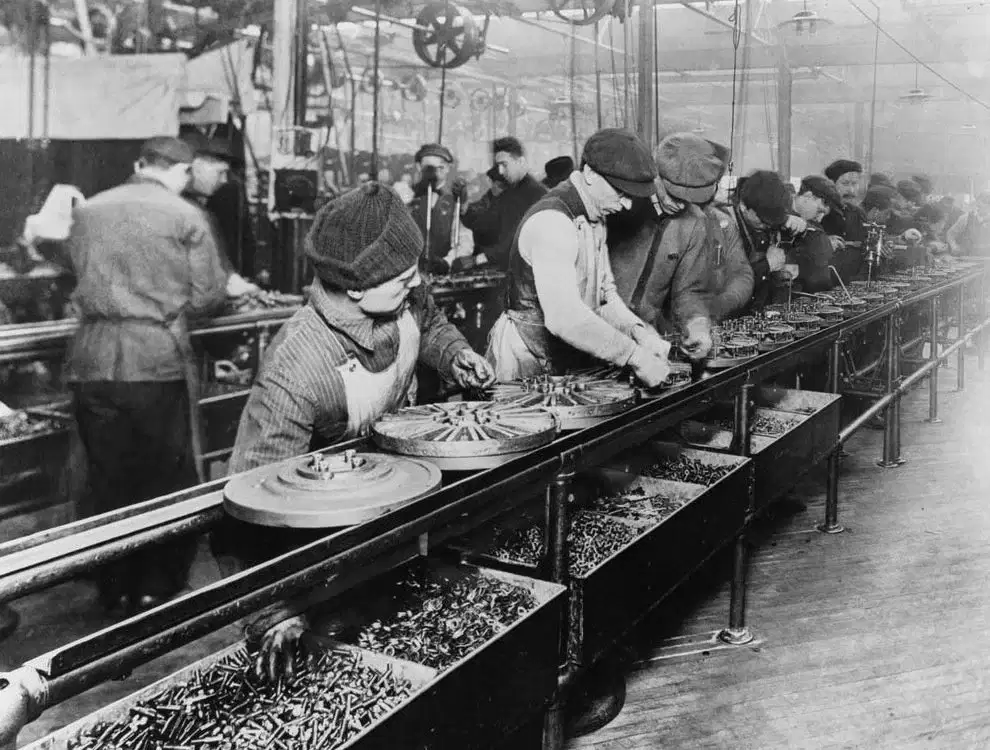
Assembly Line - Conveyor Belts - Mass Produce Cars - Specific Task
a)
Henry Ford
b)
Samuel Slater
c)
Eli Whitney
d)
Karl Marx
22.
A woman who fought for the right to voy=te was known as a _____.
a)
communist
b)
suffragist
c)
socialist
d)
capitalist
23.
Industrialized cities improved life for all people by accomplishing __________
a)
the creation of sports teams
b)
the creation of amusement parks
c)
the creation of dance halls
d)
the creation of homes, health & sanitation systems
24.
Creating things in large quantities
a)
Bessemer Production
b)
internal combustion
c)
assembly line
d)
mass production
25.
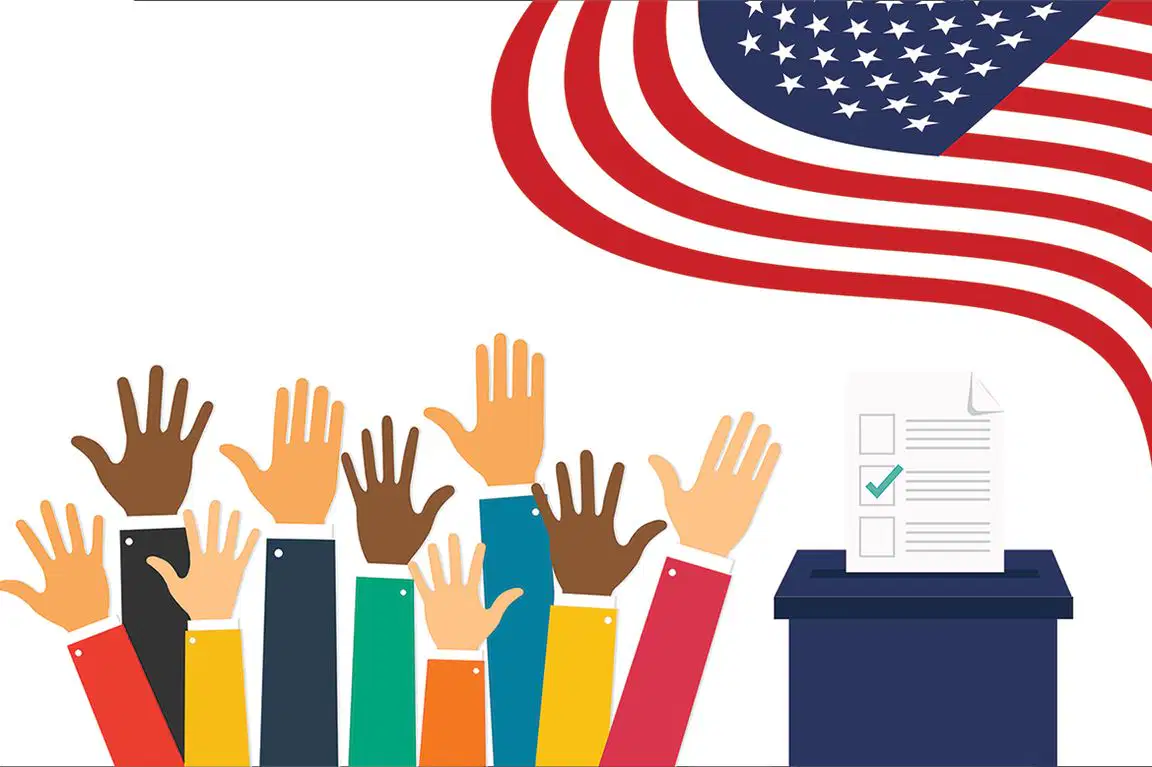
Suffrage means _____.
a)
pain
b)
the right to vote
c)
making money
d)
suffering
26.
Which of the following is a french word for "middle class"?
a)
suffrage
b)
advocate
c)
bourgeoisie
d)
proletariat
27.
_____ created the 1st airplane
a)
Henry Ford
b)
Thomas Edison
c)
Karl Marx
d)
Orville & Wilbur Wright 
28.
Which of the following was a problem associated with urbanization?
a)
substandard housing and poor sanitation
b)
shortages of domestic help
c)
feelings of isolation & loneliness
d)
higher wages
29.

The 2nd Industrial Revolution had a positive effect on mainly the Northern Countries of Europe.

a)

True

b)

False

30.

Which is not a reason that Europeans were able to buy more goods during the 2nd Industrial Revolution.

a)

Wages for workers decreased.

b)

Wages for workers increased.

c)

Assembly line made goods more available and cheaper.

d)

Prices were lower because of improved transportation.

31.

After the discovery of electricity, which is not one of the inventions that soon followed.

a)

Phone

b)

Lightbulb

c)

Electric Cars

d)

Subway Lines

32.

A revisionist Marxist would most likely start a war to end capitalism.

a)

True

b)

False

33.

Karl Marx called the "oppressed" the ......

a)

proletariat

b)

bourgeoisie

c)

peasants

d)

trailer trash

34.

Many people during the 1800's in Europe moved to the cities because of?

a)

Opportunity to own more land.

b)

They could live in a skyscraper.

c)

Less Crowded than the countryside.

d)

Better health care and sanitation.

35.

The industrial revolution created a larger middle class in Europe. The group at the top of this new middle class were called?

a)

Lower-middle class

b)

Working Class

c)

New Elite

36.

In 1870's London, 1 in every 7 members of the working class was employed as a?

a)

Construction Worker

b)

Movie Star

c)

Home Servant

d)

Sewage and sanitation worker

37.

Between 1800 and 1900, the population of London, England rose from 900,000 to _____?

a)

1 million

b)

900, 001

c)

6 million

d)

20 million

38.

Although working conditions for the working were horrible, the average work day for many was reduced to _______ hours a day.

a)

15

b)

10

c)

8

d)

4

39.

For many of the working class families, their children were expected to begin working at the age of ?

a)

4 or 5

b)

9 or 10

c)

12 or 13

d)

17 or 18

40.

Which one of the following European countries was the last to grant women the right to own property?

a)

France

b)

United States

c)

Great Britain

d)

Germany

41.

Why did Italy struggle to unite as a country under a Democracy?

a)

Italy was full of immigrants from foreign lands.

b)

Italy was heavily influenced by what Germany and Austria-Hungary did.

c)

Italy was divided by the industrialized north and the agricultural south.

42.

By 1900, this country became the richest in the world.

a)

Great Britain

b)

Germany

c)

France

d)

United States

43.

This famous German chancellor/prime minister did all he could to prevent Germany from becoming a democracy in the 1800's.

a)

Albert Einstein

b)

Adolph Hitler

c)

Otto Von Bismarck

d)

William II

44.

This country conducted pogroms to massacre Jews within their country.

a)

Germany

b)

Poland

c)

Russia

d)

Israel

45.

This man's invention of the working man's camera, ended the artistic movement called realism.

a)

Pablo Picasso

b)

Wassily Kandinsky

c)

Vincent Van Gogh

d)

George Eastman

46.

Select the picture below that was painted in the abstract art form by Wassily Kandinsky

a)
b)
c)
d)
47.

Which social theory led to a strong belief in Nationalism throughout the world, and unfortunately crimes against different races.

a)

Darwinism

b)

Modernism

c)

Impressionism

d)

Abstract

48.

This man had a theory that a person's past experiences and internal forces could be studied which led to the early stages of Psychology.

a)

Albert Einstein

b)

Sigmund Freud

c)

Marie Curie

d)

Dr. Phil

49.

Who warned that the proletariat would one day overthrow the bourgeoisie, who controlled the capital and means of production

a)

Sigmund Freud

b)

Karl Marx

c)

Charles Darwin

d)

Walt Disney

50.

A new method of mass production, the _________, enabled a product to be put together from start to finish by multiple workers.

a)

bourgeoisie

b)

mass line

c)

cottage industry

d)

assembly line

51.

_________believed that working through reforms was necessary in order to transform society.

a)

Revolutionaries

b)

Revisionists

c)

Richelles

d)

Republicans

52.

Name the 1800s movement to that wanted to overturn traditional values that stood in the way of women's equality.

a)

bourgeoisie

b)

modernism

c)

feminism

d)

zionism

53.

___________ required that a prime minister remain directly responsible to an elected legislative body, not to a king or president.

a)

Ministerial responsibility

b)

Monarchial Duty

c)

Vice Presidential Vices

d)

Proletariat Priorities

54.

The literary and artistic movement called _________ rejected traditional styles, such as realism, that had dominated cultural life since the Renaissance.

a)

boomerism

b)

abstractism

c)

modernism

d)

classical

55.

__________ were organized massacres of Jews that took place in Russia (one of the reasons they moved to Palestine).

a)

zionist

b)

proletariat

c)

feminism

d)

pogroms

56.

Th ideas of natural selection and “survival of the fittest” applied to nations—was used to justify the dominance of Western civilization.

a)

Anti-Social Genetics

b)

Mass Production

c)

Social Darwinism

d)

bourgeoisie

57.

Freud’s method of uncovering a patient’s repressed thoughts and memories.

a)

Duma

b)

suffrage

c)

photosynthesis

d)

psychoanalysis

58.

The right to vote.

a)

suffrage

b)

Duma

c)

modernism

d)

pogroms