Wayground logo

Free Printable Worksheets

Font size

S
M
L
XL
Worksheets

TX History Review Part 2

Total questions: 80

Worksheet time: 51mins

Name
Class
Date
1.

Why did many presidents not want to annex Texas?

a)

They feared it would cause a war with Mexico

b)

They believed it was too expensive

c)

They didn't support the people who were in charge of Texas

2.

Why did James K. Polk want to annex Texas?

a)

To create unity among Americans

b)

To build a trade partnership with Mexico

c)

To protect America from invasion from Mexico

d)

To achieve Manifest Destiny

3.

What were TWO causes of conflict between U.S. and Mexico over the annexation of Texas?

a)

Mexico had wanted to reclaim Texas and this would make it harder for them to do that

b)

Mexico and the U.S. disagreed about the southern border of Texas

c)

Mexico had already annexed Texas before the U.S.

d)

Mexico wanted to accomplish Manifest Destiny before America

4.
Who was the President and leader of the Mexican Army during the battle between Texas?
a)
Sam Houston
b)
William B. Travis
c)
James Fannin
d)
Santa Anna
5.
What was the purpose of William B Travis's letter?
a)
To send reinforcements/help
b)
To announce their victory
c)
To inform americans of their plans
d)
To announce his surrender
6.
Name the battle in which Santa Ana surrendered and officially gave Texas to the Americans?
a)
Battle of Gonzales
b)
Grass Fight
c)
Battle of San Jacinto
d)
Battle of Coleto
7.
What was created to prevent U.S. immigration into Mexico/Texas?
a)
Law of April 10
b)
A wall
c)
Law of April 6
d)
None of the above
8.
Which battle was significant because it was the beginning of the fight for Texas Independence?
a)
Battle of Gonzales
b)
Battle of the Alamo
c)
Goliad Massacre
d)
Battle of San Jacinto
9.
What was the very last battle of the Texas Revolution?
a)
Battle of Coleto Creek
b)
Battle of the Alamo
c)
Battle of San Jacinto
10.

Who was the first president of the Republic of Texas?

a)

Mirabeau B. Lamar

b)

Stephen F. Austin

c)

Sam Houston

d)

Erastus 'Deaf' Smith

11.
Who won the battle of the Alamo?
a)
Texas
b)
United States
c)
Mexico
12.

The Edwards brothers began their own republic because the Mexican Government refused to remove settlers off their claimed land. What cause of the Revolution am I?

a)

Arrest of Stephen F. Austin

b)

Fredonian Rebellion

c)

Law of April 6, 1830

d)

Turtle Bayou Resolutions

13.

I went to tour Texas and reported to the Mexican President that U.S. (Anglo) influence is too strong. My report led to Law of April 6, 1830. What cause of the Revolution am I?

a)

Arrest of Stephen F. Austin

b)

Turtle Bayou Resolutions

c)

Mier y Teran Report

d)

Law of April 6, 1830

14.

I am a law passed by the Mexican government. There was to be no more U.S. Immigration, no more slaves, and more custom duties (taxes) charged on U.S. imports. What cause of the Revolution am I?

a)

Mexican Independence of 1821

b)

Arrest of Stephen F. Austin

c)

Law of April 6, 1830

d)

Mier y Teran Report

15.

In this document Texans pledged their loyalty to Santa Anna and Mexico as he promised to follow the democratic (people have power) Constitution of 1824. What cause of the Revolution am I?

a)

Fredonian Rebellion

b)

Turtle Bayou Resolutions

c)

Arrest of Stephen F. Austin

d)

Texas Declaration of Independence

16.

What was the effect of the arrest of Stephen F. Austin?

a)

He ran for public office.

b)

Austin was now angry with the Mexican government, and it led to the start of the Texas Revolution.

c)

The Mexican government passed the Law of April 6, 1830.

d)

He was so upset he went back to the United States.

17.
I was arrested at Anahuac for protesting taxes, and later  became the commander of the Texas regular army at the Alamo. Who am I?
a)
Lorenzo de Zavala
b)
Santa Anna
c)
William Travis
d)
Stephen F. Austin
18.

1. The Mexican-American war was mostly fought over what territory?

a)

a. Arizona

b)

b. California

c)

c. New Mexico

d)

d. Texas

e)

e. Colorado

19.

5. What peace treaty ended the war?

a)

a. Treaty of Paris

b)

b. Treaty of Mexico

c)

c. Treaty of Texas

d)

d. Treaty of Guadalupe Hidalgo

e)

e. Treaty of Peace

20.

10. What was the land gained by the United States in the Mexican-American War called?

a)

a. Confederation

b)

b. Louisiana Purchase

c)

c. Mexican Cession

d)

d. Southwest Confederacy

e)

e. Desert Territory

21.

Match the following

a)

Nueces River

1.

Mexican border for Texas

b)

Rio Grande River

2.

US border for Texas

c)

Texas, 1846

3.

US state

d)

California, 1821

4.

Mexican territory

e)

President Polk

5.

US president

22.

What treaty with Mexico gave the US much of the southwest US?

a)

Treaty of Guadalupe Hildalgo

b)

Treaty of Paris

c)

Treaty of Ghent

d)
23.
The idea that the government was created by the people of America was--
a)
Popular Sovereignty
b)
Republicansim
c)
Federalism
d)
Self-government
24.
What is the principle of republicanism?
a)
Government should be split into three branches.
b)
The people create the government.
c)
The power of government should be limited.
d)
The interest of Americans are represented by elected officials. 
25.
Who shares power according to the principle of federalism?
a)
Elected officials and appointed officials.
b)
State government and federal government.
c)
Executive and Legislative branches.
d)
People and government.
26.
Which principle split the power of the government into three branches?
a)
Self-government
b)
Republicanism
c)
Separation of Powers
d)
Limited government
27.
Why was the Bill of Rights included in the Constitution?
a)
To protect the idea of federalism.
b)
To make sure that the three branches of government would work properly.
c)
To provide additional guarantees for individual rights. 
28.
The Federal government is also known as?
a)
Limited government
b)
Main Governemnt
c)
National Government
d)
Official government
29.
People voting on their elected representatives is an example of what constitutional principle? 
a)
Republicanism
b)
Popular Sovereignty
30.
When the Congress disagrees with a law President Obama is trying to pass,  they can veto the law. This action is an example of...
a)
limited government
b)
checks and balances
31.
The principle of government that states each branch of government has the ability to limit the power of the other branches
a)
Checks & Balances
b)
Federalism
c)
Popular Soveriegnty
32.
This principle states that the government should be divided into 3 branches: legislative, judicial, and executive.
a)
Separation of Powers
b)
Popular Soveriegnty
c)
Limited Government
33.
This is the idea that everyone, citizens and powerful leaders alike, must obey the law
a)
Limited Government
b)
Republicanism
c)
Individual Rights
34.
What are the 3 Branches of government?
a)
Freedom of Speech, Petition, Religion, Press, Assembly
b)
Legislative, Executive, Judicial
c)
Executive, Republic, School
d)
Cruel and Unusual Punishments
35.
The United States may not restrict your freedom of religion, assembly, press, petition, or speech
a)
Limited Government
b)
Individual Rights
c)
Popular Sovereignty
d)
Republicanism
36.
What do the U.S. Bill of Rights and the Texas Bill of Rights have in common?
a)
both include freedom of speech, religion, and the press
b)
both were written by George C. Childress
c)
both were added nearly 20 years after the constitution was written
d)
both are a listing of rights that were passed with 100% approval
37.
Which explains a change in lifestyle of American Indian tribes after the Civil War?
a)
Many tribes experienced drought and famine.
b)
Many tribes moved westward to find buffalo.
c)
Tribes were removed to reservations.
d)
Tribes farmed after buffalo herds disappeared.
38.
Which explains a change in lifestyle of American Indian tribes after the Civil War?
a)
Many tribes experienced drought and famine.
b)
Many tribes moved westward to find buffalo.
c)
Tribes were removed to reservations.
d)
Tribes farmed after buffalo herds disappeared.
39.
Which nickname was given to the African-American regiments of the Army after the Civil War?
a)
Buffalo Hunters
b)
Red River Rebels
c)
Buffalo Soldiers
d)
Screaming Eagles
40.
How did the end of the Civil War affect the cattle industry?
a)
The demand for beef in the East brought rapid growth.
b)
Farmers had to move west and take land needed for grazing.
c)
Much of the land used for grazing was destroyed in the war.
d)
The loss in the Confederacy brought many cowboys to Texas.
41.
The range wars between farmers and ranchers were conflicts over all of the following EXCEPT
a)
control of water rights
b)
the textiles industry
c)
use of barbed wire
d)
cattle driving
42.
What role did railroads play in Texas’ economy?
a)
Railroads brought very few people to Texas.
b)
The trains were made to transport people only.
c)
The railroads made it harder to transport goods to the East.
d)
A way to transport good to market
43.
What kind of conflicts would take place between Farmers & Ranchers?
a)
Fighting over water rights & cutting barbed wire
b)
Fighting over reservation land
c)
Fighting corrupt Railroad companies
44.

Which of the following is a likely result of the opening of West Texas to railroads and agriculture from the settlement of previous Indian lands?

a)

Increased number of Indian tribes in an area

b)

Increased number of communities and therefore merchants

c)

Decreased number of communities and merchants

d)

No change in the social and economic status of the region

45.

How did the Galveston Hurricane of 1900 alter the economic development of Texas?

a)

The devastation caused a decade-long recession

b)

Oil production never recovered to pre-hurricane levels

c)

Major industries in Galveston moved inland to Houston

d)

Cotton growers were forced out of Texas to find new distributors
46.

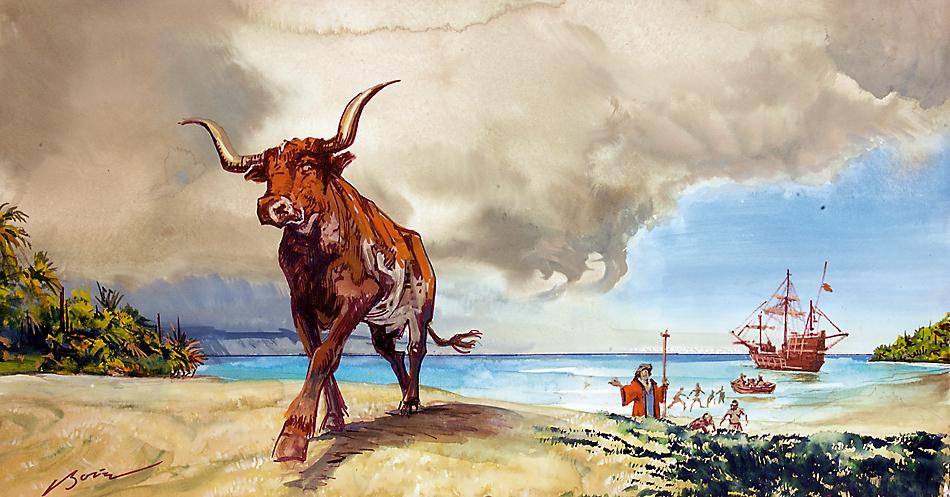
Which country brought cattle to Texas and the rest of the United States?

a)

Spain

b)

England

c)

France

d)

United States

47.

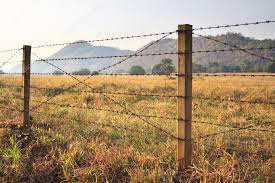
Identify the invention in the image. This invention helped to close off the open range making cattle drives dangerous and contributing to the Open Range War.

a)

Barbed Wire

b)

Wooden Fence

c)

Metal Fence

d)

Wooden Post

48.

MOVING TO THE CITY

a)

RURAL

b)

EXPANSION

c)

URBANIZATION

d)

SETTLEMENT

49.

After the hurricane, how did the people of Galveston try protect themselves from future storm?

a)

by using brick for all of their new building

b)

by raising their home and building a strong seawall

c)

by making new rafts that they could use for quick escapes

d)

by moving the center of the city north so it would be farther from the shore.

50.

The process of economic expansion and contraction that occurs repeatedly; during the boom jobs are plentiful and investors make money; during the bust, people lose their jobs and investors lose money

a)

economic cycle

b)

boomin

c)

boom cycle

d)

Boom and Bust Cycle

51.

The process of moving a herd of cattle from one place to another, usually moved and herded by cowboys on horseback

a)

Cattle drives

b)

cowboy drive

c)

cowboy trail

d)

cow trail

52.

The primary reason the Civil War as fought was over the issue of

a)

tariffs

b)

slavery

c)

states rights

d)

trade with Europe

53.

Southerners were upset when Lincoln was elected president because:

a)

they believed he might one day end slavery, which would threaten their way of life

b)

they wanted a president who would support the abolition of slavery

c)

he wanted northern states to secede from the Union

d)

he had a plan to raise taxes

54.

The name given to army from the North.

a)

Confederates

b)

Americans

c)

Military

d)

Union

55.
The name given to the southern army.
a)
Confederates
b)
Union
c)
Americans
d)
Military
56.
What is the name for people who wanted to put an end to slavery?
a)
Underground Railroaders 
b)
Suffragists
c)
Bushwackers
d)
Abolitionists
57.
To break away from a group
a)
state's rights
b)
slavery
c)
Gettysburg
d)
secede
58.

Match the Sides of the Civil War

a)

Union

1.

North

b)

South

2.

Confederacy

c)

North

3.

Union

d)

Confederacy

4.

South

59.

What is sectionalism?

a)

When people of a country are united around a common cause

b)

When people from different regions of a country care more about their region than the unity of the country

c)

When the economy hits a downturn because of a lack of trade between regions

d)

When there are parts of the country that separate (secede)

60.

The Missouri Compromise and the Compromise of 1850 were attempts by the federal government to

a)

Settle border disputes with Mexico

b)

Control the migration of settlers to the western territories

c)

Reduce the conflict over slavery

d)

Limit immigration from Europe

61.

Which side of the Civil War fight was Texas a part of?

a)

the Union

b)

the Confederacy

c)

Team Trash Panda

62.

What did the Union Navy try to do around Galveston?

a)

blockade

b)

tunnel

63.

Which side lost the Civil War?

a)

Confederacy

b)

Union

64.

What did the Union win mean for all slaves?

a)

They got pizza.

b)

They were free.

c)

They now counted as 4/5 of a person.

d)

They got to vote.

65.

What do we call the holiday that celebrates the freeing of all slaves in Texas?

a)

Cinco De Mayo

b)

Memorial Day

c)

April 9, 1865

d)

Juneteeth

66.

The slaves of Texas learned about their freedom immediately after the war was over.

a)

TRUE

b)

FALSE

67.

Freedmen's Bureau is created.

Southern states pass Black Codes.

Texas Constitution of 1866 is adopted.

Which time period is the BEST title for the above.

a)

Effects of the Republic of Texas

b)

Effects of the removal of Sam Houston

c)

Effects of Texas Reconstruction

d)

Effects of Texas Secession from Union

68.

Which statement below explains why Texas joined the Confederacy?

a)

The tariff on cotton was too low.

b)

Most Texans believed that States' Rights was wrong.

c)

Most Texans just wanted to become a republic again.

d)

Most Texans thought the economy of Texas would be crippled if slavery were to end.

69.

Sharecropping best describes

a)

how a freedman can get wealthy

b)

crop rotation

c)

how cotton became king of the crops

d)

agriculture after the civil war

70.

Reconstruction in Texas was enforced by

a)

the new state constitutions created by confederate states

b)

Military districts

c)

Ex slaves

d)

the Texas rangers

71.

The Confederate States of America had an economy based on..

a)

mining

b)

factories

c)

agriculture

d)

fishing

72.
What was the 14th Amendment?
a)
Made everyone born in the US a citizen
b)
Banned Slavery
c)
Allowed all men to vote
d)
Allowed all people to vote
73.
What was the 13th Amendment?
a)
Allowed all men to vote
b)
Banned Slavery
c)
Made everyone equal
d)
Allowed slavery in the North
74.
What was the 15th Amendment?
a)
Ended Slavery
b)
Everyone born in the US is a citizen
c)
All males can vote
d)
All people can vote
75.
What was the Freedmen's Bureau?
a)
Agency that gave houses to anyone who lost their home in the war
b)
A bank
c)
Agency that helped newly freed slaves start a new life
d)
A lawyer's office
76.
What system allowed for a farmer to rent land and tools from a landowner in exchange for a portion of the crops at harvest?
a)
sharecropping
b)
plantation system
c)
tenant farming
77.

What was the last battle of the American Civil War?

a)

Fort Sumter

b)

Battle of Galveston

c)

Battle of Sabine Pass

d)

Battle of Palmitto Ranch

78.

Why did the Battle of Palmitto Ranch occur after Robert E. Lee surrendered and the Civil War ended?

a)

Texans did not want to stop fighting

b)

It took a while for communication to reach Texas

c)

The Union soldiers refused to leave Texas, so Texas soldiers took up arms.

79.
Battle of Sabine Pass
Battle of Galveston
Battle of Palmito Ranch
These things are all... 
a)
Battles of the Mexican Revolution. 
b)
Civil War battles in Texas. 
c)
Turning points for the Civil War. 
d)
Part of the Texas Revolution. 
80.
Which act led to Texas becoming smaller and the creation of New Mexico?
a)
Texas Annexation of 1845
b)
Compromise of 1850
c)
Kansas-Nebraska Act
d)
Treaty of Guadalupe Hidalgo