Wayground logo

Free Printable Worksheets

Font size

S
M
L
XL
Worksheets

Changing Earth Review

Total questions: 63

Worksheet time: 1hrs 2mins

Name
Class
Date
1.

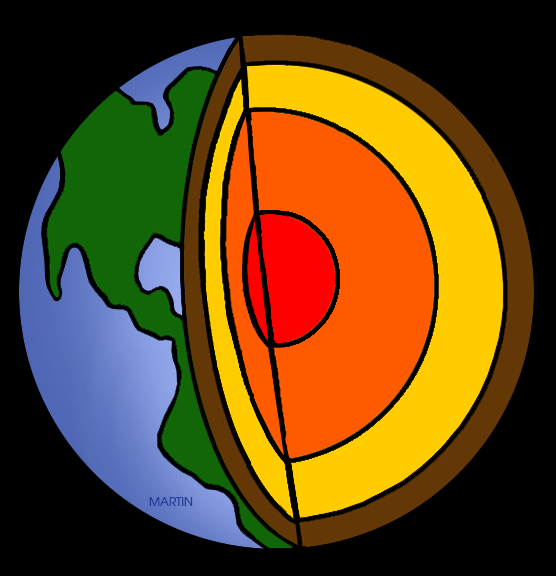
What is the thinnest layer?

a)

Crust

b)

Mantle

c)

Outer Core

d)

Inner Core

2.

What is the thickest layer?

a)

Crust

b)

Mantle

c)

Outer Core

d)

Inner Core

3.

What is the coolest layer?

a)

Crust

b)

Mantle

c)

Outer Core

d)

Inner Core

4.

What is the hottest layer?

a)

Crust

b)

Mantle

c)

Outer Core

d)

Inner Core

5.

What is the densest layer?

a)

Crust

b)

Mantle

c)

Outer Core

d)

Inner Core

6.

Which layer is the only liquid layer?

a)

Crust

b)

Mantle

c)

Outer Core

d)

Inner Core

7.

Which layer is made of liquid iron and nickel?

a)

Crust

b)

Mantle

c)

Outer Core

d)

Inner Core

8.

Which layer is made of solid Iron and nickel?

a)

Crust

b)

Mantle

c)

Outer Core

d)

Inner Core

9.

What layer of the Earth is labeled A?

a)

inner core

b)

outer core

c)

mantle

d)

crust

10.

What layer has super-heated liquid molten lava?

a)

crust

b)

mantle

c)

outer core

d)

inner core

11.

What is the correct order (starting from the surface) of Earth's layers?

a)

crust, outer core, inner core, mantle

b)

mantle, outer core, inner core, crust

c)

crust, mantle, outer core, inner core

d)

outer core, inner core, crust, mantle

12.

This layer is made of soil and rocks.

a)

crust

b)

mantle

c)

core

13.

Which layer is shown in red?

a)

crust

b)

mantle

c)

outer core

d)

inner core

14.

True or False: The continental plates move so quickly that we can feel them.

a)

True

b)

False

15.

Most geologists think that the movement of Earth's tectonic plates is caused by

a)

the rotation of the Earth.

b)

the Earth's magnetic field.

c)

subduction.

d)

convection currents.

16.

When plates collide we get ________.

a)

crumbles

b)

volcanos

c)

trenches

d)

mountain ranges

17.
Associated with transform boundaries.
a)
Volcanoes
b)
mountains
c)
trenches
d)
earthquakes
18.
A location where two tectonic plates collide is known as a _________ boundary.
a)
Convergent
b)
Divergent
c)
Transform
d)
Spreading
19.

Which layer of Earth flows slowly and causes the crust to move?

a)

Crust

b)

Mantle

c)

Inner Core

d)

Outer core

20.
What is an earthquake?
a)
When the earth causes an upward thrust in the epicenter.
b)
When the earth moves up and down along the ocean floor.
c)

When tectonic plates slide against each other causing the earth to move. 

d)
None of the above
21.

Subduction means.....

a)

one plate goes under another plate

b)

two plates slide past each other

c)

two plate collide and form folded mountains

22.

Sea-floor spreading explains how.....

a)

new crust is created at a divergent boundary

b)

volcanoes are formed on continents

c)

deep sea trenches are formed

23.

An opening on the Earth's crust through which hot molten rock flows out from deep inside the Earth.

a)

Volcano

b)

Fault line

c)

Fold

d)

Crater

24.
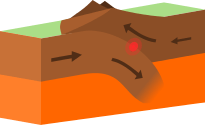
What type of event will occur at this boundary?
a)
Earthquake
b)
Volcano Eruption
c)
Tornado
d)
Mountain Building
25.
What type of plate boundary is this?
a)
Plate
b)
Divergent
c)
Convergent
d)
Transform
26.
A divergent boundary occurs when plates ....
a)
Pull apart
b)
Come together
c)
Slide past each other
d)
subducting
27.
What geologic feature/event you be most likely to find at a transform boundary?
a)
Earthquakes
b)
Volcanoes
c)
Mountains
d)
Rift Valleys
28.
What geologic feature/event would you most likely to find at a divergent boundary between two pieces of oceanic crust?
a)
Rift Valley
b)
Mid-Ocean Ridge
c)
Island Arc
d)
Flat land
29.
What geologic feature/event would you most likely to find at a convergent boundary between two pieces of continental crust?
a)
Volcano
b)
Mountain
c)
Rift
d)
Island Arc
30.
What are the puzzle pieces of the Earth's surface called?
a)
Tectonic plates
b)
Puzzles
c)
Earthquakes
31.
Lava that is still deep inside the earth is called ____________________________.
a)
lava
b)
magma
c)
volcano
d)
earthquake
32.

What type of boundary is shown in the diagram?

a)

Divergent

b)

Convergent

c)

Transform

33.

What type of boundary is shown in the diagram?

a)

Divergent

b)

Convergent

c)

Slide/Transform

34.

What type of boundary is shown in the diagram?

a)

Divergent

b)

Convergent

c)

Slide/Transform

35.
Mountains form from....
a)
Tectonic plates sliding past one another
b)
Collision of tectonic plates
c)
Tectonic plates moving away from each other
d)
Tectonic plates disappearing
36.
What is a tectonic plate?
a)
A piece of the Earth's crust
b)
A piece of Earth's mantle
c)
A piece of Earth's core
d)
A piece of Earth's Moon
37.
What is the name of the area where one crust slides underneath another
a)
Transform zone
b)
subduction zone
c)
Divergent zone
d)
School zone
38.
Name the boundary
a)
convergent
b)
transform
c)
divergent
d)
subduction
39.

What Are The Three Main Types Of Rocks?

a)

Igneous, Depository, Metamorphic

b)

Depository, Igneous, Sedimentary

c)

Metamorphic, Igneous, Depository

d)

Igneous, Metamorphic, Sedimentary

40.

How are metamorphic rocks formed?

a)

Heating and cooling

b)

Deposition

c)

Heating and pressure

d)

Materials gathering and pressing together

41.

How are igneous rocks formed?

a)

Sediment forming together

b)

Heating and pressure

c)

Cooling

d)

Deposition

42.

How are sedimentary rocks formed?

a)

Heating and pressure

b)

Sediment forming together

c)

Weathering

d)

Cooling

43.

What are grains?

a)

The grains are the particles of minerals that give a rock its texture

b)

Lines

c)

Bumps, lines, and dots

d)

It's chemical composition

44.
Which type of rock results from melting and cooling of magma?
a)
Igneous
b)
Metamorphic
c)
Sedimentary
d)
Extrusive
45.
Which type of rock forms from extreme heat and pressure?
a)
Igneous
b)
Sedimentary
c)
Organic
d)
Metamorphic
46.
A metamorphic rock changes into an igneous rock by what two processes?
a)
Melting and cooling
b)
Extreme heat and pressure
c)
Compaction and cementation
d)
Weathering and erosion
47.
Wind, water, and ice breaking down rock is called
a)
Erosion
b)
Deposition
c)
Compaction
d)
Weathering
48.
True/False: Igneous rocks can only turn into metamorphic rocks.
a)
True
b)
False
49.
The process in which dissolved minerals crystallize and glue sediment together.
a)
compaction
b)
deposition
c)
organic rock
d)
cementation
50.
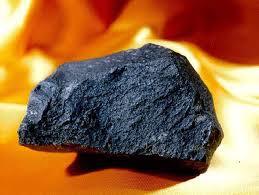
This rock was found near the mouth of a volcano. What type of rock is this?
a)
Sedimentary
b)
Igneous
c)
Metamorphic
51.
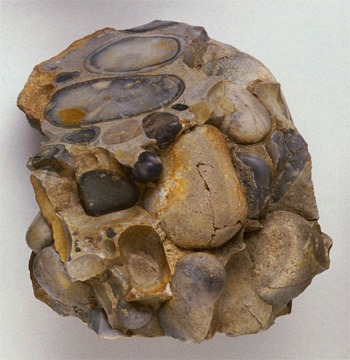
This rock was formed by smaller pieces of rock that settled at the bottom of a lake millions of years ago. What type of rock is this?
a)
Sedimentary
b)
Igneous
c)
Metamorphic
52.
This rock started as lava that cooled and then was heated and put under pressure over time. What type of rock is this?
a)
Sedimentar
b)
Igneous
c)
Metamorphic
53.
This rock started as molten magma. What type of rock is this?
a)
Sedimentary
b)
Igneous
c)
Metamorphic
54.
This rock is made from tiny pieces of other rocks that settled to the bottom of a valley millions of years ago. What type of rock is this?
a)
Sedimentary
b)
Igneous
c)
Metamorphic
55.
This rock was molten magma that slowly cooled under the ground. What type of rock is this?
a)
Sedimentar
b)
Igneous
c)
Metamorphic
56.
This rock cooled on the outside of a volcano and contained air bubbles when it was forming. What type of rock is this?
a)
Sedimentary
b)
Igneous
c)
Metamorphic
57.
After lots of time, pressure, and heat, you get this kind of rock. What type of rock is this?
a)
Sedimentary
b)
Igneous
c)
Metamorphic
58.
Each rock type can follow only one pathway of the rock cycle.
a)
True
b)
False
59.
Fossils are often found in ____________ because it is formed from the remains of once living things.
a)
metamorphic
b)
magma
c)
igneous
d)
sedimentary
60.
This rock was formed by lots of fossils that settled on top of each other over time. What type of rock is this?
a)
Sedimentary
b)
Igneous
c)
Metamorphic
61.
As you travel from the inner core to the crust, how would temperature, pressure and density of the material change?
a)

They would all increase

b)

They would all decrease.

c)

Nothing, the layers are made of the same material throughout

d)

Temperature would decrease, but pressure and density would increase

62.
What happens to pressure as we move from the crust down into the inner core?
a)
Pressure Decreases
b)
Pressure Increases
c)
Nothing
63.
What happens to temperature as we move from the crust down into the inner core?
a)
Decreases
b)
Increases