
 Worksheets
Question Bank for Grade 8 Science
Total questions: 214
Worksheet time: 2hrs 25mins

F (a)
G (b)
H (c)
dotted line (d)
J (e)
Which is not an example of an electromagnetic wave?
Radio Wave
Microwave
Light
Sound
Which color has the longest wavelength?
Red
Orange
Yellow
Blue

Of the visible spectrum, what color has the highest frequency?
Blue
Green
Yellow
Red
Violet
Match the following
opaque
does not allow light to pass
transparent
light passes through; clear image
translucent
light passes through; blurry image
transmit light
light travels through an object
absorb light
energy transfers to the medium light travels in

How do you think the incident and reflected angles compare?
The incident angle is greater than the reflected angle.
The incident angle is less than the reflected angle.
The incident and reflected angles have the same value.


How many wavelengths are pictured here?
0.5
1.0
1.5
2.0


What type of wave is this? (a)
The unit of measurement for Force is a
mass
gram
Newton
pounds

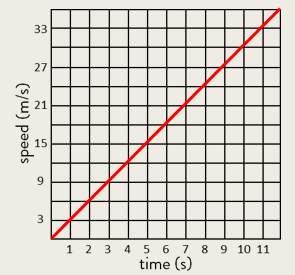
Accelerating gradually
Stopping
Slowing down constantly
Speeding up constantly
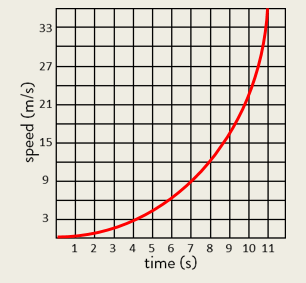
What is this graph showing?
Gradually slowing down
Gradually speeding up
Constant speed
Stopped

According to the table, what can be said about the velocity and acceleration?
The velocity stays the same so there is no acceleration
The velocity decreases so there is negative acceleration
The velocity increases at a constant rate so acceleration is constant
The velocity changes so there is no acceleration
Given the following information, what can you tell: I was traveling at 0.5 meters per second and traveling south when the deer struck my car.
My acceleration
My feelings about the incident
My speed
My velocity

Displayed above is an acceleration time graph. Select all of the graphs below which match the acceleration displayed.


Given table 2 and table 3, what can be said about the acceleration of the two objects?
The first object initially accelerated the fastest. They both reached 20 mph at the same time.
The first object did not reach as high a speed as the second object.
The second object had a constant rate of acceleration but the first did not.
Both objects had the same rate of acceleration

How will this object move?
It won't move.
It will accelerate to the right.
It will accelerate to the left.
It will accelerate in both directions.
Four hockey pucks with the same mass are sliding across the ice. Which puck would require the most force to stop?
The puck traveling 8 m/s
The puck traveling 4 m/s
The puck traveling 1 m/s
The puck traveling at 0.25 m/s

If the object were moving to the right at a constant velocity of 3 m/s and the forces shown were acting upon it as shown (they are balanced) , what could we say about it's motion?
It will accelerate to the right
it will continue at a constant speed
it will stop
it will move upward
who's to say?

Each of the golf balls has the same mass but a different position on the table. None of them are moving. What do you know about the upward force the table exerts on the golf balls relative to their position on the table?
The table exerts more force on the balls in the center than the ones on the edge.
The table exerts less force on the balls in the center than the ones on the edge.
The table exerts the same force on all the golf balls regardless of postion.
The table doesn't exert any force on the golf balls since they aren't moving.

The illustration shows people pushing farm carts of equal mass. Each person is pushing with an equal force (F) in the direction shown.
How does the acceleration of Cart A compare to the acceleration of Cart B?
It is twice the magnitude (amount of force), but in the opposite direction of cart B’s acceleration.
It is twice the magnitude (amount of force) and in the same direction as cart B’s acceleration.
It is the same magnitude (amount of force), but in the opposite direction of cart B’s acceleration.
It is the same magnitude (amount of force) and in the same direction as cart B’s acceleration.

Which system is in equilibrium?
The book on the table because the net forces are balanced.
The car because it is moving.
The tug of war because one person is pulling harder.
The weightlifter because he is strong.

A bag of potatoes hangs motionless from a hook.
What forces are acting on the bag of potatoes, and what are their relative magnitudes and directions?
The force of gravity on the potatoes and the force of the hook. The force of gravity is larger than the force of the hook. The force of gravity points downward and the force of the hook points upward.
The force of gravity and the force of the bag. The force of gravity is exactly balanced by the force of the bag. The force of gravity points downward and the force from the bag points upward.
The force of gravity is pulling the potatoes and the bag. The force of gravity is directed downward toward the ground. No other forces are acting on the potatoes.
The bag is pulling upward on the potatoes. Because the bag is not moving, no other force is acting on the potatoes.

If the masses of the balls are doubled, while the force remains the same, how will the acceleration change for the balls?
It will double
It will be halved
It will not change
It will change direction

The two cans do not have equal mass. The same force is applied to both cans. Which answer does NOT explain why the red can will go faster than the blue can?
The motion of the can relates to the action of unbalanced forces.
The larger mass requires more force to overcome inertia.
The smaller weight exerts less frictional force.
Acceleration varies directly with the mass of the object.

Which of Newton's Laws explains why you feel like you are floating on a hill or that you are pinned down in the turns of a roller coaster?
First Law because inertia is what makes you feel like you are moving even when you are not.
Second Law because the force the seat applies a net force to you when changes your direction (which is acceleration).
Second Law because there is no force other than gravity acting on you.
Third law because the forces are balanced in opposite directions.
Which is true regarding the amount of force needed to accelerate an object?
The amount of force needed to accelerate an object is always the same.
As mass increases, the amount of force need also increases.
The amount of force needed to accelerate an object is determined by the speed of the object.
The amount of force needed to accelerate an object is NOT determined by the mass of the object.
What do you need to know to determine the motion of an object experiencing unbalanced forces?
Gravity and velocity
Size, shape and color
acceleration, force and mass
force, friction and speed

A graph showing the kinetic energy of a 10 kg object at different speeds is provided. Based on the information in the graph, we can predict that the kinetic energy of the object at 2 m/s would be ...
0 J
5 J
20 J
60 J
Kinetic energy depends on_________ and _________.
speed and mass
speed and height
height and mass
energy and height
Gravitational potential energy is determined by mass, acceleration due to gravity and the (a) of the object.

Which point has the most potential energy?
G
F
B
A

Which number shows kinetic energy at its maximum?
three
two
four
five
Describe the transformation between gravitational potential energy and kinetic energy in a roller coaster. You can draw and label a diagram or write the answer in words or a combination of the two.


How does a windmill change forms of energy?
Mechanical to electrical
Electrical to mechanical
Mechanical to light
It is unable to change forms

What is the energy transformation of a violin?
Mechanical to thermal
Mechanical to Sound
Sound to Mechanical
Thermal to Sound

What is the energy Transformation of a remote-controlled car?
Chemical to electrical to mechanical
electrical to chemical to mechanical
mechanical to electrical to chemical
Chemical to Mechanical to electrical
Describe an energy transformation of your choice. You can draw and label it or just write it in words.
What type of heat transfer is the following?
Solar panels are used to collect sunlight for energy.
Convection
Conduction
Radiation
None of the above
In the following example, identify the type of heat transfer.
You hold an ice cube in your hand and it begins to melt.
Radiation
Convection
Conduction
Convection occurs in
liquids and gases
solids
none of these
Describe the thermal energy transfer that takes place in a closed system when you make ice cream. In what direction does the heat transfer? What type of thermal energy transfer is this process (conduction, convection or radiation)? You can draw or write the answer or a combination of the two.
In the following example, identify the correct type of heat transfer:
You feel the warmth from the sun on your face.
Convection
Conduction
Radiation
In the following example, identify the type of heat transfer.
You hold an ice cube in your hand and it begins to melt.
Radiation
Convection
Conduction
In the following example, identify the type of heat transfer:
The handle of a pot is hot and burns your hand.
Convection
Conduction
Radiation
Material or substance that transfers heat easily
Conductor
Radiation
Convection
Insulator
Convection occurs in
liquids and gases
solids
none of these

The arrows in the pot represent _____.
convection
conduction
waves
radiation
The total kinetic and potential energy of all particles in an object is called...
mechanical energy
kinetic energy
potential energy
thermal energy
________ is the transfer of energy from one particle of matter to another within an object or between two objects in direct contact
Conduction
Convection
Radiation
__________ is the transfer of energy by electromagnetic waves
Conduction
Convection
Radiation
What type of heat transfer is the following?
Solar panels are used to collect sunlight for energy.
Convection
Conduction
Radiation
None of the above

In this distance vs time graph, which object is moving away from their starting position at a constant speed?
A
B
C
D
E

Which object in the distance vs time graph is accelerating?
A
B
C
D
E

In this distance vs time graph, which of the following are not moving?
A
B
C
D
E

In the distance vs time graph, on average which object is traveling fastest?
A
B
C
D
E

On the distance vs time graph shown, which object is moving on average the slowest?
A
B
C
D
E

In this velocity vs time graph, which objects are maintaining the same speed?
A
B
C
D
E

In the velocity vs time graph shown, which object/s is accelerating the entire length of the graph?
A
B
C
D
E

In the velocity/time graph, which object that is accelerating has the smallest acceleration?
A
B
C
D
E
Which of the following distance vs time graphs show objects moving at the same speed?


Which of the following distance vs time graphs show objects that started at the same position?

In the distance time graph shown, the object is doing what?
(a)

In the distance vs time graph below, what is Maria doing from 4 to 8 seconds?
Speeding Up
Slowing Down
Not Moving
Changing Direction
In the distance vs time graph below, what is Maria's speed if she's travelled 200 meters at 1 second and 400 meters at 2 seconds?
2 m/s
200 m/s
100 m/s
2000 m/s
In the distance vs time graph below, where is Maria traveling at a faster speed?
0-4 seconds
4-8 seconds
8-10 seconds
Draw a distance vs time graph where the object is changing direction.


Batteries have _________ energy.
mechanical
thermal
chemical
What is the energy Transformation of a remote-controlled car?
Chemical to electrical to mechanical
electrical to chemical to mechanical
mechanical to electrical to chemical
Chemical to Mechanical to electrical
Which is the best example of kinetic energy?
A car sitting on top of a hill
A skateboard on the sidewalk
A wagon rolling down a hill
A powerwheel parked in the yard

How does energy transfer as the ball is bouncing?
Kinetic, Potential, Potential, Kinetic
Potential, Potential, Kinetic, Kinetic
Kinetic, Kinetic, Potential, Potential
Potential, Kinetic, Kinetic, Potential
Electrical → Mechanical → Sound
Which device were the students most likely observing?
Which of the following are types of kinetic energy?
mechanical
electrical
radiant
sound
thermal
mechanical
electrical
radiant
nuclear
thermal
mechanical
electrical
radiant
nuclear
thermal
mechanical
electrical
radiant
sound
The unit of measurement measuring potential and kinetic energy...
Joules
Watts
Matter
Newton
The amount of kinetic energy in an object is determined by...
Mass and Speed
Speed and height
Mass and Height
Speed and Velocity
An objects potential energy will increase with...
Mass and Velocity
Mass and Height
Mass and Speed
Speed and time
The faster an object moves the greater its ____________ energy.
Kinetic
Potential
Electrical
Solar
The ability to do work by applying force is called
work
energy
force
net force
Which number shows kinetic energy at its maximum?
three
two
four
five
Which of the following statements about a skier skiing down a steep slope is true?
His kinetic energy decreases and his potential energy increases
His potential energy decreases and his kinetic energy increases
His chemical energy increases
Both his potential and kinetic energy increases
_______________ is done when a force acts on an object and the object moves in the direction of the force.
Work
Kinetic energy
Watt
Joule

Which letter shows where kinetic energy is at is highest point?
X
Y
W
Z

Where is kinetic energy at its minimum?
Z
W
X
Y
All waves transfer
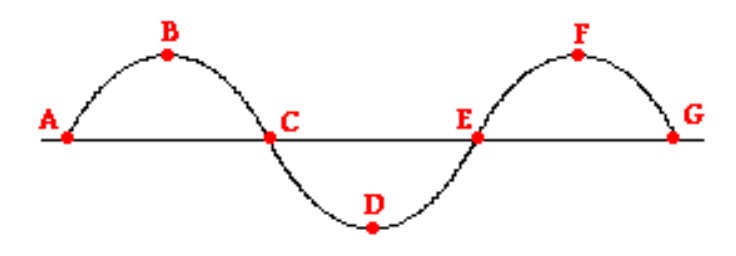
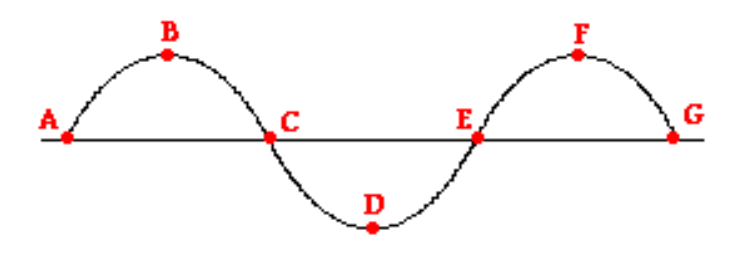
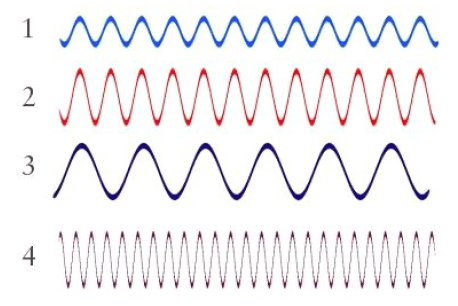

the substance through which a wave travels
medium
crest
amplitude
trough

waves that need a medium to travel through (ex. sound)
mechanical waves
electromagnetic waves
stadium waves
gravitational waves

waves that do not need a medium to be transferred (ex. light)
mechanical waves
electromagnetic waves
gravitational waves
stadium waves

the part of a longitudinal wave where the particles are crowded together
compression
crest
rarefaction
amplitude

the part of a longitudinal wave where the particles are spread apart
compression
trough
rarefaction
wavelength
The Atomic number is known as the _______
Number of electrons in an atom
Number of Protons in an atom
Number of neutrons in an atom
Number of Protons and electrons in an atom
The number of electrons in an atom is equal to the...
Atomic number
Protons
Atomic Mass
Neutrons

Which element is found in group 2, period 6?
Oxygen (O)
Barium (Ba)
Selenium (Se)
Carbon (C)

What are valence electrons?
The total number of electrons in an atom
The number of electrons in the outermost shell
The number of electrons in the second shell
The number of protons in the outermost shell
what is the valence electrons for phosphorus in group 15?
15
5
3
2
calcium is in group 2 of the periodic table. what is the valence electrons?
12
2
18
0

This is a Bohr Diagram of Aluminum. How many valence electrons does Aluminum have?
3
4
5
This type of heat transfer takes place with direct contact and at least one solid object. Example a burner on a stove heating the bottom of a pot.
convection
radiation
conduction

A radiator puts a warm air out at the top and draws in cooler air at the bottom.
CONVECTION
CONDUCTION
RADIATION
__________is the form of energy that is transferred between objects that are different temperatures.
Thermal (Heat)
Kinetic
Temperature
Heat from a lamp is an example of _____________.
convection
conduction
radiation
reaction
What happens to the speed of the molecules in matter that increases in thermal energy (heats up)?
the molecules become larger
the molecules become smaller
the molecules move faster
the molecules move slower
You pick up a cold plastic water bottle off of the countertop. The countertop underneath the bottle feels colder that the rest of the counter. Which explanation do you think is the best?
The cold has been transferred from the water bottle to the counter
There is no heat energy left in the counter beneath the water bottle
Some heat has been transferred from the counter to the water bottle
The heat beneath the water bottle moves away into other parts of the countertop
If you put a cup of cola in a freezer it turns to ice...why?
the cola absorbs energy from the air in the freezer.
the cola absorbs the coldness form the air in the freezer.
the freezer air absorbs heat from the cola.
the cola neither absorbs nor releases heat

Looking at the picture, Rico claims that radiation is the type of heat transfer that is happening because
Radiation involves thermal energy transfer via electromagnetic waves which the lamp emits
Radiation involves the transfer of thermal energy via direct contact or touch.
Radiation involves the transfer of thermal energy via differences in fluid densities
a material that reduces the rate of movement of thermal energy
insulator
conductor
radiation
thermal energy
transfer of thermal energy in electromagnetic waves
radiation
conduction
convection
thermal energy
The letter, C, is a ... of carbon.
Name
Nickname
Chemical Symbol
Pseudonym


How many protons and electrons does nickel have?
28
58.69

The negatively charged particles in an atom
Proton
Electron
Neutron
Electron Cloud

Letter A is showing
Neutrons
Electrons
Protons
Nucleus
Which subatomic particles make up almost all of the mass of an atom?
protons only
protons and neutrons
protons, neutrons and electrons
protons and electrons

The particles in the nucleus of an atom that do not have a charge (neutral)
Proton
Electron
Neutron
Ion
Which subatomic particle has No charge?
Protons
Ions
Electrons
Neutrons

Where do the electrons hangout?
Electron Cloud
Nucleus
Atom Cloud
If 20g of sugar is stirred into a beaker containing 100g of water. What would the mass of the dissolved solution be after the sugar is dissolved fully?
20g
100g
80g
120g
Suppose you have 15g of baking soda and mix it with 15g of vinegar. When they are combined they bubble and fizz a lot. The final solution has a mass of 25g. What happened to the "lost" 5g?
it dissappears
it is still there just not weighted
it is in the gas that is formed
nothing happened
a different way to say Law of Conservation of Matter
Law of Conservation of Volume
Law of Conservation of Energy
Law of Conservation of Mass
Law of Conservation of Environment
two or more atoms joined together (can be from the same element or different elements)
molecule
compound
mixture
solution
a substance that forms in a chemical reaction
coefficient
subscript
reactant
product
Physical or chemical change: Folding paper
Physical
Chemical

Which section represents the reactants?
A
B
C
Based on the Law of Conservation of Matter, describe the relationship between the mass of the reactants and the mass of the products.
The mass of the products is always greater than the mass of the reactants.
The mass of the reactants is less than the mass of the products.
The mass of the reactants equals the mass of the products.
The mass of the reactants is greater than the mass of the products.
What are the starting materials in a reaction?
product
subscript
coefficient
reactants
What happens to atoms in a chemical reaction?
they are destroyed
they are created
they are rearranged
Which model represents how matter behaves in the state of gas.


Complete this sentece: "Matter is anything that ...
the amount of matter in an object".
you can smell".
takes up space and has mass".
changes into liquid".
Chemical or Physical:
A characteristic of matter that can be observed with your 5 senses is a ____________ property.
Chemical
Physical
Chemical or Physical:
A characteristic of matter that can only be observed when matter is changed into a new kind of matter.
Chemical
Physical
Which of the following objects will experience an unbalanced force?
A bike rider on a smooth and level road, pedaling at a constant rate
A chair sitting on the floor with balanced forces acting in opposite directions
A train pulling another train, each with the same amount of force
A ball rolling across the floor with friction acting in the opposite direction

Why does a book on a table not move?
No forces are acting on the book
Forces of the table pushing up and gravity pulling down are balanced
Gravity is the only force acting on the book
Are forces balanced or unbalanced when a car is moving at a constant speed in a straight line?
Balanced
Unbalanced
Are forces balanced or unbalanced when a marble rolls down a ramp?
Balanced
Unbalanced

Are forces balanced or unbalanced when skateboarding down a ramp?
Balanced
Unbalanced
Balanced forces can cause--
an object to speed up or slow down
an object to stay still or move at a constant speed and direction
an object to stop

Calculate the Net Force
0 N
7 N Right
28 N Right
I don't know

Calculate the Net Force
2 N Right
12 N Right
2 N Left
I don't know


If two charges attract to each other, then which of the following is true?
Both charges must be positive.
Both charges must be negative
Both charges must be different.
Both charges must be equal in value.

Based on the arrangement of the electric field lines in the diagram, what are the charges?
both charges are the same
the charges are opposite
they are neutral; no charge
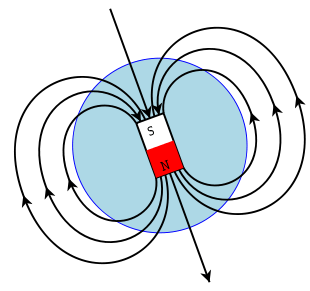
The area of magnetic force around a magnet is known as its _____________.
magnetic field
magnetic declination
magnetic fan lines
magnetic tan lines


Walking across a carpet is an example of charge being transferred by
friction.
induction.
contact.
A method used to charge an object without actually touching the object to any other charged object.
Induction
Conduction
Friction
Grounding
A negatively charged material has ___________ electrons.
gained
lost
A positively charged material has __________ electrons
lost
gained
The contact of a charged object to a neutral object
Conduction
Induction
Friction
Grounding

What would happen if the t-shirt and the balloon were brought close together?
They would attract
They would repel
It is the transfer of electron from a charged object to another by DIRECT CONTACT .
Induction
Conduction
Friction
What causes the magnetic field to form in an electromagnet?
Electromagnets are only called magnets because electricity is involved.
The domains of the magnet become aligned
The magnetic field is absorbed from another magnet
Electric current flowing in a wire
How can you increase the strength of an electromagnet?
By moving the iron core to create friction.
By adding more coils around the iron core.
By decreasing the amount of current in the wire.
By heating up the electromagnet.
An electromagnet can be strengthened if
less coils are added to the iron core
the iron core is removed
more current runs through the wire
a nickel or cobalt iron core is used.

What component becomes a temporary magnet when electricity is flowing through the circuit?
iron nail
copper wire
battery
switch
Which of these is an element?
Salt (NaCl)
Water (H20)
Oxygen (O)
Carbon Dioxide (CO2)
Which of these is a compound?
Aluminium (Al)
Carbon Dioxide (CO2)
Nitrogen (N)
Sand
Which of these is a mixture?
Laundry Detergent
Salt (NaCl)
Oxygen (O)
Fluorine (Fl)
Which of the following is classified as a pure substance?
Lemonade
Fruit punch
ketchup
Helium
___________ are the smallest unit of an element that maintains the properties of that element.
Atoms
Elements
Compounds
Mixtures
True or False: elements AND compounds are pure substances.
True
False

Pure Substance
Mixture
Which of the following is NOT a mixture?
milk
lemonade
vegetable salad
aluminum
A ______________ mixture is one that does not have a uniform composition.
heterogeneous
homogenous
pure substance
A _________________ mixture is one where the substances are evenly spread throughout.
heterogeneous
homogeneous
pure substance
In which mixture can you see all of the parts?
homogeneous
heterogeneous
In which mixture can you not see all of the parts?
homogeneous
heterogeneous

A salad is an example of a __________.
homogenous mixture
solution
heterogeneous mixture
homogenous solution


