
 Worksheets
Phylum Arthropoda
Total questions: 209
Worksheet time: 2hrs 49mins
name "phylum arthropoda" means:
joint hand/arm
joint foot/leg
joint elbow/wrist
intertwine
True or False: largest and least diverse phylum
True
False: most
relatives of annelids
True
False
Questioning
segments historically had __ pair(s) of appendages (ex: centipede)
1
2
3
4
True or False: high degree of modification since divergence
True
False: low
____ brain, _____ nerve cord
dorsal; dorsal
dorsal; ventral
ventral; dorsal
ventral; ventral
what are phylum arthropoda's exoskeleton made of?
eucoelomates
ecdysis
chitin
hemocoels
What are some advantages of their exoskeleton's being made of chitin?
protection
restricts size
support
anti-desiccation
what are some disadvantages to their exoskeleton's being made of chitin?
protection
restricts size
support
anti-desiccation
True or False: arthropod is very strong during their time of shedding their exoskeleton in order to grow
True
False: vulnerable
molting aka _____
euocoelomates
ecdysis
hemocoels
dioecious
True or False: during molting, arthropods grow a new layer of chitin beneath its exoskeleton
True
False: above
what splits an arthropod's old exoskeleton to help it crawl out during molting?
fluid between 2 layers
chitin between 2 layers
hemocoels between 2 layers
nothing
True or False: Arthropods are eucoelomates
True
False
What kind of circulatory system do Arthropod's have?
open without hemocoels
open with hemocoels
closed without hemocoels
closed with hemocoels
True or False: most arthropods are dioecious
True
False
True or False: many have simple eyes
True
False: compound
How many subphylums does Phylum Arhropoda have?
1
3
4
6
trilobites
Subphylum Trilobita
Subphylum Chelicerata
Subphylum Crustacea
Subphylum Uniramia
True or False: Some trilobites are extinct
True
False: All
horseshoe crabs, spiders, scorpions, ticks, and mites
Subphylum Trilobita
Subphylum Chelicerata
Subphylum Crustacea
Subphylum Uniramia
crabs, lobsters, crayfish, shrimp
Subphylum Trilobita
Subphylum Chelicerata
Subphylum Crustacea
Subphylum Uniramia
centipedes, millipedes, insects
Subphylum Trilobita
Subphylum Chelicerata
Subphylum Crustacea
Subphylum Uniramia
very prominent marine group for millions of years
Subphylum Trilobita
Subphylum Chelicerata
Subphylum Crustacea
Subphylum Uniramia
Body plan with little modification from annelids (segments are all pretty much the same)
Subphylum Trilobita
Subphylum Chelicerata
Subphylum Crustacea
Subphylum Uniramia
each segment divided into left, right, and center
Subphylum Trilobita
Subphylum Chelicerata
Subphylum Crustacea
Subphylum Uniramia
When did Trilobites go extinct?
400 BC
2001
100 mya
250 mya
oldest arthropod fossils
Subphylum Trilobita
Subphylum Chelicerata
Subphylum Crustacea
Subphylum Uniramia
most species are still extinct (exception = water scorpions)
Subphylum Trilobita
Subphylum Chelicerata
Subphylum Crustacea
Subphylum Uniramia
C. Merostomets
crayfish
centipedes
trilobites
water scorpions
True or False: it is known that water scorpions are the only exception to nonextinct species in Subphylum Chelicerata from the fossil record
True
False
True or False: Once upon a time, water scorpions were dominant prey of the sea (possibly land)
True
False: predators
water scorpions can reach sizes up to ___m (___ ft)
3 m (3 ft)
10 m (3 ft)
3 m (10 ft)
10 m (10 ft)
Class Arachnida
Subphylum Trilobita
Subphylum Chelicerata
Subphylum Crustacea
Subphylum Uniramia
True or False: Class Arachnida is the largest group of chelicerates
True
False: smallest
What does Class Arachnida consist of?
spiders
scorpions
daddy long legs
ticks
mites
True or False: Class Arachnida are possible descendants of sea scorpions
True
False: crayfish
Class Arachnida has two segments: _____ and _____
hemocoels
cephalothorax
abdomen
pedicel
Class Arachnida: their 2 segments are linked together by flexible _____
hemocoels
cephalothorax
abdomen
pedicel
No antennae, simple eyes
Class Chilopoda
Class Arachnida
Subphylum Uniramia
Subphylum Crustacea
Class Arachnida: how many pair(s) of chelicerae do they have?
1
6
2
30
Class Arachnida: what are their pair of chelicerae modified into?
pincers
arms
fangs
legs
True or False: Class Arachnida - None inject venom
True
False: Some
True or False: Class Arachnida's venom kills prey and breaks down tissues so the spider can drink them
True
False
Class Arachnida: how many pair(s) of pedipalps do they have?
1
6
2
35
Class Arachnida: What do their pair of pedipalps do?
hold food
catch prey
are sense organs
help hear prey from far away
Class Arachnida: how many pair(s) of legs do they have?
1
2
3
4
Class Arachnida: spinnerets = ___
release silk
catch prey
hold food
sense organs
Class Arachnida: where are the spinnerets found?
interior side of esophagus
anterior side of abdomen
anterior side of head
interior side of pedicels
Class Arachnida: what are spinnerets used for?
for webs
for catching prey
for fun
for balloning
True or False: Class Arachnida - often webs are unique to each species
True
False
Class Arachnida: What do Malpighian tubules do?
sense organs
hold food
filter waste
regulate water/solutes
Book lung or tracheal system (both)
Class Arachnida
Class Diplopoda
Class Insecta
Class Chilopoda
nuptial gifts
Class Diplopoda
Class Oligochaeta
Class Arachnida
Class Athropoda
True or False: Ticks are ectoparasites that often only release to molt
True
False: Mites
Ticks are hosts to other parasites, which cause what diseases?
Lyme Disease
Measles
Rocky Mountain Spotted Fever
HIV
shows pretty extreme tagmatization
Subphylum Trilobita
Subphylum Chelicerata
Subphylum Crustacea
Subphylum Uniramia
fusing of segments to form functional units
tagmatization
castings
satae
biramous
primarily all aquatic
Subphylum Trilobita
Subphylum Chelicerata
Subphylum Crustacea
Subphylum Uniramia
True or False: Phylum Crustacea is all marine except lobsters
True
False: crayfish
incredible number of appendages (including walking legs, antenna, antennules, swimmerets)
Subphylum Trilobita
Subphylum Chelicerata
Subphylum Crustacea
Subphylum Uniramia
lobster/crayfish = ___ pair(s) of appendages
1
22
69
19
True or False: Subphylum Crustacea - can be regenerated at each new molt
True
False: old
many are biramous
Subphylum Trilobita
Subphylum Chelicerata
Subphylum Crustacea
Subphylum Uniramia
limbs divided into two branches (lobster claws)
tagmatization
biramous
hemocoels
pedipalps
green glands
Subphylum Trilobita
Subphylum Chelicerata
Subphylum Crustacea
Subphylum Uniramia
group which includes some of the only terrestrial Crustaceans (athough, they can also be aquatic ---marine)
Isopods
Copepods
Barnacles
Decapods
familiar examples are pill bugs aka wood lice
Isopods
Copepods
Barnacles
Decapods
where are pill bugs usually found? (aka wood lice)
under your matress
beneath stones
beneath logs
inside shells
lungs/gills found with each pair of legs and all look similar
Isopods
Copepods
Barnacles
Decapods
What are the 4 groups in Subphylum Crustacea?
Isopods
Copepods
Barnacles
Decapods
Chilopoda
includes many types of plankton and krill
Isopods
Copepods
Barnacles
Decapods
most numerous animals in the world (enormous number of individuals)
Isopods
Copepods
Barnacles
Decapods
BIG source of food for whales and sharks that feed their baleen
Isopods
Copepods
Barnacles
Decapods
Some can be parasites or hosts of parasites like tapeworms
Isopods
Copepods
Barnacles
Decapods
adults are sessile, but larva are free-swimming
Isopods
Copepods
Barnacles
Decapods
undergo metamorphosis to become adults
Isopods
Copepods
Barnacles
Decapods
Darwin spent 9 years studying/classifying them
Isopods
Copepods
Barnacles
Decapods
anchor themselves with an adhesive as strong as any man-made glue (use their first antennae to secrete adhesive)
Isopods
Copepods
Barnacles
Decapods
filter-feed on plankton
Isopods
Copepods
Barnacles
Decapods
What are Barnacles' feet modified to do?
to help catch prey
to make habitat
to sift food out of the water
to become motile when they need to
name means "ten foot"...referring to 10 legs
Isopods
Copepods
Barnacles
Decapods
How many legs to Decapods have?
6
4
10
8
includes shrimp, crabs, lobster, and crayfish
Isopods
Copepods
Barnacles
Decapods
Which Decapod are the only ones that are predominantly in freshwater?
shrimp
crayfish
crabs
lobster
Crayfish External Anatomy:
how many pair(s) of long antennae do crayfish have?
1
2
3
10
Crayfish External Anatomy:
What do the long antennae help with?
balance
sensory reception
catch food
defense
Crayfish External Anatomy:
how many pair(s) of short antennules do they have?
1
2
3
10
Crayfish External Anatomy:
What are the short antennules used for?
sensory reception
catching food
defense
balance
Crayfish External Anatomy:
fused head and chest region
rostrum
cervical groove
carapace
cephalothorax
Crayfish External Anatomy:
hard shield of chitin covering the head/thorax
cephalothorax
carapace
chelipeds
maxillae
Crayfish External Anatomy:
anterior projection on carapace that hangs over the eyes
maxillae
rostrum
carapace
cephalothorax
Crayfish External Anatomy:
division in the cephalothorax separating the head from the thorax
telson
carapace
swimmerets
cervical groove
Feeding = scavengers
lobsters
crabs
shrimp
crayfish
Crayfish External Anatomy:
how many pair(s) of chelipeds do they have?
1
3
5
7
Crayfish External Anatomy:
claws for catching food and defense (technically also considered 1st pair of legs)
chelipeds
maxillipeds
rostrum
pedipalps
Crayfish External Anatomy:
how many pair(s) of maxillipeds do they have?
1
3
5
7
Crayfish External Anatomy:
"jaw feet" hold food and crush
maxillipeds
chelipeds
pedicels
rostrum
Crayfish External Anatomy:
how many pair(s) of maxillae do they have?
1
3
2
40
Crayfish External Anatomy:
hold food and pass to mouth
maxillipeds
chelipeds
carapace
maxillae
Crayfish External Anatomy:
how many pair(s) of mandibles do they have?
1
2
5
69
Crayfish External Anatomy:
chew and crush food
maxillipeds
maxillae
mandibles
telson
Crayfish External Anatomy:
what are their 4 pairs of walking legs also used for?
catching food
holding eggs
reproduction
propelling
Crayfish External Anatomy:
where are the swimmerets located?
esophagus
abdomen
in between the walking legs
on top of the mandibles
Crayfish External Anatomy:
used for swimming, females use for holding eggs
mandibles
swimmerets
telson
uropods
Crayfish External Anatomy:
used to propel backwards...escape predators
swimmerets
cephalothorax
telson
uropods
Crayfish External Anatomy:
found in the middle of "tail" and roughly triangular
telson
uropods
gills
swimmerets
Crayfish External Anatomy:
each side of telson, also propel backwards
uropods
carapace
antennae
maxillae
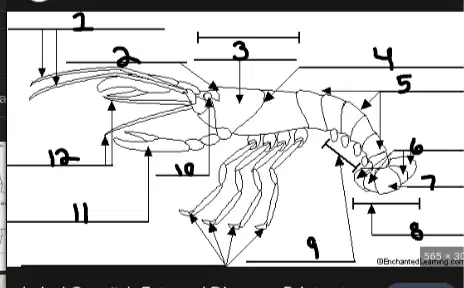
Crayfish External Anatomy:
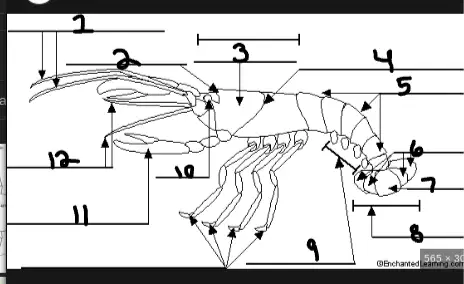
What is #1 in the diagram?
antennae
chelipeds
walking legs
swimmerets
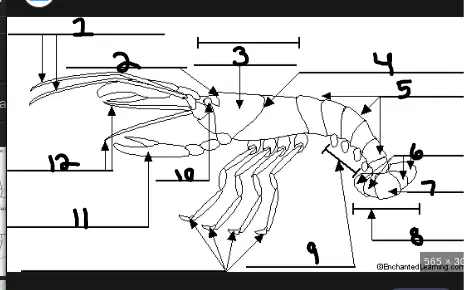
Crayfish External Anatomy:
What is #2 in the diagram?
chelipeds
cephalothorax
rostrum
antennules
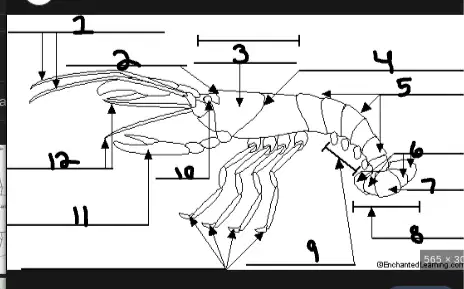
Crayfish External Anatomy:
What is #3 in the diagram?
rostrum
cephalothorax
cervical groove
telson
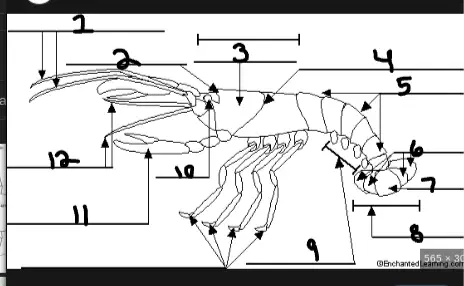
Crayfish External Anatomy:
What is #4 in the diagram?
cephalothorax
walking legs
antennules
cervical groove
Crayfish External Anatomy:
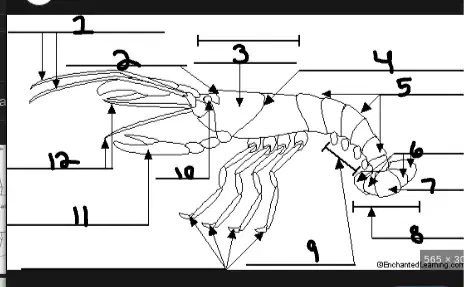
What is #5 in the diagram?
rostrum
eye
abdomen
tail fan
Crayfish External Anatomy:
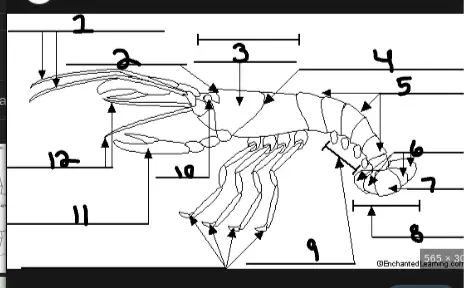
What is #6 in the diagram?
tail fan
eye
swimmerets
uropods
Crayfish External Anatomy:
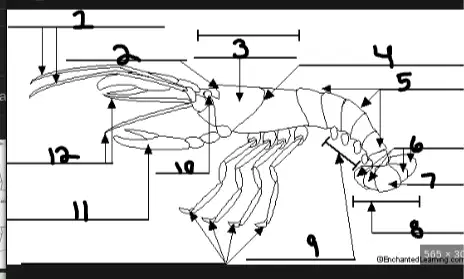
What is #7 in the diagram?
rostrum
telson
tail fan
eye
Crayfish External Anatomy:
What is #8 in the diagram?
tail fan
antennules
antennae
walking legs
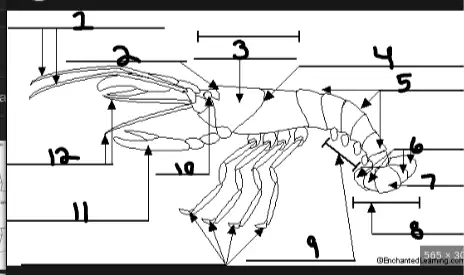
Crayfish External Anatomy:
What is #9 in the diagram?
walking legs
tail fan
cervical groove
swimmerets
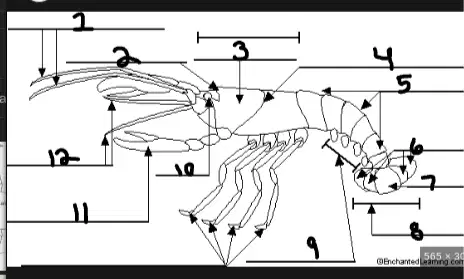
Crayfish External Anatomy:
What is #10 in the diagram?
rostrum
eye
walking legs
swimmerets
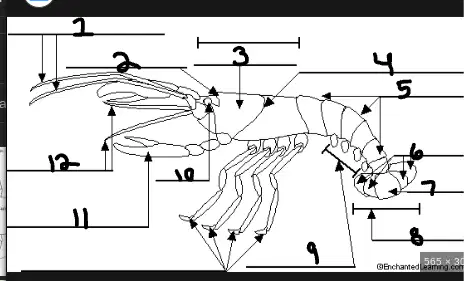
Crayfish External Anatomy:
What is #11 in the diagram?
abdomen
antennae
chelipeds
maxillae
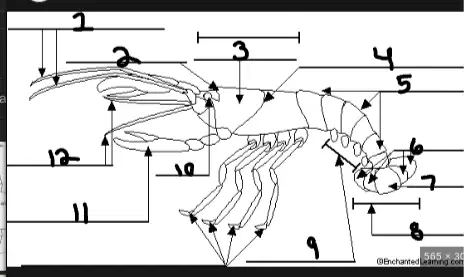
Crayfish External Anatomy:
What is #12 in the diagram?
antennules
antennae
uropods
telson
Crayfish Internal Anatomy:
What is apart if the respiratory system?
gill barrier
mouth
gills
brain
Crayfish Internal Anatomy:
attached to walking legs, "feathery" with high surface area
gill barrier
stomach
gills
digestive gland
Crayfish Internal Anatomy:
move water over gills when crayfish is stationary, associated with 2nd maxilla
green glands
stomach
ventral nerve cord
gills barrier
Crayfish Internal Anatomy:
What makes up the nervous system?
mouth
brain
ventral nerve cord
digestive gland
Crayfish Internal Anatomy:
dorsal and anterior with 2 nerve cords descending ventrally around the esophagus
brain
mouth
stomach
gills
Crayfish Internal Anatomy:
with segmental ganglia
brain
ventral nerve cord
stomach
heart
Crayfish Internal Anatomy:
What makes up the digestive system?
mouth
stomach
digestive gland
intestines
esophagus
Crayfish Internal Anatomy:
is the digestive system complete or incomplete?
Complete
Incomplete
Crayfish Internal Anatomy:
____ leads to a very short esophagus
stomach
gills
gill barrier
mouth
Crayfish Internal Anatomy:
____ has teeth of chitin; grinds food
eyes
heart
stomach
mouth
Crayfish Internal Anatomy:
______ produces enzymes which break down food then absorb nutrients
green gland
digestive gland
arteries
heart
Crayfish Internal Anatomy:
undigested material goes thru ____ and out the anus
stomach
green glands
digestive gland
intestines
Crayfish Internal Anatomy:
What makes up the Excretory System?
heart
green glands
digestive gland
arteries
Crayfish Internal Anatomy:
Where are the green glands located?
above the heart
at the base of the antennae
at the base of the antennules
under the eyes
Crayfish Internal Anatomy:
regulate amount of salt in blood and remove excess water
gill barrier
digestive gland
gills
green glands
Crayfish Internal Anatomy:
What makes up the Circulatory System?
heart
arteries
testis
ovary
Crayfish Internal Anatomy:
found on dorsal side above the stomach/intestine
gills
eye
heart
mouth
Crayfish Internal Anatomy:
blood flows away from heart in arteries to ____ and _____ ___
dorsal and ventral sides
anterior and posterior ends
Crayfish Internal Anatomy:
True or False: the circulatory system is open
True
False: closed
Crayfish Internal Anatomy:
What are the two parts of the reproductive system?
testis
heart
gills
ovary
Crayfish Internal Anatomy:
(elongated whitish organ near heart) connects to sperm ducts
testis
ovary
eye
heart
Crayfish Internal Anatomy:
where do the testis empty on?
the eye
the 3rd walking leg
the 5th walking leg
the esophagus
Crayfish Internal Anatomy:
(2 lobes reddish mass near heart) connects to oviducts
testis
heart
ovary
gills
Crayfish Internal Anatomy:
Where does the ovary empty on?
on the eye
on the 5th walking leg
on the 3rd walking leg
out of the anus
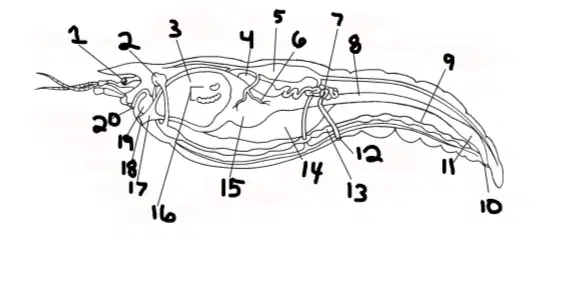
Crayfish Internal Anatomy:
What is #1 in the diagram?
brain
compound eye
artery
heart
Crayfish Internal Anatomy:
What is #2 in the diagram?
compound eye
heart
stomach
brain
Crayfish Internal Anatomy:
What is #3 in the diagram?
stomach, pyloric portion
ganglion
stomach, cardiac portion
ventral nerve cord
What is #4 in the diagram? (male)
heart
ovary
testis
opening of sperm duct
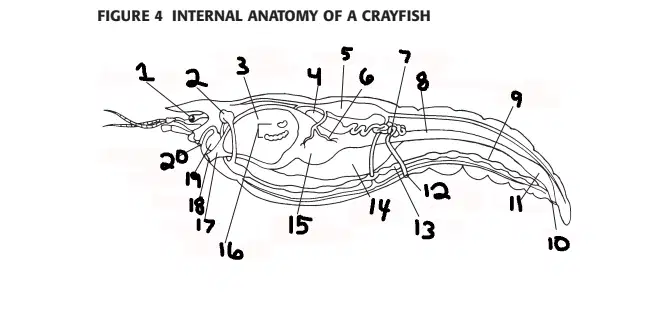
What is #5 in the diagram?
ovary
heart
artery
intestine
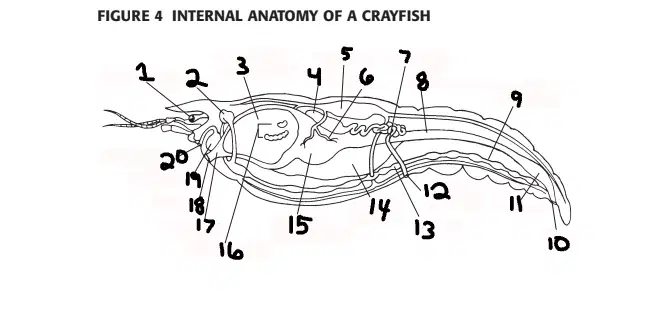
What is #6 in the diagram?
artery
heart
stomach, cardiac portion
stomach, pyloric portion
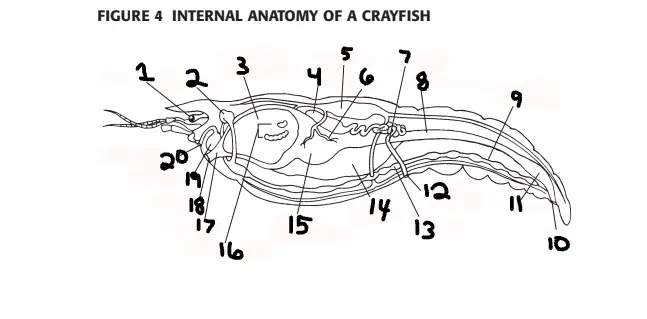
What is #7 in the diagram? (male)
heart
artery
sperm duct
testis
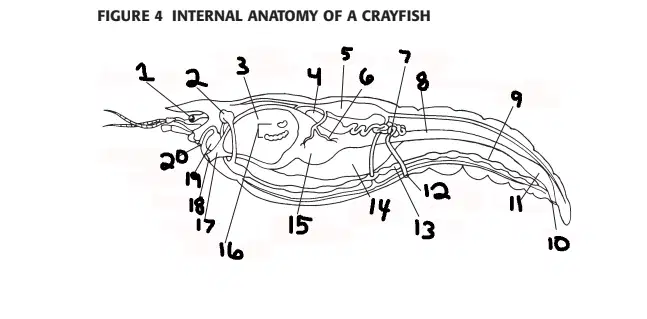
What is #8 in the diagram?
anus
rectum
opening to sperm duct
intestine
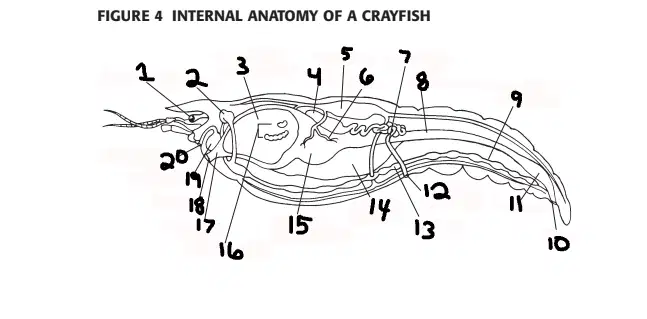
What is #9 in the diagram?
ventral nerve cord
chitinous teeth
green gland
artery
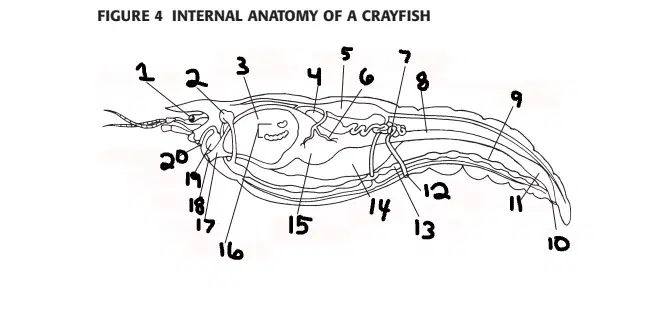
What is #10 in the diagram?
heart
anus
opening to sperm duct
digestive gland
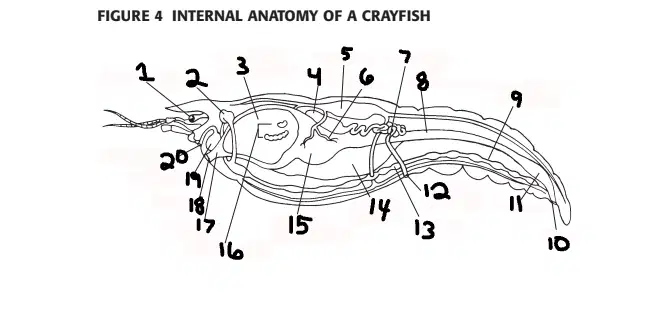
What is #11 in the diagram?
anus
rectum
digestive gland
heart
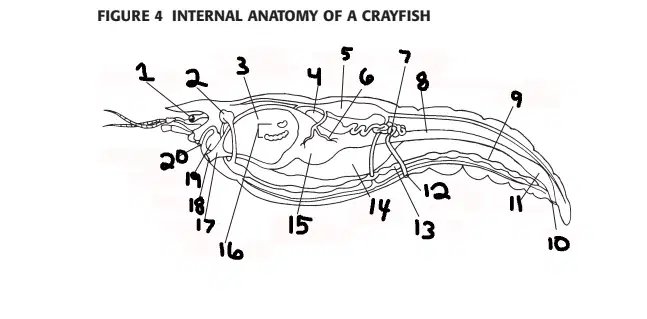
What is #12 in the diagram?
testis
ovary
opening to sperm duct
sperm duct
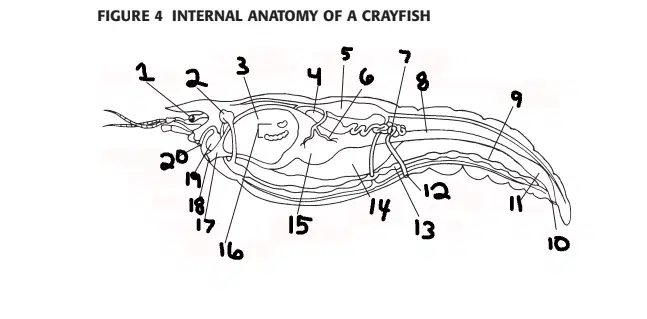
What is #13 in the diagram?
ganglion
digestive gland
compound eye
rectum
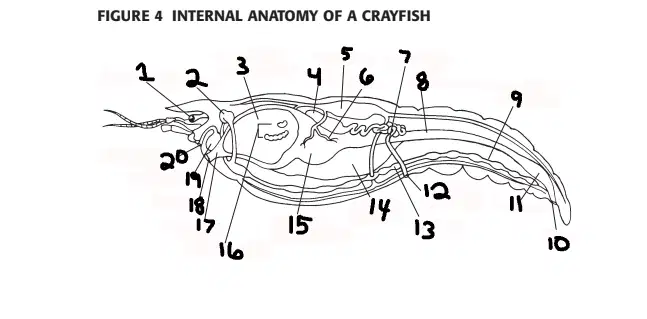
What is #14 in the diagram?
esophagus
heart
sperm duct
digestive gland
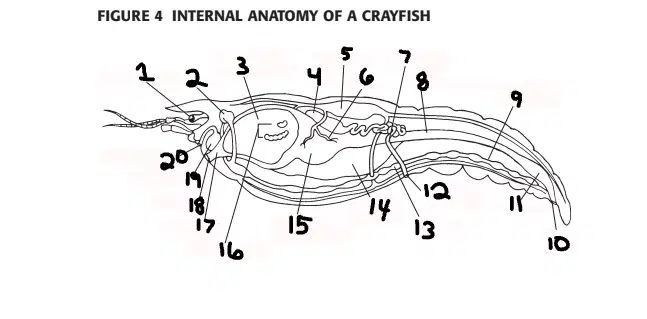
What is #15 in the diagram?
Stomach, pyloric portion
excretory pore
stomach, cardiac portion
heart
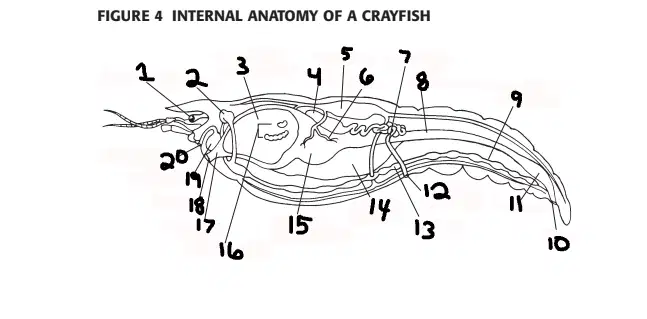
What is #16 in the diagram?
esophagus
heart
chitinous teeth
mouth
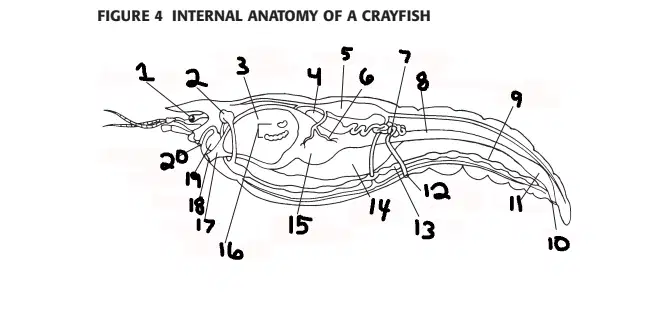
What is #17 in the diagram?
anus
rectum
mouth
esophagus
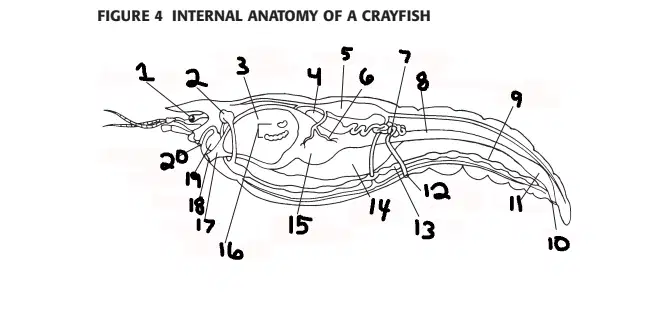
What is #18 in the diagram?
mouth
esophagus
compound eye
sperm duct
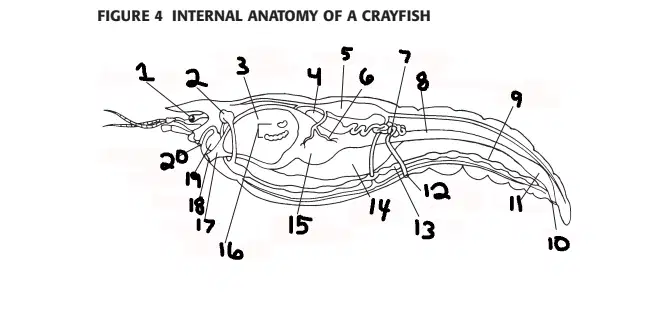
What is #19 in the diagram?
digestive gland
green glands
rectum
testis
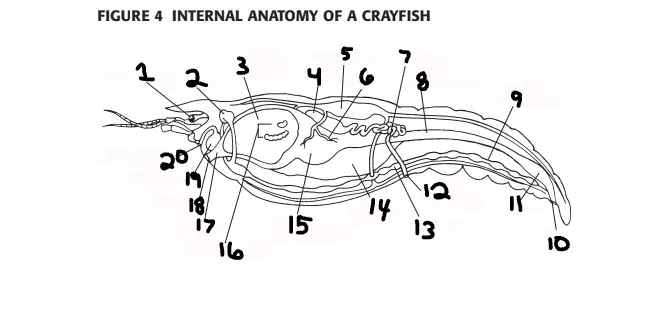
What is #20 in the diagram?
brain
sperm duct
opening to sperm duct
excretory pore
unbranched appendages
Subphylum Trilobita
Subphylum Chelicerata
Subphylum Crustacea
Subphylum Uniramia
contrast with Subphylum Crustacea
Subphylum Trilobita
Subphylum Chelicerata
Subphylum Crustacea
Subphylum Uniramia
thought to be most diverse group on Earth
Subphylum Trilobita
Subphylum Chelicerata
Subphylum Crustacea
Subphylum Uniramia
almost entirely terrestrial (aquatic habitats dominated by crustaceans)
Subphylum Trilobita
Subphylum Chelicerata
Subphylum Crustacea
Subphylum Uniramia
a few freshwater species
Subphylum Trilobita
Subphylum Chelicerata
Subphylum Crustacea
Subphylum Uniramia
single pair of antennae
Subphylum Trilobita
Subphylum Chelicerata
Subphylum Crustacea
Subphylum Uniramia
many types of mouth parts (chewing, lapping, piercing/sucking)
Subphylum Trilobita
Subphylum Chelicerata
Subphylum Crustacea
Subphylum Uniramia
tymbanal organ used to detect sound
(can be found in many places on body; legs, abdomen, thorax, etc...)
Subphylum Trilobita
Subphylum Chelicerata
Subphylum Crustacea
Subphylum Uniramia
compound eyes
Subphylum Trilobita
Subphylum Chelicerata
Subphylum Crustacea
Subphylum Uniramia
Malpighian Tubules
Subphylum Trilobita
Subphylum Chelicerata
Subphylum Crustacea
Subphylum Uniramia
What do Malpighian Tubules do?
divides head from thorax
allows air to enter
filter water
filter wastes
spiracles
Subphylum Trilobita
Subphylum Chelicerata
Subphylum Crustacea
Subphylum Uniramia
What are spiracles and what do they do?
openings to exoskeleton
inside esophagus
allow air to enter
filter wastes
True or False: Subphylum Uniramia are mouth breathers
True
False
What are the 3 classes in Subphylum Uniramia?
Class Arachnida
Class Chilopoda
Class Diplopoda
Class Insecta
carnivores
Class Chilopoda
Class Diplopoda
Class Insecta
flat body
Class Chilopoda
Class Diplopoda
Class Insecta
divided into head and body
Class Chilopoda
Class Diplopoda
Class Insecta
most segments with 1 pair of legs
Class Chilopoda
Class Diplopoda
Class Insecta
last pair of legs larger and serve in sensory function
Class Chilopoda
Class Diplopoda
Class Insecta
poison associated with "poison claw" near mouth
Class Chilopoda
Class Diplopoda
Class Insecta
centipedes
Class Chilopoda
Class Diplopoda
Class Insecta
True or False:
For Class Chilopoda, the poison is harmless to prey, but not humans
True
False: harmless to humans, but not prey
millipedes
Class Chilopoda
Class Diplopoda
Class Insecta
herbivores
Class Chilopoda
Class Diplopoda
Class Insecta
round body
Class Chilopoda
Class Diplopoda
Class Insecta
divided into head, thorax, and body
Class Chilopoda
Class Diplopoda
Class Insecta
2 pairs of legs per segment (excpet thorax = 1)
Class Chilopoda
Class Diplopoda
Class Insecta
roll into ball and spray noxious chemical when threatened
Class Chilopoda
Class Diplopoda
Class Insecta
3/4 of all animal species are insects
Class Chilopoda
Class Diplopoda
Class Insecta
In Class Insecta, what are the three body regions?
head
rostrum
thorax
abdomen
esophagus
a series of changes insects undergo as they develop into adults
DEET
chemoreception
metamorphasis
pheromones
metamorphosis
Class Chilopoda
Class Diplopoda
Class Insecta
chemoreception
Class Chilopoda
Class Diplopoda
Class Insecta
sense chemical changes in the environment
metamorphosis
chemoreception
coevolution
lophophore
What is an example of chemoreception?
mosquitoes detect CO2 as you breathe
frogs catching flys
the clouds after it rains
the UV rays shining down
How do mosquitoes detect your CO2 as you breathe?
follow your warmth and moisture
follow your spit particles
sense your phermones
what does DEET prevent?
detection of pheramones
detection of warmth
detection of dryness
detection of moisture
defense - flying, running, stinging
Class Chilopoda
Class Diplopoda
Class Insecta
coloration
Class Chilopoda
Class Diplopoda
Class Insecta
what are 3 ways of using coloration?
flickering
mimicry
warning colors
camouflage
what animal is an example of coloration?
monarch butterflies
centipedes
monarch vs viceroy butterflies
fireflies
what are some examples of different communication?
viceroy butterflies mimicking monarchs colors
species-specific flickering in lightning bugs to attract male
crickets and grasshoppers produce sounds by rubbing wings together
ants leave trail of pheromones
chemicals which are detected by other members
coloration
metamorphosis
pheramones
chemoreception
social castes
Class Chilopoda
Class Diplopoda
Class Insecta

