
 Worksheets
OSTP Semester 1 Review
Total questions: 40
Worksheet time: 20mins
When an unbalanced force acts on an object, the force ______________________.
changes the motion of the object
is cancelled by another force
does not change the motion of an object
is equal to the weight of the object
When two equal forces act in opposite directions on an object, they are called ______________________.
frictional force
balanced force
centripetal force
gravitational force
The resistance of an object to any change in its motion is called ______________________.
inertia
friction
gravity
weight
According to Newton’s second law of motion, force is equal to mass times ______________________.
inertia
weight
acceleration
direction
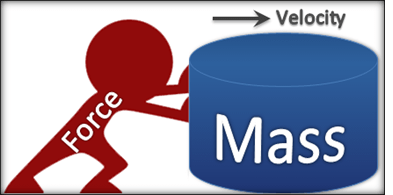
The picture is an example of Newton's...
1st Law
2nd Law
3rd Law

The picture is an example of Newton's...
1st Law
2nd Law
3rd Law


What do all waves transfer?
Matter
Heat
Electricity
Energy

Which of the following can waves transfer energy through?
solid
liquid
gas
empty space
all of the above

What are the two types of waves?
longitudinal and transverse
sound and light

What is the number of complete waves passing a fixed point in a given amount of time?
Amplitude
Intensity
Wavelength
Frequency

What is the frequency of this wave? You must count the number of complete waves.
1 Hz
5 Hz
10 Hz

What is frequency measured in?
Milliseconds
Miles
Hertz
Kilograms

Which type of waves have the longest wavelength?
Visible light
Radio waves
X-rays
Gamma-Rays

Wavelengths are usually measured in ....
seconds
Hz
inches
meters

Shorter wave lengths can carry more energy. Which of these probably carries the MOST energy:
Infrared light
Visible light
X-rays
UV light

What is the distance between the calm sea and the highest wave called?
Wave
Frequency
Amplitude
Magnitude

What does #1 represent?
Period
Frequency
Wavelength
Amplitude

What does #2 represent?
Period
Frequency
Wavelength
Amplitude
The size or quantity of something
Electromagnetic force
Magnetic strength
Magnitude
Electric force
What will happen if the north ends of two magnets are placed near each other?
They will attract each other.
Both magnets will get weaker.
They will repulse (repel) each other.
Nothing will happen.
A directional flow of electrical charge through an object or medium
Magnitude
Magnetic force
Electromagnetic force
Current
Force resulting from interaction between electrically charged particles
Electromagnetic force
Current
Magnetic strength
Magnetic force
Magnetic strength
Attraction or repulsion that arises between electrically charged particles because of their motion
Force resulting from interaction between electrically charged particles
How strong a magnet is
A directional flow of electrical charge through an object or medium
Magnetic force
Attraction or repulsion that arises between electrically charged particles because of their motion
How strong a magnet is
Force resulting from interaction between electrically charged particles
The size or quantity of something
How can the strength of an electromagnet increase?
Remove the core, leaving only the coils of wire.
Add more loops (coils) of wire around the core.
Remove the battery.
Remove loops (coils) of wire from around the core.
What will happen as an electron (-) gets closer to a proton (+)?
The attraction will be stronger.
The repulsion will be stronger.
The attraction will be weaker.
Nothing will happen to the electric field.
Electric force
Attraction or repulsion that arises between electrically charged particles because of their motion
Force resulting from interaction between electrically charged particles
The size or quantity of something
Attractive or repulsive interactions between any two charged objects
As the distance between magnets increases, the attraction between them will –
Increase
Become stronger
Decrease
Stay the same
What affects the strength of an electrical field?
The distance from the source
Both the quantity of the charge and the distance from the source
None of these
The quantity of the charge
Students want to investigate how the amount of electric energy delivered to a motor affects its speed. Which of the following procedures will most likely produce the data students need to answer their question?
Measure the rotations per second of a motor when it is connected to one battery, two batteries, and three batteries.
Add larger and larger motors to a battery to determine the size of the largest motor the battery is able to run.
Closely observe the rotation of the motor to see if the direction of spin reverses when the poles of the battery are switched.
Connect a series of motors to the same battery to figure out how many motors can be run off the same battery.

Students attached both ends of a long wire to the poles of a battery and wrapped the wire around a spoon. In this arrangement, the spoon is able to pick up five paper clips.
(See Attached Diagram)
The students wrap more wire around the spoon and want to determine if the strength of the magnetic force has increased. Which of the following observations would indicate that wrapping more wire has increased the strength of the electromagnet?
More wire was needed to wrap around the spoon.
The spoon now picks up seven paper clips.
Eventually, the battery runs out of energy.
The ends of the wire must touch the battery's poles.

The table provided shows data collected by students during an investigation of two electromagnets.
(See Attached Diagram)
Which of the following conclusions is supported by data on the table?
When two electromagnets are of like charges, they attract each other.
Electromagnets that repel each other have more force than those that attract each other.
The greater the charges of two electromagnets, the greater the size of the force.
If the charge on one magnet is positive, the charge on the other must be negative.

The illustration shows a hand generator. Turning the handle of the generator spins a magnet and creates an electric current that lights the bulb.
(See Attached Diagram)
Which of the following observations can be used to indicate the strength of the current created by the generator?
The brightness of the bulb
The size of the magnet
The length of the handle
The mass of the generator

This table shows the magnitude of electromagnetic force exerted by two electromagnets on each other as the distance between the two electromagnets is varied.
(See Attached Diagram)
The data on the table provide evidence for which of the following conclusions?
The force between any two magnets is always constant, regardless of distance.
As distance between electromagnets increases, the electromagnetic force also increases.
The smaller the distance between two electromagnets, the greater the force.
The force between two magnets depends only on the charge of the electromagnets.

