Worksheets
EOC Physical Science
Total questions: 64
Worksheet time: 2hrs 32mins
Adding or subtracting neutrons changes the atom into an (a) .
Arjun is studying the periodic table and wonders what determines the atomic number of an element?
The total number of neutrons and protons
The number of electrons
The number of protons
The number of neutrons
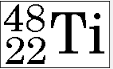
How many protons does this isotope of titanium have?
What is the maximum number of electrons in the second shell (ring)?
8
18
2
32
Emma is working on a chemistry project about elements and their properties. She needs to know: How many valence electrons does Bromine (Br) have for her project?
5
6
7
8
Match the following sets of elements with the description of their properties.
H, C, I
A set of elements that are all halogens.
He, H, Al
A set of elements that includes a noble gas, a nonmetal, and a metal.
He, Ne, Ar
A set of elements that are all noble gases.
Na, Ca, Al
A set of elements that are all metals but belong to different groups.
As you move down a group in the periodic table, the atomic size increases. This is because ____________.
The nuclear charge decreases.
Electrons are added to the same energy level.
More electron shells are added.
The shielding effect decreases.
In a science class, James, Hannah, and Luna are discussing the conductivity of different materials. Which type of element do they conclude is the least conductive?
metal
metalloid
non-metal
During a science fair, Benjamin is explaining to Mason and Grace about different materials used in electronics. He asks, 'Which kind of element is called a semi-conductor?'
metals
metalloids
non-metals
In a perfume bottle, in which state of matter do the perfume particles spread apart and fill all the space available to them once sprayed?
crystal
liquid
gas
solid
During winter, the water in the pond at Scarlett's backyard changes from a liquid to solid. This process is called
condensation
boiling
sublimation
freezing

At 1 atm pressure and 100 °C, water turns into a _____________.
solid
liquid
gas
plasma
What type of bond is typically formed when electrons are transferred from one atom to another?
covalent bond
ionic bond
metallic bond
dipole bond
Which type of bond is formed by the sharing of electrons between two atoms?
ionic bond
covalent bond
metallic bond
dipole bond
What type of bond involves the sharing of electrons between atoms?
covalent bond
ionic bond
metallic bond
transfer bond
Determine the type of bond present in H2O:
ionic
covalent
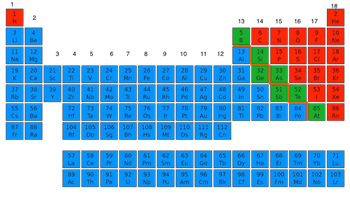
During a science fair, Ethan asked, 'Where are the nonmetals located on the periodic table? '
Blue
Red
Green

Considering frequency of 109 Hz and frequency of 1011 Hz, which type of radiation has the LONGER wavelength?
109 Hz
1011 Hz
Which type of reaction is represented by the following equation:
A + BC --> AC + B
Synthesis
Decomposition
Single Replacement
Double Replacement
Combustion
PCl5 + ___ H2O → ___ HCl + H3PO4
4, 5
1, 6
3, 8
2,2
In a chemical reaction, where are the reactants typically located?
Right side (after the yields sign)
Left side (before the yields sign)
Involves combining lighter nuclei to form a heavier nucleus
fusion
fission
How does the nuclear power-plant in our city generate electricity?
Fusion
Half-life
Fission
Fusion or fission
Time necessary for 50% of a radioactive sample to decay.
carbon dating
half-life
alpha particle
gamma ray
94Be + 11H → _____ + 42He
If a hairspray can is heated, what can be expected of the pressure of the gas inside the can?
The pressure will increase
The pressure will decrease
The pressure will remain constant
The pressure will equalize

The pressure inside the syringe will decrease if we move the plunger in:
Direction A
Direction B
We don't have to move the plunger as the pressure will change on its own.
None of the above answers.

Which of the following graphs represents pressure versus volume (V) for a real gas at a constant temperature
A
B
C
D
Solid or liquid that is being dissolved? (a)
A conductivity tester is placed in a solution of water and an unknown solute. The bulb doesn't light up. What can you determine about the unknown solute?
It is an ionic compound.
It is a metallic compound.
It is a covalent compound.
Not enough information is given to answer this question.
Which of the following will conduct electricity when dissolved to make a solution?
KCl
NH3
CO2
C12H22O11
a substance that vigorously reacts with most metals to produce hydrogen; it readily conducts electricity; it turns litmus red and has a pH of less than 7; it typically is corrosive or sour-tasting
acid
base
neutral
solution
Luna is working on a science project and needs to identify a substance. This substance does not react with most metals or readily conduct electricity; it turns litmus blue and has a pH of greater than 7; it typically feels slippery and is bitter-tasting. What is the substance?
acid
base
neutral
solution
Match the following factors with the correct description of how they affect solubility.
agitation
a factor that increases the rate of solubility by moving the solvent and solute particles around
temperature
a factor that affects solubility by increasing or decreasing it depending on whether the solute is a solid or gas
surface area
a factor that affects solubility by decreasing the size of the solute particles to increase solubility rate; grinding a solute is an example of this factor
saturation
a factor that determines the maximum amount of solute that can dissolve in a solvent at a specific temperature and pressure
John dissolves 54 grams of a solute in a solution he has gently heated near boiling. After a couple of hours he checks the temperature and finds that only 48 grams of solute should dissolve at the present temperature. The solution appears normal otherwise. What type of solution has John made?
unsaturated
saturated
super saturated
unable to determine
Which object shows an energy transformation from electrical to mechanical?


What is the principle behind heat transfer?
Heat moves from less dense to more dense materials
Heat transfers from objects in motion to objects at rest
Heat transfers from warmer objects to cooler ones
Heat does not transfer; it remains constant in a closed system
Match the following types of energy transfer with their corresponding scenarios.
insulation
Preventing heat loss through a vacuum flask
radiation
Heat from the sun warming your face
conduction
Touching a hot iron and feeling it hot
convection
Hot water flowing through cool water

If the specific heat of water is 4.18 J/g∙°C, how much heat is required to increase the temperature of 1,200 g of water from 23 °C to 39 °C?
-80,256 J
80.256 J
80,256 J
-80.256 J
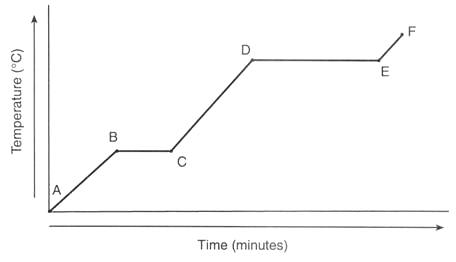
Between which points is the temperature of the substance remaining constant?
A-B only
A-B, C-D, and E-F
B-C only
B-C and D-E
Evelyn throws a ball to Kai. How do we describe the ball's motion in terms of velocity?
the quickness of the ball
the location of the ball
acceleration of the ball
speed of the ball in a specific direction

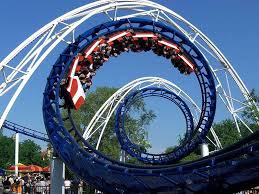

A student inflates a balloon attached to a plastic straw. A string is threaded through the straw and tied to opposite ends of the room. When the air in the balloon is released, the balloon travels the length of the string. Which of Newton's laws explain this?
The law of action-reaction
Newton's law of magnetism
The law of force and acceleration
The law of gravity

If a 40 kg student is pushed in a rolling chair with a force of 30 N, what is the student's acceleration?
(a)
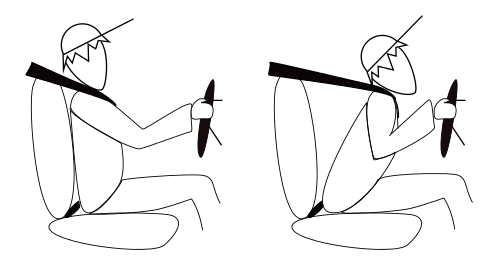
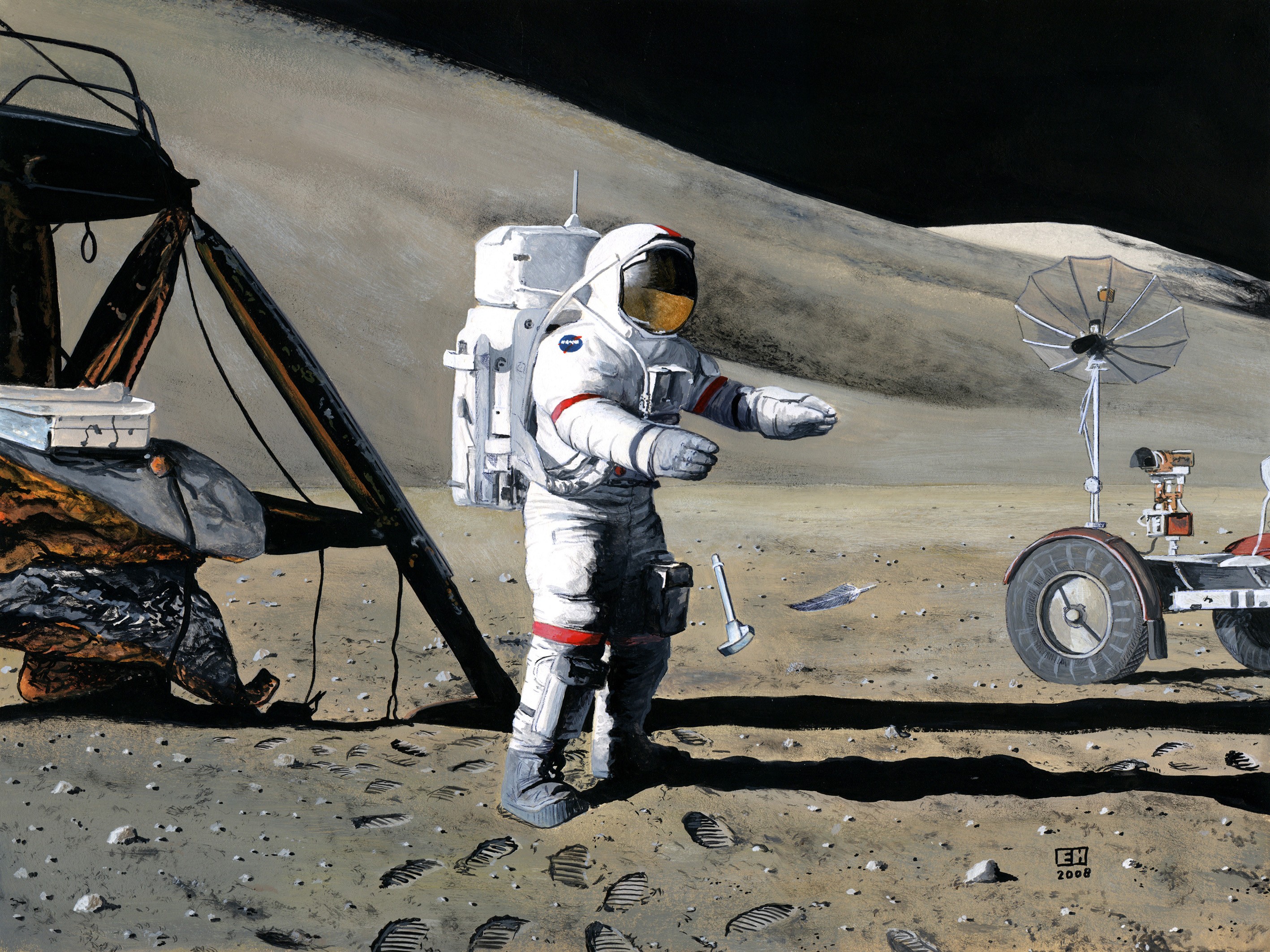
If a feather and a hammer are dropped at the same time on the moon, where there is no atmosphere, which one will hit the ground first?
Neither, there is no gravity on the moon.
hammer because it has more mass
feather because it has less mass
both will hit at the same time, there is no wind resistance
Match the following simple machines.
Doorknob
wheel and axle
Flagpole
pulley
Knife Blade
wedge
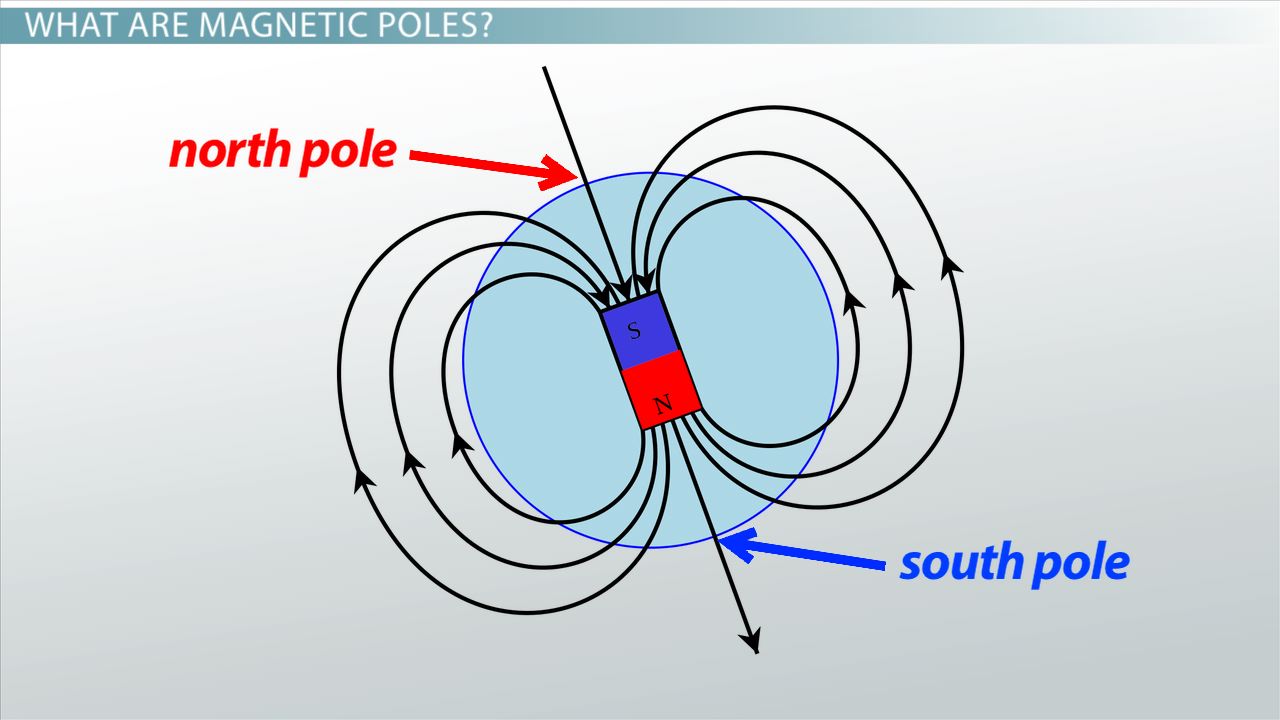
Which of the following statements describes the interaction between magnetic poles?
Like poles attract each other.
Like poles repel each other, and opposite poles attract each other.
Opposite poles repel each other.
Like poles attract each other, and opposite poles repel each other.

Which electromagnet is stronger?
A
B