
 Worksheets
EOC Review 1
Total questions: 37
Worksheet time: 19mins
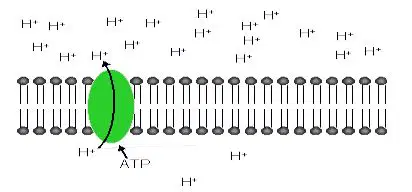
active transport
passive transport
facilitated diffusion
co-transport
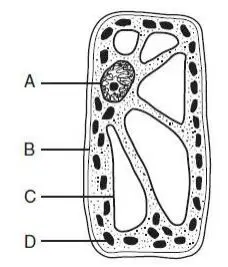
A
B
C
D
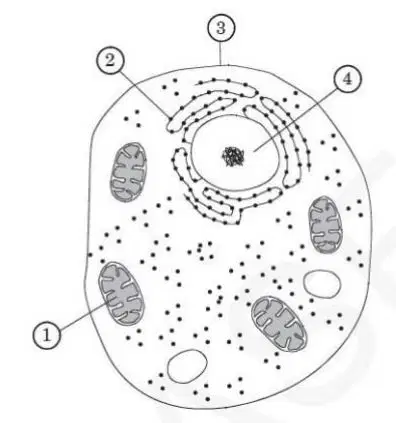
1
2
3
4
Joy took the notes shown below while learning about cells.
• Forms boundary between a cell and the outside environment
• Controls the movement of materials into and out of the cell
• Consists of double layer of phospholipids.
She forgot to write the name of the cell structure that her class was studying that day. What structure is described in her notes?
endoplasmic reticulum
cell membrane
cell wall
nucleus
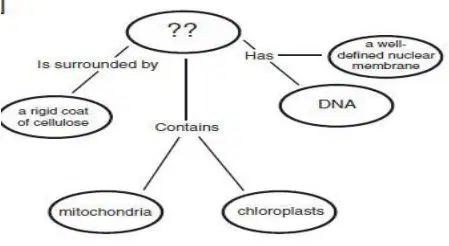
an animal cell
a prokaryotic cell
a virus
a plant cell
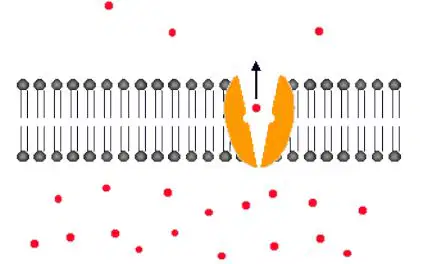
simple osmosis
active transport
simple diffusion
facilitated diffusion
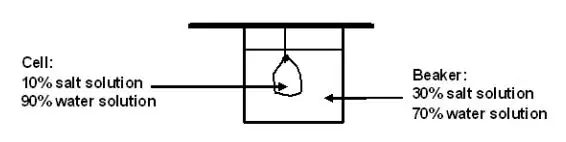
Water will move from the cell into the beaker, resulting in a smaller cell.
Water will move from the beaker into the cell, resulting in a larger cell.
Salt will move from the cell into the beaker, resulting in a smaller cell.
Salt will move from the beaker into the cell, resulting in a larger cell.

acridine orange
osmium tetraoxide
eosin
Nile blue
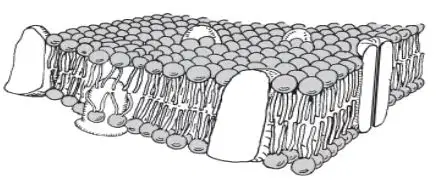
nucleotide
lipid
carbohydrate
protein
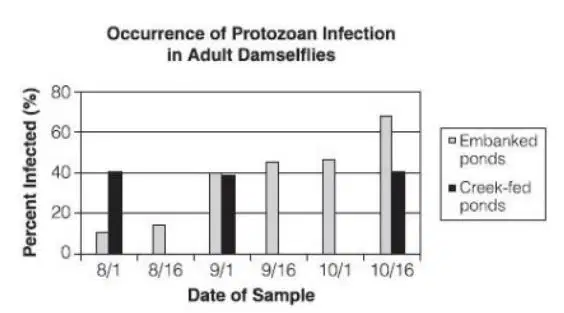
Infection in embanked ponds increased during the sampling period.
Protozoans were more common in creek-fed ponds than embanked ponds.
Protozoans reproduce more quickly in embanked ponds than creek-fed ponds.
Infection in creed-fed ponds remained constant throughout the sampling period.
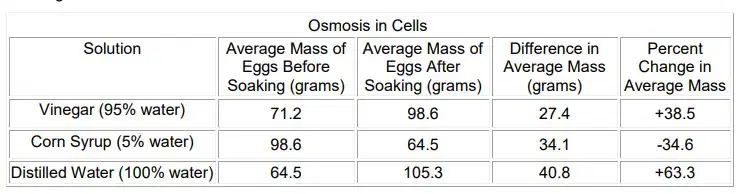
Substances other than water may also cross the cell membrane.
Substances other than water may block pores in the cell membrane.
Water enters the cell when placed in environments of high water concentration.
Water leaves the cell when placed in environments with a low concentration of solutes
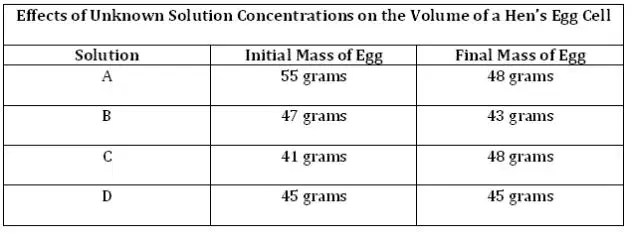
Solution A
Solution B
Solution C
Solution D
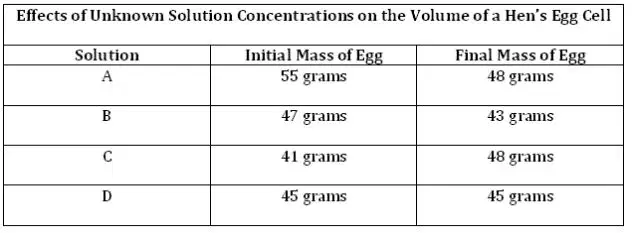
Solution A, B & C
Solution D only
The eggs
Mass

