
Font size
 Worksheets
Final Review P2 2023
Total questions: 43
Worksheet time: 1hrs 9mins
A covalent Bond is which of the following
Between non-metal & non-metal
Shares electrons
Between metal & Non-metals
Forms multiple bonds
Forms between opposite charges
An Ionic Bond is which of the following
Loses or gains electrons
Shares electrons
Between metal & Non-metals
Forms multiple bonds
Forms between opposite charges
Why do elements bond?
To gain new properties
To create a new element
To become stable
To get bigger
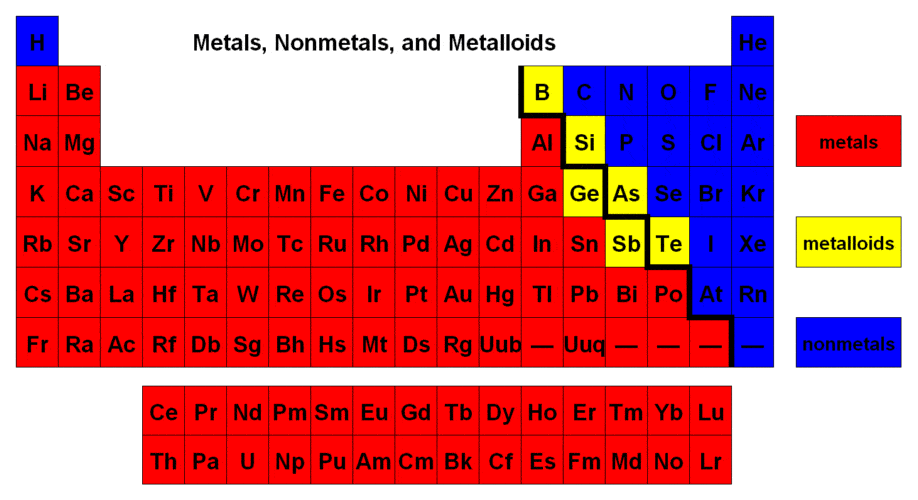
How many valence electrons does Sulfur have?
(a)
CO2
NH3
NaBr
Cl2
What type of chemical bond is found in Water?
Covalent
Ionic
Metallic
Both Covalent and Metallic
Label the following parts of a chemical formula & the type of compound at the top
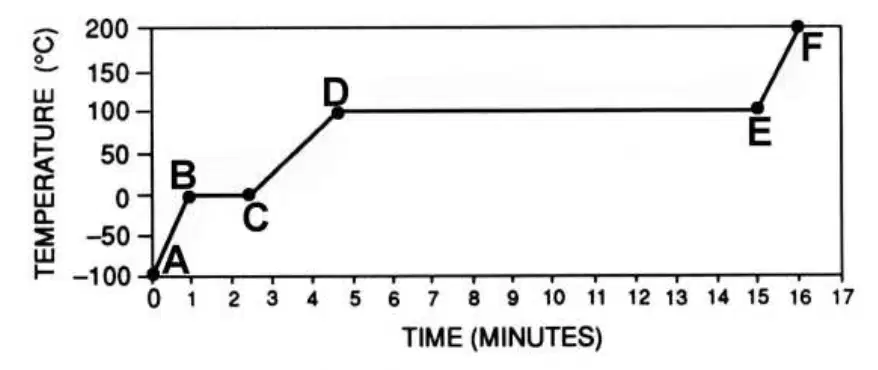
Use the image to match the ranges with the phase or state of matter
A-B
solid
B-C
melting
C-D
liquid
D-E
vaporizing
E-F
gas
A substance made of the combined atoms of two or more elements are called (a) are held together with chemical (b) . Bonds are a (c) that holds compounds together. When compounds are written we use a chemical (d) , which tells you which elements and how many of each are in the compound.
Label the following parts of a chemical formula.

If this compound had a coefficient of 4 how many Iron atoms would be in this compound?
(a)

What is the atomic number of this atom?
(a)
If Ca lost 2 electrons what would its charge be?
(type your answer as a number with a minus for negative - and a plus sign for positive +)
Ex +18 or -18
(a)
Label the parts of the chemical formula.
Label the image using the list of labels

What is the mass number of this atom?
1
3
4
7
Phillip watches a burning log in the fireplace. He makes these observations:
I. .The fire gives off heat.
II. There is a strong smell of smoke
III. Light is emitted where there are flames
IV. Ashes form from the logs.
V. Heat waves appear in the air above the log
Which of Phillip’s observations are conclusive evidence that the burning log undergoes chemical changes and not just a physical change?
observations I, II, and V only
observations II , III, and V only
observations II, III, and IV only
observations I, III, and V only
Type any one of the standard possible endings of a for polyatomic ions
(a)
When a Bunsen burner is lit; why is the presence of a flame considered to be an indication of a chemical reaction?
A flame indicates a change of energy.
A flame indicates a change in chemical energy and phase change.
A flame indicates new physical energy is forming.
A flame indicates a change in chemical energy.
The reaction represents a chemical change because the rust is just a mixture of water and iron.
The reaction represents a chemical change because the iron oxide is a new substance and has a different melting point than iron.
The reaction represents a chemical change because both the original cannonball and the rusted cannonball are solids.
The reaction represents a chemical change because iron oxide is a new substance formed on the cannonball.
Parts of the atom include positive particles called (a) , neutrons which have a (b) charge and electrons that have a (c) charge. The protons and neutrons are located in the (d) . The (e) are not allowed in the nucleus so they stay in the energy levels.

Select both elements that have the same number of valence electrons
B
C
Ga
P
Be
What is the name of S2I4 ?
Sulfur iodide
Disulfur iodide
Sulfur tetraiodide
none of the above
Match the following
Group Number
Number of Valence electrons
Period Number
Number of energy levels
Atomic Number
Number of electrons
P++ n0
Atomic Mass
m - P+
Number of n0
Which element can combine with K to form a neutral ionic compound? (Type the symbol of one of the possible correct answers)
(a)
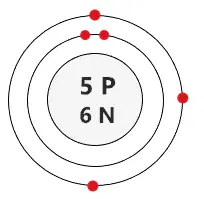
The Name of this element is (a) . It is in period (b) and group (c) . It has a mass of (d) and will have a charge of (e) because it is a metal and metals lose electrons
If an atom has 12 protons and 12 electrons what charge will it have?
(a)
When naming ionic compounds with transition metals you need to include roman numerals to show the (a) of the metal..

Which of the following combinations would need roman numerals in the name?
potassium (K) + fluorine (F)
beryllium (Be) + oxygen (O)
boron (B) + iodine (I)
chromium (Cr) + oxygen (O)

Name the following ionic compound: BeCl2
(a)

Potassium and Oxygen form....
PO
KO
K2O
KO2
Li2O
(a)
MgS
(a)
What is the correct name of Fe2O3?
(a)
What is the correct name for the compound with the formula CrPO4?
(a)
Name the compound NH4OH
(a)
What would be the subscript of Oxygen
Fe3+ O2-
(a)
What is the name of C3Cl8 ?
(a)
What is the name of Br6F10 ?
(a)
What is the name of CO
(a)
Make the type of given compound with the type of formula
Ionic
NaCl
Covalent
CO2
Ionic with Transition
Cu2O3
Ionic with Polyatomic
CaSO4
Ionic with Transition and Polyatomic
FeNO3

