
 Worksheets
CVE404 - Review for Finals
Total questions: 100
Worksheet time: 50mins
This happens when too much coarse aggregates appear on the surface of the concrete.
(a)
Describes how well concrete holds together.
(a)
The finer the cement particles, the larger the surface area available for (a) by water.
Low-heat Portland cement is best used for (a) .
A white crystalline deposit sometimes found on the surface of concrete soon after it is finished.
(a)
Measurement of the characteristics and behavior of materials such as metals, concrete, ceramics or plastics under various conditions.
(a)
A fine powder on the surface which comes off on your fingers.
(a)
The ability to withstand wear, pressure, or damage.
(a)
What does ASTM stand for?
(a)
Used primarily to increase concrete’s resistance to freezing and thawing and provide better resistance to the deteriorating action of deicing salts.
(a)
What is the Tagalog term for the following Construction jargons:
GUTTER
Soleras
Kanal
Haspe
Barakilan
What is the Tagalog term for the following Construction jargons:
PURLINS
Lastilyas
Pierno
Reostra
Piye
What is the Tagalog term for the following Construction jargons:
CABINET HINGE
Reostra
Espolon
Balangkas
Senepa
What is the English term for the following Construction jargons:
PASAMANO
Window Sill
Door Fillet
Collar Plate
Window Head
What is the English term for the following Construction jargons:
PLANTILYA
Pattern
Post
Pei de Gallo
Scaffolding
What is the English term for the following Construction jargons:
ANDAMIYO
Piketa
Scaffolding
Rebocada
Plaster
What is the English term for the following Construction jargons:
HULOG
Eave
Plumb Bob
Nut
Purlin
What is the Tagalog term for the following Construction jargons:
GIRDER
Senepa
Guililan
Tuerka
Barakilan
What is the Tagalog term for the following Construction jargons:
RIVETS
Reostra
Turnilyo
Pierno
Rimatse
What is the English term for the following Construction jargons:
HARDINERA
Plaster
Pierno
Open Stringer
Flooring
(a) contains up to 0.3% carbon.
Iron with high carbon content is called (a) .
Metals like copper, nickel, and aluminum are blended to create (a) . These are used in pipelines, automobile parts, and ships.
This weather-resistant, high-tensile strength steel incorporates a unique method that actually uses rust to prevent rust, which is the greatest weak point of steel.
(a)
It is the reversal of stress from tension to compression and vice versa, when this cycle is repeated many times.
(a)
The relation between stress and strain is known as (a) .
(a) is designed to relieve stress caused by movement induced by thermal expansion and contraction caused by temperature changes.
Phenomenon when pure plasticity happens.
(a)
If the load is removed during this stage, both stress and strain return to zero.
(a)
What is the minimum lap length for spliced bars?
(a)
What is the minimum concrete cover for members permanently exposed to earth?
(a)
Used to secure the bars in position in such a way that concrete-placing operations will not move them.
(a)
Ability to be stretched into a wire.
(a)
Grade of steel used for High-rise structures.
(a)
What does PNS stand for?
(a)
Type of ties used for heavy mats that are to be lifted by a crane.
Saddle Tie
Cross Tie
Double Stranded Single Tie
Saddle Tie with a Twist
Type of ties used for heavy works.
Saddle Tie
Cross Tie
Double Stranded Single Tie
Saddle Tie with a Twist
Type of ties used on floor slabs.
Saddle Tie with a Twist
Snap Tie
Cross Tie
Saddle Tie
Type of ties used on walls.
Saddle Tie with a Twist
Snap Tie
Cross Tie
Saddle Tie
Type of ties used on light vertical mats of steel.
Wall Tie
Cross Tie
Snap Tie
Saddle Tie
Type of ties that has little or no twist.
Wall Tie
Cross Tie
Snap Tie
Saddle Tie
Minimum concrete cover for columns
20 mm
35 mm
40 mm
75 mm
Minimum concrete cover for slabs
20 mm
35 mm
40 mm
75 mm
Mortar is a mixture of ________and ________ when mixed with _____________
cement, sand, water
sand, gravel, water
cement, concrete, water
A mixture of cement, sand, ________ and water is known as concrete
gravel
mortar
clay
Concrete can handle the higher compression stresses as compared to tension
False
True
Select some of the advantages of using concrete as construction materials
Fresh concrete expands on drying and hardened concrete shrinks on wetting
Concrete expands and contracts with the changes in temperature.
Easy to disintegrate by alkali and sulfate attack
Needs another material to reinforce it against excessive shear and tension
Lack of ductility, disadvantageous with respect to earthquake resistant design.
Select some of the advantages of steel as construction material
Very strong in compression
High ductility - Steel can undergo large plastic deformation before failure
Highly suitable for prefabrication and mass production
High fire resistant - high strength in fire if protected by paint.
Steel can be reused after a structure is disassembled
Choose the common types of steel used in construction
High Yield Steel
Mild Yield Steel
Soft Yield Steel
Construction materials are basically the substance or substances out of which a thing is or can be made. Select suitable civil engineering structures where materials are employed to design and build them.
Road & Highway
Bridge
Housing
Retaining wall
Foundation
Concrete is the binding material.
True
False
__________ is important influence on the quality of concrete produced.
Percentage of material
Quantity of aggregates
Type of cement
Water-cement ratio
________________ is one of the admixture of concrete that helps to accelerate setting and early-strength development.
Water-reducing admixtures
Retarding admixtures
Accelerating admixtures
Air Entraining Admixtures
Which are the aspects we should consider as an engineer when choosing the right materials for construction?
Costing of materials
Quantity of materials
Quality of materials
Efficiency of materials
1 part of cement
2 parts of cement
4 parts of cement
no cement
Determine the equivalent board foot for the given:
10pcs - 1" x 10" x 3 meters
(a)
The following are properties of timber, EXCEPT for
DURABILITY
PERMEABILITY
ELASTICITY
PLASTICITY
TOUGHNESS
What is the specific gravity of wood?
1.26
1.36
1.56
1.06

Identify the construction material.
Bricks
Blocks
Masonry

Identify the construction material.
(a)

Identify the construction material.
(a)

Identify that construction material.
(a)

Identify the construction material.
(a)

Identify the testing equipment.
(a)

Identify the testing equipment.
UTM
Vicat Apparatus
Los Angeles abrasion testing machine
LAOS abrasion testing machine
Kelly Ball test apparatus
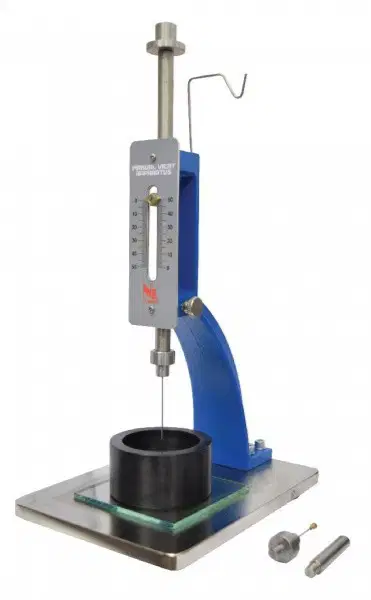
Identify the testing equipment.
UTM
Vicat Apparatus
Los Angeles abrasion testing machine
LAOS abrasion testing machine
Kelly Ball test apparatus
Which among the following are the tests used in fresh concrete?
Compression Strength Test
VeeBee Test
Kelly Ball Test
Compacting Factor Test
Rebound Hammer Test
Which among the following are the tests used in cement?
Fineness Test
SoundnessTest
Tensile Test
Compressive Test
Setting Time Test
What is the English term for the following Construction jargons:
BOLT
Plaster
Pierno
Open Stringer
Flooring
What is the Tagalog term for the following Construction jargons:
FASCIA BOARD
Senepa
Guililan
Tuerka
Barakilan
The following are the three views (section) of a wood, except for
Tangential
Longitudinal
Radial
Cross-sectional
The following statement/s is/are true except:
i. Wood is much weaker in tension across the grain than along the grain.
ii. Wood is much weaker in compression across the grain than along the grain.
iii. Wood is much weaker in shear across the grain than along the grain.
iv. Wood is much weaker in shear along the grain than across the grain.
i & iii
iv
i, ii & iv
iii
The following are standard rebar sizes except for:
10mm
22mm
30mm
25mm
12mm
It uses a consumable electrode sheathed in a material that releases a protective gas cloud around the pool of molten metal to protect it from oxidation.
Metal Inert Gas Welding
Stick Welding
Submerged Arc Welding
Spot Welding
It uses wire from a spool fed through a gun to provide filler material. Argon gas flows around the wire as it leaves the gun and shields the weld pool from oxygen.
Metal Inert Gas Welding
Stick Welding
Submerged Arc Welding
Spot Welding
It is a very useful process whereby two elements to be welded are placed in contact between two electrodes. It is perhaps the fastest way to create a joint.
Metal Inert Gas Welding
Stick Welding
Submerged Arc Welding
Spot Welding
Connections do not add strength to the finished structure.
TRUE
FALSE
Connections can be used to join together two similar materials only.
TRUE
FALSE
Connections are used to join or to link objects and make them act as though they are one and homogenous.
TRUE
FALSE
Connections provide an opportunity to transfer loads from different areas of the structure.
TRUE
FALSE
Only the axial forces are to be transferred in this type of connection. These are simplest in all types of connections which can either be welded or bolted.
Simple Connection
Moment Connection
Truss Connection
These are considered flexible and beams become simply supported. In this case only the web is connected with the other member because most of shear stresses are concentrated in the web.
Simple Connection
Moment Connection
Truss Connection
These connection are particularly used when continuity between the members of the building frame is required to provide more flexural resistance and reduce lateral deflection due to wind loads.
Simple Connection
Moment Connection
Truss Connection

