
 Worksheets
FINAL EXAM ACADEMIC RESOURCE 2024
Total questions: 73
Worksheet time: 1hrs 28mins
1. If I have to learn how to do something, I learn best when I:
(V) Watch someone show me how.
(A) Hear someone tell me how.
(K) Try to do it myself.
(V) Watch someone show me how.
(A) Hear someone tell me how.
(K) Try to do it myself.
2. When I read, I often find that I:
(V) Visualize what I am reading in my mind’s eye.
(A) Read out loud or hear the words inside my head.
(K) Fidget and try to “feel” the content.
(V) Visualize what I am reading in my mind’s eye.
(A) Read out loud or hear the words inside my head.
(K) Fidget and try to “feel” the content.
When asked to give directions, I:
(V) See the actual places in my mind as I say them or prefer to draw them.
(A) Have no difficulty in giving them verbally.
(K) Have to point or move my body as I give them.
(V) See the actual places in my mind as I say them or prefer to draw them.
(A) Have no difficulty in giving them verbally.
(K) Have to point or move my body as I give them.
If I am unsure how to:
(V) Write it in order to determine if it looks right.
(A) Spell it out loud in order to determine if it sounds right.
(K) Write it in order to determine if it feels right.
(V) Write it in order to determine if it looks right.
(A) Spell it out loud in order to determine if it sounds right.
(K) Write it in order to determine if it feels right.
5. When I write I:
(V) Am concerned with how neat and well spaced my letters and words appear.
(A) Often say the letters and words to myself.
(K) Push hard on my part or pencil and can feel the flow of the words.
(V) Am concerned with how neat and well spaced my letters and words appear.
(A) Often say the letters and words to myself.
(K) Push hard on my part or pencil and can feel the flow of the words.
If I had to remember a list of items, I would remember it best if:
(V) Wrote them down.
(A) Said them over and over to myself.
(K) Move around and used my fingers to name each item.
(V) Wrote them down.
(A) Said them over and over to myself.
(K) Move around and used my fingers to name each item.
I prefer teachers who:
(V) Use a board or overhead projector while they lecture.
(A) Talk with lots of expression.
(K) Use hands on activities.
(V) Use a board or overhead projector while they lecture.
(A) Talk with lots of expression.
(K) Use hands on activities.
8. When trying to concentrate, I have a difficult time when:
(V) There is a lot of clutter or movement in the room.
(A) There is a lot of noise in the room.
(K) I have to sit still for any length of time.
(V) There is a lot of clutter or movement in the room.
(A) Talk with lots of expression.
(K) I have to sit still for any length of time.
When solving a problem I:
(V) Write or draw diagrams to see it.
(A) Talk myself through it.
(K) Use my entire body or move objects to help me think.
(V) Write or draw diagrams to see it.
(A) Talk myself through it.
(K) Use my entire body or move objects to help me think.
10. When given written instructions on how to build something, I:
(V) Read them silently and try to visualize how the parts will it together.
(A) Read them out loud and talk to myself as I put the part together.
(K) Try to put the parts together first and read later.
(V) Read them silently and try to visualize how the parts will it together.
(A) Read them out loud and talk to myself as I put the part together.
(K) Try to put the parts together first and read later.
To keep occupied while waiting, I:
(V) Look around, stare, or read.
(A) Talk or listen to others.
(K) Walk around, manipulate things with my hands, or move/shake my feet as I sit
(V) Look around, stare, or read.
(A) Talk or listen to others.
(K) Walk around, manipulate things with my hands, or move/shake my feet as I sit
If I had to verbally describe something to another person, I would:
(V) Be brief because I do not like to talk at length.
(A) Go into great detail because I like to talk.
(K) Gesture and move around while talking.
(V) Be brief because I do not like to talk at length.
(A) Go into great detail because I like to talk.
(K) Gesture and move around while talking.
(V) Try to visualize what he/she was saying.
(A) Enjoy listening but want to interrupt and talk myself.
(K) Become bored if her/his description got too long and detailed.
(V) Try to visualize what he/she was saying.
(A) Enjoy listening but want to interrupt and talk myself.
(K) Become bored if her/his description got too long and detailed.
(V) Faces but forget names.
(A) Names, but forget faces.
(K) The situation where I met the person rather than the person’s name or face.
(V) Faces but forget names.
(A) Names, but forget faces.
(K) The situation where I met the person rather than the person’s name or face.
A friend calls one afternoon and invites you to dinner at their house that evening, but you’re in the middle of doing your homework when they call. You:
a. politely turn down the invitation and finish your homework
b. kindly tell them that you will get back to them shortly, while you check with your parents
c. immediately stop what you are doing and tell them that you’ll be right over
d. become anxious because you can’t decide what to do
You are the new student at your high school and have trouble making friends easily. You:
a. join a club to meet other students with common interests
b. introduce yourself to other students, despite your discomfort
c. wait until another student initiates a friendship with you
d. do nothing
You are tired of eating lunch alone every day at school. You:
a. offer to share your lunch with someone so they will spend time with you
b. approach a classmate(s) that you know and hint that you’d like to join them
c. skip eating lunch all together
d. feel bad, but make no effort to change your situation
Your partner in chemistry lab never does their share of the lab work and this bothers you. You:
a. ask your chemistry partner to pitch in more
b. immediately explain the situation to the teacher and ask for their help
c. survey the other students to find a new chemistry partner
d. do nothing
You agree to meet a teammate at the local pizzeria after your soccer game, but you lose track of time. You arrive 30 minutes late and your teammate is no longer there. You:
a. call your teammate to apologize and ask if they can still meet you at the pizzeria
b. leave the pizzeria and apologize to your teammate the next day
c. do nothing because you don’t know what to do
d. assume your teammate forgot to meet you at the pizzeria
Some students in your P.E. class are making negative remarks about your athletic ability during class. You:
a. politely ask them to stop
b. ignore their comments
c. get upset and tell the P.E. coach
d. tell your parents you no longer want to take P.E. class
You and your little sister are home alone and you decide to cook something on the stove for dinner. Suddenly you smell something burning from your kitchen, but you don’t see any smoke and can’t determine the source. You:
a. turn off the stove immediately and call the fire department to explain the situation
b. turn off the stove, exit your house immediately (with your sister), and wait for your
parents to come home
c. do nothing since you don’t see any smoke coming from the stove
d. instantly become alarmed and hysterically call your parent(s)
You have an A+ grade in English class, but missed the final test because you were out sick on the day it was given. You:
a. ask your teacher if your missed test will affect your grade
b. are worried about your perfect grade and ask your teacher if you can take a make-up
exam
c. do nothing because you don’t know what to do
d. do nothing because you don’t care
9. You have a friend over to your house after school and decide to make cookies for the school fundraiser. Your friend would rather make a cake than cookies, and you can’t seem to agree. You:
a. compromise and decide to make both
b. concede and make the cake instead
c. tell your friend you are making cookies and it’s not negotiable
d. get upset and ask your friend to leave
10. You’re out to lunch with a friend from school when you realize that you have forgotten your lunch money. You:
a. tell your friend that you’ve forgotten your money and ask if they have any money to loan
you
b. tell your friend that you’ve forgotten your money and ask if they will share their lunch with
you
c. say nothing and eat nothing
d. ask if you can have your friend’s lunch to eat
11. You and a friend are reprimanded for talking in class, but only you get detention for it,
and this upsets you. You:
a. explain to the teacher why you feel the punishment isn’t fair
b. expect your friend to accept responsibility too
c. say nothing and assume the punishment alone
d. get upset with your friend and the teacher
You’re at a restaurant with your sister and you’ve both ordered your meal. But
when your meal arrives, it’s not exactly how you’ve ordered it. You:
a. politely explain why you must return your meal and ask for it to be corrected
b. express your disappointment to your server and ask for other options
c. refuse to eat your meal and pout until your sister finishes her meal
d. abruptly leave the restaurant and threaten never to return
13. You witnessed a student rear-end a vacant car in the school parking lot. You:
A. immediately tell the school principal what you witnessed
b. assume the student involved will handle the situation
c. say nothing unless someone asks for your input
d. call the police immediately and report the incident
14. You’re a guest at your cousin’s graduation party. It’s a sit-down dinner and you quickly
realize that nothing the host is serving is anything you ordinarily eat. You:
a. compliment the host, but politely explain that you have dietary issues and unfortunately
can’t eat the meal
b. decide to taste a few of the dishes anyway
c. fake a stomach ache and asked to be excused
d. announce to everyone at the table that the menu is ridiculous
15. You want to learn how to drive a car, but your parents don’t think you are ready.
You disagree. You:
a. decide to study for the driver’s license test to prove to them you are ready
b. are upset, but understand your parents’ concerns
c. nag your parents until they give in d. practice driving illegally, despite your parents’
concerns
16. You and a group of your school friends meet before school for breakfast. The server brings you your meal first, while everyone else at your table is still waiting to be served.
You:
a. wait until the entire group is served and then eat yours
b. ask the others at the table if they mind if you start eating before them
c. Start eating because you are hungry
d. wait for the next guest to get their food and then eat yours
17. You’ve wanted to play the drums in the school band for over a year, but you are nervous because you have sensory issues. When you finally have enough courage to join, your music teacher tells you she doesn’t think it’s a good idea. You:
a. attend a few band practices and see how it affects you
b. join anyway, despite your concerns and your teacher’s warning
c. take her word for it and decide to join a different school club
d. realize it was a bad idea, but decide to play a different instrument
18. Your brother’s friend is at your house having a meal with you and your family. You notice that your brother’s friend is chewing with his mouth open, licking his fingers, and wiping his mouth with his shirt sleeve instead of using his napkin. You:
a. offer your brother’s friend a napkin
b. pretend not to notice him
c. are embarrassed and tell your brother’s friend he’s rude
d. leave the table in disgust
19. You discover your friend is taking prescription medication that is not prescribed for them and you are concerned. You:
a. tell their parents
b. tell your parents
c. explain your concerns to them
d. do nothing
20. You just found out that your best friend is moving across town and won’t be attending your high school anymore. You:
a. are upset, but understand
b. recognize that situations change, but plan to keep in touch
c. are inconsolable and can’t imagine school the same without them
d. look for a new best friend
What might be inferred from the fact that insects are on own their own as soon as they are born?
A. Insects stay with their parents until they are old enough to live on their own.
B. Insects are able to gather their own food and live on their own as soon as they are born.
C. Insects eggs have hard shells that contain food for the growing baby inside.
D. All eggs need to be in water to survive.
Barren-ground caribou are about 4 feet tall at their shoulder and weigh up to 300 pounds. Their short, think bodies help them keep warm in the cold Arctic weather. Their long legs and large hooves are perfect for the long distances they travel every year.
What inference can you make abut barren-ground caribou?
Barren-ground caribou are tall and chubby.
Barren-ground caribou are mammals well suited to freezing temperatures.
Barren-ground caribou are large birds.
Barren-ground caribou animals travel long distances looking for warm weather.
Scientists say that cats typically ignore music made for humans, and that they become more at ease listening to music imitating purrs and the suckling sounds of kittens nursing . In their experiment, they layered such sounds creating melodies made for feline listening pleasure. These tunes are being used to help calm skittish shelter cats.
What inference can you make from the paragraph?
Cats enjoy listening to the sounds of other cats more than human music.
Cats like a specific type of music.
Music can be used to calm animals down.
Human music is not good for animals.
Like every trap, the Venus Flytrap contains bait. Sugary nectar covers the leaves. Insects smell the nectar and think that it is meal time. They are right, but they never guess that they are on the menu.
What inference can you make from the paragraph?
Insects must have nectar in every meal.
Venus Flytrap restaurant serves insects on the menu.
Venus Flytraps are used to produce nectar juice.
Insects are drawn to the smell of nectar.

Which of these is an observation?
The dog is 4 years old.
The dog is wearing a hat.

What is an observation about this picture?
The lady is working on a remote learning day.
This lady has her hair in a bun.

Choose 2 inferences about this picture.
Today is the dog's birthday.
There is a candle on the cake.
The dog has a tag on the collar.
The dog will eat the cake.

Observation or Inference: I think the weather is cold.
Observation
Inference
Observation or Inference: I notice the tree by the pond has no leaves on it.
Observation
Inference

Which statement is an observation about this picture?
There are washing machines or dryers in the picture.
The woman is at a laundry mat.

The cat looks mad. He must be hangry.
Observation
Inference
In qualitative research, we depend mostly on our senses.
True
False

Which of these is an observation about this picture?
The blue team is winning.
The blue team is the Golden State Warriors.
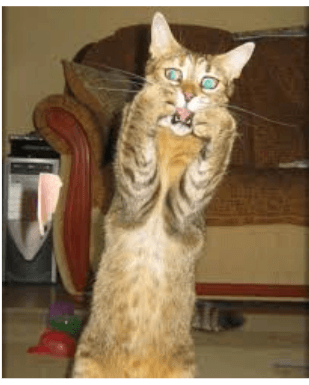
Observation or Inference: The cat is scared.
Observation
Inference

Choose 2 inferences about this picture.
The person is wearing brown shoes.
There are 2 carts showing in the picture.
The person is trying to climb up in the dryer to hide.
The cart is used for hanging and sorting clothes.
Using any of your 5 senses to describe the world around you.
Observation
Inference
Quantitative Observation
Logical Theory
An observation that has to do with adjectives like heavy.
Centimeters
Inference
Qualitative Observation
Quantitative Observation
An observation that has to do with numbers and labels like 3.5 cm.
Observation
Touch, Taste, Sight, Hearing, Smell
Qualitative Observation
Quantitative Observation

Qualitative or Quantitative: There is 300 mL of liquid in this beaker.
Qualitative Observation
Quantitative Observation

Qualitative or Quantitative: I feel rough sand and a strong heat on the back of my neck.
Qualitative Observation
Quantitative Observation

Qualitative or Quantitative: We bought 3.4 pounds of fruit.
Qualitative Observation
Quantitative Observation

Qualitative or Quantitative: I hear a rush of wind, loud yells, and metal banging together.
Qualitative Observation
Quantitative Observation

Qualitative or Quantitative: The green bar is 3.5 centimeters long.
Qualitative Observation
Quantitative Observation
Where can you find the main idea?
At the beginning of the text.
In the middle of the text.
At the end of the text.
Where is the Main Idea stated in this example?
Men have gazed up at the moon for centuries, but in the 20th century, men not only gazed at the moon, but stood on it, as well in 1969, Neil Armstrong and buzz Aldrin became the first men to walk on the surface of the Moon, but they were not the last. In 1972, Gene Cernan became the last man to step off the lunar surface. Between 1969 and 1972, a total of 12 men walked on the moon.
Beginning
Middle
End
Where is the main idea stated in this example? Most teenagers and young adults do not know what they want to do for the rest of their lives. If you don't know what kind of career you'd enjoy, you can take an interest test, do research about different careers, or job-shadow a person who is working in a field that interests you. As you can see there are a number of things you can do to help you begin to choose a career.
Beginning
Middle
End
When citing evidence from a text, the proper way to punctuate it is:
italics
underlined
in quotes
none of the above
What is an inference?
an answer that is clearly stated in the text
a logical conclusion drawn from evidence in a text
an opinion made from reading a text
none of the above
What is the best way to cite evidence from a text?
summarize
paraphrase
in quotes
all of the above
When you decide to study for an exam instead of going out with friends, you are practicing:
Self-management
Responsible decision-making
Relationship skills
Self-awareness
Which of the following best describes responsible decision-making?
Making choices based on ethical standards, safety concerns, and social norms
Understanding your own emotions
Managing relationships effectively
Recognizing and appreciating individual and group similarities and differences
Apologizing after realizing your mistake in a disagreement shows:
Self-awareness
Responsible decision-making
Relationship skills
Self-management
Creating a study schedule and sticking to it is an example of:
Stress management
Time management
Responsible decision making
Identifying feelings
Choosing to apologize after realizing you've hurt someone's feelings is an example of:
Responsible decision making
Time management
Stress management
Identifying feelings
Choosing to delegate tasks to manage a heavy workload is an example of:
Stress management
Time management
Responsible decision making
Identifying thoughts

