
NEW
Font size
 Worksheets
Anatomy/Physiology Final Rev.
Total questions: 35
Worksheet time: 18mins
What is a sensory neuron?
conducts impulses away from the brain
transmits impulses from the CNS
resides the CNS
conducts impulses to the brain

What bone(s) are part of the pelvic girdle?
pubis, ilium
ilium only
pubis, ilium, and ischium
pubis, coccyx
Typical anemia is _________.
low iron in the hemoglobin molecule
low globin (protein) in the hemoglobin molecule
low sugar
too much iron
An erythrocyte is a ________.
white blood cell
platelet
blood clot
red blood cell
Hemostasis is __________.
bleeding to death
the stoppage of bleeding
formation of white blood cells
formation of red blood cells
The correct order of hemostasis are:
1. platelet plug forms
2. vascular spasms
3. coagulation
1. vascular spasms
2. platelet plug
3. coagulation
1. coagulation
2. vascular spasms
3. platelet plug
Epithelial tissue can be simple or __________.
compound
stacked
complex
stratified
Epithelial tissue can be ALL but _________.
squamous
cuboidal
round
columnar
The Integumentary System functions include _______.
barrier from infection
transport of nerve impulses
breakdown of nutrients
interpreting messages
Penicillin only kills what type of pathogens?
protists
viruses
bacteria
fungi
How can AIDS caused by the HIV harm someone's immunity?
It destroys the antibodies made by B cells
It destroys the T cells
It attacks the non-specific response
Why is hemoglobin important?
It helps fight infections.
It helps blood clot.
The iron (heme) carries the oxygen to all cells.
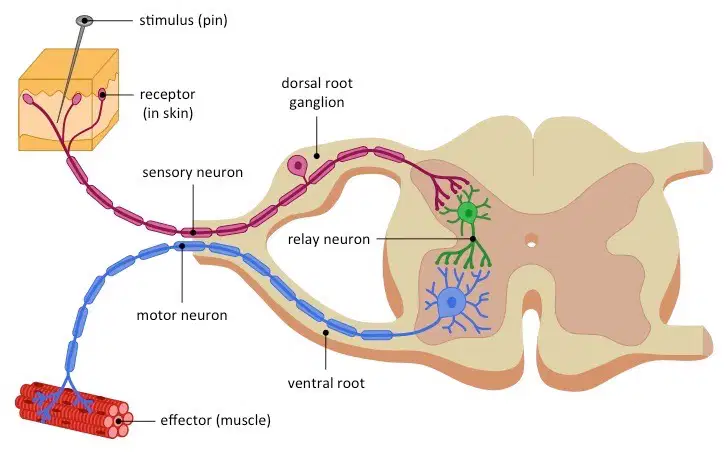
The diagram shows a sensory neuron, the spinal cord, and a motor neuron. These are parts of _________.
the brain
reflex arc
central nervous system
peripheral nervous system
_________ is the enzyme in saliva that _______ the activation energy of digestive reactions.
Amylase, raises
Lactase, raises
Amylase, lowers
Lactase, lowers
The small intestines functions to ________
absorb water and form feces.
digest nutrients and absorption of the nutrients.
digestion of nutrients only.
The large intestines functions include _________
absorbing water and forming feces.
digesting nutrients only.
digesting and absorbing nutrient into bloodstream.
Which bones are in the axial skeleton?
femur, clavicle
skull, ribs
phalanges, hips
humerus, carpals
Which bones are in the axial skeleton?
fibula, tarsals
scapula, ulna
tibia, tarsals
vertebrae, sternum

Which color shows the body divided by a frontal plane?
blue
green
red
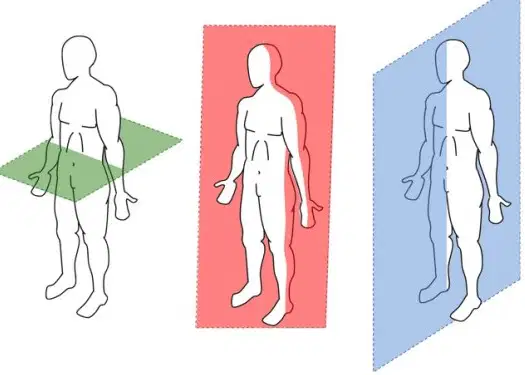
Which color shows a body divided by a midsaggital plane?
blue
green
red

Which color shows a body divided by a transverse plane?
blue
green
red

Sarcomeres, the contractile unit of a skeletal and cardiac cell, contain what two proteins in the A band?
striated and smooth
calcium and phosphorus
hemoglobin and pectin
myosin and actin
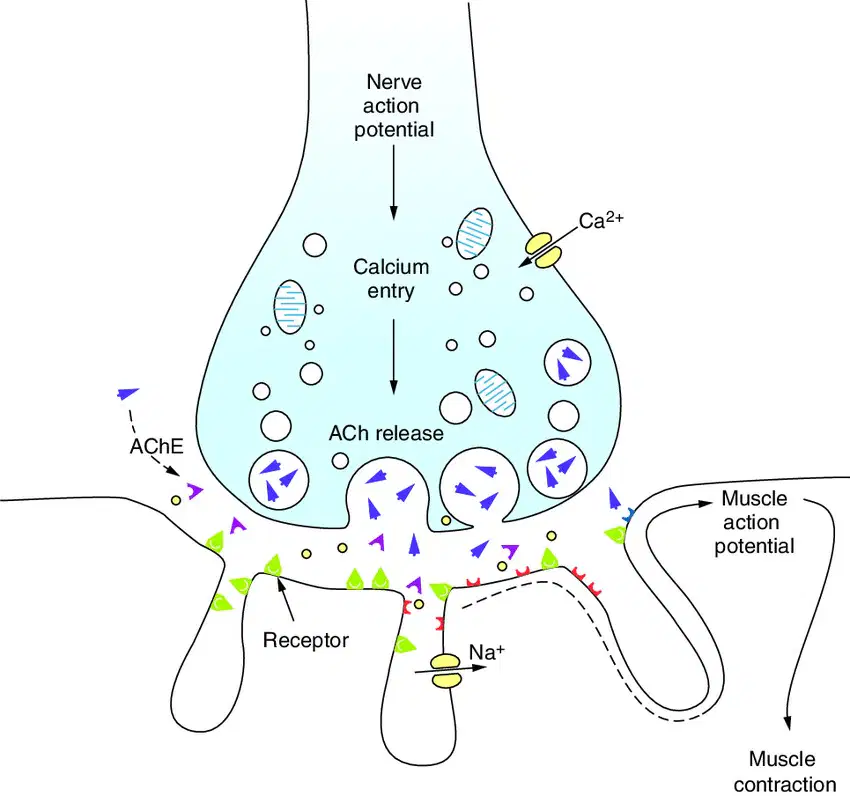
This is a neuromuscular junction. What chemical needs to enter the presynaptic neuron for the muscle to contract?
Calcium
ACh
Na (sodium)
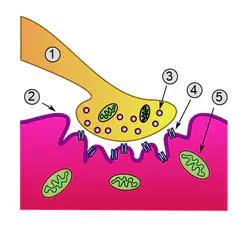
This is a neuromuscular junction. What number represents a neurotransmitter called ACh (acetylcholine)?
1
2
3
5
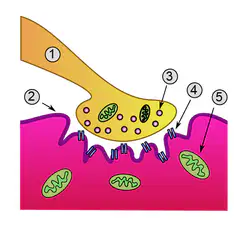
In this neuromuscular junction, what number represents where ATP is made in the muscle cell?
1
2
3
5
What macromolecule (organic compound) builds structures and functions as enzymes?
carbohydrates
proteins
lipids
nucleic acids
What macromolecule (organic compound) supplies the body with short-term energy?
carbohydrates
proteins
lipids
nucleic acids
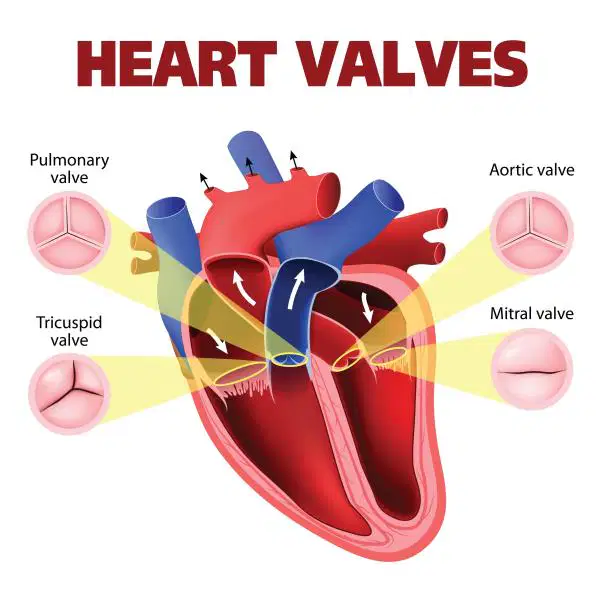
The heart sounds "lub dub" are caused by ________
Lub-semilunar valves closing
Dub-AV (tricuspid/mitral) valves closing
Lub-AV (tricuspid/mitral) valves closing
Dub-semilunar valves closing
There are two types of glands, exocrine and endocrine. Which type secretes hormones?
exocrine
endocrine
Exocrine glands secrete _________.
hormones
sweat, tears, mucous
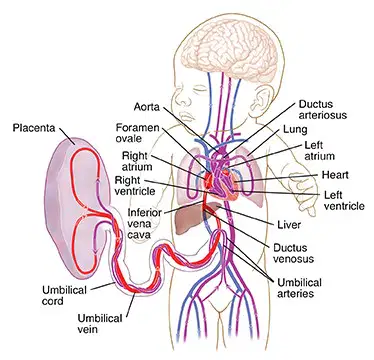
Which vessel from umbilical vein has the highest oxygen level?
umbilical arterios
ductus venosus
What type of epitheilial cell gives capillaries the ability to absorb and release gases and other products?
stratified squamous
simple squamous
Are enzymes in tears are a ________.
specific immune response
non-specific immune response
Making antibodies is _________.
a non-specific immune response
a specific immune response
Anemia is usually caused by a lack of ______ in the diet.
sugar
iron
fat
protein

