
Font size
 Worksheets
Land Use ES
Total questions: 55
Worksheet time: 1hrs 5mins


a naturally occurring solid material from which a metal or valuable mineral can be profitably extracted.
Minerals
Ore
Oil
Water
Mining that is done above ground is called...
surface mining.
subsurface mining.
Mining that is done below ground is called...
surface mining.
subsurface mining.
When ore is extracted from near the surface by digging deep into the ground.
Strip Mining
Contour Mining
Mountaintop Removal
Open Pit Mining
When ore is removed in layers by removing the soil that is on top.
Open Pit Mining
Oil Derricks
Strip Mining
Fracking
This form of mining uses tunnels and shafts to bring ore to the surface.
surface mining
subsurface mining
Removing a mountaintop to reach the ore that lays underneath.
Open Pit Mining
Fracking
Mountaintop Removal
Contour Mining


Which greenhouse gas is released by coal mining?
nitrous oxide
carbon dioxide
ozone
methane
High birthrate and high death rate means the total population is low
stage 1
stage 2
stage 3
stage 4
stage 5
In what stage of the DTM are traditional tribes?
1
2
3
4
5
Which describes the birth and death rate of Stage 1 of the DTM?
The death rate is high but the birth rate is low
Both the death and birth rate are high
The death rate is low but the birth rate is high
Both the death and birth rate are low
In which stage of the DTM is the population growth the most rapid?
1
2
3
4
5

What does the whole right side of the population pyramid represent?
Males
Females
Unemployed
Young people

What age group does the top of the population pyramid represent?
The working people
The rich people
The elderly
The young people

What age groups does the bottom of a population pyramid represent?
The elderly
The working adults
The children
Males

Does this age structure diagram show a country with
Rapid Growth
Decreasing Growth
Zero Growth
Deep-sea exploration time! How does mining in the mysterious depths of our oceans impact the rich biodiversity found there?
By introducing invasive species to new areas
By increasing the amount of sunlight that reaches the ocean floor
By causing physical destruction to habitats on the ocean floor
By reducing the amount of carbon dioxide absorbed by the ocean
🌊 Deep-sea adventurers beware! What's a sneaky side effect of those mysterious sediment plumes kicked up by deep-sea mining?
Increased water clarity
Enhanced marine biodiversity
Smothering of marine organisms
Reduction in ocean acidification
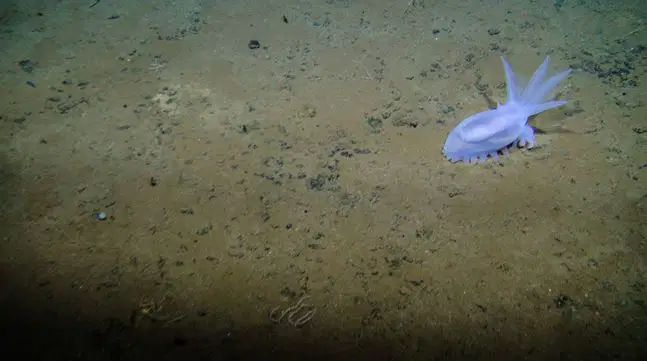
Deep sea mining involves
digging deep into the seabed to find metals
removing metal-rich nodules from the seabed
burying electronic waste below the seabed
there's no such thing as deep sea mining
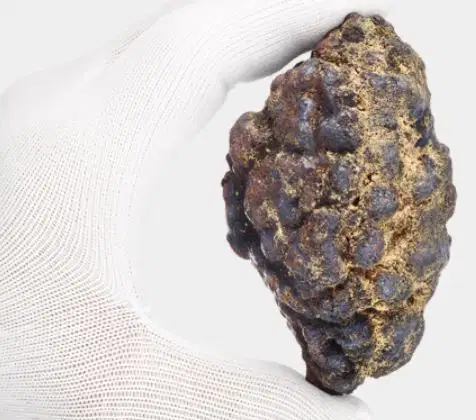
Why is The Metals Company exploring The Clarion-Clipperton Zone?
The company is hoping to protect biodiversity.
The company would like to drill for oil in this area.
The seabed has a lot of metal nodules.
The company is not interested in the CCZ.
The thick, tar-like heavy oil contained in tar sands is referred to as
kerogen
bitumen
shale oil
light crude oil
Extraction of tar sands oil involves which of the following steps?
clear cutting of boreal forest above tar sand deposits
pump steam into bedrock to liquefy tar sand deposits
combustion of natural gas to generate large amounts of steam
mining of coal above tar sands deposits
A significant disadvantage of tar sands as an alternative oil source, compared with traditional oil drilling, is
the use of so much energy to extract the energy source
the potential for ocean oil spills
the production of additional CO2 into the atmosphere
that tar sands are more expensive than traditional oil
The energy from the absorbed radiation heats the gases in the air and the gases hold the heat in the Earth’s atmosphere. This process is called the
Electromagnetic Waves
Greenhouse Effect
Heat Transfer
El Niño
Which are considered Greenhouse Gasses?
Sodium Chloride, Sodium dioxide, methanicane, and other gases in the air are considered Greenhouse Gases
Sodium Choride and smoky gasses
Water vapor, carbon dioxide, methane, and other gases in the air
Oxygen and Triglyceride
How are humans contributing to the Greenhouse Effect
By increasing the rate of chemical and mechanical weathering
By shopping too much
By watching Netflix on the weekends and eating strawberry popcorn all day
By increasing Carbon Dioxide (CO2)
This environmental policy holds companies responsible for the clean up of hazardous wastes and is also known as the Superfund policy.
Clean Water Act
Safe Drinking Water Act
CERCLA
Endangered Species Act
This macromolecule is responsible for long term energy storage and water proofing membranes.
Carbohydrates
Proteins
Lipids
Vitamin A
This vitamin/mineral is responsible for the development of hemoglobin in our bodies and can be found in foods like red meats and dark green leafy veggies.
Zinc
Iron
Vitamin
Iodine
Which of the following is an advantage of urbanization?
better education and healthcare
garbage / pollution decreases
more spacious living conditions for people
Urbanization is..
planting trees
making more city in an area
making more countryside in an area
creating more greenspace
What evidence is there to support that Global Warming is occurring?
Rising ocean temperatures
Declining arctic sea glacers
Sea levels rising
Increase in carbon dioxide in the atmosphere
Which of the following could increase the amount of greenhouse gasses in our atmosphere?
Burning fossil fuels
Planting trees
Walking to school and work
Cutting down trees
Why do we need greenhouse gasses?
We don't! All greenhouse gasses are bad
They help regulate Earth's climate
They decrease Earth's temperature
None of the above
This vitamin/mineral is responsible for thyroid development and hormones. Can be found in shell fish and salts.
Iodine
Zinc
Vitamin A
Iron
What is the tragedy of the commons?
the general idiocy of the average human
The failure to create a sense of shared responsibility
the prevalence of extreme poverty in the developing world
destruction of shared resources through self-serving behavior
What are considered "the commons"
Common house hold items like knifes, spoons, and forks.
A resource owned by no one and available for use by anyone at little or no charge
A field where college students can sit outside in between classes
Which of these is not an example of a commons?
The air
The ocean
Privately owned farms
How does urban heat island effect contribute to climate change?
By increasing temperature, energy consumption, greenhouse gas emissions, and reducing air quality.
By having no effect on temperature, energy consumption, greenhouse gas emissions, and air quality.
By decreasing temperature, energy consumption, greenhouse gas emissions, and improving air quality.
By reducing temperature, energy consumption, greenhouse gas emissions, and improving air quality.

