wayground logo

Free Printable Worksheets

Font size

S
M
L
XL
Worksheets

final exam review

Total questions: 60

Worksheet time: 3hrs 0mins

Name
Class
Date
1.

What is climate?

a)

The daily weather changes of an area.

b)

The average weather of a specific area.

2.

What is the main gas responsible for causing global warming?

a)

Oxygen

b)

Carbon Dioxide

c)

Hydrogen

d)

Helium

3.

What is the definition of "Greenhouse Effect?"

a)

Gases that increase Earth's temperature

b)

when the gases in Earth’s atmosphere trap heat from the Sun and keep the planet warm

c)

the pattern of weather that occurs over time

d)

When our climate changes

4.

97% of scientists believe what is causing climate change?

a)

Animals and Plants

b)

Eco-Friendly Cars

c)

Humans

d)

Conservation of energy

5.

Transfer of thermal energy when two items of different temperatures touch:

a)

convection

b)

conduction

c)

radiation

d)

density

6.

Transfer of thermal energy by electromagnetic waves or subatomic particles: Example: Sun's Rays

a)

convection

b)

conduction

c)

radiation

d)

density

7.

Transfer of thermal energy caused by the rising of hotter less dense fluids and the sinking of cooler more dense fluids:

a)

convection

b)

conduction

c)

radiation

d)

density

8.

Touching a hot stove is an example of

a)

conduction.

b)

convection.

c)

radiation.

9.

Feeling the warmth of a campfire is an example of...

a)

conduction.

b)

convection.

c)

radiation.

10.

Soup molecules moving and heating up on the stove is an example of...

a)

conduction.

b)

convection.

c)

radiation.

11.

The plates of the crust move because...

a)

volcanoes erupt violently.

b)

of the weight of the oceans.

c)

of convection currents in the mantle.

d)

of the moon's gravity.

12.
If differences in air pressure produce winds, what can you conclude about temperature and air pressure based on the figure?
a)
As warm air rises, it creates an area of lower pressure, and cooler air flows in as wind
b)
Warm air is denser than cold air is, creating an area of high pressure the produces wind.
c)
Winds flow from areas of low pressure to areas high pressure when temperature is warmer
d)
Air pressure decreases at night because temperature is lower, producing land and sea breezes
13.

Heat transfer by convection is caused by differences in what two things:

a)

Thickness and material

b)

Weight and electricity

c)

Temperature and density

14.
The cycle that powers the ocean currents, weather, and tectonic plates it called
a)

conduction currents

b)

radiation

c)

condition currents

d)

convection currents

15.
The main reason that we have currents in the ocean and air is
a)
the sun heats the air and ocean evenly everywhere
b)
the heat inside the earth heats the ocean and the ocean heats the air
c)
the sun cannot heat both the air and water, so one must heat the other
d)
the sun heats air and water more at the equator because it receives more direct sunlight
16.
In convection, COOL air
a)
Rises
b)
Sinks
17.
In convection, WARM air
a)
Rises
b)
Sinks
18.

Deep ocean currents are primarily caused by

a)

salinity and temperature

b)

temperature and wind

c)

salt and sand

d)

gravity and sand

19.

Global winds are the main cause of _________________________currents in the ocean.

a)

surface

b)

deep water

c)

fish

d)

density

20.
When a cold air mass moves into a warm air mass, it will get colder and we will have severe weather. What type of front is this?
a)
warm front
b)
cold front
c)
occluded front
d)
stationary front
21.
What type of front moves quickly and can produce severe thunderstorms?
a)
Stationary
b)
Warm
c)
Cold
d)
Occluded
22.
When two different air masses collide...
a)
A front forms
b)
They casually become one
c)
A new planet evolves
d)
Dinosaurs become extinct
23.
When a warm air mass gently slides on top of a cold air mass, and you have drizzly rain and then warmer weather, what type of front is it?
a)
warm front
b)
cold front
c)
occluded front
d)
stationary front
24.
What is weather?
a)
The measure of transparency of the atmosphere.
b)
The condition of Earth's atmosphere at a certain time and place.
c)
Cumulus clouds
d)
Stratus clouds
25.

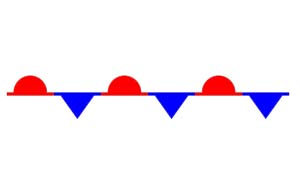
Which is the correct symbol for an cold front?

a)
b)
c)
d)
26.

Which is the correct symbol for a warm front?

a)
b)
c)
d)
27.

Which direction is the cold front heading

a)

north

b)

south

c)

east

d)

West

28.
What types of air masses form over oceans?
a)
Maritime
b)
Continental
c)
Polar
d)
Tropical
29.
How do we name air masses?
a)
Water and temperature
b)
Air pressure
c)
Humidity and temperature
d)
Cold and warm
30.
How do we characterize an air mass that forms near the poles?
a)
Dry
b)
Wet
c)
Warm
d)
Cold
31.
How do we characterize an air mass that forms over land?
a)
Dry
b)
Wet
c)
Cold
d)
Warm
32.
Air _________________ , also known as atmospheric pressure, refers to the weight of the Earth's atmosphere pressing down on everything at the surface.
a)
weight
b)
pressure
c)
density
d)
mass
33.

Which instrument is used to measure temperature?

a)

Thermometer

b)

Anemometer

c)

Barometer

d)

Hygrometer

34.

Which instrument is used to measure air pressure?

a)

Thermometer

b)

Anemometer

c)

Barometer

d)

Hygrometer

35.
________ pressure is associated with clear and dry conditions.
a)
High
b)
Low
c)
medium
d)
bad
36.
_________ pressure is associated with storms, tornadoes, and hurricanes.
a)
High
b)
medium
c)
good
d)
Low
37.
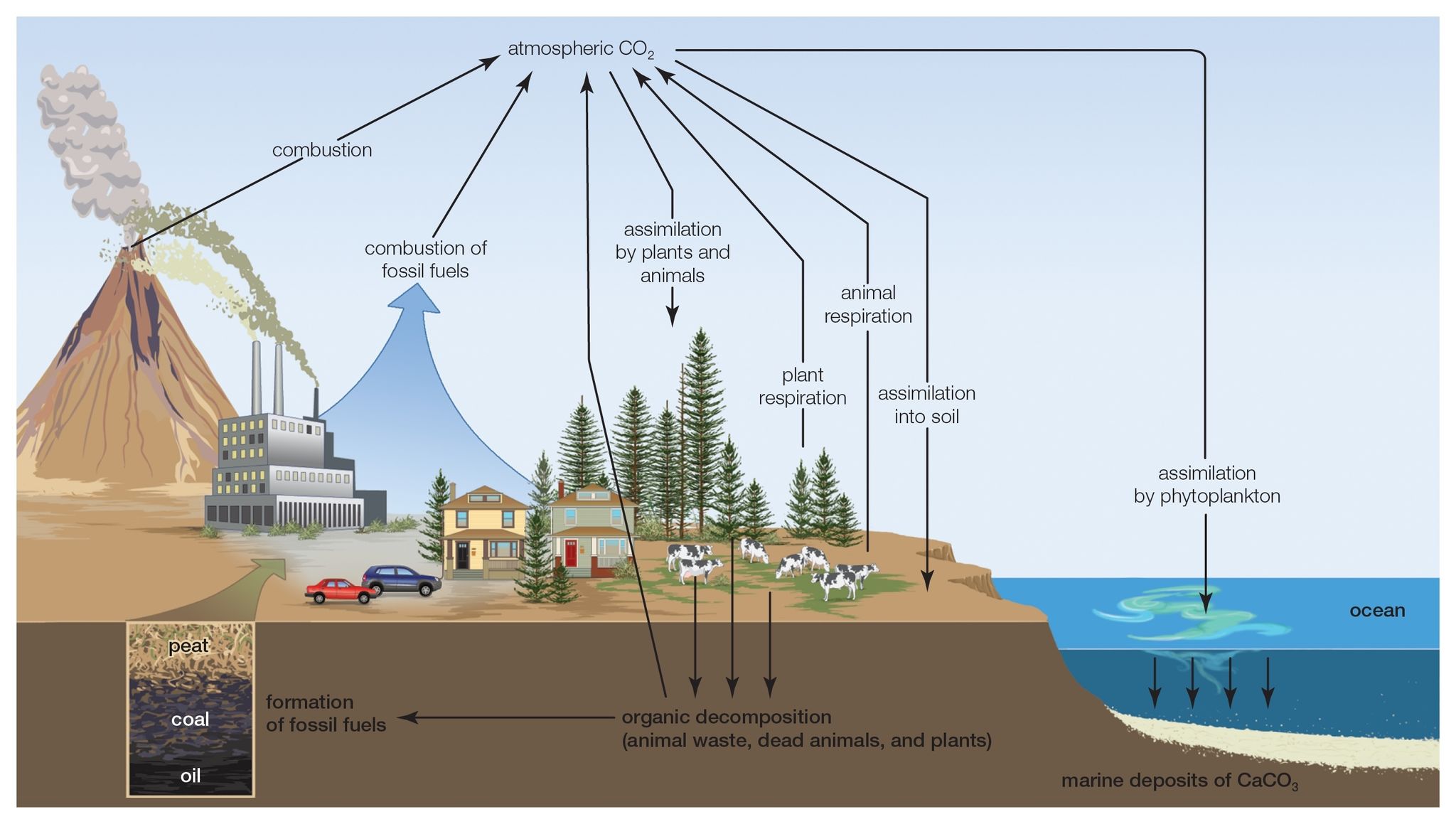
How do living organisms return carbon to the atmosphere in the carbon cycle?
a)
respiration and photosynthesis
b)
 decomposition and respiration
38.
Which of the following add carbon dioxide to the atmosphere?
a)
volcanoes
b)
combustion of fossil fuels
c)
animal and plant respiration
d)
all of these
39.
Carbon can be found in...
a)
The atmosphere
b)
Soil
c)
Fossil fuels
d)
All of the above
40.
Which of the following removes carbon from the atmosphere?
a)
Combustion
b)
Respiration
c)
Photosynthesis
d)
Death
41.

Respiration is the process by which animals take in _____ and release _____ to make energy. 

a)
photosynthesis, air
b)
carbon, oxygen
c)
oxygen
d)
oxygen, carbon dioxide
42.
What are the products of photosynthesis?
a)
water and carbon dioxide
b)
oxygen and glucose
c)
oxygen and carbon dioxide
d)
oxygen and water
43.
How animals get the nitrogen they need
a)
from the air they breathe
b)
from the water they drink
c)
from the food they eat
d)
from the Sun
44.
Organisms that need nitrogen to survive
a)
only plants
b)
only animals
c)
only bacteria
d)
all living organisms
45.
How nitrogen is "fixed" into useable form for plants
a)
only through action of bacteria
b)
only through lightning
c)
through action of bacteria & lightning
d)
through photosynthesis
46.
How plants get the nitrogen they need
a)
from the air
b)
from the soil or water in which they live
c)
from the Sun
d)
from broken down rocks
47.

The process when plants release water vapor from their leaves is called _____________.

a)

precipitation

b)

evaporation

c)

transpiration

d)

condensation

48.
What step of the water cycle occurs when clouds become too heavy
a)
Condensation
b)
Runoff
c)
Precipitation
d)
Evaporation
49.

Which best explains why runoff is important?

a)

It returns water to other locations on Earth

b)

It increases the chance of flooding

c)

It makes evaporation occur faster

d)

It increases condensation

50.
What source of energy evaporates the most water from Earth’s surface?
a)
volcanoes
b)
the sun
c)
lightning
d)
wind
51.

What are formed when water vapor condenses and come together?

a)

Clouds

b)

Mountains

c)

Transpiration

d)

Valleys

52.
When water is heated in the ocean by the sun and turns into water vapor
a)
condensation
b)
evaporation
c)
transpiration
d)
runoff
53.

The largest threat to biodiversity is

a)

bacteria

b)

fungi

c)

humans

d)

plants

54.
Why are fossil fuels a nonrenewable resource? 
a)
they take millions of years to replace 
b)
they can be used over and over again
c)
they are used to heat and light homes 
d)
they cause air and water pollution 
55.

In what areas of the world do hurricanes form?

a)

Warm ocean waters

b)

Polar ocean waters

c)

On lakes and rivers

d)

Over the Central Plains

56.

The Saffir-Simpson Scale was developed to measure a hurricane’s____________________.

a)

Rainfall

b)

Intensity

c)

Area of the storm

d)

Storm surge damage

57.

The area of the hurricane with the calmest winds.

a)

Upper elevations

b)

Storm surge

c)

Eye

d)

Eye Wall

58.

The Coriolis Effect is a force caused by

a)

Earth’s rotation

b)

Earth’s spinning core

c)

Earth’s tides

d)

Earth’s seasons

59.

Which is a hurricane?

a)

wind speeds of ≤ 62 km/h (or ≤ 38 mph)

b)

wind speeds of 63 to 118 km/h (or 39 to 73 mph)

c)

wind speeds of ≤ 119 km/h (or ≥ 74 mph)

60.

A Tornado Warning means...

a)

a tornado could form

b)

a tornado will happen in the next few hours

c)

a tornado is happening now

d)

it's safe to go outside