wayground logo

Free Printable Worksheets

Font size

S
M
L
XL
Worksheets

Algebra Review

Total questions: 82

Worksheet time: 4hrs 58mins

Name
Class
Date
1.

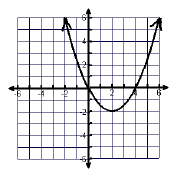
Identify the function family. What type of function is graphed?

a)

Linear

b)

Exponential

c)

Quadratic

d)

Constant

2.

Identify the function family. What type of function is graphed?

a)

Linear

b)

Exponential

c)

Quadratic

d)

Constant

3.

Identify the function family. What type of function is graphed?

a)

Linear

b)

Exponential

c)

Quadratic

d)

Constant

4.

y=x23xy=x^2-3x  Identify the function family. What type of function is graphed?

a)

Linear

b)

Exponential

c)

Quadratic

d)

Constant

5.

y=2x3y=2^x-3  Identify the function family. What type of function is graphed?

a)

Linear

b)

Exponential

c)

Quadratic

d)

Constant

6.

y=2x3y=2x-3  Identify the function family. What type of function is graphed?

a)

Linear

b)

Exponential

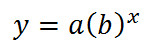
c)

Quadratic

d)

Constant

7.

What is the first step to solve this equation:

-3x + 11 = 44

a)

Add 3 to both sides

b)

Subtract 11 from both sides

c)

Add 11 to both sides

d)

Divide 3 on both sides.

8.
a)
2
b)
4
c)
6
d)
8
9.
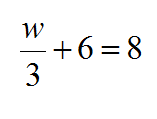
Solve.
a)
-12
b)
0
c)
1
d)
3
10.

Give the solution to the system

a)

(3,1)

b)

(1,3)

c)

(-1,3)

d)

(-3, 1)

11.
a)
Function
b)
Not a Function
12.
a)
Function
b)
Not a Function
13.

Find the product.

(m - 8)(m - 9)

a)

m2-17m+72

b)

m2-17m-72

14.

Factor the following polynomial:

x2 + 5x + 6

a)

(x+6)(x+1)

b)

(x+3)(x+2)

15.
Which point below is NOT part of the solution set?
a)
(0, 0)
b)
(5, 1)
c)
(-1, -3)
d)
(20, -5)
16.
Which is a zero of the graph?
a)
0
b)
-1
c)
1.5
d)
-3
17.
Is the pictured graph growth, decay, or linear or none?  
a)
Growth
b)
Decay
c)
Linear
d)
None
18.

What is the equation for axis of symmetry?

a)

y = 3

b)

x = 3

c)

x = 5

d)

x = 1

19.

Add:

(3x² - 3x + 2) + (x² - 2x + 1)

a)

4x³- 2x² + 2

b)

4x² - 5x + 3

c)

-2x³ + 2x + 2

d)

4x³ - 2x² - 2

20.
Factor
3a2 + 4a + 1
a)
(7a-10)(a-8)
b)
Not factorable
c)
(3a+1)(a+1)
d)
(3a-1)(a-1)
21.

Choose ALL the factors of the following polynomial.

2x2 +24x +642x^{2\ }+24x\ +64  

a)

x - 4

b)

x + 8

c)

x + 4

d)

x - 8

e)

2

22.
How many solutions does this graph have?
a)
one
b)
two
c)
no solutions
d)
cannot be determined
23.

Find the solutions to the following:

x2 + 13x + 40

a)

-8, 5

b)

-40, -1

c)

5, 8

d)

-8, -5

24.
(x3-x2+4) - (3x3-2x2+3)
a)
-2x3-3x2+7
b)
-2x3+x2+1
c)
2x3-3x3-1
d)
4x3-3x2+7
25.

Simplify.

a)

5x2y

b)

-5x2z

c)

-5x2yz

d)

5xy2z

26.

Find the equivalent expression to the following: (5x+2)(x2-3x+6)

a)

5x3 - 17x2 +24x +12

b)

5x3 + 17x2 - 24x +12

c)

5x3 - 13x2 + 24x +12

d)

5x3 +13x2 - 24x - 12

27.

Simplify.

5y0 - (5xy)0

a)

5y

b)

4

c)

4y

d)

0

28.

Translate this phrase into an algebraic expression.

8 less than the product of 4 and a number m

a)

8 - 4m

b)

8m - 4

c)

8m + 4

d)

4m - 8

29.
In the equation y=mx+b, m is the ____.
a)
Slope
b)
Y-intercept
c)
X-intercept
d)
Origin
30.
For the function {(0,1), (1,-3), (2,-4), (-4,1)}, write the domain and range.
a)
D: {1, -3, -4,}
R: {0, 1, 2, -4}
b)
D: {-4, 0, 1, 2}
R:{-4, -3, 1}
c)
D: {0, 1, 2, 3, 4}
R:{1, -3, -4}
d)
D: {0, 1, 2, -4}
R: {1, -3, -4, 1}
31.

Evaluate the expression 4h + 2g + 4 if g = 3 h = 9

a)

42

b)

46

c)

34

d)

58

32.
Identify the domain of the following relation:
a)
{-6, 14, 2, 28}
b)
{(-6,14), (0,32), (2,38), (4,44)}
c)
{-6, 0, 2, 4}
d)
{14, 32, 38, 44}
33.
What is the range of the function? 
a)
y ≤ 2.5
b)
y > 2.5
c)
all real numbers
34.
Slopes of parallel lines are...
a)
opposite reciprocals.
b)
opposites.
c)
identical.
d)
always 7.
35.
Find the sum. 
(3 - 2x + 2x2) + (4x - 5 + 3x2)
a)
7x - 7x + 5x2
b)
5x+ 2x - 2
c)
5x2
d)
5x2 + 6x + 8
36.
Classify by number of terms:
3x3 – 6x
a)
Monomial
b)
Binomial
c)
Trinomial
d)
4-Term Polynomial
37.
Determine if (4, 1) is a solution for the system of equations.
y = -x + 5
y = 2x - 7
a)
yes
b)
no
38.
Solve:
2(a + 4) = 2a - 8 + 4a
a)
3
b)
-3
c)
-4
d)
4
39.

Solve for y:

8x + 4y = 16

a)

y = -8x + 16

b)

y = 2x -4

c)

y = -2x + 4

d)

y = -8x + 12

40.
Which equation represents the following graph?
a)
y = 3x + 2
b)
y = -2x + 3
c)
y = 2x + 3
d)
y = -3x + 2
41.

What is the perimeter of the figure shown here?

a)

9x2 - 6

b)

9x2 - 12x - 6

c)

9x4 - 6

d)

9x4 - x - 6

42.
Find the error in the problem below
19 - 2k = 3k - 1
     +3k   +3k
19 + 1k = -1
-19           -19
k = -20
a)
They should have divided by 1 for the last step
b)
They should add 19 instead of subtracting 19
c)
I can not find an error
d)
Instead of adding 3k they should subtract 3k
43.
Is the relation a function? Why.
a)
Yes, because the x-value 11 has two y-values pair with it.
b)
Yes, because each x-value has only one y-value paired with it.
c)
No, because the x-value 11 has two y-values pair with it.
d)
No, because each x-value has only one y-value paired with it.
44.

What is the equation of the line?

a)

y = 4x - 2

b)

y = -2x + 4

c)

y = 2x + 4

d)

y = -4x - 2

45.

Find the slope of the line containing these two points:


(3, -7) and (-4, 5)

a)

m = -12/7

b)

m = -7/12

c)

m = -2/7

d)

m = -7/2

46.

Which is the standard form for a quadratic equation?

a)

x=b±b24ac2ax=\frac{-b\pm\sqrt{b^2-4ac}}{2a}

b)

ax2+bx+c=0ax^2+bx+c=0

c)

y=a(xh)2+ky=a\left(x-h\right)^2+k

d)

a2+b2=c2a^2+b^2=c^2

47.

7x2=6x17x^2=6x-1  

Given this quadratic equation, what could be the values a, b, and c to use in the quadratic formula?

a)

a = 7, b = 6, c = 1a\ =\ 7,\ b\ =\ -6,\ c\ =\ 1  

b)

a = 1, b = 6, c = 7a\ =\ 1,\ b\ =\ 6,\ c\ =\ -7  

c)

a = 7, b = 6, c = 1a\ =\ -7,\ b\ =\ 6,\ c\ =\ 1  

d)

a = 6, b = 7, c = 1a\ =\ 6,\ b\ =\ 7,\ c\ =\ 1  

48.

x27x=0x^2-7x=0  

Solve by the method of your choice.

a)

x = 7 only

b)

x = 0 only

c)

x = 0 and 7

d)

There is no real answer for this equation.

49.

3x210x+1=03x^2-10x+1=0  

Solve by the method of your choice.

a)

x=10±886x=\frac{-10\pm\sqrt{88}}{6}  

b)

x=5±2223x=\frac{-5\pm2\sqrt{22}}{3}  

c)

x=10±1126x=\frac{10\pm\sqrt{112}}{6}  

d)

x=5±223x=\frac{5\pm\sqrt{22}}{3}  

50.

2x2=8x+32x^2=8x+3

 
2x28x3=02x^2-8x-3=0  
x=8±644(2)(3)4x=\frac{8\pm\sqrt{64-4\left(2\right)\left(-3\right)}}{4}  
x=8±404x=\frac{8\pm\sqrt{40}}{4}
x=8±2104x=\frac{8\pm2\sqrt{10}}{4}  
x=4±102x=\frac{4\pm\sqrt{10}}{2}  

Suzanne solved the equation using this process.

Did she make a mistake?

If yes, at which line did she make her first mistake?

(There are 5 steps in her process)

a)

Suzanne made no errors.

b)

Step 2

c)

Step 3

d)

Step 4

e)

Step 5

51.
What are the zeros?
a)
x= 0 and x= -4
b)
x= 0 and x= 4
c)
y= 0
d)
x= 2
52.
What is another word for zeros?
a)
y-intercepts
b)
roots
c)
vertex
d)
axis of symmetry
53.
What are the solutions of this graph?
a)
x=-2 and x=3
b)
x=-1/2 and x=-6
c)
x=-2 and x=-6
d)
x=3 and x=-6
54.
True or false:
The solutions, roots, x-intercepts, and zeros of a quadratic equation are all the same thing.
a)
True
b)
False, because the solution and root are the same but the x-intercept and zero are different
c)
False, because the x-intercept and root are the same but the zero and solution are different
d)
False, they are all different
55.
What is the vertex of the parabola: y=2(x-3)2+4
a)
(3,4)
b)
(-3,4)
c)
(3, -4)
d)
(-3,-4)
56.
What should you do first in solving this equation?
x2 + 6x - 13 = 3
a)
Get factored form
b)
Write down: a=1, b=6, c=-13
c)
Make it equal 0 by subtracting 3 on each side
d)
Type it all in a calculator.
57.

Solve by factoring: x2 = 7x + 18

a)

-7 and -18

b)

9 and 2

c)

9 and -2

d)

2 and 7

58.
Solve Using the Quadratic Formula
 x2 + 4x - 40 = -8
a)
-10 & -4
b)
-4 & 10
c)
-8 & 4
d)
8 & -4
59.
What is the first step to solving THIS equation by completing the square?
a2 + 10a + 21 = 0
a)
Set the equation equal to zero
b)
Divide 10 by 2 and add the result to both sides
c)
Add a2 and 10a together
d)
Subtract the 21
60.

Solve the following quadratics equation by completing the square...


x2 + 4x + 1 = 0

a)

x = -2 ± √3

b)

x = -3 ± √2

c)

x = 2 ± √3

d)

x = 2 ± √2

61.
A parabola has a vertex at (-3,2). Where is the axis of symmetry?
a)
y = -2
b)
x = 3
c)
x = -3
d)
y = 2
62.
Which answer choice describes  y = -3x2 +7x - 2 accurately?
a)
opens up with a maximum
b)
opens up with a minimum
c)
opens down with a maximum
d)
opens down with a minimum 
63.
What is the axis of symmetry for the following equation?
y=4x2-8x+9
a)
x=-8
b)
x=1
c)
x=-1
d)
x=2
64.
If given the equation
y = 3(x + 5)2 - 4, what is the vertex of the parabola?
a)
(5, -4)
b)
(-5, -4)
c)
(-15, -4)
d)
(15, -4)
65.
What are the
x-intercepts of the function
f(x)= (x - 2)(x + 3)?
a)
x = - 2 or x = 3
b)
x = 2 or x = -3
c)
The are no real roots
d)
x = 2 or x = 3
66.
Solve:
2x2 - 9x = 35
a)
x = 7/2, x = -6
b)
x = -5/2, x =5
c)
x = -3/7, x =6
d)
x = -5/2, x = 7
67.

Find the axis of symmetry of

y=3(x2)2+3y=3\left(x-2\right)^2+3  

a)

x=2x=2  

b)

x=2x=-2  

c)

x=3x=3  

d)

x=3x=-3  

68.

What type of pattern do exponential functions have?

a)

Adds or subtracts by the same number every time

b)

Multiplies or divides by the same number every time

c)

Square roots all the inputs

69.

What type of pattern do linear functions have?

a)

Adds or subtracts by the same number every time

b)

Multiplies or divides by the same number every time

c)

Square roots all the inputs

70.

In an exponential function, what does the 'a' represent?

a)

Input

b)

Rate of change

c)

Y-intercept/Initial value

d)

Output

71.

In an exponential function, what does the 'b' represent?

a)

Input

b)

Rate of change

c)

Y-intercept

d)

Output

72.

In the linear equation, y = mx + b, the letter b is the ___________.

a)

y-intercept/initial value

b)

x-intercept

c)

slope

d)

rate of change

73.

In the linear equation, y = mx + b, the letter m is the ___________.

a)

y-intercept/initial value

b)

x-intercept

c)

slope/rate

d)

multiplier

74.

Which equation is represented by the table?

a)

y = 40(2)x

b)

y = 40(1/2)x

c)

y = 40 - 2x

d)

y = 40 - 1/2x

75.

Write the function for the following table:

a)

f(x) = 5x + .08

b)

f(x)= 5x + 2

c)

f(x) = .08(5)x

d)

f(x)= 2(5)x

76.

Which table represents the following equation?

a)
b)
c)
d)
77.

b0 =

a)

-1

b)

0

c)

1

78.

Describe this function.

a)

Exponential Growth

b)

Exponential Decay

c)

Linear Positive

79.
a)

Exponential Growth

b)

Exponential Decay

c)

Quadratic

80.

2 A function has a discriminant of 0.


How many x-intercepts does it have?

a)

0

b)

1

c)

2

d)

5

81.

3 What is the discriminant of

-2x2 − x − 1 = 0 ?

a)

76

b)

-7

c)

9

d)

none of these

82.

4 Determine the value of the discriminant and name the nature of the solution for the following:

x2 + 2x - 63

Remember: b2 - 4ac

a)

256 - 2 reals - Rational

b)

√(-256 - 2 imaginary solutions

c)

√(137) - 2 reals - Irrational

d)

123 - 2 reals - Rational