
 Worksheets
Science 4 (4th Periodical Test)
Total questions: 80
Worksheet time: 1hrs 2mins
The sun can hurt your
skin
eyes
both of them
The sun can cause a sunburn.
true
false
We can live without heat from the sun
true
false
The visible layer on the surface of the
sun that gives off light.
Core
Convection Zone
Photosphere
Corona
The part of the sun's atmosphere that is a reddish glow only visible during a total solar eclipse
Core
Corona
Photosphere
Chromosphere
The outermost layer of the sun's atmosphere that appears as a bright halo.
Core
Corona
Photosphere
Convection Zone
Areas of gas on the sun’s surface that are cooler than the gases around them.
Solar flare
Solar wind
Prominences
Sunspots
Reddish loops of gas that link parts of sunspot regions.
Helium
Prominences
Solar flare
Hydrogen bonds
What is a moon?
an asteroid
a space object that orbits around a planet
a space object that orbits around a star
About how long does it take the Earth's moon to complete a full cycle of moon phases?
one year
one day
one month
12 hours
When the moon appears to be increasing in light, it is
waxing
waning
crescent
gibbous
When the moon appears to be decreasing in light, it is
waxing
waning
crescent
gibbous
True or false: The moon has no air.
True
False
True or False: The moon has no gravity.
True
False
The moon's maria are formed from
oceans
meteor impacts
hardened lava
oxygen
The moon's craters are formed from
oceans
meteor impacts
hardened lava
oxygen
The moon gets its light from
the sun
the Earth
itself
aliens
We see all of the lighted side of the moon during
new moon
crescent moon
gibbous moon
full moon
We see none of the lighted side of the moon during
new moon
crescent moon
gibbous moon
full moon
We see less than half of the lighted side of the moon during
new moon
crescent moon
gibbous moon
full moon
We see more than half of the lighted side of the moon during
new moon
crescent moon
gibbous moon
full moon
Which NASA missions brought humans to the moon?
Hubble
Mercury
Apollo
Voyager
Who was the first American to step onto the surface of the moon?
Buzz Aldrin
Neil Armstrong
Alan Shepard
Scott Kelly

What phase of the moon is shown?
waning gibbous
1st quarter
waxing crescent
Waxing gibbous

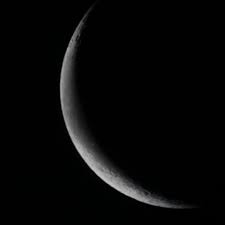
When the Moon is directly between the Sun and the Earth, what phase would the Moon be in?
Full Moon
New Moon
Half Moon
Waxing Crescent
The Earth is the _____ planet in the Solar system
1st
2nd
3rd
4th
The ____ is the only natural and permanent satellite of the planet earth
Stars
Moon
Meteors
Sun
In space, the Earth revolves around the sun
TRUE
FALSE
Maybe
Not sure
The Earth revolves about ____ times around its own axis
300
365.26
400
465.26
The largest planet of the Solar system is __
Saturn
Mars
Venus
Jupiter
The word “earth” is derived from the old English word “eor(th)e” and “ertha” which means
Water
Empty
Ground
Space
The shape of the Earth is
Round
Oval
Spherical
Triangular
The force that pulls back things to the ground on Earth is called
Gravitational force
Magnetic force
Pull force
Push force
The planet Earth comes between the planet Venus and ___
Neptune
Mars
Neptune
Jupiter
The Earth is ____ million miles away from the Sun
93
99
100
45
__________ are scientists that study the structure and composition of the Earth.
Earthologists
Geologists
Environmentalists
Lithologists
What is the outermost layer of the Earth called?
Mantle
Crust
Inner Core
Outer core
What are the two main metals that make up the outer and inner core?
Gold
Aluminum
Crust
Iron & Nickel
Which layer of earth is all liquid?
Outer Core
Mantle
Inner core
Crust
The crust and the top of the mantle is called?
Asthenosphere
Inner Core
Lithosphere
Outer core
Which layer of the Earth is solid and most dense?
Mantle
Inner Core
Outer core
Crust
Which layer is located directly underneath the lithosphere?
Mantle
Crust
Inner core
Asthenosphere
Earth’s crust can only be____________ or _______________.
Volcanic & Seismic
Oceanic & Continental
The layer of the Earth where convection currents occur is called the
Mantle
Lithosphere
Upper core
Inner core
What is the best way scientists know about the structure of the earth?
Volcano
Oceanic
Seismic Waves
Lithosphere
wind
temperature
air pressure
density

hygrometer
Instrument used to measure the wind direction.
Barometer
Wind vane
Anemometer
It is generally prevailing weather conditions for a longer period of time.
Weather
Sunny Day
Climate
It is the daily condition of the atmosphere.
Climate
Temperature
Weather
Pressure
The Earth has seasons. Which motion of the Earth causes seasons?
roatation
rotate
revolution
rebates
Day and night are caused by which motion of the Earth?
revolution
rotation
revolve
remiss
The Earth _________________________ around the sun.
rotation
rotates
revolves
relation
It takes this long for the Earth to rotate once on its axis.
1 week
1 year
365 days
24 hours
What would happen if the Earth's rotation was faster?
There would be more seasons
There would be shorter days
There would be less days in a year
There would be no high or low tides.
How long would it take the Earth to complete four orbits around the Sun?
1461 days
1460 days
366 days
365 days
Which statement describes the Sun's position?
It is the center of the Universe
It is the center of the Milky Way Galaxy
It is the center of the Solar System

