
Font size
 Worksheets
Gr.12: Final Exam review II
Total questions: 84
Worksheet time: 1hrs 11mins
What European country colonized Vietnam until World War II?
France
Germany
Great Britain
Spain
Which of the following was NOT a reason for the Vietnam War?
The Domino Theory
Containment
Gulf of Tonkin Incident
Vietnamization

During the Vietnam War, in the ________, the United States soldiers killed at least 450 women, children, and elderly men.
My Lai Massacre
Attack on Pearl Harbor
Gulf of Tonkin incident
Trade Embargo
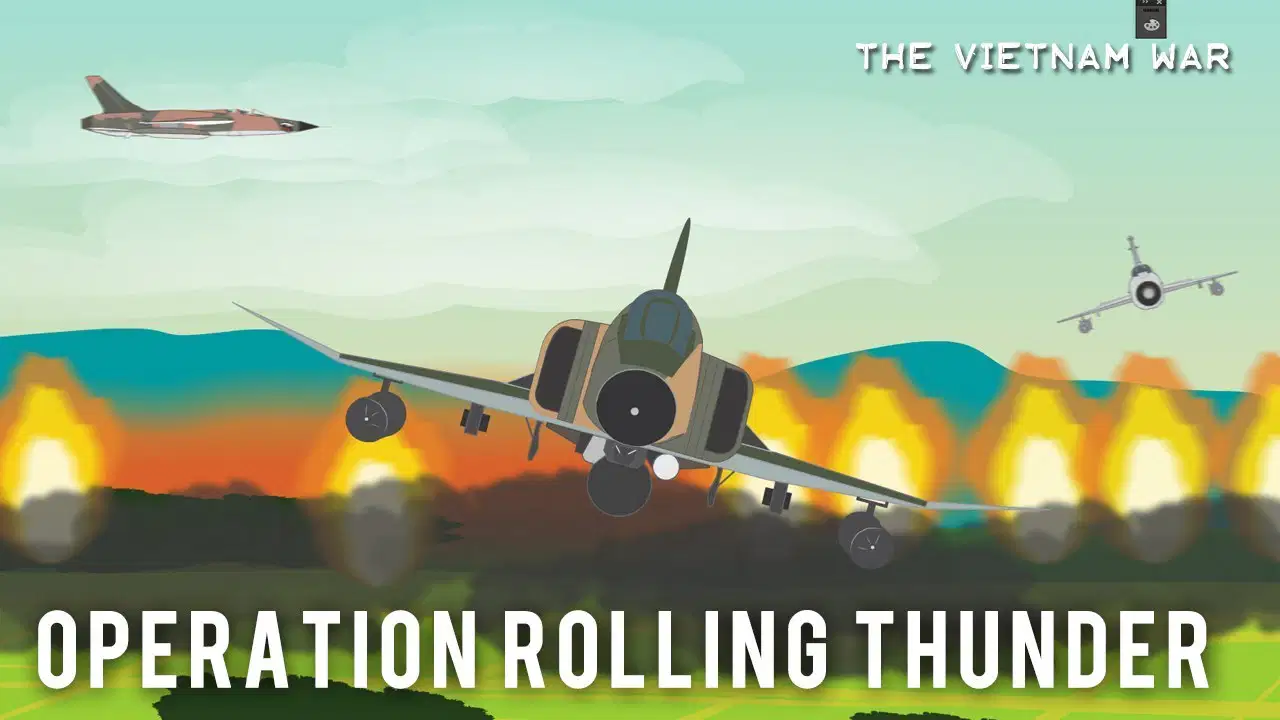
What is the sustained bombing of North Vietnamese and Viet Cong troops, ordered by Johnson in 1965 called?
Domino Theory
Operation Rolling Thunder
Gulf of Tonkin Resolution
Tet Offensive
US troop reduction in Vietnam is called
Domino Theory
Kent State University
Tet Offensive
Vietnamization
Leading Vietnamese nationalist figure, supporting the Communist party
Ngo Dinh Diem
Ho Chi Minh
Viet Cong
Kent State University
President of the Republic of Vietnam, had US support, eventually would be overthrown
Ngo Dinh Diem
Viet Cong
Democratic Republic of Vietnam
Ho Chi Minh
If one country falls to Communism, the countries around would also fall to Communism
Vietnamization
Domino Theory
Tet Offensive
Democratic Republic of Vietnam
The Vietnamese group who fought against the U.S. and South Vietnamese troops
Democratic Republic of Vietnam
Ngo Dinh Diem
Viet Cong
Ho Chi Minh
Who was the leader of the Communist government in North Vietnam?
Mao Zedong
Ho Chi Minh
Le Duan
Ngo Dinh Diem
When the French pulled out of Southern Vietnam, what country entered to stop the spread of Communism?
United States
Great Britain
Germany
China
What made the Vietnam War difficult for the U.S. army?
knowledge of the land and jungle by the Vietnamese
Difficult climate and terrain
Ambushes and traps
Guerrilla warfare
Public opposition to the war in the USA
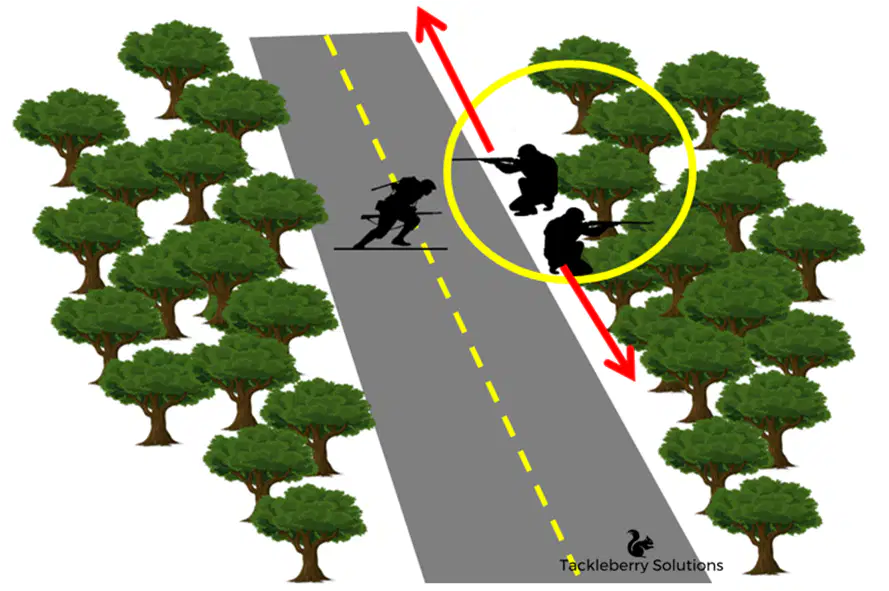
Whic of the following best describes Guerrilla Warfare?
Fighting by small groups using tactics such as the ambush
Using gorillas to fight against enemy soldiers
Dressing up as gorillas and fighting while hitting your chest
Who were the Vietcong?
South Vietnam force
North Vietnam force
North Vietnamese forces in South Vietnam
Another name for Communists

What were the problems faced by U.S. troops when fighting in Vietnam?
Identifying the enemy
Jungle provided cover and a place to transport enemy supplies
Weather and climate
all of these

What irregular warfare tactic was used by Vietnamese fighters against the U.S. soldiers?
Vietnamese Warfare tactics
Cheetah Warfare
Hidden Warfare
Guerrilla warfare

The idea that if South Vietnam fell to Communism, other nations would soon follow...
Vietnamization
Communism
Domino Theory
Imperialism
In the Vietnam War
War began and ended quickly
Both sides used a tactic of wearing down the enemy until they were severely weakened
Both sides decided to come to peaceful negotiations
Nuclear weapons were used
USA offered support to this group to prevent the rise of another Communist regime:
China
France
North Vietnam
South Vietnam
When was the Korean War fought?
1945-1948
1945-1950
1941-1945
1950-1953
What parallel line divides North and South Korea?
17th
48th
15th
38th
How did the Korean War end?
In a stalemate- with a ceasefire
With the Soviets driving out the American troops
In a win for the Chinese & South Koreans
With Nationalist retreat to the Sea of Japan
By pouring hundreds of thousands of troops into the northern part of the Korean peninsula, what country added to the bitter fighting in Korea?
The Soviet Union
China
Japan
Mongolia
Which Asian country is Communist today, struggling with food and energy shortages and frequent famines?
South Korea
China
North Korea
Japan
What type of landform do the two Koreas share?
Mountain
Peninsula
Island
Plateau
What is the capital of North Korea?
Pyongyang
Seoul
What is the capital of South Korea?
Pyongyang
Seoul
U.S. and Korea
Soviet Union and China
North Korea and South Korea
None of the above
Before World War II, Korea was ruled by
Russia
China
Japan
USA
What happened when China decided to join the Korean War?
They managed to conquer Korea.
They helped North Korea push the USA and South Korean forces back across the 38th parallel.
They could not defeat the USA and South Korea, so North Korean forces remained in China.
They were attacked by the USA with nuclear weapons.


North and South Korea were in a war over the location of their border.
True
False
People accused of ESPIONAGE were accused of _____.
spying
writing newspaper reports
hiding communists
making speeches about democracy
Who was the United States President during the Cuban Missile Crisis?
Harry Truman
Dwight Eisenhower
John F. Kennedy
Robert Kennedy
James Gregory
Who was the Cuban Dictator during the Cuban Missile Crisis?
John F. Kennedy
Nikita Khrushchev
Fidel Castro
Dwight Eisenhower
Edwardo Obstinado
The failed US attempt to overthrow the communist Cuban government in 1961 was called the:
Bay of Pigs Invasion
Cuban Missile Crisis
Project to Eliminate Cuban Communism (PECC)
Inchon Invasion
Anti-Totalitarian Takeover (ATT)
How did the US discover that nuclear missile sites were being constructed in Cuba?
from American CIA spies in Cuba posing as farmers
from US spy satellites
from listening in on secret Soviet-Cuban radio transmissions
the British intercepted the telegram which outlined the nuclear missile project in Cuba
from photographs taken from an American U-2 spy plane
Why did the USSR want to put missiles on Cuba?
To have more missiles because they couldn't match the nuclear power of the US
To counter the Warsaw Pact countries that were overthrowing communism
To counter the US missiles in Italy and Turkey
To counter the power of NATO
Why didn't Kennedy want to attack Cuba once the missiles were discovered?
fear of war
fear of communism in the US
fear of putting European allies in danger
fear of losing re-election
What year did the Soviet-Afghan War start?
1965
1979
1955
2015
Which of the following best describes a proxy war?
Two superpowers directly fighting
Two countries fighting without any outside assistance
Supporting sides in another country's war to oppose an enemy
Competing in sports instead of military force
Which of the following is NOT an example of a proxy war?
Vietnam War
Korean War
World War 2
Soviet-Afghan War
Which of the following groups/governments did the United States support during the Cold War era?
the government of North Korea during the Korean War
the government of North Vietnam during the Vietnam War
the Viet Cong during the Vietnam War
the government of Afghanistan during the Soviet-Afghan War
the mujahideen during the Soviet-Afghan War
Which of the following groups/governments did the Soviet Union support during the Cold War era?
the government of South Korea during the Korean War
the United Nations coalition during the Korean War
the government of South Vietnam during the Vietnam War
the Viet Cong during the Vietnam War
the mujahideen during the Soviet-Afghan War
In what way(s) did the United States support South Korea during the Korean War?
led United Nations coalition to push back North Korean invaders
provided support to China to fight alongside South Koreans
provided money, supplies, and weapons, but no troops
In what way(s) did the Soviet Union support North Korea during the Korean War?
led a UN coalition to push back South Korean invaders
sent Soviet troops to fight alongside North Koreans
provided support to China to fight alongside North Koreans
What was the outcome of the Korean War?
South Korea surrendered and North Korea united the Korean peninsula under a communist government
North Korea surrendered and South Korea united the Korean peninsula under a democratic government.
North Korea and the UN signed an armistice and the Korean peninsula remained divided at the 38th parallel.
In what way(s) did the Soviet Union support the Viet Cong?
sending Soviet troops to fight alongside the Viet Cong
sending money, supplies, and weapons, but no soldiers
sending UN peacekeepers
In what way(s) did the United States support the mujahideen during the Soviet-Afghan War?
Sending American soldiers to fight
Sending weapons, money, and supplies, but no soldiers
Sending UN peacekeepers
In what way(s) did the Soviet Union support Afghanistan's communist government during the Soviet-Afghan War?
sending Soviet soldiers to fight against the mujahideen
sending diplomats to broker a truce with the mujahideen
sending money, weapons, and supplies, but no soldiers
What was the outcome of the Soviet-Afghan War?
Soviet troops successfully defeated the mujahideen.
The Soviet Union withdrew its troops and Afghanistan's communist government fell.
The United States entered the war and defeated Afghanistan's communist government.
The secular government of Iran changed to this form of government after the Islamic revolution
Communist
Democratic
Theocratic (religious-based)
Monarchy

What two countries were involved in the Iranian Hostage Crisis ?
North & South Africa
Iran & United States
Iran & Iraq
China & Japan

Which Cold War event is depicted in this political cartoon?
Soviet Afghan War
Vietnam War
Cuban Missile Crisis
Bandung Conference
Who was the dictator of Iraq during the Persian Gulf War?
Osama Bin Laden
George Bush Sr.
Saddam Hussein
George W. Bush (Jr)
In what year did Iraq invade Kuwait?
1990
1991
2001
2003
Why is the United States interested in the Middle East?
That's where we get our natural gas.
That's where we get our oil.
The Middle East has lots of money.
The US is not interested in the Middle East.
What was the main reason for both the US and USSR wanting a policy of Détente?
Needing to focus on ending the Vietnam War
Civil Rights protests at home
Poor living standards
The increasing cost of the arms race
What was the nickname for the agreements that limited the number of nuclear missiles held by the U.S. and the Soviet Union?
Mutually Assured Destruction (M.A.D.)
Shared Armament De-Escalation (S.A.D.)
Strategic Arms Limitation Treaty (SALT I & II)
Please-Avoid-Bombing-Lands-Obviously (P.A.B.L.O.)
What event ended the policy of Détente?
Nuclear Non- Proliferation Treaty
Invasion of Afghanistan
The Carter Doctrine
Iranian Embassy siege
The start of the Cultural Revolution came...
Before the Great Leap Forward
After the Great Leap Forward
At the same time as the Great Leap Forward

What was the name of the leader who led the Great Leap Forward and Cultural Revolution?
Deng
Mao
Meow
Qing

What were the goals of the Great Leap Forward?
To modernize China through agriculture and industry
To develop a stronger military
To make all the Chinese people work harder than ever before
To grow enough crops that they could sell what they don't eat
What form of government did Mao have in China?
Democracy
Communism
Monarchy
Anarchy

What was the Cultural Revolution?
Mao's attempt to regain control of China and get rid of anything "old" in the country
Introducing democracy to the Chinese people
Showing the rest of the world how powerful Mao was
Growing crops and producing steel at a very rapid rate

Who was a main target of the Red Guard?
Students
Teachers
Store owners
Old people

What was the purpose of the Cultural Revolution?
To stop all opposition to the Communist party
To create a society of freedom
To show the world how powerful China was
To treat all people fairly

What political party currently controls China?
Communist Party of China
Free Chinese Party
Monarchy of China Party
Libertarian Party

Mao Zedong & Lenin are similar because they
Mao Zedong y Lenin son similares porque
believed that revolution would be lead by peasants
creía que la revolución sería liderada por campesinos
believed in a democratic government
creía en un gobierno democrático
supported capitalism in China
capitalismo apoyado en China
gave more power to the rich
dio más poder a los ricos
Who were the main leaders, and main forces of the Chinese Civil War?
Mao Zedong = Communists; Joseph Stalin = Nationalists
Mao Zedong = Communist; Harry S. Truman = U.S. Nationalists
Mao Zedong = Communists; Chiang Kai-shek = Nationalists
Chiang Kai-Shek = Taiwan; Joseph Stalin = Communists
Why did the Chinese Civil War stop from 1937 to 1945?
The United States invaded into China, they defeated the Communists
The Japanese invaded into China, causing the Nationalists and Communists to come together to fight the Japanese
The Nationalists defeated the Communists
The Nationalists and Communists formed two different countries
Which side was victorious in the Chinese Civil War?
Harry Truman and the United States
Chiang Kai-shek and the Nationalists
Joseph Stalin and the Soviet Union
Mao Zedong and the Communists
What happened to Chiang Kai-shek and the Nationalists once they were defeated?
They maintained military resistance against Mao Zedong and the communists for 40 years
They surrendered, leading to the official end of the Chinese Civil War
They fled to the Soviet Union, who guaranteed their protection and safety
They fled to Taiwan, and claim to this day that they are the legitimate rulers of mainland China
Why do you think the United States was concerned about Mao Zedong and the Communist's victory in China?
The United States was concerned that China would invade into the Soviet Union
The United States was concerned that communism would spread into East Asia and Southeast Asia
The United States was concerned that the Soviet Union gained a powerful ally in East Asia
The U.S. feared that China would seek revenge against the Japanese for their inhumane actions during WWII

