
 Worksheets
science quiz
Total questions: 243
Worksheet time: 3hrs 1mins
When last estimated, how many different species did Scientists estimate there are on Earth?
1 million
10 thousand
8.7 million
100 million
Which of the following is the worlds largest living organism?
Blue Whale
Elephant
Fungus - Armillaria ostoyae
quaking aspen tree
Which of these animals is an AMPHIBIAN?
Dog
Frog
Cat
Spider
Which of these animals is a MAMMAL?
Bird
Mouse
Shark
Frog
Which are types of vertebrates?
Fish and jellyfish
Mammals and insects
Amphibians, birds, fish, mammals and reptiles
Crustaceans
What season is it in the Southern Hemisphere when it is Autumn in the Northern Hemisphere?
Winter
Summer
Autumn
Spring
One rotation of Earth is equal to
Day
Month
Year
Where on Earth can you experience entire days of darkness?
The equator
The poles
The tropic of Cancer
The tropic of Capricorn
Which section of Earth is composed primarily of liquid metal?
Crust
Mantle
Inner core
Outer core
When a volcano no longer erupts, the lava inside cools and forms
Sedimentary rock
Igneous rock
Metamorphic rock
Ash
A mountain range is MOST LIKELY formed due to
erosion of the land around a mountain
deposition from a nearby river that results in soil accumulated over time
they have always existed, but due to their density, they are never changed
tectonic plates shifting during an earthquake
What is the most abundant gas in the atmosphere?
Oxygen
Nitrogen
Carbon dioxide
Ozone
Approximately how much of available water on Earth is fresh water?
1%
11%
53%
97%
A species survives better than another because it has better adaptations. This is an example of what?
Replication
Evolution
Natural selection
Selective breeding
Who is Charles Darwin?
First man to go to the moon in 1969
First man to discover DNA and the human genome
First man to discover adaptations to support his theory of evolution by natural selection

What is this science tool?
jar
beaker
thermometer
ruler


What does this science tool do?
used for heating a liquid
used for measuring volume of a liquid
used for measuring mass
used for measuring volume of a sound

Name this tool.
Thermometer
Triple Beam Balance
Pan Balance
Safety Goggles
Which of the following is a test tube?


erlenmeyer flask
test tube
graduated cylinder
beaker
Which of the following pieces of chemistry lab equipment produces a flame from gas that is used for heating substances?
Bunsen burner
induction cooker
crucible
stove
What is a mortar and pestle used for?
Crushing and grinding solids into a powder
Heating substances
Scooping up solids such as powder

What is this?
beaker
telescope
microscope
spring scale

What is this?
Triple Beam Balance
Graduated Cylinder
Overflow Can
Massometer

What is this?
barometer
compass
test tube
thermometer


What is this?
A Beaker
An Erlenmeyer Flask
A Test Tube
A Vial

What is this?
A Graduated Cylainder
A Spot plate
A Triple Beam Balance
A Test Tube Rack
A water molecule has the chemical formula H2O. This means that the water molecule is made up of
Two hydrogen atoms and one oxygen atom
Two oxygen atoms and one hydrogen atom
Two hydrogen atoms and two oxygen atoms
Two molecules of water
Capillary Action is key for
Water moving from roots to leaves in plants
Air moving from mouth to lungs
Ice floating on water
Water moving to lower areas
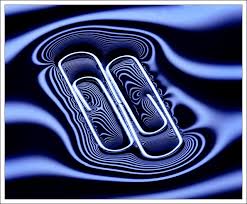
Cohesive means ........
the water molecules stick to each other
the water molecules stick to other surfaces
the water molecules are less dense
the water molecules are far apart
Adhesive means ........
the water molecules stick to each other
the water molecules stick to other surfaces
the water molecules are less dense
the water molecules are far apart
Water striders can walk on water because of ____________.
capillary action
adhesion
surface tension
universal solvent
Water can bounce on water because of surface tension.
True
False
Why is water so good at dissolving so many substances?
it is polar
it is less dense as a solid
cohesion
adhesion


Which end of the water molecule has a slightly negative charge?
This planet rotates on its side.
Mercury
Earth
Neptune
Uranus
The second largest planet
Jupiter
Saturn
Uranus
Neptune
The red planet
Venus
Mars
Jupiter
Mercury
Planet with no atmosphere
Mercury
Venus
Earth
Mars
Planet with the most rings
Jupiter
Saturn
Uranus
Neptune
Planet with a great red spot caused by a continuous storm
Mars
Earth
Jupiter
Neptune
The hottest planet
Mercury
Venus
Earth
Mars
Planet with thick atmosphere of carbon dioxide
Mars
Venus
Mercury
Jupiter
Two planets with no moons
Mercury & Mars
Mercury & Earth
Venus & Mars
Venus & Mercury
Planet with two moons
Earth
Mercury
Mars
Jupiter
A day is longer than a year on this planet
Jupiter
Mars
Venus
Earth
Planet with the shortest day
Earth
Mercury
Jupiter
Saturn
All planets have moons
inner planets
outer planets
Another word for inner planets
terrestrial planets
ice giants
Another name for outer planets
terrestrial planets
gas giants
Planets revolve around the sun faster
inner planets
outer planets
Planets rotate faster
inner planets
outer planets
Gravity of this object keeps planets in their orbits
moon
sun
Jupiter
Two things that affect an object's gravity are mass and distance
true
false
Planets are relatively close together
inner planets
outer planets


Which two facts describe Earth?
largest inner planet
outer planet
terrestrial planet
gas giant
What are the four terrestrial (inner) planets?
Earth, Uranus, Mercury, Venus
Mercury Venus Earth Saturn
Mars, Earth , Mercury, Venus
Mars, Earth, Neptune, Mercury

Which planet was once known as the ninth planet?
Pluto
Mercury
Mars
Earth
The red planet
Earth
Mars
Jupiter
Venus
Which is the farthest planet from the sun?
Neptune
Saturn
Jupiter
Uranus
Which is the smallest planet?
Mercury
Mars
Earth
Venus

This cold, blue planet was discovered by a mathematical prediction.
Neptune
Jupiter
Mars
Venus
Which of the following statements is correct?
Pluto was once classified as a dwarf planet, but is now classified as a main planet
Pluto was never classified as a planet
Pluto has always been considered a planet
Pluto was once considered a planet, but no longer is
Other than Mercury, name another planet that has no moons.
Venus
Earth
Jupiter
The brightest planet
Venus
Earth
Saturn
Sun
Dwarf Planet
Pluto
Mercury
Mars
Earth
The only planet that rotates the opposite direction to most other planets.
Mercury
Mars
Venus
Neptune
The red planet
Earth
Mars
Jupiter
Venus
The most distant planet
Neptune
Saturn
Jupiter
Uranus
Mercury,Saturn
Jupiter, Uranus, Neptune
Jupiter, Neptune,
Mercury,Saturn,
Uranus
Mars,Jupiter,
Saturn,Uranus
Neptune

The Earth is the center of the solar system.

Mercury,Saturn
Jupiter, Uranus, Neptune
Jupiter, Neptune,
Mercury,Saturn,
Uranus
Mars,Jupiter,
Saturn,Uranus
Neptune


The planets are not lined up in a perfectly straight line
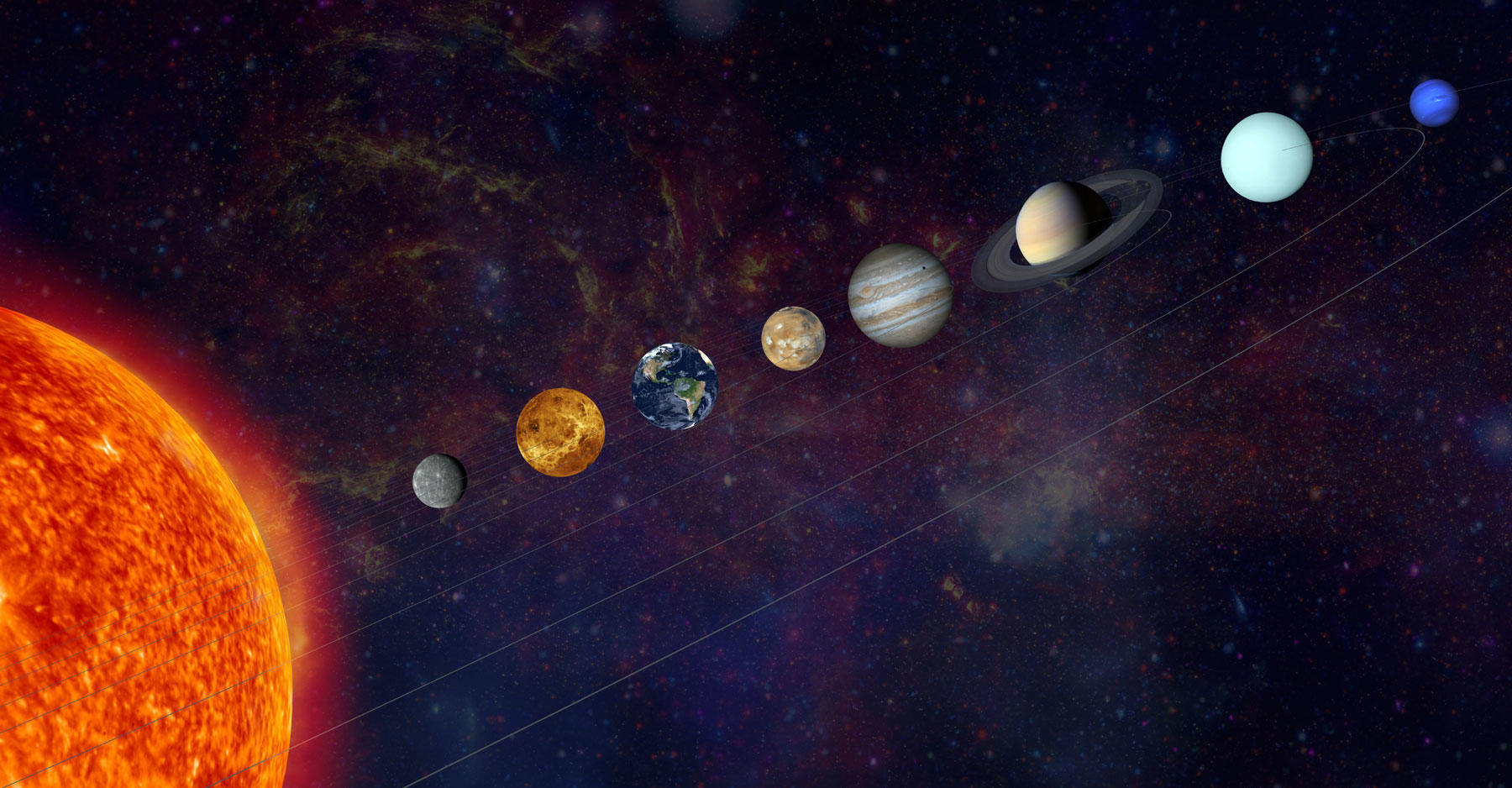
The planets are all equally distanced from each other.


The Earth is the center of the solar system.
Mercury,Saturn
Jupiter, Uranus, Neptune
Jupiter, Neptune,
Mercury,Saturn,
Uranus
Mars,Jupiter,
Saturn,Uranus
Neptune
The planets are not lined up in a perfectly straight line
The planets are all equally distanced from each other.

