wayground logo

Free Printable Worksheets

Font size

S
M
L
XL
Worksheets

4th Quarter Review (Motion and Electricity)

Total questions: 70

Worksheet time: 35mins

Name
Class
Date
1.

How will these charges interact?

a)

Repel

b)

Attract

c)

No interaction

2.

How will these charges interact?

a)

Repel

b)

Attract

c)

No interaction

3.

How will these charges interact?

a)

Repel

b)

Attract

c)

No interaction

4.

True or False: An object can carry a positive, negative or neutral charge.

a)

True

b)

False

5.

What is the total positive charge? Total negative charge? Net charge?

a)

+2, -4, Net charge = -1

b)

+1, -3, Net charge = -2

c)

+3, -5, Net charge = -2

d)

+5, -3, Net charge = +2

6.

What is the net charge of the balloon in the picture?

a)

-1

b)

+1

c)

-2

d)

0

7.

What is the net charge of the balloon?

a)

-1

b)

+1

c)

0

d)

+2

8.

How will the two balloons interact?

a)

Attract

b)

Repel

c)

No interaction

9.

Michael tries to pick up a small bit of plastic wrap that is on his desk. Michael's hand has a negative charge. The piece

of plastic has a positive charge. What will happen when Michael's hand gets close to the plastic?

a)

The plastic will neither move towards or away from Michael's hand.

b)

The plastic will circle around Michael's hand.

c)

The plastic will move away from Michael's hand.

d)

The plastic will move towards Michael's hand.

10.
Is iron a conductor or insulator?
a)
Conductor
b)
Insulator
11.
Which of the following is NOT an insulator?
a)
Wool
b)
Plastic
c)
Copper
d)
Styrofoam
12.
Is wood a conductor or insulator?
a)
Conductor
b)
Insulator
13.
What is NOT an example of an insulator in the kitchen?
a)
An oven mitt
b)
Pots and pans
c)
A wooden spoon
d)
A plastic measuring cup
14.
What is a current?
a)
A constant flow of electricity 
b)
A path that a current can flow along
15.
What is a circuit?
a)
A constant flow of electricity 
b)
A path that a current can flow along
16.

Whic is an example or examples of a load?

a)

Kite

b)

Computer

c)

Bread

d)

Lamp

17.

How many types of circuits are there?

a)

1

b)

2

c)

3

d)

4

18.

What are the 3 basic components of a circuit?

a)

Energy source, Load, Energy Pathway

b)

Battery, Energy source, Energy Pathway

c)

Battery, Wire, Energy Pathway

d)

ALL of them

19.

What type of circuit is shown?

a)

Parallel

b)

Series

c)

Open

20.

What is the power source in this circuit?

a)

Bulb

b)

Switch

c)

Wire

d)

Battery

21.

What is a parallel circuit?

a)

It is a circuri rhar has one path for energy to flow.

b)

It is a circuit that has no paths for energy to flow.

c)

It is a circutt that has several paths for energy to flow.

d)

None of the above.

22.
The picture shows an electrical circuit. This circuit is a series circuit because: 
a)
It has 3 light bulbs.
b)
The same current flows through all three light bulbs.
c)
It uses a single battery.
d)
The electrical current is divided between the three light bulbs.
23.

Solve for total Current in the circuit shown

a)

25 Amps

b)

35 amps

c)

25 milliamps

d)

35 milliamps

24.
Pick the correct sentence.
a)
This circuit will work because it is a closed circuit.
b)
Energy will freely flow in this circuit.
c)
This circuit will not work because there is no energy source.
d)
This circuit will not work because there is no switch.
25.
The picture shows an electrical circuit. This circuit is a series circuit because: 
a)
It has 3 light bulbs.
b)
The same current flows through all three light bulbs.
c)
It uses a single battery.
d)
The electrical current is divided between the three light bulbs.
26.
What will happen if one light bulb is removed from this circuit?
a)
The other bulbs will go out.
b)
The other bulbs will stay on
c)
The other bulbs will get dimmer.
d)
The battery will become stronger.
27.
The current has only has one loop to flow through in this circuit. 
a)
Series Circuit 
b)
Parallel Circuit 
28.
When you remove a bulb from a three bulb circuit, and the other two bulbs go off, then the bulbs must have been connected in __________.
a)
parallel
b)
series
c)
open
d)
closed
29.
Does this diagram represent a series or parallel circuit?
a)
series circuit
b)
parallel circuit
30.
What kind of circuit is this?
a)
Series
b)
Consecutive
c)
Parallel
d)
Training
31.
What kind of circuit is this?
a)
series
b)
parallel
32.
a)
Series circuit - Bulbs are lit
b)
Series circuit - Bulbs are off
c)
Parallel circuit - Bulbs are lit
d)
Parallel circuit - Bulbs are off
33.
What is a closed path for electrons to flow through?
a)
static electricity
b)
circuit
c)
amperes
34.
Identify the conductor below.
a)
cloth rag
b)
plastic bottle
c)
gold ring
35.
Identify the insulator below.
a)
aluminum foil
b)
paperclip
c)
rubber eraser
36.
As the resistance in a circuit increases, the electric current __________.
a)
increases
b)
decreases
c)
stays the same
37.
Electricity is the flow of _________.
a)
protons
b)
neutrons
c)
electrons
38.

What would happen if in a circuit, the resistance increases but the voltage stays the same?

a)

The current would decrease

b)

The current would increase

c)

The voltage would decrease

d)

The voltage would increase

39.

What would happen if in a circuit the voltage is increase?

a)

The time would increase

b)

The current would increase

c)

The current would decrease

d)

The current would stay the same

40.

What is the unit of measure for current?

a)

ampere

b)

current

c)

voltage

d)

ohms

41.

What unit of measure is for resistance?

a)

ohms

b)

ampere

c)

voltage

d)

watts

42.

What moves when we say that there is current?

a)

inductors

b)

conductors

c)

electrons

d)

atoms

43.

If there is a current of 2A and a resistance of 24 ohms, what voltage will there be?

a)

26 V

b)

48 V

c)

12 V

d)

22 V

44.
What size resistor would produce a 3 Amp current flow with a 12 Volt battery
a)
1 Ohm
b)
3 Ohms
c)
4 Ohms
d)
12 Ohms
45.

If the voltage is increased and the resistance stays the same, what will current do?

a)
Increase
b)
Decrease
c)
Stay the same
d)
X
46.

An alarm clock draws 0.5 A of current when connected to a 120 volt circuit. Calculate its resistance.

a)

60Ω

b)

120Ω

c)

180Ω

d)

240Ω

47.

A circuit contains a 1.5 volt battery and a lamp with a resistance of 3 ohms. Calculate the current.

a)

0.5A

b)

1A

c)

1.5A

d)

2A

48.
What is Newton's Third Law?
a)
Object in motion stays in motion and an object at rest stays at rest unless acted on by a outside force
b)
Force = mass x acceleration
c)
For every action there is an equal and opposite reaction
49.
An object will always move in the direction of the _______ force.
a)
larger 
b)
smaller 
c)
equal 
50.
Which type of force(s) will cause a change in an object's motion?
a)
gravity
b)
speed
c)
balanced forces
d)
unbalanced forces
51.

Newton's first law of motion is also called the law of _______

a)

Conservation

b)

Physics

c)

Inertia

d)

Force

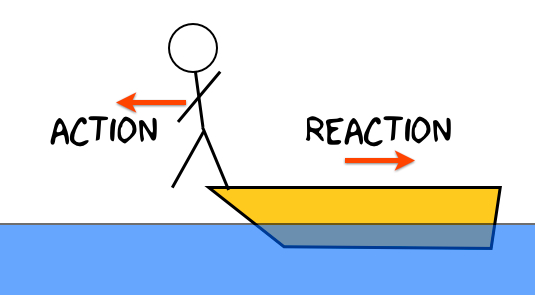
52.
What law of motion does this picture represent?
a)
Newtons 1st law
b)
Newtons 4th law 
c)
Newtons 3rd law 
d)
Newtons 2nd law
53.

A truck has a mass of 10 kg. In order to accelerate at 3 m/s², how much force would need to be produced?

a)

3

b)

30

c)

300

d)

3000

54.
What is the standard unit force is measured in?
a)
Newtons
b)
pounds
c)
grams
d)
meters
55.
  A basketball with a mass of 0.60 kg is accelerated with a force of 10.8 N.  If resisting forces are ignored, what is the acceleration of the basketball to the nearest m/s2?
a)
0.06 N
b)
6.48 m/s2
c)
18 N
d)
18 m/s2
56.
Which of the following best describes the velocity of an object?
a)
30 m/s
b)
30 m East
c)
30 m/s East
d)
30 m/s2
57.

What is Inertia?

a)

any push or pull

b)

change in speed

c)

tendency of an object to resit a change in ts motion

d)

causes motion

58.

What is a force?

a)

Any push or pull

b)

change in speed

c)

something that causes no motion

d)

tendency of an object to resist a change in its motion

59.

What is Acceleration?

a)

Any push or pull

b)

Anything that causes motion

c)

Change in speed

d)

Something that causes no motion

60.
If there are two forces going in the SAME direction, you would ...?
a)
(-) Subtract the forces
b)
(+) Add the forces
c)
Neither
d)
(x) Multiply
61.

If there are two forces going in opposite directions how would you find the net force?

a)

Subtract

b)

Add

c)

Neither

d)

Multiply

62.
What is the net force?
a)
5.5 N left
b)
5.5 N right
c)
2.5 N left
d)
2.5 N right
63.
What is the net force?
a)
65 N left
b)
65 N right
c)
35 N left
d)
35 N right
64.
If these boys are pulling with the same amount of force.  What will happen?
a)
The boy in blue will win.
b)
They will not move at all.
c)
The boy in red will win.
d)
Both will fall down.
65.

Pushing a box across the room

a)

Work

b)

No Work

66.

Carrying a baby

a)

Work

b)

No Work

67.

Lifting a laundry basket

a)

Work

b)

No Work

68.

Holding a cell phone

a)

Work

b)

No Work

69.

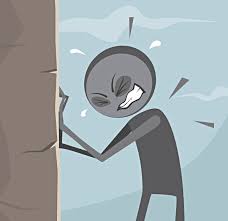
Is this an example of work?

a)

Yes

b)

No!

70.

Is this an example of work?

a)

Yes

b)

No