
 Worksheets
Global 10 Regents Review
Total questions: 150
Worksheet time: 3hrs 28mins


clergy
The Second Estate was made up of the these people.
clergy
common people
priests
nobles


Example: United States; citizens vote for representatives on local, state and national levels who make laws.
Monarchy
Anarchy
Theocracy
Representative Democracy


Example: Saddam Hussein from Iraq in the 1980s-2000s
Supreme Leader
Pope
Dictator
Monarch


When the central government is run by a small group of people who all have similar beliefs on how to control the nation.
Autocracy
Democracy
Oligarchy
Parliamentary
Adam Smith would most likely agree with which statement?
Revolution is the only solution to economic problems.
Five-year plans are necessary in order to industrialize.
All nations would benefit from an agricultural economy.
Government should follow a laissez-faire policy.
Laissez-faire capitalism as attributed to Adam Smith called for
heavy taxation of manufacturers
strict government control of the economy
minimal government involvement in the economy
government investments in major industries
What is a key principle of a market economy?
The means of production are controlled by the state.
Supply and demand determine production and price.
Employment opportunities are determined by social class.
Businesses are owned by the people collectively.
Where did Karl Marx predict a revolution of the proletariat would occur first?
industrial Europe
independent Latin America
colonial Africa
agricultural Russia
Karl Marx and Friedrich Engels encouraged workers to improve their lives by
electing union representatives
participating in local government
overthrowing the capitalist system
demanding pensions and disability insurance
Speaker A:Government should not interfere in relations between workers and business owners.
Speaker B:The workers will rise up and overthrow the privileged class.
Speaker C:Private property will cease to exist. The people will own the means of production.
Speaker D:A favorable balance of trade should be maintained by the use of tariffs
Which speaker is referring to laissez-faire capitalism?
A
B
C
D
Which two major ideas are contained in the
writings of Karl Marx?
survival of the fittest and natural selection
class struggle and revolutionary change
separation of powers and checks and balances
monotheism and religious tolerance
What was the goal of Robespierre?
To get rid of anyone against the revolution
to kill everyone
to keep Louis XIV in power
for France to be industrialized
Which heading best completes the partial outline below?
I. ___________________________________
A. Market system
B. Profit incentive
C. Entrepreneurs
Forms of Government
Characteristics of Capitalism
Structure of the Guild System
Elements of Culture
Bismarck's practice of Realpolitik was guided by which of the following?
Doing what was moral
Doing what would best serve the people
Doing what was necessary to support the nation
None of the above
What nation did Otto Von Bismarck unite as one?
Prussia
Austria
Germany
Italy
Mazzini, Garibaldi, and Cavour were all wanted to unify Italy.
True
False
A time when new inventions and techniques made farming faster and easier is known as the: _____
The French Revolution
The Industrial Revolution
The Mechanical Revolution
The Agricultural Revolution
In the early days of the Industrial Revolution, many factories were built along rivers because
water was a major source of irrigation
water power was used to power factory machines
ships could easily deliver goods to factories
ships could bring in supplies
Britain had abundant natural resources at the time including
Honey
Ivory
Tobacco
Iron and Coal
What is a cause of the Industrial Revolution?
socialist organizations promised land and a good wage to those who moved to industrial cities.
The British government paid people to move to cities.
Agricultural innovations made it easier for farmers to hire more people.
Coal powered steam engines powered factories that employed many people in cities in England.
Due to inventions like the seed drill, which made planting crops easier and faster, farmers migrated to the cities. What was an effect of inventions like the seed drill?
Farmers lost their jobs and moved into industrial jobs
The machines turned into robots and took over land in Great Britain
The farmers needed more work and hired more people to work the land.
The farmers moved to the United States
What are three negative effects of Urbanization?
Safe living structures, adequate food supply, high wages
Poor sanitation, high crime rates, overcrowding
Toxic gas, climate change, melting of the polar ice caps
High employment rates, fewer deaths, higher incomes
What did Ireland experience?
famine
low immigration
war
industrialization
how did the potato famine affect the Irish people?
used the potatoes as french fries
it was the animals main source of food
it didn't affect them
it was the peoples main source of food
How did the English government help the starving people in Ireland?
they set up soup kitchens
they didn't require them to pay taxes
they didn't help at all
they they gave them money to buy food
What did the Russian Revolution happen during?
World War One
Industrial Revolution
The Civil War
The Enlightenment
Who was the leader of the Bolsheviks (Communists)?
Lenin
Putin
Hitler
Franco
Who ruled Russia prior to the Russian Revolution?
Czars
Presidents
Emporers
Serfs
Lenin's campaign slogan was:
Peace Bread Land
Money Wealth Power
Greed Blood Profits
History Best Class
Which action contributed to the success of Lenin’s communist revolution in Russia?
Peasants were promised land reform
Businessmen were encouraged to form monopolies
Landowners were offered tax relief
Factory workers were required to start small businesses
Which action is most closely associated with totalitarian governments?
allowing public discussion of issues and building consensus
accepting criticism and permitting dissent
engaging in censorship and propaganda campaigns
having open and transparent elections with multiple political parties
Which condition was a result of Joseph Stalin’s command economy?
Peasants were encouraged to sell surplus grain for personal profit.
The production of consumer goods increased
National revenue increased allowing for greater individual spending
The government controlled agriculture through collective farms
Which goal did Joseph Stalin establish for the Soviet Union?
becoming an industrial power
creating a golden age of culture
instituting a parliamentary monarchy
easing tensions using détente
Forced famine in Ukraine (1932–1933) was a direct result of
Czar Nicholas’s involvement in World War I
Vladmir Lenin’s New Economic Policy
Joseph Stalin’s collectivization
Nikita Khrushchev’s removal from power
Which action is associated with Joseph Stalin?
expanding privatization
establishing five-year plans
encouraging glasnost
promoting détente
What was the actual purpose of European Imperialism?
To find natural resources to facilitate industrialization
To identify new and improved ways of creating art
To spread democracy throughout the world
Joseph Stalin’s policies in Ukraine during the 1930s directly resulted in
widespread starvation
agricultural self-sufficiency
the development of cottage industries
the use of subsistence farming techniques
How was Lenin able to win the Civil War?
He used war communism
He stole food from peasants
He forced men to fight for him
All of these options
China and Britain fought a war over:
the Korean peninsula
conquests along the Nile River
opium production and distribution
the elimination of the samurai
To say that foreign countries seized “spheres of influence” in China means that they...
had secret agreements with the Chinese government.
created a new territorial government to prevent the U.S. from entering the trade market.
gained control of trade and resources in specific areas of China.
established a circular discussion forum.
The Sepoy Mutiny and the Boxer Rebellion were both
revolutions against the United States
responses to European imperialism
responses to European industrialization
responses to European monarchs
Which one was a mutiny fought by Indian soldiers against British rule in India in the mid 1800s?
Sepoy Rebellion
Boer War
Opium War

What was the result of the Rebellion?
India became an independent nation
Great Britain stopped the rebellion and took full control of India
Why did the Sepoy Rebellion occur?
They wanted revenge for all the starvation occurring throughout India
Hindus and Muslims feared that ammunition was greased with animal fats that were against their religion

12013 36 Which Chinese leader is most closely associated
with leading the Great Leap Forward and the
Cultural Revolution?
Sun Yixian (Sun Yat-sen)
Jiang Jieshi (Chiang Kai-shek)
Mao Zedong
Deng Xiaoping
82015 38 What was an immediate result of the Great Leap
Forward (1958)?
increased famine in China
the relocation of Bosnian refugees
the breakup of the Soviet Union
independence of Kenya from Great Britain
cl One similarity between the Reign of Terror during the French Revolution and the Cultural Revolution in China was that both
limited the power of absolute leaders
illustrated the power of public opinion in forming national policy
established social stability and economic growth
used violent methods to eliminate their opponents
What was a key cause for the rise of fascism in nations such as Italy and Germany?
collectivization
economic hardship
genocide
secret treaties
One purpose of the Nuremberg Trials and of the Truth and Reconciliation Commission in South Africa was to (HINT: if they are COMPARING the two, you don't need to know both! If you know which is true for one, it is true for the other, too!)
address human rights abuses
support the establishment of democratic
establish free trade zones throughout the
provide encouragement to people behind the iron curtain
Neville Chamberlain visited Munich in 1938 to negotiate the fate of Sudetenland. Which policy is most closely associated with Chamberlain’s action?
appeasement
nonalignment
reparations
colonialism
Select all that apply: Which of the following are causes of World War I?
Militarism
Alliances
Nationalism
Imperialism
Religion

Nations that fell under the influence of the Soviet Union and established communist regimes were referred to as
communist republics
socialist nations
Soviet republics
satellite nations

The nation created after World War II as a homeland for displaced Jews was
Palestine
the Soviet Union
Czechoslovakia
Israel
Which Cold War alliance was created by Western Europe and the United States?
NATO
Non-alignment Movement
Warsaw Pact
Potsdam Conference
The Cold War began
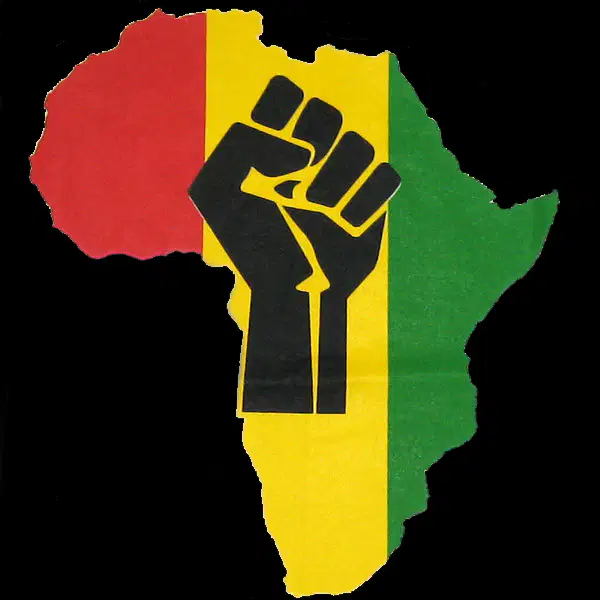
The original goal of Pan-Africanism was to
demand democratic reforms
encourage ethnic rivalry
promote a united Africa
divide Africa into separate countries
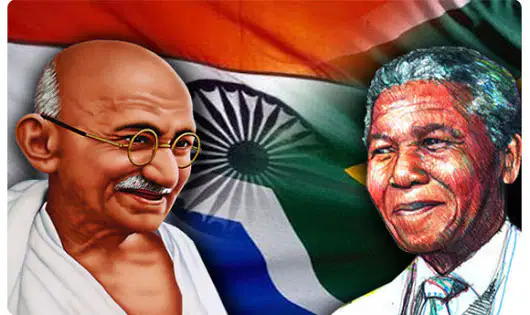
A similarity of the goals of Nelson Mandela and Mohandas Gandhi is that both leaders wanted to
secure political power for the majority of the people
encourage a greater degree of industrialization
improve the economy by expanding governmental control
gain independence from the Soviet Union
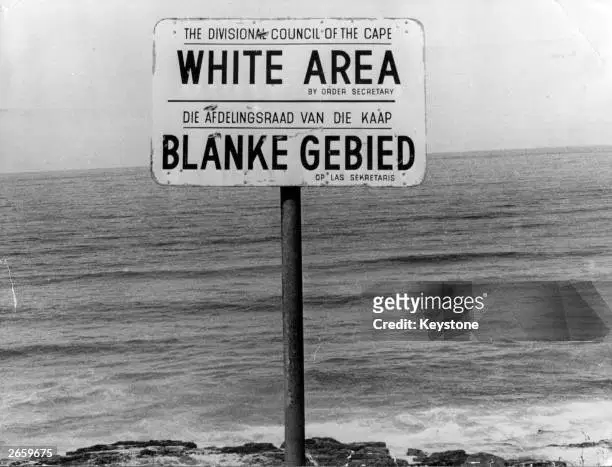
What is the apartheid system?
A democratic government system
A system that brought equality to all races
A system of laws that segregated the races in South Africa
A dictator type of government system

Which ethnic group in Rwanda was given more privilege under Belgian rule and later killed in a genocide?
Hutu
Tutsi
Zulu
Twa
Independence movement group in Kenya that caused a lot of violence to Europeans and Africans who supported Europeans.
Boxers
Sepoys
Zulu
Mau Mau
Led an independence movement against the British in Ghana.
Jomo Kenyatta
Nelson Mandela
Kwame Nkrumah
Mahatma Gandhi
The Khmer Rouge wanted to create a society in Cambodia that was primarily based on ___.
farming and agriculture
the adoption of western culture
exporting industrial goods
none of the above
Which of the following leaders founded the Khmer Rouge in Cambodia?
Kim Il Sung
Ho Chi Minh
Pol Pot
Mao Zedong
Khomeini established a theocratic type of government.
True
False
A major cause of the Islamic Revolution in Iran in 1979 was the concern by Islamic leaders that
Women were being denied political rights
Traditional values were being undermined by Western ideas
Israel had lost its influence in the Middle East
Religious leaders were becoming too powerful
What was the goal of the Green Revolution?
To build better transportation systems
To explore outer space
To develop new computer technology
To improve agricultural techniques
What was one of the unexpected consequences of the Green Revolution?
Increase in wildlife population
Decrease in water usage
Environmental damage from long-term chemical usage
Improved soil quality
Deng's economic reforms were met with resistance by some who thought he was taking the 'capitalist road'
True
False
Deng thought that by economically modernising China only then could communism continue to advance
True
False
Deng reformed agriculture in China by...
Dictating what could be grown in China
Dismantling the Mao commune system and allowing individual farmers to own their land
Training peasants to be better farmers and increase production
82013 37 During the Great Leap Forward, Chinese
peasants were forced to...
join communes
move to the cities
convert to Christianity
attack the Red Guards
82015 38 What was an immediate result of the Great Leap
Forward (1958)?
increased famine in China
the relocation of Bosnian refugees
the breakup of the Soviet Union
independence of Kenya from Great Britain
What is the name of the army of young students that Mao used to enforce policies in the 1960's?
The Red Guard
The Kuomintang
The great Collective
The Alliance for Progress
What was the primary purpose of the Balfour Declaration?
To protect Palestine from Jewish refugees
To end WWI
England expressed support for a Jewish homeland in Palestine
For England to govern Palestine after the war
What was the name of the political movement that aimed to establish a Jewish homeland in Palestine?
Zionism
Imperialism
Nationalism
Colonialism
What was the intent of the Balfour Declaration?
To establish a national home for the Jewish people in Palestine
To grant independence to Arab leaders in Palestine
To divide Palestine between Jews and Palestinians
To maintain British control over Palestine
What was the outcome of the UN vote on the partition plan for Palestine in 1947?
Accepted by both Jews and Palestinians
Accepted by Jews, rejected by Palestinians
Accepted by Palestinians, rejected by Jews
Rejected by both Jews and Palestinians
What was the impact of World War I on the British promises in the Middle East?
They made multiple promises to different groups
They fulfilled all their promises
They abandoned their promises
They modified their promises
Kemal Ataturk reformed his country. What reforms did he make?
Modernization
Westernization
Non-Secularization
Dictatorship
Which new Soviet policy granted the people of the USSR more decision making power and greater access to private ownership of businesses?
perestroika
glasnost
democratization
shock therapy
Which of Gorbachev's programs created more openness, more public participation in government, and greater individual rights were given to Soviet citizens?
glasnost
perestroika
democratizatsiya
shock therapy

