
 Worksheets
Career Preparedness Final Exam
Total questions: 123
Worksheet time: 3hrs 6mins
Dave is an air conditioning repair technician. A previous appointment took longer than expected. Dave will now be late to his appointment at Mrs. Alvarez's house. What should Dave do?
Call Mrs. Alvarez, apologize, and provide an updated arrival time.
Explain to Mrs. Alvarez that the late arrival was not his fault and blame it on previous customer.
While driving to her house, Dave should text Mrs. Alvarez the updated arrival time.
All of the above.
Emma thinks it would be fun to wear a costume to work on Halloween. What should Emma do?
Ask her customers if they feel it is a good idea.
Check the employee handbook and ask her supervisor about the policy on costumes.
Ask co-workers to also wear costumes that day.
Complain on social media if her company does not allow employees to wear costumes.
A storm broke windows and damaged a store's backroom. Which statement demonstrates that Lisa, a cashier, is both a safe employee and a team player?
"I would like to help, but cleaning is not one of my job responsibilities."
"I will use a broom and wear gloves to clean up the glass."
"I will pick up the glass with my bare hands."
"If Ron had unpacked those boxes yesterday, the rain would not have damaged the contents."
Carlos works for an electronics company. He would like his company to promote him to manager. Carlos should do all of the following EXCEPT:
Express his interest in taking on increased responsibilities and challenges at work.
Learn more about the industry, his company, and the roles and responsibilities of managers.
Demonstrate his knowledge, strong work ethic, dependability, and positive attitude every day.
Demand a promotion if he does not receive one within six months.
T/F: To appear loyal and dependable, an employee should never call in sick.
True
False
T/F: Even if a customer is rude, you must remain calm, poised and professional.
True
False
T/F: Do exactly as your supervisor tells you, even if the request is illegal or unsafe.
True
False
T/F: If you have an issue with your work schedule, have your parent call your boss.
True
False
T/F: It is important to be on time for work each and every day.
True
False
T/F: Dress codes are just guidelines. They do not need to be followed exactly.
True
False
T/F: Texting while talking to a co-worker or customer is acceptable if you do it quickly.
True
False
requires gathering reliable information, assessing information for answers and selecting a suitable solution based on the situation
academic preparation
problem-solving
apprentice
ethical behaviors
style of speaking or behaving
leadership
mannerisms
commitment
integrity
What is the FIRST step of the decision-making process?
make a plan!
make a decision
determine need or want
evaluate choices
Which of these is not part of the decision making process?
Gather information
Consider the consequences
Evaluate the results
Agonize
A ________________ is something that happens as a result of a particular action or set of conditions
Technology
Warranty
Resource
Consequence
They often only involve you, and they have few possible negative consequences
Minor Decisions
Major Decisions
Prefrontal Cortex
Criteria
The standards in which you base your decisions
Self-Image/Self-Concept
Dopamine
Criteria
Responsible
What is opportunity cost?
the value of the next best option that is not selected when a choice is made.
there is not enough of it.
things people make to earn money.
actions people do to earn money.
Which is a need?
iPhone
water
coffee
Ray-Ban sunglasses
These are the things we desire to have.
Wants
Goals
Opportunity Costs
When "wants are greater than the resources available to satisfy them," it is called...
Scarcity
Needs
Opportunity Cost
None of these answers
When you make a choice, you often have to give up other options...those things are called the...
Opportunity Cost
Missed Opportunities
Misused Resources
Scarce Options
Which one of the following is an opportunity cost?
You stay out late and your parents ground you.
You run a red light and you get a ticket.
You choose to give up math to study for history.
In a softball game, you miss the ball and strike out.
A student decides to buy a ticket for a concert instead of buying a new shirt. What is the opportunity cost of buying the ticket?
the concert
the price of the ticket to the concert
the shirt
the time spent purchasing the ticket
All except the following is a step in the decision making process
Evaluate the decision
Flip a coin
List all your alternatives
Carry out the decision
True or false: The decision-making process is used only for big, important decisions.
True
False
True or false. A decision will affect only the person who makes it.
True
False
True or false: A poor decision can be a learning experience.
True
False
Made on a daily basis and don’t require a lot of time to think through
major decisions
Well-being
routine decisions
decision
determine all the choices you have
Identify the Problem
Identify Alternatives
Decide
Evaluate the Results
know the problem or question before searching for an answer
Identify the Problem
Identify Alternatives
Decide
Evaluate the Results
The following elements describe a SMART goal
Specific, Measurable, Attainable, Realistic, Time Bound
Short, Measurable, Action, Realistic, Time Bound
Specific, Monetary, Attainable, Recognize, Temporary
Short term, Mandatory, Attainable, Repetition, Timely
The loss of potential gain from other alternatives when one alternative is chosen
personal financial planning
opportunity cost
goals
demand
What does the S stand for in SMART GOALS
Specific
Special
Standard
Sports
What does the M stand for in SMART Goals
Mighty
Mediocre
Measurable
Most
What does the A in SMART stand for?
Attainable - a goal must be reachable; you CAN do it.
Admirable - a goal must impress people.
Artistic - a goal must be creative.
Academic - a goal must be scholarly and oriented towards learning.
Relevant - a goal must be something that is important to YOU
Timely - the goal must be reached within a specific length of time.
Why is it important that your goals have deadlines?
You need details.
So you can tell if you have accomplished it or not.
So you know what you are trying to accomplish.
So you will actually work towards achieving it in a timely manner.
Who should set your goals?
Mom
You
Your teacher
Your best friend
Why is "I will eat healthy this week" not a SMART goal?
Not attainable.
Not time-bound.
Not measurable or specific.
It is a SMART goal.
I will score 15 soccer goals this season.
SMART goal
NOT a SMART goal
I will learn to play the drums.
NOT a SMART goal
SMART goal
Why is it important that SMART goals are measurable
So you know exactly what you are trying to accomplish
So you know when you have accomplished it or not
So you have a deadline you are working within
So it is something you care about
I will get all A's these 9 weeks.
SMART goal
NOT a SMART goal
"We want to make lots of money with our lemonade stand by the end of the day," is missing...
Timely
Relevant
Specific
Attainable
"I want to run faster than the speed of light by the time I am 20" is a bad goal because...
It is not Specific.
It is not Relevant
It is not Attainable.
It is not Measurable.
Setting goals will help you...
Identify some specific steps to take to help work toward goals
be the first in line to lunch
help you make the basketball team
fail science for the 2nd nine weeks
Belief or practice of what is important, desirable and worthwhile to an individual.
Need
Well-being
Value
Want
Which option is a Need?
Shelter
Hot Tub
Nike Sneakers
TikTok
Guides individuals to think through all components of making a good decision for a major decision
major decisions
decision‐making process
routine decisions
well‐being
Have long‐term effects on a person’s life. They should be made very carefully and with a lot of thought.
major decisions
decision‐making process
routine decisions
well‐being
Impacts an individual’s or family’s well‐being
major decisions
decision‐making process
routine decisions
decision
The state of being happy, healthy and prosperous
major decisions
Well-being
routine decisions
decision
Made on a daily basis and don’t require a lot of time to think through
major decisions
Well-being
routine decisions
decision
determine all the choices you have
Identify the Problem
Identify Alternatives
Decide
Evaluate the Results
know the problem or question before searching for an answer
Identify the Problem
Identify Alternatives
Decide
Evaluate the Results
make the best choice after thinking about all of the consequences.
Identify the Problem
Identify Alternatives
Decide
Evaluate the Results
this will help in making better decisions in the future.
Identify the Problem
Identify Alternatives
Decide
Evaluate the Results
What is an example of a Major Decision?
What to wear in the morning
Saving for a family vacation
What to pack for lunch
Where to sit on the school bus
Specific objectives to be accomplished through financial planning.
short‐term goal
goal
education goals
financial goals
The end result of something a person intends to acquire, achieve, do, reach or accomplish.
short‐term goal
goal
education goals
Financial goals
Achieve in a time period of less than one year.
short‐term goal
goal
Values
education goals
Achieve in a time period of more than one year.
short‐term goal
goal
Long-term goal
education goals
The following elements describe a SMART goal
Specific, Measurable, Attainable, Realistic, Time Bound
Short, Measurable, Action, Realistic, Time Bound
Specific, Monetary, Attainable, Recognize, Temporary
Short term, Mandatory, Attainable, Repetition, Timely
The loss of potential gain from other alternatives when one alternative is chosen
personal financial planning
opportunity cost
goals
demand
A balance achieved between two desirable but incompatible features; a compromise.
opportunity cost
trade-off
value
want
Prejudice is when you think badly of someone based on something about them, such as religion or race.
True
False
Diversity means
Being same
Being different
Being indifferent
Being unhappy
The belief in the superiority of one race over another.
Racism
Inequality
Equality
Fascism
An item that is necessary for life
Need
Well-being
Value
Want
Belief or practice of what is important, desirable and worthwhile to an individual.
Need
Well-being
Value
Want
Something that is
unnecessary to life, but desired.
Need
Well-being
Value
Want

Wants are things that make our life _____________.
more difficult
not fun
expensive
easier

Needs are the things that all people must have to __________.
stay alive
not need
play everywhere
throw away

Someone who buys goods or services is called a ____________________
producer
consumer
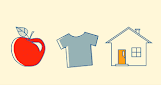
Air, shelter, and food are all examples of ______________
needs
wants

Is this a want or a need?
Need
Want
Which do you NEED to survive?


Soda is a need.


Air is a want.


Moving money from your savings to your checkings is an example of a
transfer
withdrawal
deposit
Paying a bill with bill pay
deposit
withdrawal
transfer
Checking accounts are only offered by banks, not credit unions.
TRUE
FALSE
Signing the back of a check made payable to you is called?
Deposit
Payor
Endorsement
Influencer
Maintaining a minimum balance is one way of possibly qualifying for a free checking account.
TRUE
FALSE

What is the first set of numbers at the bottom of the check called? (789123456)
Account Number
Check Number
Routing & Transit Number
Telephone Number
What is the second set of numbers at the bottom of the check called? (123789456123)
Account Number
Check Number
Routing & Transit Number
Telephone Number
Why does the amount of the check need to be written out in words?
It helps clarify the numbers intended by the maker of the check.
It is the legal amount of the check.
It makes it more difficult to alter the intended amount.
ALL of these.
What will you absolutely need to set up a bank account?
Tax ID/Social Security Number
Passport
Driver's License
Instagram Account
Banks and credit unions often offer ______ protection (usually linked to a savings account) so that you don't put your account into the negative.
indeterminate
capital
overdraft
underside
Which of the following would be the best, most secure password?
1234ABCD
Iloveyou
Ttg@5wP!k
qwerty3
Lucy has $50. She wants to start saving money, but also be able to access her money without penalty.
Which type of savings account should she open?
Traditional savings
Money Market Account
Certificate of Deposit (CD)
If a check is lost or stolen, the bank can place a ______ on it, at the maker's request and expense, so that the check cannot be cashed.
overdraft
stop payment
debit
money order

A bank account that allows you to deposit/withdraw money at any time and earns interest is a
money market fund
money market deposit account
regular savings account
certificate of deposit

Interest earned on both the principal and any interest earned on the principal.
Rate of return
Compound interest
Simple interest
Principal earnings

The interest rate on a CD is __________ than that on a regular savings account.
Lower
Higher
Same
Does not earn interest

You earn _______________ by saving money in a savings account.
money
interest
awards
trophies

Interest calculated on the amount of money deposited ONLY.
Daily
Simple
Compound
Annual

What is a savings account?
A basic type of money product that allows you to save money and earn profits.
A complex type of money product that allows you to save money.
A simple type of money product that allows you to spend money.
A easy type of money product that allows you to spend money.

What is one advantage of having a savings account?
Access emergency funds.
Money in the savings account gains value over time
Opportunity to use an ATM.
Ability to make secure investments?
What is the term for the amount of money in someones account?
Balance
Debt
Deposit
Withdrawal

What is line. "B". for?
How much cash you have
How much cash you want to keep
How much money depositing into bank
Signature line

What is line "A" for?
Signature line
How much cash you have
how much you are depositing into account
date of deposit

What is line. "C". for?
How much cash you have
How much cash you want to keep
Checks you have to put into bank
total money putting into bank

What is line. "D". for?
Date of deposit
total before keeping cash
Total putting into bank
Cash you want to keep
Form you fill out to put money in your account.
withdrawal
deposit slip
service charge
deposit
Write each amount in word form, as it would appear on a withdrawal slip.
$64.25
sixtey-four dollars and 25 cents
sixty-four and 25/100 dollars
six tens and 4 dollars and 25/100 cents
sixtey-four and 25/100 dollars
Write each amount in word form, as it would appear on a withdrawal slip.
$748.00
Seven-forty eight and 00 dollars
Seven forty-eight hundred dollars and 00/100 cents
Seven hundred fourty eight dollars
Seven hundred forty-eight and 00/100 dollars
$1620.38
$1510.06
$1485.06
$787.10
What is her total deposit?
$214.16
$198.16
$194.16
$234.16
What is the total deposit for $324.75, 15 pennies, 8 nickels, 5 dimes and 3 quarters?
$325.15
$326.45
$325.95
$326.55
Paula Cruz wants to deposit $74.00 in cash and check for $122.17. What is the subtotal and total deposit?
Subtotal: $74.00, Deposit: $198.17
Subtotal: $196.17, Deposit: $196.17
Subtotal: $198.17, Deposit: $198.17
Subtotal: $198.17, Deposit: $74.00

