
 Worksheets
Sixth Grade Science YEAR review!
Total questions: 50
Worksheet time: 25mins
A child on his way down a playground slide.
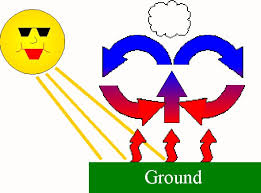
______ causes deep ocean currents
The Coriolis Effect
gravity
wind
density differences

What does the blue line represent in the Thermohaline circulation?
Warm salty water
Warm water
Cold water
Cold salty water
Which pictures shows the correct "Global Conveyor Belt"?


The smallest unit of a living thing
cell
tissue
organ
organ system
organism
A living thing that is made up of organ systems.
cell
tissue
organ
organ system
organism

Which is one of TWO body systems that allows the body to move?
Cardiovascular System
Muscular System
Nervous System
Circulatory System

Which body system obtains oxygen from the environment and expels carbon monoxide?
Respiratory
Cardiovascular
Muscular
Skeletal
Which of the following provides the best evidence that the circulatory system and the respiratory system work together to carry out their functions?
Nutrients are absorbed into the blood from the intestines.
Lungs expand and contract through movements of the diaphragm.
New red blood cells are generated in the marrow of bones.
Gases exchanged in the lungs are carried by the blood.
What is something male birds do to attract female birds?
Have brightly colored plumage
Use feathers to impress females and intimidate other males
Sing
All of the above
What is asexual reproduction?
The process by which organisms produce more of their own kind
Having characteristics that allow specific functions to be performed
A method of reproduction that requires both a male and female parent
A method of reproduction that requires only one parent
Animals have developed characteristic behaviors that help in________________________the odds of being able to reproduce.
decreasing
equalizing
leveling
increasing

How are dandelion seeds dispersed?
by animals
by explosion or bursting
by wind
The process in which an organism produces more of its own kind is called-
genetics
reproduction
adaptive behavior
offspring
What type of reproduction doe these terms relate to: DNA, male, female, unique, traits, egg, sperm
Asexual Reproduction
Sexual Reproduction

If Purple Flowers (P) are dominant over white flowers (p), what would the phenotype be for a Pp genotype?
Purple flowers
White flowers
Not enough information
In what state of matter is kinetic energy the highest most likely?
Solid
Liquid
Gas
If a cup of hot chocolate is put in the microwave, would that add or remove thermal energy to the hot chocolate.
Thermal Energy is Added
Thermal Energy was Removed
Which model is demonstrating what molecules in a liquid look like.


If thermal energy is increasing, what is happening to the kinetic energy.
Kinetic energy would be decreasing
Kinetic energy would stay the same
Kinetic energy would be increasing
The total kinetic energy of the tiny particles that make up matter.
Thermal Energy
Energy Transfer
Temperature
Heat
Movement of energy from one object to another.
Heat
Energy Transfer
Themal Energy
Temperature


If a door was left open between the bedroom (74 degrees) and the living room (68 degrees), what would likely happen to the temperatures after several hours?
nothing, they would not change
both rooms would become hotter
both room would become colder
the bedroom temp. would lower and the living room temp. would rise

In heat transfer, heat always flows from the _______________ substance to the _______________ substance.
Hotter to colder
Colder to hotter
Hotter to hotter
Colder to colder

Why is Earth's equator warmer than the poles?
angle of the sun is more direct
it's closer to the sun
there is more water near the equator
snow at the poles keeps it cold

The seasons are caused by___________?
The tilt of the Earth on its axis
Tropical Storms
Changes in the moon
The Earth's rotation
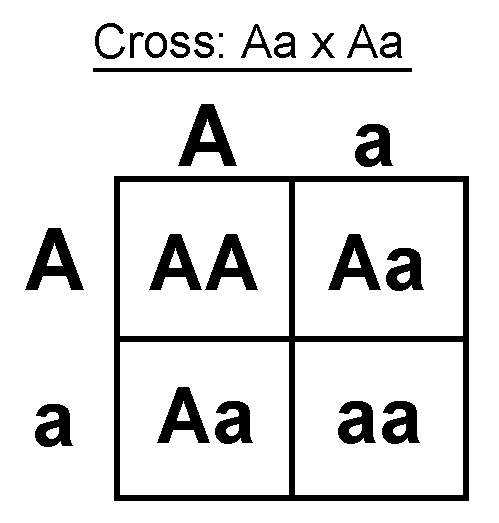
A-Brown hair; a-blond hair
Which describes is the phenotypes of the offspring?
50 % Brown Hair and 50% Blond Hair
25 % Brown Hair and 75% Blond Hair
75 % Brown Hair and 25% Blond Hair
0% Brown Hair and 100% Blond Hair
Which of the following is the correct order of organization in living things from most basic (simple) to most complex?
a. organism, organelle, cell, tissue, organ, organ system
a. organ system, organ, tissue, cell, organism, organelle
a. organelle, cell, tissue, organ, organ system, organism
a. cell, organ, tissue, organelle, organ, organism, organ system

