
 Worksheets
Biology Sem 2 Review 2023
Total questions: 141
Worksheet time: 2hrs 41mins

A ______________ is a large molecule.
Micromolecule
Polymer
Amino Acid
Macromolecule
Which macromolecule is used as our main source of energy?
Lipids/Fats
Nucleic Acids
Proteins
Carbohydrates
Which of the following are examples of carbohydrates? (Select all that apply).
Bread
Pasta
Olive Oil
Cheese
Which macromolecule stores energy?
Carbohydrates
Proteins
Lipids/Fats
Nucleic Acids
Nucleic acids make up which of the two molecules listed below?
FDA
RNA
DNA
FDR
This is one job proteins do not have in the body.
structure for tissues and organs
transport things through cell membranes
speed up chemical reactions
insulation

Salmon is an example of what 2 macromolecules?
Carbohydrates
Lipids/Fats
Protein
Nucleic Acids

carbohydrate

lipid

protein
An enzyme is a ______________.
carbohydrate
lipid
nucleic acid
protein
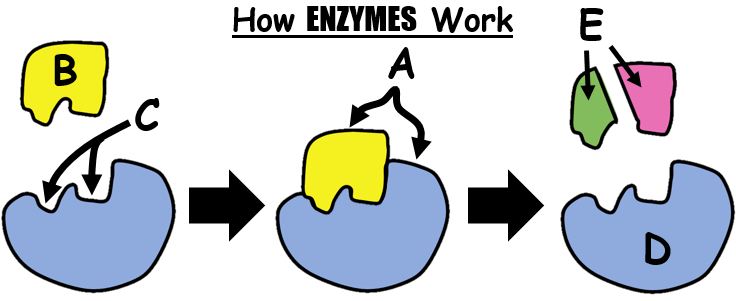
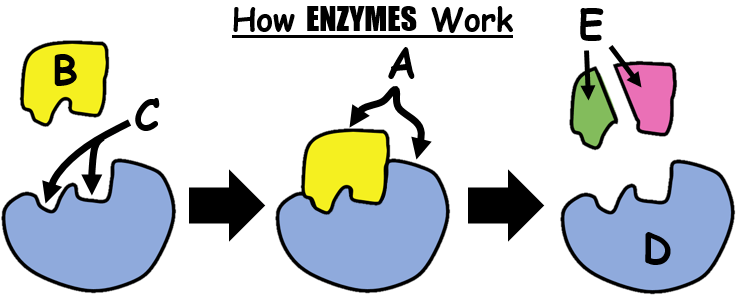
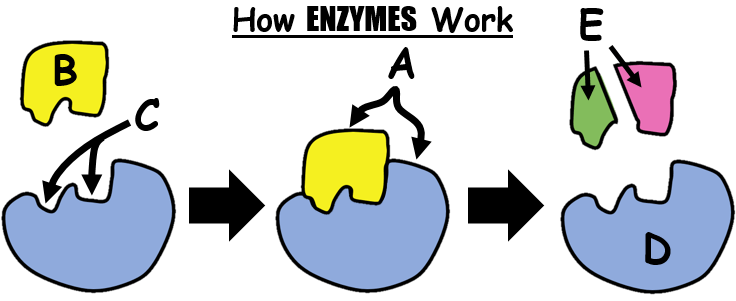
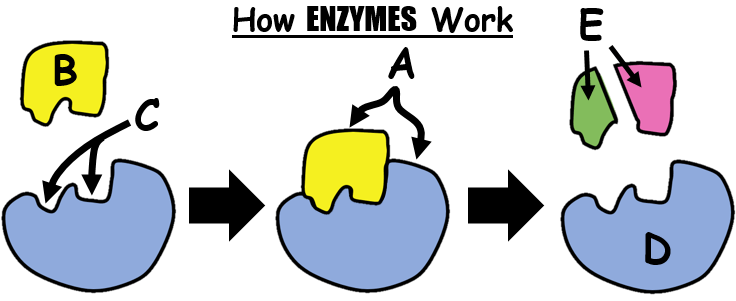
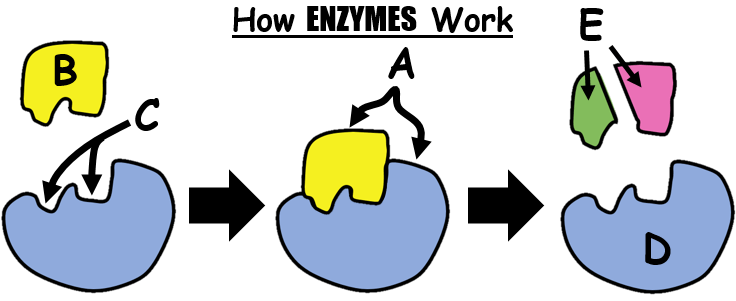
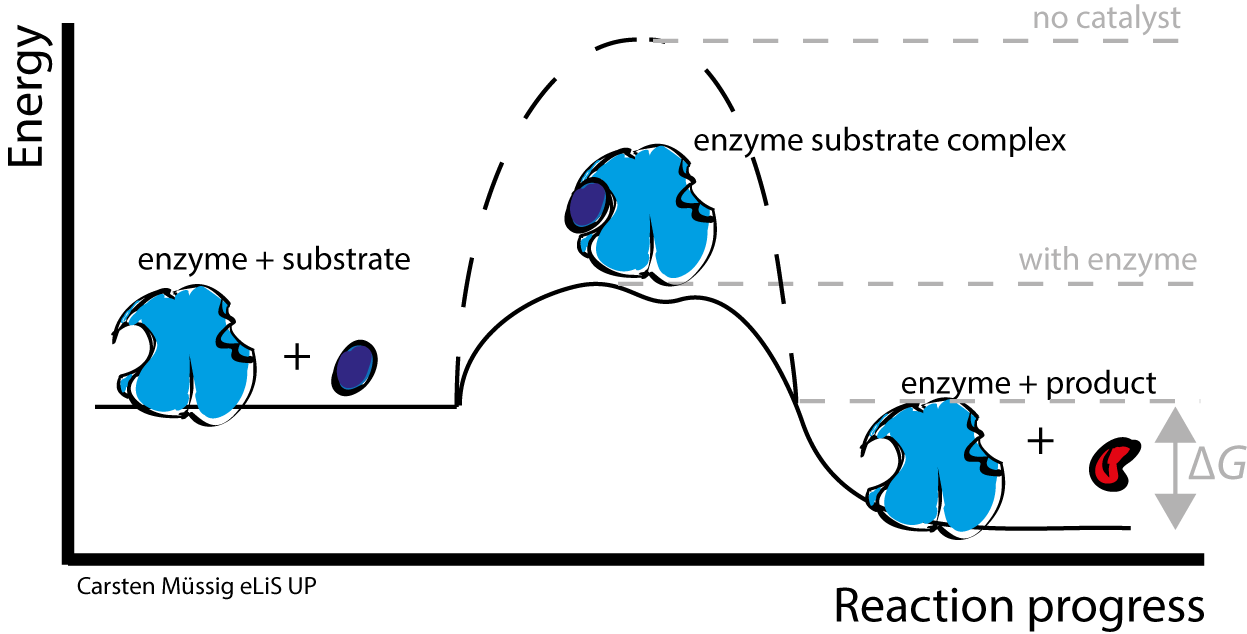
What happens when enzymes are heated to a high temperature?
The enzymes die.
The shape of the enzyme are changed and it denatures
The enzymes' amino acid sequence changes.
The enzymes remain the same
What organism(s) perform photosynthesis?
primary consumers
producers
secondary consumers
tertiary consumers
What are the TWO inputs of photosynthesis?
ATP
carbon dioxide
glucose
oxygen gas
water
What are the TWO outputs of photosynthesis?
ATP
carbon dioxide
glucose
oxygen gas
water
What happens to the solar energy (sunlight) absorbed by the chloroplasts?
It is converted into sunlight energy.
It is transferred to glucose.
It is stored in glucose.
It is stored in the bonds of ATP.
What organism(s) perform cellular respiration? Select ALL that apply.
primary consumers
producers
secondary consumers
tertiary consumers
What are the TWO inputs of cellular respiration?
ATP
carbon dioxide
glucose
oxygen gas
water
What are the THREE outputs of cellular respiration?
ATP
carbon dioxide
glucose
oxygen gas
water
What happens to the energy stored in glucose?
It is converted to solar energy.
It is transferred to ATP.
It turns into ATP.
Nothing - It remains in glucose.
Which option below is NOT a source of energy?
water
sunlight
ATP
glucose
What happens to matter between photosynthesis and cellular respiration?
Matter is lost as heat to the environment.
Matter is used by cells to perform daily processes.
Matter is cycled between these processes.
None of these are correct.
Where do plants get the energy they need to perform photosynthesis?
The soil
The sun
The rain
Bees
In which cell organelle does PHOTOSYNTHESIS take place?
The chloroplast
The mitochondria
The cytoplasm
The golgi apparatus
In what organelle does the 2nd stage of cellular respiration take place in?
chlorophyll
chloroplast
cytoplasm
mitochondria

Which organelle is in this picture?
Mitochondria
Ribosome
Chloroplast
Nucleus

Which organelle is in this picture?
Nucleus
Golgi Apparatus
Chloroplast
Mitochondria
Cells of organisms must go through cell division for?
growth
repair of damaged cells
replacement of dying cells.
All of these
DNA is replicated during ______ of the cell cycle.
Gap 1
Synthesis (S phase)
Gap 2
Gap 0
In prophase of mitosis, chromosomes
form and the nuclear envelope disappears.
are pulled toward opposite ends of the cell.
chromosomes line up along the equator of the cell
chromosomes begin to decondense and the two new nuclei begin to form.
In metaphase of mitosis, chromosomes
form and the nuclear envelope disappears.
are pulled toward opposite ends of the cell.
chromosomes line up along the equator of the cell
chromosomes begin to decondense and the two new nuclei begin to form.
In anaphase of mitosis, chromosomes
form and the nuclear envelope disappears.
are pulled toward opposite ends of the cell.
chromosomes line up along the equator of the cell
chromosomes begin to decondense and the two new nuclei begin to form.
In telophase of mitosis, chromosomes
form and the nuclear envelope disappears.
are pulled toward opposite ends of the cell.
chromosomes line up along the equator of the cell
chromosomes begin to decondense and the two new nuclei begin to form.
This process is the programmed death of a cell
stem cell
regulation
apoptosis
cytocide
These undifferentiated cells can become specialized cells after receiving a chemical signal.
stem cells
generic cells
blank cells
empty cells
When cells go through mitosis repeatedly without entering interphase, this results
arthritis
cancer
mutation
diabetes

Which diagram, A or B, represents mitosis?
A
B

Label the parts of the cell cycle
Gap 1
B
DNA Synthesis
C
Gap 2
D
Prophase
E
Metaphase
F
Stages of Mitosis

Metaphase
All cell must have these instructions to work together
Why must each new cell have a copy of the DNA that is identical to the original cell?
DNA Synthesis
During what stage of the cell cycle is this copy made?

(A) the time in-between divisions (90% of the cell cycle)
interphase
mitotic phase
mitosis
cytokinesis

(E) the time when the cell is going through cell division is known as:
G1
Interphase
Mitotic Phase
S

(B) when the cell is growing and performing its metabolism (aka its job)
G1
G2
G3
S
Adenine pairs with
Thymine
Thyme
Guanine
Glutamine
The backbone of DNA is made of
base pairs
sugars and phosphates
only sugars
only phosphates
The two strands of DNA are held together with
covalent bonds
hydrogen bonds
nothing
If a DNA molecule has 30% Guanine bases, how many Cytosine bases will it have?
30%
25%
20%
10%
One function of DNA is to
code for proteins
code for lipids
code for carbohydrates
The first step in DNA replication is
to unwind and unzip the two strands
to break the backbone in half so the sequence can be copies
to attach new nucleotides
to proof read the sequence

Which is this picture showing?
Protein synthesis
DNA replication
Gene editing
The DNA sequence is TTA CCG What is the complementary sequence?
TTA CCG
AAT GGC
GGC AAT
The backbone is held with covalent bonds so the
sequence doesn't get out of order
base pairs don't separate
When DNA replicates what is separated?
the backbone
the base pairs
the sequence of bases
the sugar- phosphate bond

The process of DNA replication is called semi conservative because it results in
none of these
Two DNA molecules. One original molecule and one with two new strands
two exact copies with new strands
two DNA molecules, each with 1 original strand and one new.
Why does DNA replicate?
To create a duplicate copy in case the original gets damaged
New cells will have a copy of the DNA
To create a new copy to replace the damaged original
Why is DNA important?
it is very small and very complicated
it's in everything
it serves as the blueprint for traits of all living things
because we eat it every day for energy
What is needed for DNA replication to unzip at the hydrogen bonds?
phosphates
enzymes
deoxyribose (sugar)
hydrogen
What is a mutation?
Adenine
a change/mistake in DNA
a copy of the original DNA
Guanine
What causes mutations?
the environment
random assortment
chemicals
independent assortment
This is an example of -
THE DOG HID THE TOY (ORIGINAL)
THE DOH IDT HET OY? (NEW)
addition
substitution
deletion
This is an example of -
THE DOG HID THE TOY (ORIGINAL)
THE DOG SHI DTH ETO Y??
addition
deletion
substitution
This is an example of -
THE DOG HID THE TOY (ORIGINAL)
THE DOG HIM THE TOY (NEW)
addition
deletion
substitution
Frameshift mutations result from -
additions
substitutions
deletions
all of these
Point mutations result from -
none of these
substitutions
additions
deletions
Key players in DNA Replication are...
enzymes
sugars
fats
amino acids
Helicase
The unzipper
Primase
Tells where to start
DNA Polymerase
Builds the new strand
Ligase
Glues fragments together
Which organelle is the location where protein is made?
Ribosome
Nucleus
Cytoplasm
Nucleotide
During transcription, this type of ribonucleic acid is responsible for copying the DNA and brining it out of the nucleus.
tRNA
mRNA
rRNA
dRNA
When these bond together, they form a protein
Amino Acids
Peptide Bonds
Ribose
Nucleotides
There are 3 types of RNA. What are they? (Select all that apply)
tRNA
rRNA
mRNA
xRNA
The Process of creating RNA from DNA
Transcription
Translation
Replication
What is the order for Protein Synthesis?
Transcription -> Translation -> Protein
Translation - > Transcription -> Protein
Protein -> Transcription -> Translation
Translation -> Protein -> Transcription

What type of mutation involves substituting a DNA base with a different base?
point mutation
frameshift mutation
silent mutation
chromosomal mutation

What type of mutation involves adding or deleting bases from the DNA, which results in new codons (a shift in the reading of the codons)?
point mutation
frameshift mutation
silent mutation
chromosomal mutation
Original DNA = TAC GAC TTG AAT
Mutated DNA = TAC GAC TCG AAT
What type of mutation has occurred?
Chromosomal mutation
Point mutation
Frameshift mutation
No mutation occurred

What are considered "positive" mutations?
mutations in the DNA sequence that changes the resulting protein and harms the organism
mutations in the DNA sequence that changes the resulting protein and benefits the organism
mutations in the DNA sequence that produces the same protein
all mutations are considered bad and harm the organisms

What are considered neutral mutations?
mutations in the DNA sequence that changes the resulting protein and harms the organism
mutations in the DNA sequence that changes the resulting protein and benefits the organism
mutations in the DNA sequence that produces the same protein
all mutations are considered bad and harm the organisms

What phase of Meiosis is in this picture?
Prophase I
Metaphase I
Anaphase I
Telophase I
In which phase of Meiosis does crossing-over happen?
Prophase I
Metaphase I
Anaphase I
Telophase I

Which phase of meiosis is shown in the picture?
Prophase II
Metaphase II
Telophase I
Telophase II

Which phase of meiosis does the picture on the left happen?
prophase I
prophase II
metaphase I
telophase II
After meiosis II, which of the following is true about the cells that are produced?
Four cells are produced. They are identical to each other and each contains half the number of chromosomes that the parent cell has.
Four cells are produced. Each is unique and contains half the number of chromosomes that the parent cell has.
Four cells are produced. Each is unique and contains the same number of chromosomes that the parent cell has.
Two cells are produced. Each is unique and contains the same number of chromosomes that the parent cell has.
What effect does crossing over has in terms of traits of offspring?
Results in identical traits of offsprings.
Causes variation in the traits of offsprings.
It really does nothing to the traits of offspring.
The four cells that are produced after Meiosis are _______.
haploid because they contain just half the number of chromosomes as the parent cell.
diploid because they contain as many chromosomes as the parent cell.
diploid because they contain twice as many chromosomes as the parent cell.

What is the scientific term that refers to sex cells?
autosome
gamete
karyotype
chromosome

This term refers to half the normal chromosome number
haploid
2N
diploid
3N

The term that refers to a cell that has its full or complete number of chromosomes is
diploid
N
gamete
haplpoid
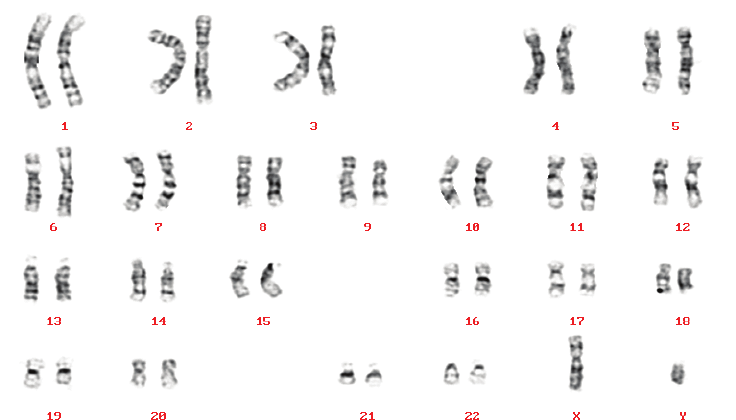
By looking at the chromosomes is this individual biologically male or female? How do you know?
Female, because they have two X chromosomes
Male, because they have one X and one Y chromosome
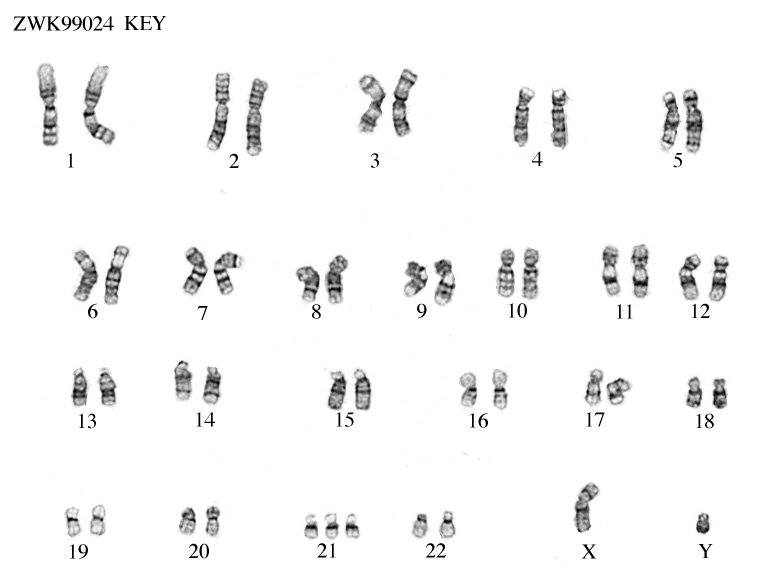
What is the mutation in this persons chromosomes?
There is only one X
7 is shaped like a hockey stick
There's an extra 21
1 is too curved
In snapdragons, flower color is an incompletely dominant trait. Which genotype will lead to a third blended phenotype?
Homozygous dominant
Heterozygous
Homozygous recessive
Red is incompletely dominant to white in snapdragons. Which cross would result in 100% pink flowers?
RR x rr
rr x rr
Rr x Rr
RR x RR

When one allele is not dominant over the other, resulting in both traits expressed in a heterozygous individual.....
Incomplete Dominance
Codominance
Some flowers are controlled by codominance. Red flowers (RR), blue flowers (BB) and Speckled flowers (RB).
Cross a red flower with a speckled flower. What is the phenotypic ratio?
2 red, 2 speckled
2 red, 2 blue
2 blue, 2 speckled
In cattle red coats are represented as RR, and white coats are represented as WW.
What is the genotype for Roan color?
RR
RW
WW


A calico cat shows both the traits for orange fur and black fur.
Incomplete Dominance
Co-dominance
Complete dominance
Mendelian dominance

A man with type O blood is accused of being the father of a type B baby. The mother is type A. Could this man be the father?
Yes
No
Maybe
How can a person's muscle cells have the same exact DNA sequences as their nerve cells even though the look and perform completely different?
The two different cells become mutated
The proteins expressed in each cell are different
They actually have different DNA in the two types of cells.
The genome of the different cells changes


Epigenetics refers to changes in:
DNA sequence
Gene structure
Gene expression
DNA frequency
Every cell has a copy of every gene
True
False
All genes are expressed in every cell
True
False

