
 Worksheets
Using the Periodic Table Study Guide
Total questions: 50
Worksheet time: 41mins
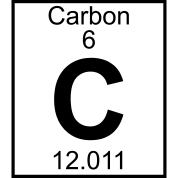
the basic structural unit of matter
atom
matter
element
nucleus
the positively charged subatomic particle contained in the nucleus of an atom
proton
neutron
electron
matter
a subatomic particle, contained in the nucleus of an atom, having the same mass as a proton but no electrical charge
proton
neutron
electron
matter
a negatively charged subatomic particle that orbits the nucleus of an atom
proton
neutron
electron
matter
one or two letters that represent the name of an element
element name
element symbol
atomic number
atomic mass
a grouping of elements based on similar properties, arranged by columns in the periodic table; also known as a family
group
period
row
isotope
a row on the Periodic Table of Elements
family
period
row
isotope


Which color on the image of the periodic table corresponds with the metalloids.
bright yellow
gold
teal
light blue
The periodic table is mostly comprised of what type of element?
Metals
Nonmetals
Metalloids

Which elements are to the LEFT of the zigzag?
metals
nonmetals
metalloids

Which elements are colored red?
nonmetals
metals
metalloids
Name the following: MgO
Magnesium Oxide
Monomagnesium monoxide
Magnesium monoxide
Magnesium (II) oxide
Name the following: NO2
Nitrogen oxide
Mononitrogen dioxide
Nitrogen dioxide
Nitrogen (II) oxide
Name the following: CF4
Carbon fluoride
Monocarbon tetrafluoride
Carbon tetrafluoride
Carbon fluorate
Name the following: N2O5
Nitrogen oxide
Dinitrogen pentoxide
Nitrous oxide
Nitrogen pentoxide
Name the following: CuO
Copper oxide
Copper (II) oxide
Monocopper monoxide
Copper monoxide
Name the following: C3H8
Tricarbon octahydride
Carbon hydride
Carbon octahydride
Tricarbon hydride
Because the overall charge in an ionic compound must be neutral, the charge of iron in Fe2O3 is ______.
2+
3+
0
3-
Name the compound: N2O5.
dinitrogen pentaoxide
binitrogen pentaoxide
nitrogen oxide
pentanitrogen dioxide
Name the compound: MgCl2
magnesium chloride
magnesium dichloride
monomagnesium chloride
manganese chloride
Name the compound: P4O8
tetraphosphorus octoxide
phosphorus oxide
tetrapotassium octoxide
potassium oxide
Name the compound: SF6
sulfur heptafluoride
sulfur hexafluoride
monosulfur hexafluoride
monosulfur heptafluoride
Name the compound: Zn3P2
zinc phosphide
trizinc diphosphide
zinc phosphate
zinc phosphite
Write the formula: iodine heptafluoride
IF7
I2F14
IHF7
IF6
Write the formula: carbon monoxide
CO
CO2
OC
C2O4
Lithium nitride
Li3N
LiN
Li3(NO3)2
LiNO3
The Law of Conservation of Matter
tells how many atoms of an element are contained in one molecule or formula unit.
the starting materials in a chemical reaction
the new substances that are formed in a chemical reaction
A law stating that atoms are not created or destroyed during a chemical reaction.
Balance this equation
_Al +_HCl --> _H2 +_AlCl3
2,6,3,2
it's already balanced
4,12,3,4
2,1,4,5
How many atoms of carbon (C) are in 2C6H12O6?
3
6
12
24
2H2 + O2 --> 2H2O
2H2 + O2 --> 2H2O
Example: H2
Ex: 2H2 + O2 --> 2H2O
_N2 + _H2 --> _NH3
Balance this equation
_Al +_HCl --> _H2 +_AlCl3
2,6,3,2
it's already balanced
4,12,3,4
2,1,4,5
_CF4 + _Br2 -- _CBr4 + _F2
_SnO2 +_H2-->_Sn +_H2O

