
 Worksheets
Science 6 Reviewer 2
Total questions: 110
Worksheet time: 1hrs 1mins
Inner Planets are also called.
Terrace Planets
Terrestrial Planets
Terminal Planets
Treasure Planets
Inner planets are most likely ____
closer to the Sun and are smaller and made of gasses
away from the sun and made up mostly of rocks
closer to the Sun and are smaller and rockier
away from the sun and made up mostly of gasses
Inner planets are consist of ______
Mercury , Venus, Jupiter and Mars
Mercury, Jupiter, Saturn and Mars
Marcury, Earth, Mars and Neptune
Mercury, Venus, Earth and Mars
Planets that is closest to the and orbits the sun for 88 days.
Earth
Mercury
Mars
Venus
Two moons of Mars are called ____.
Titan
Deimos
Rhea
Phobos
Which of the following is considered the 'Red Planet?
Mars
Earth
Venus
Mercury
All inner planets have moon.
True
False
Which statement about inner planets is true?
All inner planets are mostly covered with water.
The inner planets have common types of rocky land forms such as mountains and volcanoes
Earth is the hottest inner planets
All inner planets have thick and protective atmosphere.

Which planet is on the picture?
Earth
Mercury
Mars
Venus
Which of the planets considered to be hospitable to life.
Mars
Venus
Mercury
Earth
The solar system is believed to have formed roughly 4.568 billion years ago.
True
False
Even though Mercury is the closest planet to the Sun, Venus is the hottest of all planets in the solar system.
Yes
No
May be
I don't know

Object "D" in the solar system diagram represents which planet?
Mercury
Earth
Mars
Venus
It is the center of the Solar System.
Asteroids
Jupiter
Mars
Sun
It is sometimes referred to as the sister planet to Earth, because their size and mass are so similar.
Mars
Mercury
Jupiter
Venus
It is formed when substances are combined
matter
mixture
solid
liquid
The substance being dissolved is the _____.
solute
solvent
colloid
matter
A mixture in which particles can be distinguished is called ________.
Solution
Colloid
homogeneous mixture
heterogeneous mixture
These are the mixtures that often have a main component or a base ingredient.
Homogeneous
Heterogeneous
Colloid
A mixture in which the components or ingredients are not distinguished from one another
Heterogenous
Homogeneous
Colloids
It is a solvent that dissolves many substances, also call universal solvent.
solute
solvent
water
It used filter paper for the particles of coffee to be separated.
Diffusion
Filtration
Centrifugation
Salivary glands Produces saliva in your
nose
mouth
The nutritional components of the food are then absorbed by the
large intestines
small intestines
Organs are made up of different
tissues
cells
Skeleton gives shape to our
body
tissues
New born has about _______ bones
206
300
An adult has ____ bones.
206
300
1. An adult human muscular system consists of 600
bones
muscles
Digestion begins in the
mouth
stomach
Name any two digestive organs .
intestines. food pipe
nose, lungs
We can stand straight and walk due to our
muscles
skeleton
The food pipe connects the mouth and
intestines
stomach
The bones are hard and join together to form a
muscles
skeleton
The ___________ breaks down food into small pieces.
stomach
kidney
This planet rotates on its side.
Mercury
Earth
Neptune
Uranus
The second largest planet
Jupiter
Saturn
Uranus
Neptune
The red planet
Venus
Mars
Jupiter
Mercury
Planet with no atmosphere
Mercury
Venus
Earth
Mars
Planet with the most rings
Jupiter
Saturn
Uranus
Neptune
Planet with a great red spot caused by a continuous storm
Mars
Earth
Jupiter
Neptune
The hottest planet
Mercury
Venus
Earth
Mars
Planet with thick atmosphere of carbon dioxide
Mars
Venus
Mercury
Jupiter
Two planets with no moons
Mercury & Mars
Mercury & Earth
Venus & Mars
Venus & Mercury
Planet with two moons
Earth
Mercury
Mars
Jupiter
A day is longer than a year on this planet
Jupiter
Mars
Venus
Earth
Planet with the shortest day
Earth
Mercury
Jupiter
Saturn
All planets have moons
inner planets
outer planets
Another word for inner planets
terrestrial planets
ice giants
Another name for outer planets
terrestrial planets
gas giants
Planets revolve around the sun faster
inner planets
outer planets
Planets rotate faster
inner planets
outer planets
Gravity of this object keeps planets in their orbits
moon
sun
Jupiter
Two things that affect an object's gravity are mass and distance
true
false
Planets are relatively close together
inner planets
outer planets
How many bones are there in our body?
200
206
250
It is the longest and strongest bone in our body.
skull
spine
femur
The human body can move because of its (a)
What do u call joints that cannot move?
immovable joints
unmovable joints
non moving joints
They are hard and tough but still light enough for the body to carry and move
heart
hair
bones
It is the jelly-like tissue inside the bone.
sponge
marrow
compact bone
This is the other organ that helps the bones move.
tissue
cell
muscle
This is the outer layer of the skin
epidermis
dermis
sweat gland
How many skin cells the body looses?
1,000
35,000
1,000,000
This material makes the hair and nails tough.
collagen
keratin
lotion
oil and water
solution
colloid
suspension
sand and water
solution
colloid
suspension
milk
solution
colloid
suspension
mayonnaise
solution
colloid
suspension
paint
solution
colloid
suspension
sugar and water
solution
colloid
suspension
flour and water
solution
colloid
suspension
toothpaste
solution
colloid
suspension
body lotion
solution
colloid
suspension
salt and water
solution
colloid
suspension
How many bones are there in the human body?
201
206
202
205
What do tendons connect to?
Muscle to muscle
Bone to Bone
Muscle to ligament
Muscle to Bone
What do ligaments connect to?
Bone to muscle
Bone to bone
Tendon to muscle
Bone to Tendon


How do muscles move?
by extraction
by contraction
by absorption
by relaxation

What layer of skin produces melanin?
Dermis
Epidermis
Hypodermis
Subcutaneous
Both of these foods would be classified as a homogeneous mixture.
Chicken noodle soup and fudge ripple ice cream.
Soda pop and chocolate ice cream.
Rocky road ice cream and an orange.
A mixture of two or more uniformly dispersed substance is a ___________________.
A mixture of two or more uniformly dispersed substances is a ________________.
colloid
solution
suspension
A solution which holds a higher concentration of a solute than is normally possible at a certain temperature and pressure is called ________________.
solute
solvent
supersaturate
mixture
What is the definition of a solvent?
The substance that is dissolved.
The substance in which the solute is dissolved.
Unable to be dissolved.
What is often called the universal solvent?
sodium chloride
oxygen
sodium
water


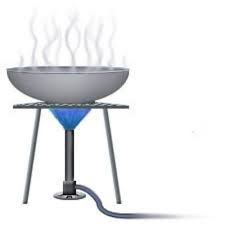
Name the separation technique shown in the diagram.
evaporation
distillation
filtration

What mixture could you use this tool to best separate that mixture?
Sugar and Salt
Sand and rocks
Apples and grapes
Nicole wants to dissolve a substance in water. Which substance will dissolve the easiest?
Rocks
sugar
pepper
sand
Which statement describes a heterogeneous mixture?
A chemical reaction takes place.
It has a uniform composition and appearance.
It does not have a uniform composition and appearance.
No answer
Which is an example of a solution (homogenous mixture)?



