
 Worksheets
5th Grade Science Review
Total questions: 114
Worksheet time: 2hrs 39mins
What does a complete, simple circuit require to work?
wire and a switch
wire and a light bulb
wire, a battery, and a switch
wire, a battery, and a light bulb
What is the smallest unit of life and makes up all thing things?
nucleus
microorganism
cells
viruses
Living things that are too small to be seen without magnification are called __.
microorganisms
microscopes
hand lenses
animals
A student observes a label found on raw chicken sold at the grocery store.
Warning: Cook thoroughly to kill bacteria.
Which argument should the student use to support a claim that some bacteria is harmful to humans?
Some bacteria can harm humans because bacteria reproduce faster when they are cooked at high temperatures.
Some bacteria can harm humans because bacteria become toxic when cooked at high temperatures
Some bacteria can harm humans because bacteria make food taste bad when it is not cooked properly.
Some bacteria can harm humans because bacteria can cause food poisoning when contaminated food is not cooked properly.
After a person takes an antibiotic to fight a bacterial infection in the body, some doctors recommend taking a pill called a probiotic every day.
Which argument BEST supports the claim that humans benefit from taking probiotics?
probiotics prevent people from getting sick.
e probiotics are made of living microorganisms.
probiotics can be taken every day after having an infection.
probiotics balance the number and types of bacteria that live in the gut.

The pictures show the structure of two cells. Which sentence explains why the shape and structure of the two cells are different?
Cell X is shaped like a circle because it is an animal cell, which means it does not have a cell wall, and cell Y is shaped like a rectangle because it is a plant cell, which means it has a cell wall.
Cell X is shaped like a circle because it is a plant cell, which means it does not have a cell wall, and cell Y is shaped like a rectangle because it is an animal cell, which means it has a cell wall.
. Cell X is shaped like a circle because it is an animal cell, which means it has a cell membrane, and cell Y is shaped like a rectangle because it is a plant cell, which means it does not have a cell membrane.
Cell X is shaped like a circle because it is a plant cell, which means it has a cell membrane, and cell Y is shaped like a rectangle because it is an animal cell, which means it does not have a cell membrane.
Which sentence describes how the differences between a plant cell and an animal cell can be determined by looking at the parts inside the cell?
Plant cells have a nucleus, but animal cells do not.
Plant cells have chloroplasts, but animal cells do not.
Plant cells do not have a nucleus, but animal cells do.
Plant cells do not have chloroplasts, but animal cells do.

The picture shows a cow.
Which question can be asked to learn about the inherited physical traits of the cow?
How old is the cow?
Has the cow been fed today?
Is the cow tame enough to pet?
Why does the cow have brown fur?
A student is investigating chemical changes by using different materials. Which investigation would provide evidence of a chemical change and why?
Melting a solid because the solid would change shape.
Cutting cardboard into many smaller pieces because the pieces cannot be put back together.
Placing a solid into hot water and stirring while the solid dissolves because the dissolved material is lost.
Combining two liquids that give off heat and gas because the particles react to make a new material with different properties
Which investigation would provide evidence of a chemical change?
Spray perfume into the air, and observe the change in odor
Put an antacid tablet in water, and observe the bubbles that form
Heat water in a pan on a stove, and observe the steam that forms as the state of matter of the water changes.
Blow air through a wand filled with soap solution, and observe the bubbles that form.
Placing a liquid in the freezer until the liquid becomes a solid provides evidence of a
Chemical Change
Physical Change
Using a saw to cut a solid into different pieces would provides evidence of a
Chemical Change
Physical Change
Using a hot plate to heat a solid until it changes color and releases an odor would provides evidence of a
Chemical Change
Physical Change
Placing two different liquids together in a beaker and observing that a solid forms when they mix would provides evidence of a
Chemical Change
Physical Change
Placing a mixture containing a solid and a liquid on a windowsill and letting the liquid evaporate would provides evidence of a
Chemical Change
Physical Change
Using a magnet to remove a magnetic solid from a mixture that also contains nonmagnetic solids would provides evidence of a
Chemical Change
Physical Change
Some people who live in coastal areas along cliffs are using drones to take pictures of their neighborhoods. A drone is a flying vehicle without a pilot on board. The two pictures show changes in the cliff near a building on two days in December.
Which question can be studied by using a drone to observe recent changes in Earth’s surface along coastal areas?
How fast are the cliffs eroding?
How many people live near cliffs?
How old are rock layers at the bottom of the cliff?
How can people stop the erosion of cliffs near the coast?
When something is cold blooded it means
their bodies produce heat
their bodies are the same temperature as their surroundings
their body temperature changes with their surroundings
their bodies can always maintain the same temperature
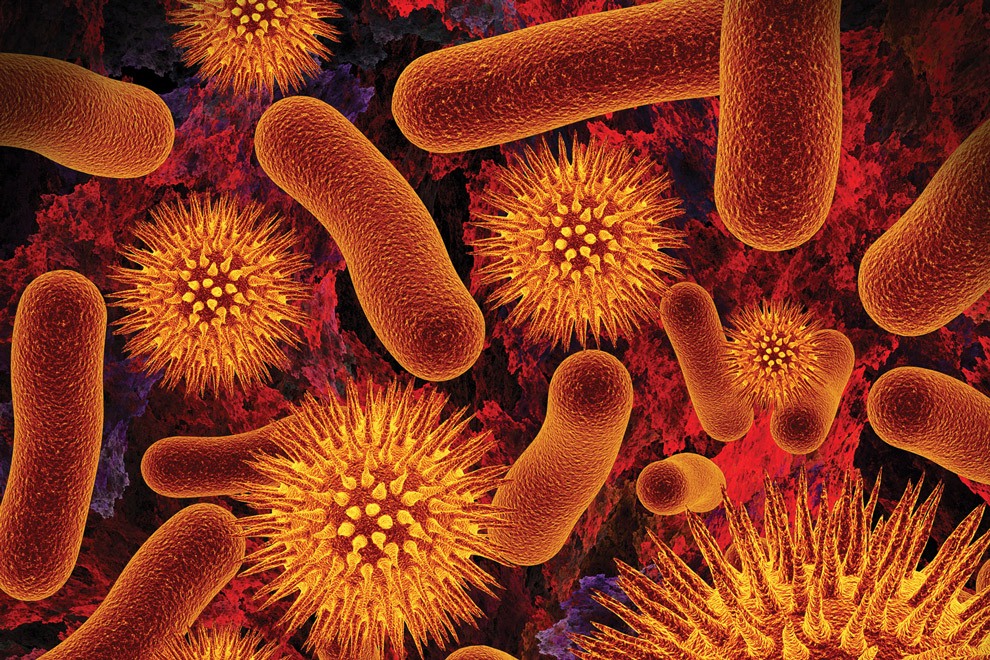

Yogurt contains __________________
harmful bacteria
beneficial bacteria
harmful mold
yeast


Define destructive process
building up of the earth's surface
breaking down of the earth's surface
depositing sediments on the earth's surface
weathering the earth's surface

Animals that have a backbone are classified as
Consumers
Vertebrates
Producers
Invertebrates
Animals that do not have a backbone are classified as:
Decomposers
Vertebrates
Invertebrates
Consumers

Mammal
Bird
Fish
Reptile
Amphibian

Mammal
Bird
Fish
Reptile
Amphibian

Mammal
Bird
Invertebrate
Reptile
Amphibian

Mammal
Bird
Invertebrate
Reptile
Amphibian
Have scaly skin
Live on land
Are cold-blooded
Usually lay leathery eggs
Mammal
Bird
Fish
Reptile
Amphibian
Breathe with gills
Have fins and scales
Live in water
Are cold-blooded
Usually lay gelatinous eggs
Mammal
Bird
Fish
Reptile
Amphibian
Live in water when they are young (breath with gills)
Live on land when they are adults (breath with lungs)
Are cold-blooded
Have smooth, moist skin
Lay jellylike eggs without shells
Mammal
Bird
Fish
Reptile
Amphibian
Have two legs, feathers, and wings
Breath with lungs
Eat with a bill or beak
Are warm-blooded
Have hollow bones and most can fly
Lay hard-shelled eggs
Mammal
Bird
Fish
Reptile
Amphibian
Have hair or fur
Are warm-blooded
Feed milk to their young
Usually have live births
Mammal
Bird
Fish
Reptile
Amphibian
Invertebrates are the most numerous animals and include insects, worms, jellyfish, sponges, snails, clams, octopuses, sea stars, urchins, spiders, ticks, lobsters, crabs, and crayfish.
True
False
Examples of ___________________ plants include ferns, horsetails, pine trees, roses, and maple trees.
Vertebrates
Invertebrates
Vascular
Nonvascular
ferns are classified as vascular plants that are _____________ producers
Seed
Non-seed
Examples of ______________ plants include mosses, liverworts, and hornworts.
Vertebrates
Invertebrates
Vascular
Nonvascular
Pine trees are classified as ____________________ producers without using flowers
Seed
Non-seed

Mammal
Bird
Fish
Reptile
Amphibian
Which part of the cell is a watery, jelly-like substance?
cytoplasm
nucleus
vacuole
cell wall
Which part of the cell CONTROLS everything that happens in the cell?
cytoplasm
nucleus
cell membrane
vacuole
Which parts do ONLY plant cells have? (Animal cells don't have them!)
vacuoles and mitochondria
nucleus and chloroplasts
chloroplasts and cell membrane
cell wall and chloroplasts
In PLANT cells, which part is the rigid outer layer that supports and protects the cell?
cell membrane
cell wall
chloroplast
nucleus
Chloroplasts...
are where plant cells do photosynthesis and make food
are where plant cells produce energy
are where both plant and animal cells make food (photosynthesis)
A cell wall...
is very soft and flexible
is very rigid, and supports the plant cell, giving it its shape
is the part that is inside the plant's nucleus
Where does PHOTOSYNTHESIS happen in plants?
in the nucleus
everywhere in the cell
in the cytoplasm
in the chloroplasts
Which thing is NOT made of cells?
A dog
A carrot
A piece of candy
A piece of wood from a tree

Name the Organelle.
cell wall
cell membrane
cytoplasm
nucleus

Name the Organelle.
cell wall
cell membrane
cytoplasm
nucleus

Name the organelle.
cell wall
cell membrane
cytoplasm
nucleus

nucleus
cell wall
cell membrane
cytoplasm

Name the organelle.
nucleus
cell membrane
cytoplasm
chloroplast

Name the Organelle.
nucleus
cell wall
cell membrane
cytoplasm

Name the organelle.
nucleus
cytoplasm
cell wall
cell membrane

Name the organelle.
cell membrane
chloroplast
nucleus
cytoplasm
Cells can be seen
using a naked eye.
using a microscope.
using a hand lens.
using a telescope.
Looking in a microscope, you see a plant and animal cell. Which of the following is most likely the same?
You see a cell wall in both cells.
The shapes of both cells are the same.
You see the cell membrane in both cells.
Cells are too small to be seen using a microscope.
What will create static electricity?
Rubbing a plastic comb on a piece of wool.
Flipping on a light switch in the classroom.
Allowing like forces to attract (negative attracts a negative).
Wrapping a wire around an iron and sending a charge through a wire.
Sarah is learning about human harnessed electricity as well as naturally occurring electricity. Sarah comes into contact with many forms of electricity each day. Which is an example of Sarah coming in contact with naturally occurring electricity?
Sarah quickly walks across the carpet in the socks and feels a small shock on her foot.
Sarah felt a small sting on her finger when she changed the lightbulb on her lamp.
Sarah was lightly shocked when she inserted the plug of her lamp in the wall socket.
Sarah accidently left her curling iron plugged in and burned her hand on the metal.
Which of the following correctly describes one way in which static electricity is different from the current electricity that is used in homes?
Static electricity is a quick release of energy.
Static electricity requires magnets and coils of wire.
Static electricity flows at a constant rate.
Static electricity always goes in the same direction.
Which of the following is an example of a source of human-harnessed (current) electricity?
Lightning striking a building
Getting a shock from a doorknob
A hydroelectric dam
Socks from the dryer sticking together
Jordan rubs her socks along the wool carpet as she walks across her house. She grabs onto a metal door knob. What will most likely happen as she touches the door knob?
The charge will disappear.
The chair will repel her.
She will get a light shock.
She will build up more charge.
When is it easiest for a person to build up static electricity?
After a rainstorm when they air is warm and humid
During the winter when the air is dry
After a lightning strike when the air is full of electricity
During the spring when the ground is wet


Look at the diagram. Why did the bulb not light up?
The bulb was fused.
The battery had not enough electric current to light up the bulb.
The switch was opened and prevented electric current from flowing through the circuit.

The diagram shows a complete circuit but the bulb did not light up. Why?
The plastic spoon is an insulator of electricity and prevented electric current from flowing through the circuit.
The plastic spoon is not connected properly and prevented electric current from flowing through the circuit.
The plastic spoon is a conductor of electricity and prevented electric current from flowing through the circuit.
Probiotics are an example of ....
A microorganisms that can make people sic
A microorganism that lives in the ocean
An example of bacteria and all bacteria is harmful
live bacteria and yeast that is helpful to humans by aiding in the digestion of food
Which is NOT an example of a harmful microorganism?
Mold growing on a kitchen sponge
Bacteria found in yogurt
Bacteria that causes turberculosis
Salmonella on uncooked chicken

Why should cooked and uncooked food be stored separately?
Because bacteria only like cooked food
Because bacteria only like uncooked food
To stop bacteria from spreading to one another

Which of the following BEST explains how the canyon was created?
The canyon was created by constructive forces. Over time, the soil was deposited on the edges of the river to build up the surrounding land.
The canyon was created by destructive forces. The river slowly weathered the surrounding area and eroded its sediment down the river.

Does the model indicate constructive or destructive process?
constructive
destructive

Does the model indicate constructive or destructive process?
constructive
destructive

Does the model indicate constructive or destructive process?
constructive
destructive
A student is creating a model to show which soil material erodes the most during a rainfall. Which model could he use?
He pushes a pile of dirt together to form a mountain. The model measures 10 cm high. He uses a spray bottle to make it rain.
He places a mound of sand, gravel, clay and soil in the middle of 4 separate large pans. Each mound is 10 cm high. Then using a cup of water, he pours water onto each mound.
The breakdown of rock into smaller particles from the effects of wind, water, and ice is . . .
Weathering
Rapid Change
Deposition
Erosion
The movement of weathered materials on Earth's surface by wind, water, and ice is . . .
Weathering
Slow Change
Deposition
Erosion
A student argues that a destructive force can change the surface of Earth. Which of these supports that claim?
A mountain grows taller over a thousand years.
A new island forms in the middle of an ocean.
The wind blows and forms a sand dune.
A plain becomes a deep canyon with steep walls.
Over many years, the depth of a lake gets more shallow. What could cause this change?
The climate in the area gets warmer.
Sediments are deposited in the lake.
A hurricane brings heavy rain.
Stones in the lake become smooth.

A sea arch is created by a
constructive force
a destructive force
a volcano
an earthquake
Mountain ranges are created by
plate movement
weathering
erosion
deposition

Tallulah Gorge was created by
an ancient glacier
deposition of weathered rock
plate movement
weathering and erosion by a river

Does the model show a constructive or destructive process?
constructive force
destructive force
both a constructive and destructive force

A moraine is an example of deposition
by wind
by water
by ice

The picture is an example of
weathering
erosion
deposition
plate movement
What is a destructive force?
A natural process where areas that are normally dry is covered in water
A natural process that destroys land
A natural process that creates land
A natural process of deposition

Are the mountains shown below an example of a constructive process or destructive process?
constructive
destructive

Is the surface feature shown below an example of a constructive process or destructive process?
constructive
destructive
The process that breaks down rocks and other materials on Earth's surface is called
weathering
erosion
deposition

Water getting into cracks, freezing, and breaking the rocks or pavement apart is an examples of what?
weathering
erosion
deposition
Weathering and erosion are processes that constantly change Earth's surface. How are weathering and erosion different?
Weathering acts quickly, and erosion acts slowly.
Weathering breaks down materials, and erosion moves materials.

How was Tallulah Gorge formed?
The river destroyed the rock to form the gorge
The river constructed the rock and formed the river
As a river flows into an ocean, it forms a:
delta
sea arch
beach

Providence Canyon was formed when:
The topsoil weathered and eroded away to leave behind the canyon (poor farming practices)
The river carved out the canyon

