
 Worksheets
P5 Science the way we see things
Total questions: 110
Worksheet time: 57mins
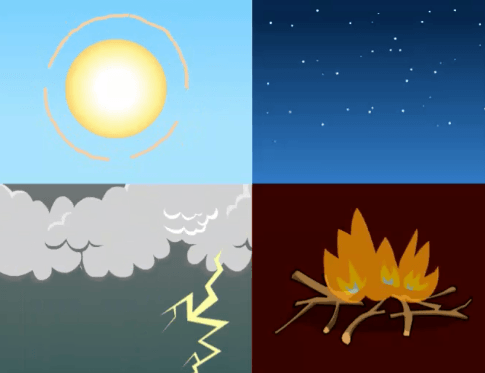
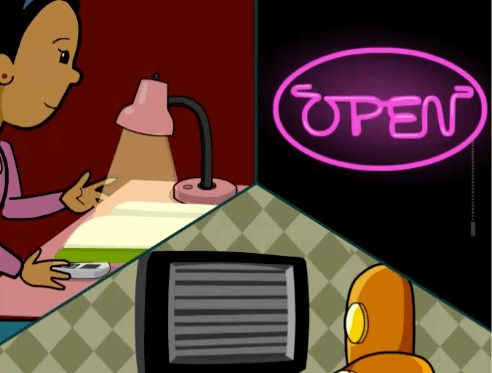

Which of these is our main source of light?
Lightbulbs
The Sun
Fire
All of them
The bouncing of light off an object is ....
a mirror
absorption
a reflection
refraction
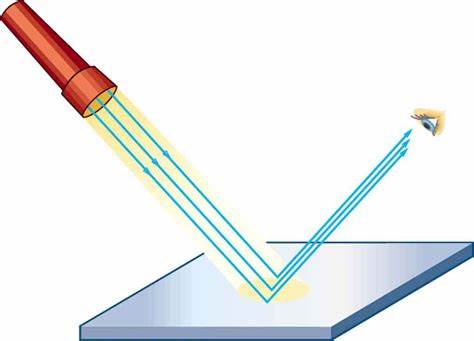
Scientists use mirrors to study reflection. When a light ray hits a mirror, it reflects off at the same angle as it hits the mirror.
True
False
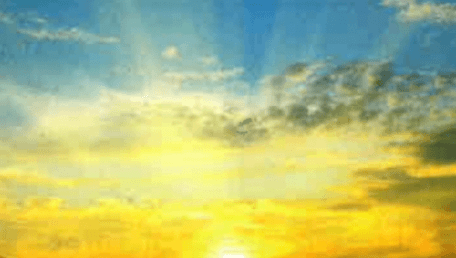
A line that light travels in is called a ...
light source
ray
wave
reflection
You are enabled to see objects because...
light travels out of your eyes and onto an object.
light travels out of an object.
light reflects off of an object and into your eyes.
light brightens up objects.
Why do mirrors reflect light well?
Because you can see your face in one.
They are a light source.
They are used in periscopes.
They have a shiny surface.
You are enabled to see objects because...
light travels out of your eyes and onto an object.
light travels out of an object.
light reflects off of an object and into your eyes.
light brightens up objects.
Why do mirrors reflect light well?
Because you can see your face in one.
They are a light source.
They are used in periscopes.
They have a shiny surface.
Light always travels in a ____________ line.
straight
curved
elliptical
none
The intensity of the light can be measured using a _______________.
intensity
volt meter
stop watch
light meter
what is light?
energy that you can see
energy used for heat
is just an energy
light is light of course

What is the correct order of what happens when our eyes see the flower in the picture:
1. the light bounces off,
2. the light enters the boy's eyes,
3. the sunlight hits the flower.
1-2-3
2-1-3
3-1-2
None of these
Which place will have the highest light intesity during sunny clear daytime?
in the attic
in the storage room
in the classroom
at the school yard

Allows most light through
Reflection
Refraction
Translucent
Transparent
Tick 3 correct pictures.
Picture that shows correct path of light to see an object are ....


Picture that shows reflection on mirror is ____


Is the moon a light source?
(a)
The unit of light intensity is ____
Meter
lamp
lux
volt
Tick 3 correct answers.
Light sources are ____
star
the moon
diamond
campfire
light bulb
Tick 3 correct answers.
Natural light sources are ____
lamp
flashlight
fire fly
lightning
the sun

Based on this graph, the light intensity at 10 cm from the light source is (a) lux.

Based on this graph, the distance from the light source when the light intensity is about 600 lux is (a) cm
In which of these objects can you see your reflection?
glass window
cotton towel
writing paper
metal spoon

What is shown in the picture.
Source of light.
Reflection of light.
Refraction of light.
How do we see things?
When light is reflected.
When we open our eyes.
When we close our eyes.
What is correct statement about the light.
The light travels in a square.
The light travels in a circle.
The light travels in a straight line.
When the light hits a transparent object:
All light passes through it.
No light passes through it.
Some light passes through it.
When light hits an opaque object.
The shadow is made.
It passes through it.
We get energy
Shadow becomes bigger when:
We fix the light source far from the object.
We bring the light source near to the object.
When we switch off the light.

Which object is shown in the picture?
Translucent
Opaque
Transparent

Which object is shown in the picture.
Translucent
Opaque
Transparent
Select all sources of light.
Table and chair
Bulb and torch
Book and pen
The Sun and moon
Select, that are not sources of light.
Torch
Candle
Football
Shoes
what is light?
energy that you can see
energy used for heat
is just an energy
light is light of course
what objects are luminous objects?
the sun
light bulb
stars
mars
what are luminous objects?
objects that make their own light
objects that reflect light
objects that let light pass through
objects that block light
what is reflection?
when light is absorbed by a object
when the light bounces off a surface
when light is given out of an object
when the light is stoped
which of these objects are reflective
sun
moon
cat eyes
mirrors
light travels in (a) lines
what happens to light when the light hits a mirror?
nothing happens
becomes a light source
changes the direction of the light
break the mirror
how can you see the objects behind you with a mirror?
we look into the mirror
the light make you see everything
the light travels directly to the mirror and hits the object behind you and then you can see.
the light from a source travels and reflects off the object behind you and hits the mirror and then the the mirror reflects the light into your eye
do all objects reflect light?
yes
no
if a surface reflects light well then...
you can see yourself
it absorbs light
has a rough surface
dose smooth surface absorb or reflect light
absorbs light
reflects light
dose rough surfaces reflect or absorb light?
absorbs light
reflects light
which materials let light through them?
transparent
opaque
translucent
luminous
which materials dose't let light through?
transparent
opaque
translucent
luminous
which materials only let some light pass through them?
transparent
opaque
translucent
luminous
Which of these is not a light source?
Candle flame
Sun
Moon
Torch
Light contains many colors. Which of the following is not one of these?
Green
Black
Yellow
Red
What happen when light hits a shiny and smooth surface?
It bounces off the material, changing direction.
It is absorbed by the material
It forms a rainbow
It passes completely through the material
What happen when light hits a shiny and smooth surface?
It bounces off the material, changing direction.
It is absorbed by the material
It forms a rainbow
It passes completely through the material
How does an opaque material affect light?
It allows all light to travel through it
It allows some light to travel through it
It bends the light which passes through it
It allows no light to travel through it
Light reflects off which of these materials?
A mirror
Football
Glass
Nearly every material will reflect light
Which of the following materials is not translucent?
A glass sheet
Tissue paper
Frosted glass
Butter paper
Which of the the following would reflect the most light?
A smooth, shiny object with flat surfaces
An object with a crumpled surface
A rough object with curved surfaces
A dark, shiny object with curved surfaces
When we are able to see the object?
We are able to see when the sun is outside.
We are able to see when light shines on the eyes.
We are able to see the object when light from the torch enters our eyes.
We are able to see the object when reflected light from the object enters our eyes.

Why is the cave fish does not have eyes?
because there are bright lights in the cave so they don't need the eyes
because there are dim lights in the cave so they don't need the eyes
because thy not using eyes to see object, however they use their fins
because there are no lights in the cave so they don't need the eyes

Our eyes have to receive _________ in order for us to see. It is also can not give out this thing.
heat
sound
light
magnetism

Why are we can not see clearly in the dark?
because there is no light that enter our eyes.
because there is bright light that enter our eyes.
because we see objects using hands in the dark place and not our eyes.
because our eyes doesn't work, it needs heat, and its too cold in the dark place to get heat up.

Object that gives out light is called as ___________
light meter
light sensor
light source
light ray

A man-made light source such as city lights is an example of ______________ light source.
Natural
Supranatural
Artificial
Super facial
Which one is not the natural light source in nature?


The main light source that we have in day time is the ________
stars
moon
sun
meteor

We can see the light source because the light from the light source ___________
bounces to our eyes
enters our eyes
reflects to our eyes
jumps to our eyes
We should not look directly to the bright light sources such as Sun because it can _________
make our eyes change their colors
damage our eyes and harm them
cure our eyes astigmatism
make our eyes fresh but if its too much it can burn them

The path in which light travels is called a __________
light ray
light beam
light orbit
light axis

A bundle of light rays make up a _______ light.
laser
saber
stream
beam

When a lot of light falls on an area, it looks _________. When only little light falls on an area, it looks __________.
bright, dim
dim, bright
bright, bright
dim, dim
A brightly lit area has a higher _______________(Brightness) than a dimly lit area.
light bright
light beam
light ray
light intensity

Light intensity is measured in the unit _______. We can use ___________
light meter, lux
light meter, decibel
lux, light meter
decibel, light meter

How does the light ray goes so the girl can see the unicorn?
light goes to the girl and reflects to the girls eyes
light goes to the unicorn and reflects to the unicorn eyes
light goes to the girl and reflects to the unicorn eyes
light goes to the unicorn and reflects to the girls eyes

Based on the light rays in the picture, this picture showing ______
how the flower can see the boy
how the Sun light up the boy and the flower
how the boy can see the flower
how the boy can see the Sun instead of the flower

The men in the picture can see the rose because _______
the light from the Sun enter the men eyes
the light from the Sun reflected by the rose to the men eyes
the light from the rose enter the men eyes
the light from the rose reflected by the Sun to the men eyes

If the boy want to see the tree, the light from the Sun based on the picture needs to go to the ______ first.
tree
boy
ground
eyes

Based on the picture, the girl can see the board in the floor because the light get reflected and enter the girl __________
ear
nose
mouth
eyes

The keeper can catch the soccer ball easily because he can see it clearly. It happens because
the light reflected by the keeper to the soccer ball
the light reflected by the keeper to the keeper eyes
the light reflected by the soccer ball to the keeper eyes
the light reflected by the soccer ball to the soccer ball
What is the best description of an opaque material?
no light passes through the material
some light passes through the material
all light passes through the material
What is the best description of a transparent material?
no light passes through the material
some light passes through the material
all light passes through the material
What is the best description of a translucent material?
no light passes through the material
some light passes through the material
all light passes through the material

What type of object is shown in the picture?
opaque
transparent
translucent

What type of object is the glass in the glasses considered?
opaque
transparent
translucent

What type of object is a mirror considered?
opaque
transparent
translucent
What type of object is the black rim around the glasses considered?
opaque
transparent
translucent

What type of object is the polarized lens in the sunglasses considered?
opaque
transparent
translucent



