wayground logo

Free Printable Worksheets

Font size

S
M
L
XL
Worksheets

Science Review

Total questions: 130

Worksheet time: 3hrs 36mins

Name
Class
Date
1.

a solid material made up of one or more minerals.

a)

rock

b)

crystal

c)

mineral

d)

smelting

2.

a nonliving solid material that has a definite chemical makeup, a crystal shape, is naturally occurring and is inorganic

a)

rock

b)

mineral

c)

smelting

d)

nonrenewable

3.

the continuous series

of changes that rocks

undergo

a)

Nonrenewable resource

b)

mineral

c)

rock cycle

d)

rock

4.

rock that forms when melted, or molten, rock from deep below the Earth's surface cools and hardens.

a)

metamorphic rock

b)

sedimentary rock

c)

igneous rock

5.

new rock that forms when existing rocks are changed by heat, pressure, or chemicals beneath Earth's surface.

a)

igneous rock

b)

sedimentary rock

c)

metamorphic rock

6.

rock that forms when sand, particles of rock, bits of soil, and bits of once-living things are pressed together and harden.

a)

igneous rock

b)

sedimentary rock

c)

metamorphic rock

7.

Sand, particles of rock, bits of soil and remains of once-living things.

a)

sediment

b)

rock cycle

c)

ore

d)

smelting

8.

A solid, in which the atoms are arranged in an orderly, repeated pattern.

a)

ore

b)

smelting

c)

crystal

d)

sediment

9.

A natural resource that is not replaced in a useful time frame.

a)

smelting

b)

ore

c)

sediment

d)

nonrenewable resource

10.

Useful metallic mineral that can be mined at a profit

a)

ore

b)

crystal

c)

sediment

d)

mineral

11.

The process by which ore is melted to separate the useful metal from other elements.

a)

rock cycle

b)

smelting

c)

nonrenewable resource

d)

mineral

12.

In an activity, a student floats a toy boat in an aquarium. What causes the part of the boat's hull that is underwater to appear larger than the part just above the water line?

a)

Reflection

b)

Absorption

c)

Conduction

d)

Refraction

13.

Students classify objects by the properties of reflection and refraction. Which is a list of objects that best reflect light?

a)

Prism, water, camera

b)

Water, cardboard, clear container

c)

Foil, shiny pan, mirror

d)

Mirror, wood, water

14.

Describe the difference between reflection and refraction by completing the sentence. Write the correct answer in each box. Not all answers will be used. Light ​ ​ (a)   ​ when it is reflected and ​ (b)   when it is refracted.

Choose from the below words
bounces off
bends
stops
decreases
stops
15.

What happens when light strikes a dark, heavy object?

a)

Light is refracted

b)

The light moves quickly through the medium

c)

Light energy is absorbed

d)

Light does not strike dark objects

16.

Which of the following objects do NOT reflect light?

Select TWO answers.

a)

Bathroom mirror

b)

White car

c)

Black shirt

d)

Wooden block

e)

Copper penny

17.

What is shown in the image below?

a)

The force needed to push a swing

b)

The path light takes when it is refracted

c)

The flow of an electrical current

d)

The path light takes when it is reflected

18.

Students performed an investigation testing refraction of objects in water. First, they recorded how objects looked in hot water. Then they used cold water to test if the appearance changed. What variable did students test in this investigation?

a)

The student who performed the investigation

b)

The time of day the investigation was performed

c)

The temperature of the water

d)

The objects tested

19.

Sometimes it is possible to see light rays. An example is when sunlight breaks through the clouds. Sunlight breaking through the clouds demonstrates how light rays travel in -

a)

curved rays

b)

straight line

c)

zigzag rays

d)

circular waves

20.

Students perform an investigation to compare and contrast the effects of reflection and refraction. What tools are most helpful to students when exploring refraction?

Select TWO correct answers.

a)

Magnet

b)

Prism

c)

Hand lens

d)

Mirror

e)

Spring scale

21.

Bifocals were invented in 1784 by Benjamin Franklin. He invented bifocals to make it easier to see both up close and far away. Bifocal eyeglasses have two different lenses. One lens helps people to see at a distance, and the other is for seeing up close. Why can people who are both nearsighted and farsighted see better though bifocals?

a)

The bifocal lenses reflect light

b)

The bifocal lenses refract light

c)

The bifocal lenses make light less visible

d)

The bifocal lenses absorb light.

22.
In which medium will sound travel the fastest?
a)
air
b)
water
c)
glass
d)
salt water
23.
What is vibrate?
a)
moving foward
b)
moving backwards
c)
moving back and forth very slow
d)
moving back and forth very fast
24.
What is frequency?
a)
the number of vibrations per second
b)
how high or low a sound is
c)
the loudness or softness of a sound
d)
the back and forth movement of matter
25.
Measure of how high or low a sound is
a)
amplitude
b)
compression
c)
speed of sound
d)
pitch
26.
If you walk into an empty gym and yell, why would you hear an echo?
a)
The gym walls are soft and uneven. 
b)
The sound waves are being absorbed by the hard smooth walls.
c)
The sound waves are bouncing off the hard smooth gym walls.
d)
The gym walls are really clean.
27.
Why do we not hear sound in outer space?
a)
there is no one out there to hear it.
b)
it is so cold
c)
it is a vacuum or empty space so there is not a medium for sound to travel
d)
there are too many stars that are exploding
28.
The ___________________ is how loud or soft a sound is. 
a)
echo
b)
frequency
c)
pitch
d)
volume
29.
Which word describes how LOUD a sound is?
a)
volume
b)
pitch
c)
frequency
d)
tone
30.
Objects that vibrate more quickly create 
a)
low pitches
b)
high pitches
31.
The higher the amplitude of a sound wave, the ____ the sound. 
a)
louder
b)
quieter
32.
Sound travels through solids.
a)
True
b)
False
33.
What would happen if you tighten the strings on a guitar?
a)
it would make a low pitch sound
b)
it would make a high pitch sound
c)
it produces a slow vibrations
d)
it produces low frequency
34.
Which color bell would produce the highest pitch?
a)
red
b)
yellow
c)
green
d)
purple
35.
Which string shown below would have the LOWEST pitch?
a)
String 1 
b)
String 2
c)
String 3
36.
Why would a school build a library with carpet on the floor? 
a)
So everyone can make a lot of noise
b)
to help absorb sounds to keep it quiet
c)
because it looks good
d)
to help absorb sounds so it can stay noisy
37.

A disease reduces the number of young salmon in a river. Which population will MOST likely increase as a result?

a)

trout and eagle

b)

algae and trout

c)

sculpin and algae

38.

Which lists animals that live in an aquatic ecosystem?

a)

black bear, deer, vole

b)

ducks, turtles, amphibians

c)

panthers, monkeys, snakes

39.

Bryson is comparing two different ecosystems and creates the following list of similarities: aquatic, diverse fish life, high salt concentration, plentiful light at the water's surface. Which two ecosystems is Bryson most likely comparing?

a)

ocean and lake

b)

estuary and ocean

c)

grassland and pond

40.

Which is a difference between abiotic and biotic factors?

a)

Abiotic factors are plants and biotic factors are animals.

b)

Abiotic factors are all living things and biotic factors are all nonliving things.

c)

Abiotic factors are all nonliving things and biotic factors are all living things.

41.

Which is most accurate in describing an estuary ecosystem?

a)

High salt levels keep the water clear of nutrients and proteins.

b)

Freshwater mixes with saltwater to provide a nutrient-rich environment.

c)

Cold water mixes with saltwater to create a cooling effect that encourages growth.

42.

Which type of ecosystem has the greatest variation in temperature from its top to its bottom?

a)

lake

b)

pond

c)

ocean

d)

estuary

43.

Which ecosystem is most similar to an estuary?

a)

salt marsh

b)

ocean

c)

pond

44.

Which ecosystem has lifeforms most similar to those of the ocean?

a)

estuary

b)

lake

c)

pond

d)

swamp

45.
Which is NOT a freshwater ecosystem?
a)
a river
b)
a lake 
c)
an estuary
d)
a stream
46.
A wetland that contains a mixture of fresh water and salt water is called
a)
an estuary
b)
a stream
c)
a river
d)
a pond
47.
An ecosystem where water covers the soil or water is near the surface of the soil is called
a)
a desert
b)
an ocean
c)
an estuary
d)
a wetland
48.
Estuary water should have 
a)
less salt than the ocean
b)
more salt than the ocean
c)
no salt
49.
An aquatic ecosystem includes any
a)
fish and frogs living there
b)
water environment and the community of organisms living there
c)
water but no animals or plants
50.
The major abiotic factors that influence aquatic ecosystems include
a)
water temperature and amount of light
b)
plants and animals
c)
water and plants growing there
51.
Organisms in estuaries must be able to survive
a)
frequent dry conditions
b)
high winds
c)
changing salt levels
52.
Which is a fresh water ecosystem?
a)
river
b)
estuary
c)
ocean
53.

Label the parts of a plant check the correct box.

1._______________

a)

stem

b)

flower

c)

leaf

d)

root

54.

Label the parts of a plant check the correct box.

2._______________

a)

stem

b)

flower

c)

leaf

d)

root

55.

Label the parts of a plant check the correct box.

3._______________

a)

stem

b)

flower

c)

leaf

d)

root

56.

Label the parts of a plant check the correct box.

4._______________

a)

stem

b)

flower

c)

leaf

d)

root

57.

What does a plant need to survive?

a)

sunshine

b)

nutrients

c)

water

d)

all of the above

58.

What does the stem of a plant do?

a)

It makes food for the plant.

b)

It soaks up water from the ground.

c)

It delivers water to other parts of the plant.

d)

It makes seeds.

59.

What do the leaves of a plant do?

a)

They make food for the plant.

b)

They soak up water from the ground.

c)

They deliver water to other parts of the plant.

d)

They make seeds.

60.

True of False: All plants flower.

a)

True

b)

False

61.

What keeps a plant from breaking or falling?

a)

the seeds

b)

the leaves

c)

the roots

d)

the flower

62.

What gives plants power to make their own food?

a)

the sun

b)

insects

c)

seeds

d)

the flowers

63.

How could a plant spread its seeds?

a)

An animal could eat the fruit and spread the seeds.

b)

A seed could get tangled in animal fur and be carried to a new place.

c)

Seed could float away in the wind.

d)

all of the above

64.

Pollination is the way plants__________.

a)

make food

b)

absorb minerals

c)

absorb sunlight

d)

create new seeds

65.

Why do plants make and spread seeds?

a)

to create food for animals

b)

to drink up nutrients

c)

to make more plants

d)

to make food

66.

True or False: Stems can only be soft.

a)

True

b)

False

67.

How do roots help a plant?

a)

Roots are where sunlight is turned into energy.

b)

Roots help a plant take in water and store food.

c)

Roots make a plant smell nice to insects.

d)

Roots help a plant move from place to place.

68.

Which of these is a plant's stem most like?

a)

a boat that brings people from one country to another

b)

an elevator that carries goods from the bottom of a building to the top.

c)

an advertisement that tires to convince people to buy something

d)

a blanket that protects a baby from the cold

69.

Photosynthesis is the process

a)

of leaves growing

b)

of plants creating new seeds

c)

of leaves changing color

d)

of plants making food

70.

Which of these would spread seeds?

a)

a chipmunk not touching a plant at all as it moves through the forest

b)

a bird getting seeds stuck in its feathers as it moves around the woods

c)

a squirrel finding as acorn buried in the ground and digging it ip to eat

d)

a plant's leaves starting to dry up because it doesn't have enough water

71.

What is the main reason plants grow fruit?

a)

to provide delicious food for humans and other animals

b)

to encourage bees to pollinate

c)

to stop animals from spreading seeds

d)

to keep seeds safe and make them easier to spread

72.

a push or pull that can change the position or motion of an object / material

a)

Friction

b)

Force

c)

Gravity

d)

Magnetism

73.

a force that pulls objects toward each other

a)

Friction

b)

Force

c)

Gravity

d)

Magnetism

74.

a force that pushes or pulls a magnetic material across a distance

a)

Friction

b)

Force

c)

Gravity

d)

Magnetism

75.

a force that acts in an opposite direction to movement

a)

Friction

b)

Force

c)

Gravity

d)

Magnetism

76.

a change in the position of an object

a)

Motion

b)

Push

c)

Pull

d)

Position

77.

the act of applying force to move something toward or with you

a)

Motion

b)

Push

c)

Pull

d)

Position

78.

the act of applying force in order to move something away

a)

Motion

b)

Push

c)

Pull

d)

Position

79.

the place where something is located; where something has been put

a)

Motion

b)

Push

c)

Pull

d)

Position

80.

a condition in an experiment that is changed in order to determine the effect of that change

a)

variable

b)

Control

c)

Testable Hypothesis

81.

the substance, object or group in an experiment that is not changed

a)

variable

b)

Control

c)

Testable Hypothesis

82.

an idea that can be tested by experiment or observation

a)

variable

b)

Control

c)

Testable Hypothesis

83.

The umbrella is ​ (a)   the frog.

Choose from the below words
above
below
beside
in front of
84.

The mushroom is ​​ (a)   the frog.

Choose from the below words
below
beside
in front of
85.

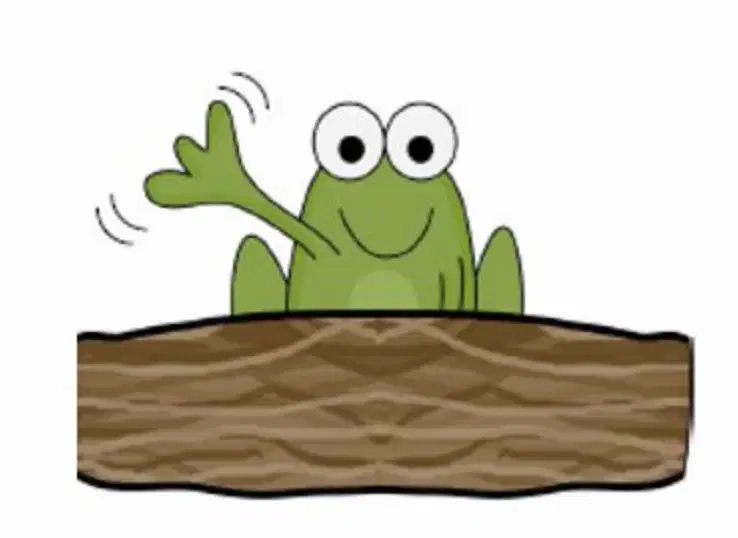
The frog waves from ​ (a)   the log.

Choose from the below words
behind
beside
in front of
86.

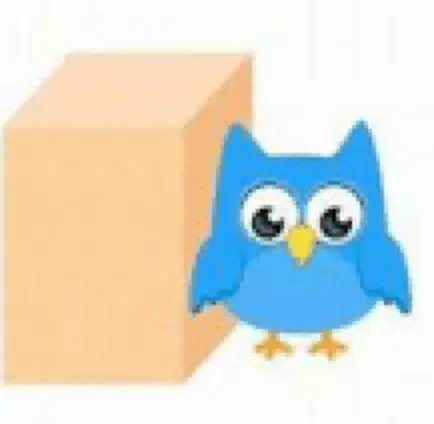
The owl is ​ (a)   the box.

Choose from the below words
beside
in front of
above
below
87.
Question Image

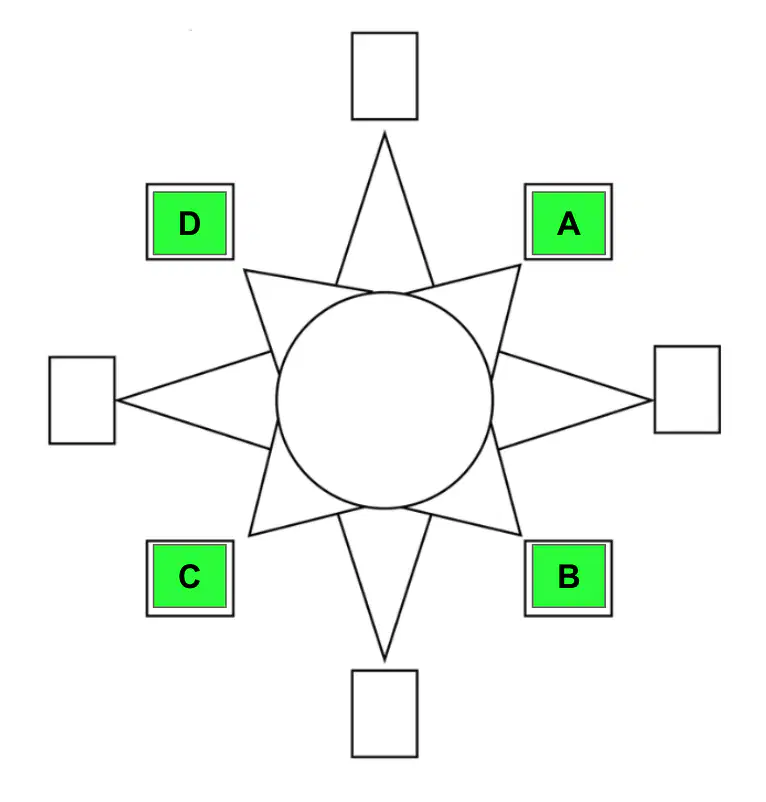
Look at the image and match the following.

a)

North

1.

A

b)

East

2.

B

c)

South

3.

C

d)

West

4.

D

88.
Question Image

Look at the image and match the following.

a)

Northeast

1.

A

b)

Southeast

2.

B

c)

Southwest

3.

C

d)

Northwest

4.

D

89.
Electrical Energy is transferred to _____ Energy.
a)
Thermal
b)
Solar
c)
Electrical
d)
None
90.
Which energy transformation occurs in a toaster?
a)
chemical to electric
b)
electric to thermal
c)
kinetic to chemical
d)
thermal to potential
91.
Energy transformations occur when...
a)
energy is created through conduction
b)
energy changes from one form to another
c)
two forces slide together that are touching
d)
a chemical reaction takes place
92.
The picture shows a microwave oven. As a microwave oven is operated, electrical energy is transformed into all of the following types of energy EXCEPT —
a)
solar
b)
light
c)
thermal
d)
mechanical
93.
The purpose of the panels is to change solar energy into ____________.
a)
light energy
b)
electrical energy
c)
chemical energy
d)
mechanical energy
94.
A hairdryer converts -- 
a)
electrical energy into chemical
b)
electrical energy into thermal
c)
chemical energy into mechanical
d)
thermal energy into mechanical
95.
A group of students are studying the movement of thermal energy. The teacher asks the students to place the palms of their hands flat on their table tops and describe what is happening. Which statement below is the best description of what is happening? 
a)
The table feels cold because it is at a lower temperature than the students' hands, and thermal energy is being pulled into the table. 
b)
The table feels cold because it is at a lower temperature than the students' hands, and thermal energy is being pulled into the students' hands. 
c)
The table feels cold because it is solid, and solids hold thermal energy better than air. 
d)
The table feels cold because it is at a lower temperature than the air in the room. 
96.
Mechanical Energy is transferred to _____ Energy.
a)
Solar
b)
Mechanical
c)
Electrical
d)
Potential
97.
Electrical -> Mechanical -> Sound 
a)
A triple beam balance measuring an object’s mass
b)
A pencil sharpener plugged into a wall outlet
c)
A projector displaying a diagram on the screen
d)
A working flashlight used to light up a dark corner
98.
What energy is given off when a cell phone rings?
a)
Sound Energy
b)
Gravitational Energy
c)
Thermal Energy
d)
Nuclear Energy
99.
Which of the following energy transformations occur when a lamp that is plugged into a wall socket is functioning correctly?
a)
Chemical to light
b)
Electrical to chemical
c)
Electrical to light
d)
Chemical to electrical
100.
Which of the following devices transforms electrical energy into mechanical energy?
a)
An e-reader
b)
a fan
c)
a manual pencil sharpener
d)
ipod
101.
What is produced during ALL energy transformations?
a)
Sound Energy
b)
Mechanical Energy
c)
Thermal Energy
d)
Chemical Energy
102.
Name the energy transformations taking place when I plug in my radio and it begins playing.
a)
Thermal to mechanical to electrical
b)
Radiant to chemical
c)
Electrical to sound
103.
What is Energy?
a)
The transfer energy when a force is applied over a distance.
b)
The ability to cause change or the ability to do work.
c)
The energy of an object has because of its motion.
104.
What is electrical energy?
a)
The energy that an electric current carries. When you plug something in, this energy flows.
b)
Energy carried in waves of vibrating matter. It cannot travel through empty space (it MUST have matter to travel)
c)
Energy stored in objects that are compressed or stretched like springs or rubber bands.
105.
What is sound energy?
a)
The energy that an electric current carries. When you plug something in, this energy flows.
b)
Energy carried in waves of vibrating matter. It cannot travel through empty space (it MUST have matter to travel)
c)
Energy stored in objects that are compressed or stretched like springs or rubber bands.
106.
What is thermal energy?
a)
Stored energy that is released when the nucleus of atoms are split apart or fused together.
b)
The energy due to an object's motion, position or condition. It is both kinetic and potential.
c)
The energy due to the movement of atoms or molecules that make up an object. This energy moves from warmer objects to colder objects.
d)
The energy from the sun carried by electromagnetic waves. It can move through empty space (no matter needed).
107.
What is mechanical energy?
a)
Stored energy that is released when the nucleus of atoms are split apart or fused together.
b)
The energy formed due to an object's motion, position or condition. It is both kinetic and potential.
c)
The energy due to the movement of atoms or molecules that make up an object. This energy moves from warmer objects to colder objects.
d)
The energy from the sun carried by electromagnetic waves. It can move through empty space (no matter needed).
108.
What kind of energy does this device use?
a)
Chemical
b)
Electrical
c)
Thermal
d)
Chemical
109.
What kind of energy is represented in this picture?
a)
Thermal
b)
Potential
c)
Nuclear
d)
Mechanical
110.
Electrical Energy is transferred to _____ Energy.
a)
Thermal
b)
Solar
c)
Electrical
d)
None
111.
Which energy transformation occurs in a toaster?
a)
chemical to electric
b)
electric to thermal
c)
kinetic to chemical
d)
thermal to potential
112.
Energy transformations occur when...
a)
energy is created through conduction
b)
energy changes from one form to another
c)
two forces slide together that are touching
d)
a chemical reaction takes place
113.
The picture shows a microwave oven. As a microwave oven is operated, electrical energy is transformed into all of the following types of energy EXCEPT —
a)
solar
b)
light
c)
thermal
d)
mechanical
114.
The purpose of the panels is to change solar energy into ____________.
a)
light energy
b)
electrical energy
c)
chemical energy
d)
mechanical energy
115.
A hairdryer converts -- 
a)
electrical energy into chemical
b)
electrical energy into thermal
c)
chemical energy into mechanical
d)
thermal energy into mechanical
116.
A group of students are studying the movement of thermal energy. The teacher asks the students to place the palms of their hands flat on their table tops and describe what is happening. Which statement below is the best description of what is happening? 
a)
The table feels cold because it is at a lower temperature than the students' hands, and thermal energy is being pulled into the table. 
b)
The table feels cold because it is at a lower temperature than the students' hands, and thermal energy is being pulled into the students' hands. 
c)
The table feels cold because it is solid, and solids hold thermal energy better than air. 
d)
The table feels cold because it is at a lower temperature than the air in the room. 
117.
Mechanical Energy is transferred to _____ Energy.
a)
Solar
b)
Mechanical
c)
Electrical
d)
Potential
118.
Electrical -> Mechanical -> Sound 
a)
A triple beam balance measuring an object’s mass
b)
A pencil sharpener plugged into a wall outlet
c)
A projector displaying a diagram on the screen
d)
A working flashlight used to light up a dark corner
119.
What energy is given off when a cell phone rings?
a)
Sound Energy
b)
Gravitational Energy
c)
Thermal Energy
d)
Nuclear Energy
120.
Which of the following energy transformations occur when a lamp that is plugged into a wall socket is functioning correctly?
a)
Chemical to light
b)
Electrical to chemical
c)
Electrical to light
d)
Chemical to electrical
121.
Which of the following devices transforms electrical energy into mechanical energy?
a)
An e-reader
b)
a fan
c)
a manual pencil sharpener
d)
ipod
122.
What is produced during ALL energy transformations?
a)
Sound Energy
b)
Mechanical Energy
c)
Thermal Energy
d)
Chemical Energy
123.
Name the energy transformations taking place when I plug in my radio and it begins playing.
a)
Thermal to mechanical to electrical
b)
Radiant to chemical
c)
Electrical to sound
124.
What is Energy?
a)
The transfer energy when a force is applied over a distance.
b)
The ability to cause change or the ability to do work.
c)
The energy of an object has because of its motion.
125.
What is electrical energy?
a)
The energy that an electric current carries. When you plug something in, this energy flows.
b)
Energy carried in waves of vibrating matter. It cannot travel through empty space (it MUST have matter to travel)
c)
Energy stored in objects that are compressed or stretched like springs or rubber bands.
126.
What is sound energy?
a)
The energy that an electric current carries. When you plug something in, this energy flows.
b)
Energy carried in waves of vibrating matter. It cannot travel through empty space (it MUST have matter to travel)
c)
Energy stored in objects that are compressed or stretched like springs or rubber bands.
127.
What is thermal energy?
a)
Stored energy that is released when the nucleus of atoms are split apart or fused together.
b)
The energy due to an object's motion, position or condition. It is both kinetic and potential.
c)
The energy due to the movement of atoms or molecules that make up an object. This energy moves from warmer objects to colder objects.
d)
The energy from the sun carried by electromagnetic waves. It can move through empty space (no matter needed).
128.
What is mechanical energy?
a)
Stored energy that is released when the nucleus of atoms are split apart or fused together.
b)
The energy formed due to an object's motion, position or condition. It is both kinetic and potential.
c)
The energy due to the movement of atoms or molecules that make up an object. This energy moves from warmer objects to colder objects.
d)
The energy from the sun carried by electromagnetic waves. It can move through empty space (no matter needed).
129.
What kind of energy does this device use?
a)
Chemical
b)
Electrical
c)
Thermal
d)
Chemical
130.
What kind of energy is represented in this picture?
a)
Thermal
b)
Potential
c)
Nuclear
d)
Mechanical