
 Worksheets
US History Sem 2 Rev Cold War
Total questions: 91
Worksheet time: 52mins
What is the term used to describe the invisible line that separated communist Eastern Europe from democratic Western Europe?
Berlin Wall
Iron Curtain
No Man's Land
Iron Wall

What policy implemented in the Cold War said the U.S. would give military aid to a country that needed to resist communism?
Marshall Plan
Truman Doctrine
Domino Theory
Open Door Policy

During what Cold War event did the U.S. bypass a Soviet blockade in Germany without provoking a military conflict?
Berlin Airlift
Vietnam War
Watergate Scandal
Bataan Death March
The first country in Asia to become communist in 1949 was
Japan
North Korea
South Korea
China

What does this map represent
Truman Doctrine
Containment plan
Marshall Plan
NATO Alliances
What were the effects of the Marshall Plan?
stop spread of communism
Money for Western Europe to rebuild
Supplies for Western Europe
all of the above
What was the Truman Doctrine?
President Truman declared war on the Soviet Union
Truman's oath as President
Truman's declaration to Congress that the US needed to help stop communism
When President Truman nominated George C. Marshall

What does this map display?
The Iron Curtain
Countries in NATO
Countries in Warsaw Pact
Marshall Plan

What does this map represent?
The Iron Curtain
The Marshall Plan
Truman Doctrine
NATO and Warsaw Pact Alliances
A military and defense alliance formed by 12 countries in Western Europe and North America. And the first peace time alliance in US History and the most important for the past 60 years.
NATO
WARSAW
Marshall Plan
Truman Doctrine

A system where the government is run by a dictator with complete control of everything in the country.
democracy
totalitarian
command economy
The Truman Doctrine became known as:
The Marshall Plan
The policy of Containment
The Riga Axioms
The Domino Theory
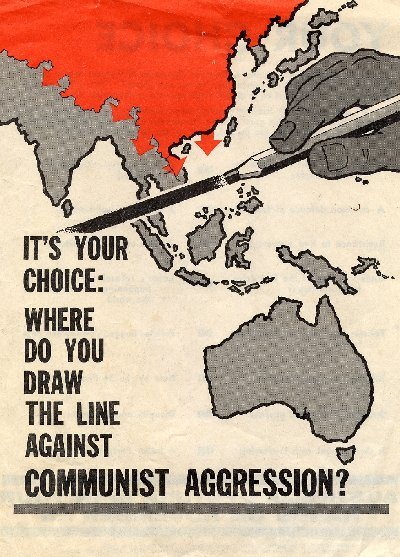
The U.S. got involved in Korea and Vietnam because of what foreign policy?
containment
Good Neighbor policy
isolationism
Roosevelt Corollary

What were the results of the Korean War?
The two sections of Korea reunited
North Korea & South Korea remained divided
The Soviet Union took control of both sections of Korea
China set up a communist government



U.S. flew planes over the Soviet blockade of Berlin to get supplies to West Berlin without military conflict.
Berlin Airlift
Marshall Plan

U.S. provided financial assistance to Western European Countries to rebuild after WWII.
Berlin Airlift
Marshall Plan

⭐ What policy did the United States follow to STOP the spread of communism?
Open Door Policy
Big Stick Policy
Containment Policy
Dollar Diplomacy

⭐ Which statement explains how the Truman Doctrine guided U.S. foreign policy in Europe following World War II?
The United States provided financial aid to noncommunist governments fighting communist rebels
The United States divided countries and cities recovering from the war into zones occupied by international forces.
The United States established satellite governments in countries that share borders with the Soviet Union.
The United States boycotted international events held in countries allied with the Soviet Union.

President Truman adopted a new foreign policy during the Cold War know as the Truman Doctrine. What was the main goal of the Truman Doctrine?
to expand trade with Europe to encourage the spread of communism
to limit the buildup of nuclear weapons to stop the spread of communism
to increase nuclear weapons to stop the spread of communism
to send financial aid to countries fighting against the spread of communism

What does the bold green line on this map represent?
the demilitarized zone of Europe
The alliances of World War II
the Iron Curtain
the western border of the Soviet Union

⭐ What bill did the U.S. Congress pass to provide financial assistance to western European countries?
Truman Doctrine
Open Door Policy
Marshall Plan
Domino Theory

During the Cold War, what bill did the U.S. Congress pass to provide financial assistance to western European countries?
Truman Doctrine
Open Door Policy
Marshall Plan
Domino Theory
“…The truth of the matter is that Europe’s requirements for the next three or four years of foreign food and other essential products— principally from America—are so much greater than her present ability to pay that she must have substantial additional help, or face economic, social, and political deterioration of a very grave character..."
Based on this text, how did the Marshall Plan try to stop the spread of communism in Western Europe?
by providing government housing for refugees
by providing military assistance to Vietnam
by providing money to stop poverty

⭐ The United States followed a policy of containment during the Cold War in response to the spread of communism. How did the Marshall Plan reflect containment policy?
It blocked Soviet missiles from from arriving in communist Cuba.
It provided economic aid to European countries in order to prevent the spread of communism.
It authorized the use of military force against communist forces in Vietnam.
It stopped communist efforts to control the Korean Peninsula.

“During Harry Truman’s presidency, food and supplies were dropped to the people of Berlin, Germany. They were experiencing starvation because of blocks set up by the Soviet Union.”
What was the "drop" called?
VJ Day
Berlin Wall
Communist Containment Policy
Berlin Airlift
Why did Joseph Stalin block the city of Berlin from getting supplies?
He wanted to make the people dependent on communist Germany for their needs
He hated Berlin
The railroads were broken and still needed to be fixed after the war
The people of Berlin were very wealthy and did not need his help

⭐ What was the PURPOSE of the Berlin Airlift?
To bring necessary supplies to assist the Communists after World War II.
It was designed to help citizens in France to resist Communism.
Moving Allied soldiers to help fight the Nazis during World War II.
To supply the citizens of West Berlin while the Soviet blockade continued.

What was the name of the mutual defense alliance of non communist nations?
NATO
Warsaw Pact
Truman Doctrine
Open Skies
“After World War II, the U.S. and its allies formed an organization to assist each other. The countries supported the other members in diplomatic negotiations and military action. Their purpose was to ensure the security of member countries from outside threats.”
What is the name of this organization?
Allied Powers (AP)
United Nations (UN)
Civilian Conservation Corps (CCC)
North Atlantic Treaty Organization (NATO)
American policy of resisting further expansion of communism around the world
Containment
Iron Curtain
Marshall Plan
Truman Doctrine
Competition between the Soviet Union and the United States, to achieve firsts in spaceflight capability. Began with the Soviet launch of Sputnik
Baby Boom
McCarthyism
Space Race
Arms Race
Cold war competition between the U.S. and Soviet Union to build up their respective armed forces and weapons
Baby Boom
McCarthyism
Space Race
Arms Race
Increase in birthrate after WWII. Led to an increased demand for housing and the growth of the suburbs.
Baby Boom
McCarthyism
Space Race
Arms Race
A prolonged war (1954-1975) between the communist armies of North Vietnam who were supported by the Chinese and the non-communist armies of South Vietnam who were supported by the United States.
Korean War
Vietnam War
Cuban Missile Crisis
Bay of Pigs Invasion
Failed invasion of Cuba in 1961 when a force of 1,200 Cuban exiles, backed by the United States, landed at the Bay of Pigs.
Korean War
Vietnam War
Cuban Missile Crisis
Bay of Pigs Invasion
The conflict between Communist North Korea and Non-Communist South Korea. The United Nations (led by the United States) helped South Korea in an effort to contain communism.
Korean War
Vietnam War
Cuban Missile Crisis
Bay of Pigs Invasion
The 1962 confrontation between US and the Soviet Union over Soviet missiles in Cuba. The U.S. responded by blockading Cuba until the Soviets agreed to remove the missiles.
Korean War
Vietnam War
Cuban Missile Crisis
Bay of Pigs Invasion
West Germany became democratic and East Germany did not.
true
false
After the war when Germany was defeated it was split up east and west, who controlled each part?
Soviet Union--West, U.S. Britain and France--East
Soviet Union--East, U.S. Britain and France- West
At the end of WWII, tension started increasing between which two countries?
Britain and the Soviet Union
China and the Soviet Union
The US and the Soviet Union
France and China
Congressional committee questioned actors, directors, writers and others about their possible Communists sympathies.
House of Un-American Activities Committee
House Investigative Committee
Communist Finding Committee
Reds Be Gone Committee
How was the Cold War different from previous wars involving the United States?
Previous wars were fought between the United States and European countries, and the Cold War was fought between the United States and the Soviet Union.
The Cold War refers to the political and economic tension between the United States and the Soviet Union-not an actual war.
The Cold War was fought in the cold climate region of the Soviet Union, whereas previous wars were fought in warmer climate regions.
The Cold War battles were fought with more modern weaponry since it took place in the 1960s.
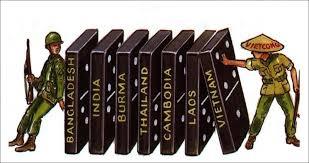
Theory based on the idea that if communism was allowed in one area, it would quickly spread to surrounding areas in a domino effect.
Domino Theory
Vietnamization
Anti-War Movement
Peace with Honor
Name given the failed invasion of Cuba by U.S. forces while attempting to oust communist leader Fidel Castro
Tet Offensive
Gulf of Tonkin Resolution
Bay of Pigs
Cuban Missile Crisis
State and local laws enforcing racial segregation in the Southern United States.
Affirmative Action Laws
Integration Laws
Civil Disobedience Laws
Jim Crow Laws

How did the House Un-American Activities Committee intensify domestic tensions during the Cold War?
The Committee's public investigations led Americans to suspect one another.
The Committee's economic policies contributed to a recession.
The Committee encouraged further development of nuclear weapons.
The Committee nominated known communists to run for political office.

How did Congress's decision to investigate communist activities in the United States affect average Americans?
Americans began to distrust their government.
Accused communists lost their Fifth Amendment rights.
Thousands of Americans were accused of being communists.
The spread of communism within the country was prevented.
What event ushered in the nuclear arms race?
U.S. successfully testing an atomic weapon
U.S. use of atomic weapons to end WWII
Soviet Union successfully tests an atomic weapon
Soviet Union testing the Tsar Bomb
The Civil Defense Administration encouraged citizens to do what
prepare for nuclear attack
build bomb shelters
practice duck and cover drills
all of the above
What is an arms race?
100 meter dash where you can only use your arms like some kind of legless hyena
a competition between nations for superiority in the development of technology
a competition between nations for inferiority in the development and accumulation of weapons
a competition between nations for superiority in the development and accumulation of weapons
What is containment?
U.S. foreign policy of threatening to use all out military aggression against enemy
The purchasing of material goods
Designing of products to wear out or become outdated so consumers need to buy more
U.S. foreign policy of blocking spread of communism to other nations by the Soviets
The "Iron Curtain" of which Churchill spoke of symbolically
threatened Soviet Union power in Europe
enforced the agreements made at the Tehran Conference
upheld the virtues of a liberated Europe
separated the Communists dominated countries of Eastern Europe from the Western democracies
The policy of containment was designed to “contain” Soviet communism from spreading beyond its post World War II borders.
TRUE
FALSE

The Truman Doctrine represented a dramatic sea-change in American foreign policy.
TRUE
FALSE
Competition between the Soviet Union and the United States, to achieve firsts in spaceflight capability. Began with the Soviet launch of Sputnik
Baby Boom
McCarthyism
Space Race
Arms Race
Cold war competition between the U.S. and Soviet Union to build up their respective armed forces and weapons
Baby Boom
McCarthyism
Space Race
Arms Race
Period in the United States where the fear of communism led to widespread accusations with no evidence
Baby Boom
McCarthyism
Space Race
Arms Race

Soviet Premier
"De-Stalinization"
Soviet leader after Stalin
Visited the US and made a closer relationship with the US than before
He faced several crises, such as the Suez Canal, the Hungarian uprising, the Berlin Wall, the Cuban missile crisis, and the Sino-Soviet split
Backed the Soviet space program
Removed from power in 1964
Nikita Khrushchev
Fidel Castro
Mikhail Gorbachev
Vladimir Lenin

35th President of the United States
Took blame for disastrous Bay of Pigs invasion early in term
Stood up to communists during Cuban Missile Crisis
Assassinated in Dallas in 1963
John F. Kennedy
Robert Kennedy
George W. Bush
Gerald Ford

36th President of the United States
Master at domestic politics but couldn’t stop the US from getting mired in the Vietnam War
Chose not to run for reelection due to the stress of the Vietnam War
Lyndon B. Johnson
Gerald Ford
Dwight Eisenhower
Richard Nixon

33rd President of the United States
Began the policy of “containment” of communism aka The Truman Doctrine
President during the Korean War to stop communism from spreading
Famously fired Gen McArthur from the war for disobedience.
Made the decision to drop the atomic bomb during WW2
Harry S. Truman
John F. Kennedy
Richard Nixon
Lyndon Johnson

First man-made satellite sent into orbit by the Soviet Union in October 1957. The Soviet Union inaugurates the “Space Age” with its launch of _________, the world’s first artificial satellite, on October 4, 1957.
Sputnik
Apollo
Kazakh
Tet

Line of latitude that served as the divider between North and South Korea from the end of the Korean War until today.
38th Parallel
Iron Curtain
Berlin Wall
Demarcation

Term for using fear of communism to promote your own gain as Senator McCarthy did in the 1950’s. ________________is part of the Red Scare period of American history in the late 1940s and 1950s.
McCarthyism
Red Scare
Defamation
Blacklisting

Military alliance of democratic countries after WWII
NATO
Warsaw Pact
SALT I
Star Wars

The ____________ was a symbol of the Cold War, dividing the city into East and West for 28 years.
Berlin Wall
Eastern Bloc
Warsaw Pact
Iron Curtain

Military alliance of communist countries after WWII and led by the Soviet Union.
Warsaw Pact
NATO
SALT II
Axis Powers
Principle of deterrence founded on the notion that a nuclear attack by one superpower would be met with an overwhelming nuclear counterattack such that both the attacker and the defender would be annihilated.
Arms Race
McCarthyism
.Blacklist
Mutually Assured Destruction (MAD)
A _______ war is a war of _______.
cold, weapons
hot, words
hot, weapons
cold, words
The _______ Doctrine focused on the policy of _______.
Eisenhower, Containment
Truman, Brinkmanship
Eisenhower, Détente
Truman, Containment
Through the logic of mutually assured _______ (MAD) both sides would theoretically be deterred from starting a war.
deliberation
de-escalation
diffusion
destruction
The arms race was established on the belief that if one nation has enough weapons of mass destruction, like nuclear missiles, their enemy would be less likely to attack. What is this concept known as?
Mutually Assured Destruction
Massive Retaliation
Globalization
Glasnost
What is the contest between nations to gain weapons superiority?
Arms Race
Space Race
Perestroika
Detente
Which of the following best identifies the result of the Korean War?
The United States liberated the Communists in Korea
Korea was united under a new communist government
The United States ended the war with atomic force
Korea remained divided after the war
What was name of the event in which the United States failed in overthrowing Fidel Castro and the Communist government of Cuba, hurting the global prestige of the United States?
Bay of Pigs
Cuban Missile Crisis
Iran-contra Scandal
Tet Offensive
How did the United States respond to the discovery of nuclear missiles in Cuba?
The United States invaded Cuba
The United States launched an airstrike on the missile sites in Cuba
The United States carried out a naval "quarantine" of Cuba
The United States installed additional nuclear missiles in Mongolia
What is the term given to identify the ideological, economic, and military conflict between the United States and the Soviet Union from the conclusion of World War II to 1991?
Hundred Years War
Great War
Great Revolution
Cold War

