Wayground logo

Free Printable Worksheets

Font size

S
M
L
XL
Worksheets

Electricity and Magnetism Final Exam Review

Total questions: 60

Worksheet time: 2hrs 35mins

Name
Class
Date
1.

Electric charges always flow from _____ areas to _____ areas.

a)

positive, negative

b)

negative, positive

c)

positive, neutral

d)

neutral, negative

2.

. A material through which electrons do NOT flow easily is a(n) _____.

a)

insulator

b)

fuse

c)

conductor

d)

circuit breaker

3.

Which of the following statements about electric charge is true?

a)

Objects must be touching on another to exert electrical force.

b)

Electrical forces act at a distance.

c)

Air cannot conduct electricity; it is conducted only by solid materials.

d)

Opposite electric charges always repel one another.

4.

Which of the following will increase the resistance of a wire?

a)

using a thicker/wider wire

b)

using a shorter wire

c)

increasing the temperature of the wire

d)

using silver instead of copper

5.

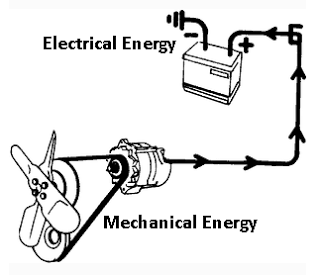
The function of a generator is to change ____.

a)

chemical energy to electrical energy

b)

electrical energy to chemical energy

c)

electrical energy to mechanical energy

d)

mechanical energy to electrical energy

6.

This exerts a force that causes other electric charges to move.

a)

electrical poles

b)

electrical fields

c)

insulators

d)

conductors

7.

Match the following

a)

Protons

1.

Positively charged particles in an atom

b)

Electrons

2.

Negatively charged particles in an atom

c)

Neutrons

3.

Particles in the atom that have no charge

d)

Ferromegnetism

4.

When non-magnetic materials become attracted to magnets

e)

Electroscope

5.

A device that detects electric charge on an object

8.

Silver has a resistance of 0.0198 ohms. What voltage would produce a current of 100 amps?

a)

1.98 V

b)

0.000198 V

c)

5,050 V

d)

100.0198 V

9.

Match the following

a)

Electromagnets

1.

Temporary magnet made by placing a piece of iron inside a current carrying coil of wire.

b)

Voltmeter

2.

A device that measures the voltage difference in a circuit

c)

Series Circuit

3.

Circuit that has only one pathway for current to travel through

d)

Parallel Circuit

4.

Circuit that has more than one pathway for current to travel through

10.
The transformer shown is what type?
a)
step-up
b)
step-down
c)
current transformer
d)
isolation transformer
11.

This is the symbol of which electrical device?

a)

A light bulb

b)

An resistor

c)

An electrical cell

d)

A switch

12.

This circuit is ...........................?

a)

open

b)

parallel

c)

closed

d)

the cutiest little circuit ever!

13.

The picture shows an electric circuit. This is a series circuit because:

a)

The electrical current is divided between the three light bulbs.

b)

It has 3 light bulbs.

c)

The same current flows through all threelight bulbs.

d)

It uses a single battery

14.

Which best describes a parallel circuit?

a)

Electricity flows along one pathway.

b)

The flow of electricity comes from more than one source.

c)

Electricity flows along more than one pathway

d)

The flow of electricity comes from one source.

15.

What is one problem with using a series circuit?

a)

If one device goes down, they all go down!

b)

It doesn't work properly.

c)

It has a lot of series.

d)

There are no problems.

16.

Does this diagram represent a series or parallel circuit?

a)

parallel

b)

series

17.

This is an example of a _______ circuit

a)

open

b)

series

c)

parallel

d)

switch

18.
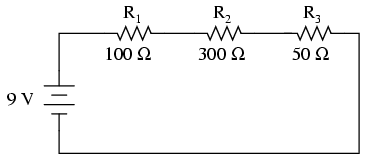
The total resistance in this circuit is 
a)
100 ohms
b)
450 ohms
c)
400 ohms
d)
30 ohms
19.

What is D?

a)

Wires

b)

Bulb

c)

Switch

d)

Energy Source

20.

The rate of electron flow in a circuit

a)

Voltage

b)

Resistance

c)

Current

21.

Opposition to the flow of electrons

a)

Current

b)

Voltage

c)

Resistance

22.

Unit is Ohms Ω\Omega  

a)

Current

b)

Resistance

c)

Voltage

23.

Unit is Amps (A)

a)

Current

b)

Voltage

c)

Resistance

24.

Unit is Volts (V)

a)

Current

b)

Voltage

c)

Resistance

25.
The buildup of charges on an object is called
a)
static discharge
b)
positive charge
c)
static electricity
d)
negative charge
26.
According to Ohm’s law, resistance is equal to voltage divided by
a)
time
b)
conduction
c)
current
d)
potential
27.
A complete, unbroken path through which electric charges can flow is a(n)
a)
electric circuit
b)
electrical resistance
c)
magnetic field line
d)
magnetic pole
28.
Materials through which charge can flow easily are called
a)
insulators
b)
resistors
c)
conductors
d)
magnets
29.
An example of an insulator is
a)
rubber
b)
copper
c)
silver
d)
iron
30.
The unit of measure for voltage is the 
a)
Volt
b)
Amp
c)
Ohm
31.
The unit for resistance is the 
a)
ohm
b)
amp
c)
volt
d)
cenitmeter
32.
A particle that carries a negative electric charge is called a(n) ______.
a)
neutron
b)
atom
c)
proton
d)
electron
33.
What do the lines around this magnet represent?
a)
North Pole
b)
South Pole
c)
Magnetic Declination
d)
Magnetic Field
34.
As the distance between two magnets increases (they get farther apart), the force between them:
a)
Increases
b)
Decreases
c)
Stays the Same
35.
If you cut a magnet in half, what happens to the poles?
a)
One half gets the North Pole, the other half gets the South Pole
b)
Both halves get only a North Pole
c)
Both halves get only a South Pole
d)
Both halves get a North pole and a South Pole
36.
What is responsible for the Magnetic Field around Earth?
a)
The Earth's crust
b)
The Earth's molton iron core
c)
The Earth's mantel
d)
The Sun
37.
An electromagnet's poles may be reversed by:
a)
decreasing the voltage of the coil
b)
increasing the number of coils
c)
changing the direction of current flow
d)
altering the material used to make the coils
38.
In un-magnetized materials the domains are __________ aligned.
a)
super
b)
slightly
c)
randomly
d)
always
39.
What kind of magnet can be turned on and off?
a)
refridgerator magnet
b)
electromagnet
c)
magnetite
d)
iron
40.

If a glass plate is placed over a magnet and iron filings are sprinkled over the glass, a pattern will be visible. What does this pattern indicate?

a)

The magnetic field

b)

The electrostatic field

c)

The piezoelectric effect

d)

The chemical reaction of the magnet and the filings
41.
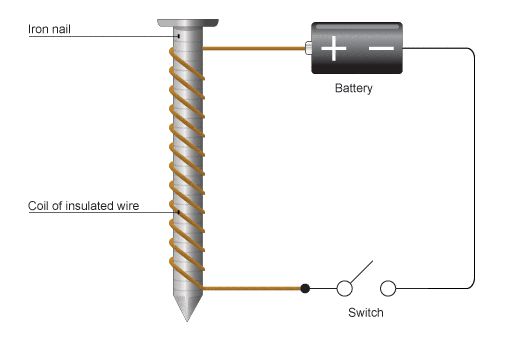
What is most likely to happen when the switch is closed?
a)
A magnetic field should be produced
b)
The nail will rust
c)
The battery will explode
d)
The wire will catch on fire
42.
How do electromagnets differ from regular magnets? 
a)
A. They  can be turned off and on 
b)
B. Their polarity can be reversed
c)
C. Their strength can be changed
d)
D. All of the above
43.
The magnet's shown will
a)
not move
b)
attract
c)
repel
d)
all of the above
44.
The magnet's shown will
a)
not move
b)
attract
c)
repel
d)
all of the above
45.
Which of the following is true about a bar magnet?
a)
Its magnetic field is strongest near its center.
b)
It is surrounded by a magnetic field.
c)
The north pole is stronger than the south pole.
d)
The south pole is stronger than the north pole.
46.
The space around a magnet where the force of a magnet can attract best is called__________
a)
magnetism
b)
bar magnet
c)
horseshoe magnet
d)
magnetic field
47.
Why does a compass needle point north?
a)
The compass is a bar magnet
b)
Because north is up
c)
Because it's magic
d)
It lines up with the Earth's magnetic field
48.

What is the transfer of energy in when you plug in a motor and it spins?

a)

chemical to mechanical

b)

electrical to mechanical

c)

mechanical to electrical

d)

physical to potential

49.
What size resistor would produce a 3 Amp current flow with a 12 Volt battery
a)
1 Ohm
b)
3 Ohms
c)
4 Ohms
d)
12 Ohms
50.
What is current measured in?
a)
Ω (Ohms)
b)
V (Volts)
c)
A (Amps)
d)
W (Watts)
51.
What is resistance measured in?
a)
Ω (Ohms)
b)
V (Volts)
c)
A (Amps)
d)
W (Watts)
52.
What is Resistance?
a)
The flow of electrons
b)
Electric potential difference
c)
A battery
d)
The ability to reduce the flow of electrons
53.
Electricity that flows in a closed path is called a
a)
path
b)
current
c)
circuit
d)
light
54.
What is the Voltage of a circuit that has a resistance of 5 Ω and a current of 2 A?
a)
25 V
b)
10 V
c)
2.5 V
d)
0.4 V
55.
The mathematical relationship among Voltage, Current, and Resistance
a)
Faraday's Law
b)
Tesla's Law
c)
Edison's Law
d)
Ohm's Law
56.
Current times Resistance equals
 (I X R)
a)
Power
b)
Voltage
c)
Amperage
d)
Ohm
57.
This circuit has more than one loop. When one light goes out, the others stay on. 
a)
closed circuit
b)
series circuit
c)
parallel circuit
d)
open circuit
58.

What is the current in a circuit with 6 ohms of resistance and a battery containing 24 Volts?

a)

1/4 A

b)

144 A

c)

4 A

d)

0.4 A

59.

What is the voltage of a circuit with 4 ohms of resistance and 3 amps of current?

a)

12 V

b)

21 V

c)

4/3 V

d)

3/4 V

60.

If the battery produced 12.6 Volts what would be the current flow for a 6 Ohm resistor?

a)

2.1 Amps

b)

2.4 Amps

c)

1.71 Amps

d)

15 Amps