wayground logo

Free Printable Worksheets

Font size

S
M
L
XL
Worksheets

5th Grade SOL Science 8 Days

Total questions: 65

Worksheet time: 1hrs 3mins

Name
Class
Date
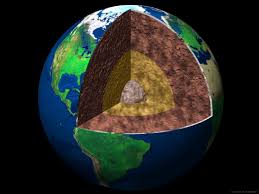
1.
Which layer of Earth is located above the outer core?
a)
crust
b)
inner core
c)
mantle
d)
lithosphere
2.
Which layer of Earth is located above the outer core?
a)
crust
b)
inner core
c)
mantle
d)
lithosphere
3.
Temperature _____________________ as you go deeper into the earth.
a)
increases
b)
decreases
c)
goes up and down depending on the layer
d)
stays the same
4.
What type of plate boundary is this?
a)
Plate
b)
Divergent
c)
Convergent
d)
Transform
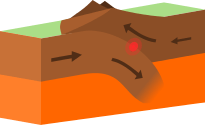
5.
What type of event will occur at this boundary?
a)
Earthquake
b)
Volcano Eruption
c)
Tornado
d)
Mountain Building
6.
Which of the following is the name of the ancient supercontinent formed 28 Million Years ago.
a)
Pangea
b)
Gondwanda
c)
Laurasia
d)
Neverland
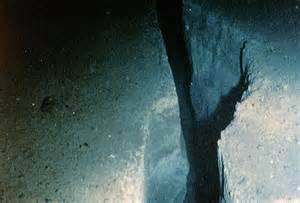
7.
What type of plate boundary is this?
a)
Transform
b)
Convergent
c)
Divergent
d)
Plate
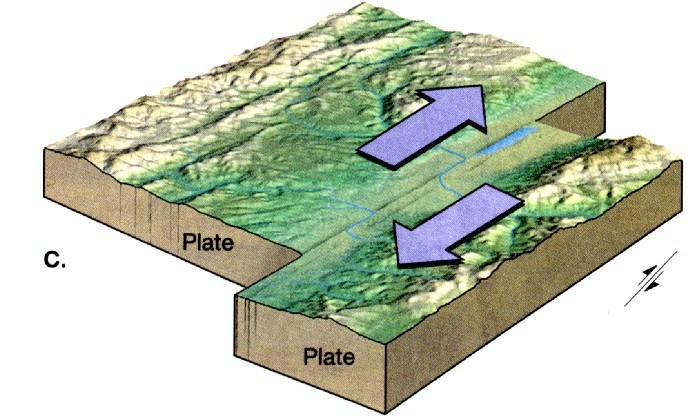
8.
What is the name of the plate boundary that slides past each other?
a)
Divergent
b)
Convergent
c)
Transform
d)
Mr. C the Slide Man
9.
What type of boundary is shown at A?
a)
transform
b)
convergent
c)
divergent
d)
subduction
10.
What are the puzzle pieces of the Earth's surface called?
a)
Tectonic plates
b)
Puzzles
c)
Earthquakes
11.

What type of boundary is shown in the diagram?

a)

Divergent

b)

Convergent

c)

Transform

12.

What type of boundary is shown in the diagram?

a)

Divergent

b)

Convergent

c)

Slide/Transform

13.

What type of boundary is shown in the diagram?

a)

Divergent

b)

Convergent

c)

Slide/Transform

14.
What was the name given to all the continents when they were joined as one super continent?
a)
Supreme Continent
b)
Eurasia
c)
Plate tectonics
d)
Pangea
15.
Mountains form from....
a)
Tectonic plates sliding past one another
b)
Collision of tectonic plates
c)
Tectonic plates moving away from each other
d)
Tectonic plates disappearing
16.
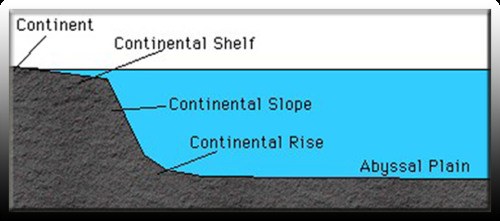
Which section represents the abyssal plain?
a)
Section 1
b)
Section 5
c)
Section 2
d)
Section 3
17.
Which section represents the continental shelf?
a)
Section 2
b)
Section 4
c)
Section 3
d)
Section 1
18.
Which section represents the continental slope?
a)
Section 1
b)
Section 4
c)
Section 2
d)
Section 3
19.
Underwater mountains or volcanoes are called-----
a)
abyssal plain
b)
shelf breaks
c)
trenches
d)
seamounts
20.
The flat, deep ocean floor is called----
a)
the abyssal plain
b)
the mountain ranges
c)
the continental rise
d)
the continental slope
21.
Which number represents an ocean trench?
a)
9
b)
6
c)
2
d)
10
22.
Which number represents the continental shelf?
a)
3
b)
2
c)
7
d)
5
23.
Which section represents the continental rise?
a)
Section 2
b)
Section 5
c)
Section 3
d)
Section 1
24.
Which location is likely to have the greatest water pressure, the coldest temperatures, and the smallest number of living organisms?
a)
1
b)
4
c)
2
d)
3
25.

Which ocean floor feature is labeled "F"?

a)

Continental Shelf

b)

Abyssal Plain

c)

Ocean Trench

d)

Continental Slope

26.

A shallow area of sediment near the shore...

a)

Continental Shelf

b)

Ocean Trench

c)

Continental Slope

d)

Abyssal Plain

27.

Which of these are the deepest parts of the oceans?

a)

Continental Shelf

b)

Abyssal Plain

c)

Ocean Trench

d)

Continental Rise

28.

"A" on the diagram labels the...

a)

Continental Shelf

b)

Abyssal Plain

c)

Continental Slope

d)

Ocean Trench

29.

Which ocean floor feature is the steep cliff-like drop beyond the continental shelf?

a)

Continental Shelf

b)

Continental Slope

c)

Abyssal Plain

d)

Ocean Trench

30.

Which part of the ocean floor is labeled "D"?

a)

Mid-Ocean Ridge

b)

Continental Slope

c)

Blue-Ridge Mountains

d)

Abyssal Plain

31.

"C" on the Ocean Floor diagram represents the...

a)

Continental Slope

b)

Abyssal Plain

c)

Continental Rise

d)

Ocean Trench

32.
In what zone does approximately 90% of all ocean life live?
a)
sunlight
b)
twilight
c)
midnight
33.

What is the deepest zone of the ocean called?

a)

Sunlight

b)

Twilight

c)

Abyss

d)

Trench

34.
the area between the high tide and the low tide mark
a)
benthic zone
b)
intertidal zone
c)
pelagic zone
d)
abyssal zone
35.
As oceans become deeper, the water pressure ___________________.
a)
increases
b)
decreases
c)
stays the same
36.

As the depth of the ocean water increases, the temperature...

a)

increases (warmer)

b)

decreases (colder)

37.

A mother turtle digs a nest on the shore and lays her eggs in it. The process takes takes 1-3 hours in the middle of the night, after which the mother turtle slowly drags herself back to the ocean.

a)

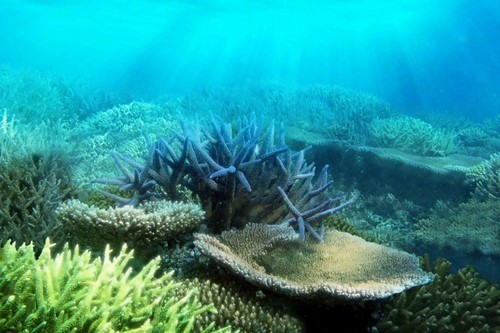
Coral Reef

b)

Intertidal Zone (High Tide)

c)

Intertidal Zone (Low Tide)

d)

Ocean (Aphotic Zone)

38.

Marine mussels are usually found clumping together on wave-washed rocks. When exposed to air, those in the middle of a clump will undergo less water loss.

a)

Coral Reef

b)

Ocean (Both photic and aphotic zones)

c)

Intertidal Zone (Low tide)

d)

Intertidal Zone (High tide)

39.

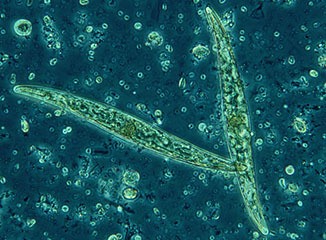
Plant-like plankton is called...

a)

Photosynthesis

b)

Phytoplankton

c)

Decomposer

d)

Consumer

40.

Animal-like plankton is called...

a)

phytoplankton

b)

zooplankton

41.
What does this tool measure?
a)
Wind speed
b)
Wind direction
c)
Air pressure
d)
Temperature
42.
This weather instrument is an...
a)
wind vane
b)
anemometer
c)
barometer
d)
thermometer
43.
This weather instrument is a...
a)
anemometer
b)
Christmas ornament
c)
wind vane
d)
barometer
44.
What is the name of this tool?
a)
Barometer
b)
Hygrometer
c)
Rain Gauge
d)
Thermometer
45.
This weather instrument is a...
a)
anemometer
b)
barometer
c)
wind vane
d)
thermometer
46.
This weather instrument is a...
a)
thermometer
b)
wind vane
c)
anemometer
d)
rain gauge
47.
What temperature is this in Fahrenheit?
a)
84 degrees
b)
85 degrees
c)
86 degrees
d)
30 degrees
48.
What is the name of a person who forescast weather?
a)
weather man
b)
geologist
c)
meteorlogist
d)
scientist
49.

How many °F does the thermometer show?

a)

0

b)

30

c)

10

d)

50

50.

About how many °F does the thermometer show?

a)

0

b)

120

c)

40

d)

60

51.

What is the temperature in degrees Celsius?

a)

5

b)

7

c)

9

d)

3

52.

It is (a)   degrees Celsius

53.

Look at the graduated cylinder. How much liquid is in it?

a)

7.5 grams

b)

7 mL

c)

5 mL

d)

9 mL

54.

What is the measurement of the graduated cylinder?

a)

30 mL

b)

38 mL

c)

40 mL

d)

28 mL

55.

The amount of liquid in the graduated cylinder is...

a)

90 mL

b)

85 mL

c)

75 mL

d)

87 mL

56.
How many spaces are there between 20 and 25?
a)
3
b)
5
c)
7
d)
10
57.
This graduated cylinder is indicating a liquid volume of...
a)
5 ml
b)
15 ml
c)
20 ml
d)
25 ml
58.
What is the volume of water held in the graduated cylinder? 
a)
16 mL
b)
14 g
c)
12 mL
d)
14 mL
59.

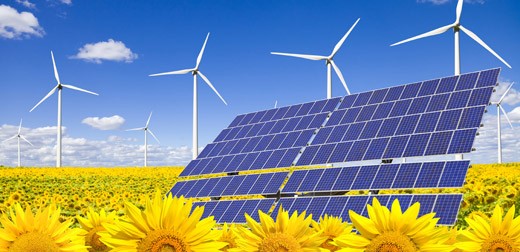
__________ is an energy resource that WILL NOT run out in the next several hundred years.

a)

Renewable Energy Resource

b)

Nonrenewable Energy Resource

c)

Fossil fuels

d)

biodegradable

60.

__________ is an energy resource that WILL run out in the next several hundred years.

a)

Renewable Energy Resource

b)

Nonrenewable Energy Resource

c)

natural resources

d)

pollution

61.
Why is solar energy considered renewable energy?
a)
It's cheaper than fossil fuels
b)
The sun's energy would not run out for billions of years
c)
Solar energy recharges batteries
d)
All of them
62.

What are renewable resources?

a)

A limited amount and cannot be replaced in a human life time.

b)

Plastic bags

c)

Coal, oil, and natural gas

d)

Can be replaced in our lifetime through natural processes
63.

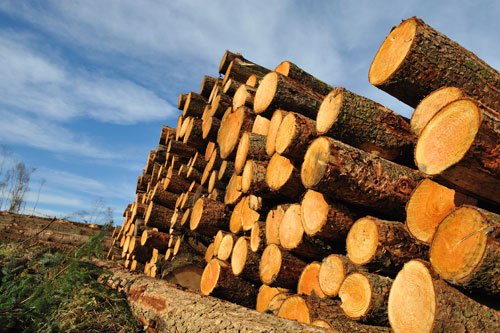
Wood is...

a)

A renewable resource

b)

A nonrenewable resource

c)

Used to make oil

d)

Used to make plastic

64.

Trees are renewable resources.

a)

True

b)

False

65.

Coal is a renewable resource.

a)

True

b)

False