
 Worksheets
6Bth 2nd Semester Exam 2023
Total questions: 67
Worksheet time: 1hrs 3mins
Fluids form layers based on their....
locations
areas
densities
heights
In a density column, is the substance with the highest density on the bottom or the top?
Bottom
Top
In a density column, is the substance with the lowest density on the bottom or on the top?
Bottom
Top

You calculated the density of an unknown substance to be 7.8g/cm3. According to the chart, which of the substances doe you most likely have?
Zinc
Copper
Tin
Iron
What is the density of an object if it has a mass of 6g and a volume of 3cm3? (Hint: Density = mass/volume)
6 g/cm3
3 g/cm3
2 g/cm3
1/3 g/cm3

At which point is potential energy greatest?
W
X
Y
Z

Potential
Kinetic
Both potential and kinetic energy
none of the above

Potential
Kinetic
Both potential and kinetic energy
none of the above
A contact force is from
objects physically touching
far apart objects
not touching object
always a pull
A non-contact force is between
two objects that aren't touching
two objects that are touching
the ground and wheels
you and me

The three examples pictured are of
Non-contact Forces
Contact Forces

The force between the phone and the mount is a
contact force
non-contact force
You are pulled to the surface of the earth due to the force of _________________
gravity
friction
normal force
contact force
If the wind is heading south with a force of 5 N, and a car is going north with force of 78936 N, what is the Net Force and Direction.
78931 N North
78931 N South
78531 N North
78531 N South

How do you find the net force of this image.
Add up all the arrows
Add a green arrow and the orange arrow.
Subtract all the arrows.
Add the green arrows and subtract the orange arrow.

What is the overall Net Force and which side has a greater Net Force?
641, Left
571, Left
601, Right
480, Right


Which body has the greater effect on Earth's tides?
Sun
Saturn
Moon
Venus


_______are daily changes in ocean water.
Waters
Tides
Colors
Earths
Reorder the following from the TOP (1) to the CENTER (4)
Crust
Mantle
Outer Core
Inner Core
Match the following:
The layer of Earth with its composition
Iron and nickel
inner core
Iron and nickel
outer core
oxygen and silica
crust
Oxygen, silica, and magnesium
Mantle
) Which of the following best describes the Earth's crust?
The area of the Earth that is sometimes called the lithosphere
The thinnest layer of the four layers that make up the composition of the Earth
It consists of liquid iron and nickel
It resides between the crust and the outer core
It is under such immense pressure that, even though it is very hot, it is still a solid
The continental crust is
thinner than the oceanic crust
thicker than the oceanic crust
the same thickness as the oceanic crust
Rocks that are transformed into different rocks under heat and pressure are known as _____
sedimentary rocks
volcanic rocks
igneous rocks
metamorphic rocks
If you wanted to collect sedimentary rocks, what sort of characteristics would you look for in a rock's composition?
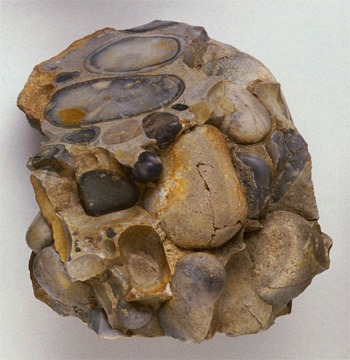
Rock made from eroded material broken off other rocks and cemented together.
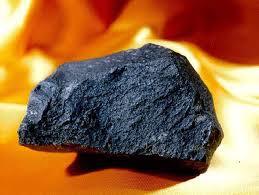
Rock that formed from magma or lava during a volcanic eruption.
Rock that includes sparkly crystals and other types of gemstones
Rock that has been transformed into new substances due to intense heat and pressure.
What rock type is formed from the cooling of magma or lava?
Igneous
Sedimentary
Metamorphic
The Lithosphere is made up of the ___________.
Crust and Upper Mantle
Inner and Outer Cores
Outer Core and Lower Mantle
Lower and Middle Mantle
What is the Asthenosphere?
an elastic substance on which the tectonic plates float.
the air that we breathe.
another name for a globe.
the hard inner core
Which meaning goes with the Latin prefix Bio-
Living Things
Air
Land
Water
Which meaning goes with the Latin prefix Hydro-
Living Things
Air
Land
Water
Which meaning goes with the Latin prefix Geo-
Living Things
Air
Land
Water

Which sphere is "A"
Atmosphere
Geosphere
Biosphere
Hydrosphere

Which sphere is "B"
Atmosphere
Geosphere
Biosphere
Hydrosphere

Which sphere is "C"
Atmosphere
Geosphere
Biosphere
Hydrosphere

Which sphere is "D"
Atmosphere
Geosphere
Biosphere
Hydrosphere
The biosphere includes:
plants
animals
bacteria
fungus
trees
Match the following for the atmosphere
Nitrogen
1%
Oxygen
78%
Argon, Carbon Dioxide, and Others
21%
The three conditions that allow us to sustain life on Earth are -
Choose all that apply.
liquid water
distance from the Sun / temperature
atmospheric conditions
stars
In order for life as we know it to exist, the planet must also be in the _______________.
greenhouse effect
Milky Way galaxy
solar system
habitable zone
Is Mars in the habitable zone?
yes
no
Which of the following solar system objects has a tail?
meteor
meteorite
comet
asteroid
A small solar system object that enters the Earth's atmosphere and creates streaks of light is called a _________
comet
meteor
meteorite
Meteoroid
What is found in the middle of Mars and Jupiter’s orbit?
Asteroid belt
Comets
Meteors
Planets

Anti
alike
side
against
first
Which word is associated with the test/independent variable?
Change
Measure
Which word is associated with the outcome/dependent variable?
Change
Measure

What is the test/independent variable in this experiment?
The height of the plants
The color of the lightbulbs

What is the outcome/dependent variable in this experiment?
The height of the plants
The color of the light bulbs
Which type of graph best represents data that shows a change over a period of time?
line
bar
table
circle
What type of graph would you make to show how many of your classmates were born in each month of the year?
line
bar
circle
scatter plot


They used their results to make the graph below.
Which month had an average daily temperature of around 41 degrees?

This is an example of

Choose the correct hypothesis for "What effect does studying have on your test grade?"
IF I study for hours, THEN my test grade will be better.
IF I have a good test grade, THEN I will study.
Good grades are from studying.
Which of the following hypotheses is written correctly?
If I freeze a tennis ball, then it will not bounce as high.
If a tennis ball is frozen, it won't bounce as high as one that is not frozen.
Frozen tennis balls will not bounce as high.
If I heat up a tennis ball it will bounce high

