wayground logo

Free Printable Worksheets

NEW

Font size

S
M
L
XL
Worksheets

Solar System Review

Total questions: 68

Worksheet time: 1hrs 2mins

Name
Class
Date
1.
Gravity from an object _____
a)
stops at it's surface
b)
stops after about 10,000 km
c)
stops at the edge of the solar system
d)
goes on forever
2.

What two things determine the gravity of an object?

a)

mass & weight

b)

mass & distance

c)

density & mass

d)

volume & distance

3.

When will the forces of gravity between two objects be the GREATEST?

a)

when the masses of both objects are small and the objects are far apart

b)

when the masses of both objects are large and the objects are close together

c)

when the masses of both objects are small and the objects are close together

d)

when the masses of both objects are large and the objects are far apart

4.

When will the gravity between two objects be the LEAST?

a)

when the masses of both objects is small and the objects are close together

b)

when the masses of both objects is small and the objects are far apart

c)

when the masses of both objects is large and the objects are close together

d)

when the masses of both objects is large and the objects are far apart

5.
What is the SI unit used to measure force? 
a)
pounds 
b)
grams 
c)
newtons 
d)
kg/ m2
6.
The amount of matter in an object.
a)
force 
b)
mass
c)
weight 
d)
pressure 
7.
Which model has greater gravitational attraction (if any)
a)
Model A
b)
Model B
c)
Both Model A and Model B (same gravity)
8.

Relating to gravity - more mass equals:

a)

less gravity

b)

less distance

c)

more gravity

d)

more distance

9.

The ____________________ is everything that exists.

a)

universe

b)

sunspot

c)

magnitude

d)

solar wind

10.

What is the term for the sum of all space, matter, and energy that exist, that have existed in the past, and that will exist in the future?

a)

the stars

b)

the galaxy

c)

the universe

d)

the solar system

11.
After the Sun, what is the next most massive object in the Solar System?
a)
the Earth
b)
Jupiter
c)
Saturn
d)
Uranus
12.
The order of the planets is:
a)
Mars,Venus,Earth,
Mercury,Saturn
Jupiter, Uranus, Neptune
b)
Earth,Venus,Mars
Jupiter, Neptune,
Mercury,Saturn,
Uranus
c)
Mercury,Venus,Earth
Mars,Jupiter,
Saturn,Uranus
Neptune
13.
The spinning of an object on its axis is called______
a)
orbit
b)
rotation
c)
revolution
d)
tide
14.
Day and night is caused by the _____________ of earth on its axis.
a)
revolution
b)
orbit
c)
rotation
15.
The earth orbits around...
a)
the sun.
b)
the moon
c)
other planets
d)
the Milky Way
16.
What are the reasons for the seasons?
a)
Earth's tilt and rotation.
b)
Earth's rotation and revolution.
c)
Earth's tilt and revolution.
d)
Earth's tilt and resolution
17.
When the Northern Hemisphere of Earth is Leaning away from the Sun, What season is the Southern Hemisphere experiencing?
a)
Summer
b)
Winter
c)
Spring
d)
Fall
18.
How long does it take the Earth to make one REVOLUTION around the Sun?
a)
12 hours
b)
24 hours
c)
365 days
d)
29.5 days
19.
As the moon's shape appears to get smaller, we say that the moon is _.
a)
swelling
b)
waxing
c)
waning
d)
disappearing
20.
Phases of the moon in which the moon appears to be getting larger are referred to as _.
a)
waxing
b)
waning
c)
new
d)
eclipse
21.
Which type of eclipse occurs when the Moon comes directly between Earth and the Sun?
a)
Lunar eclipse
b)
Solar eclipse
22.
The average distance between the earth and the sun is the 
a)
astronomical unit 
b)
Light year
23.
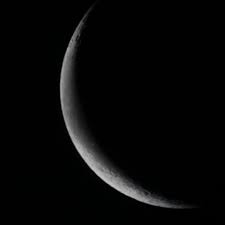
Name the moon phase
a)
waning crescent
b)
waxing crescent
c)
waning gibbous
d)
waxing gibbous
24.
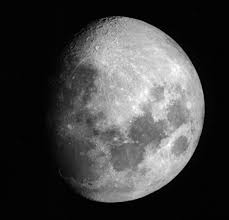
Name the moon phase
a)
waning crescent
b)
waxing crescent
c)
waning gibbous
d)
waxing gibbous
25.
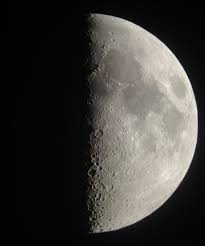
Name the moon phase
a)
First Quarter
b)
Last Quarter
c)
New Moon
d)
Full Moon
26.
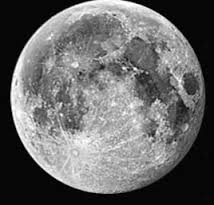
Name the moon phase
a)
First Quarter
b)
Last Quarter
c)
New Moon
d)
Full Moon
27.
Name the moon phase
a)
waning crescent
b)
waxing crescent
c)
waning gibbous
d)
waxing gibbous
28.
How many phases does the moon go through?
a)
4
b)
8
c)
10
d)
16
29.

The moon get's it light from the

a)

Earth

b)

Sun

c)

Solar System

30.

A "gibbous" moon is when

a)

Less than half of moon visible

b)

More than half of moon visible

c)

All of moon visible

d)

None of moon visible

31.

A "crescent" moon is when

a)

less than 1/2 of the moon is lit

b)

half the moon is lit

c)

more than 1/2 of the moon is lit

d)

none of the moon is lit

32.
The cycle of the moon lasts about a _.
a)
day
b)
year
c)
week
d)
month
33.
A solar eclipse only happens during a ________ moon.
a)
New
b)
Cresent
c)
Gibbous
d)
Full
34.

A natural object that orbits a planet is a _?_.

a)

asteroid

b)

comet

c)

moon

d)

star

35.

What force keeps the planets in their orbits around the sun?

a)

magnetism

b)

inertia

c)

gravity

d)

mass

36.

The sun, moon, and earth all rotate on an __________.

a)

Axle

b)

Axis

c)

Pivot

d)

Point

37.

Which planet is furthest from the sun?

a)

Pluto

b)

Neptune

c)

Uranus

d)

Jupiter

38.

A person would weigh _________ on the moon.

a)

More

b)

Less

39.

Which moon phase occurs directly after the new moon?

a)

Waxing gibbous

b)

Full

c)

Waning crescent

d)

Waxing crescent

40.
Gravity attracts all objects towards one another.
a)
False
b)
True
c)
It depends
41.
As distance between two objects increase the pull of gravity 
a)
Increases
b)
Decreases
c)
Stays the same
42.
When the southern hemisphere has winter, what season does the northern hemisphere have?
a)
winter
b)
spring
c)
summer
d)
fall
43.
All planets are the same size.
a)
True
b)
False
44.
Day & night are caused by the ______________ of earth on its axis
a)
revolution
b)
orbit
c)
rotation
d)
tilt of the axis
45.
Which season have the same amount of daylight hours?
a)
Spring & Fall
b)
Winter & Summer
c)
None of the seasons have equal daylight hours
d)
All are equal
46.
Which season, or seasons, have the shortest daylight hours?
a)
Summer
b)
Fall
c)
Winter
d)
Spring
47.
In winter, the axis of the earth is pointed away or toward the sun?
a)
towards
b)
up
c)
down
d)
away
48.
What season is when the north pole is tilted toward the sun?
a)
summer
b)
winter
c)
fall
d)
spring
49.
What happens when the area in which you live tilts away from the sun?
a)
It is summer.
b)
It is spring.
c)
It is winter.
d)
It is fall.
50.
When the Northern Hemisphere leans toward the sun, the northern part gets -
a)
more sunlight
b)
less sunlight
c)
to be winter
d)
cooler
51.
What season is letter A in the northern hemisphere?
a)
Winter
b)
Summer
c)
Spring
d)
Fall
52.
In summer, the axis of the earth is pointed away or toward the sun?
a)
towards
b)
up
c)
down
d)
away
53.
Why is the Equator warmest?
a)
Because it is closest to the sun.
b)
Because it receives the most direct sunlight
c)
Because no clouds form here.
d)
Because it is far from the sun
54.
If its ____ in the Northern hemisphere, then its summer in the Southern hemisphere. 
a)
spring
b)
summer
c)
fall
d)
winter
55.
The Earth's axis is tilted _____ degrees.
a)
23.5
b)
25.3
c)
30.2
d)
24
56.
The Earth's _______ is an imaginary line that goes from the North Pole to the South Pole.
a)
vernal equinox
b)
axis
c)
solar eclipse
d)
solar flare
57.

What season is it for us in the Northern Hemisphere in the picture?

a)

Summer

b)

Winter

c)

Fall

d)

Spring

58.

With the Earth in the position shown, is there anywhere that would receive sunlight for more than a 24 hr period?

a)

No, everywhere will get sunlight less a 24 hour period.

b)

Yes, the North Pole will receive for more than 24 hrs of sunlight.

c)

No, the South Pole will have receive than 24 hrs of sunlight.

d)

Yes, the entire Earth will get more than 24 hours of sunlight.

59.

The image above shows which type of sunlight?

a)

direct sunlight

b)

indirect sunlight

60.
What causes more heat,  indirect sunlight or direct sunlight?
a)
indirect
b)
direct
61.

The equator gets the most direct sunlight, as you move north and south from the equator, the weather will get _________________ because of the amount of _____________ __________________.

a)

warmer, direct sunlight

b)

cooler, direct sunlight

c)

cooler, indirect sunlight

d)

warmer, indirect sunlight

62.
When it is winter in the US, what is the season in Australia?
a)
winter
b)
spring
c)
fall
d)
summer
63.
Summer is warm because the Sun's rays 
a)
 hit Earth at direct angles 
b)
hit the water and heat is reflected
c)
hit the clouds and heat is refracted
d)
location is near the equator
64.
What is the shape of Earth's orbit?
a)
Ellipse
b)
Perfect circle
c)
No one knows
d)
Rectangular
65.
What season is depicted in the picture?
a)
summer
b)
winter
c)
fall 
d)
spring
66.
What season is depicted in the picture?
a)
summer
b)
winter
c)
fall 
d)
spring
67.

Which path would be the path of the sun on a day in winter?

a)

A

b)

B

c)

C

d)

impossible to tell

68.

Which path would be the path of the sun on a day in summer?

a)

A

b)

B

c)

C

d)

impossible to tell