
 Worksheets
Unit 1 Review
Total questions: 30
Worksheet time: 16mins
Which sequence correctly lists the relative sizes from smallest to largest?
our solar system, universe, Milky Way Galaxy
our solar system, Milky Way Galaxy, Universe
Milky Way Galaxy, our solar system, universe
Milky way galaxy, universe, our solar system
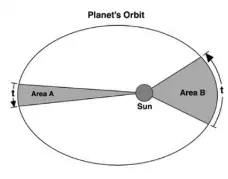
The planet below is orbiting the Sun. The two sweeps are on opposite sides of the Sun and are labeled according to Kepler’s 2nd Law, what is the relationship between Area A and Area B?
Area A is 50% larger than Area B.
Area A is 50% smaller than Area B.
Area A is the same size as Area B.
Area A is twice as big as Area B.
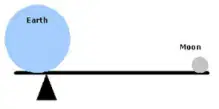
When two masses orbits around each other, the point that they revolve around is referred to as the as:
The equator
The barycenter
The orbit
The elliptical movement
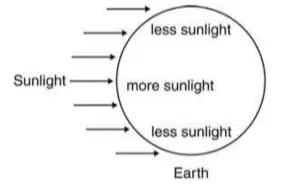
Earth’s spherical shape results in an uneven distribution of sunlight reaching Earth’s Surface.
This uneven distribution is MOST directly responsible for differences in which climatic variable at different latitudes on Earth’s surface?
wind speed
temperature
annual rainfall
average humidity
How does the tilt of the Earth’s axis determine the seasons?
by changing the amount of direct solar energy reaching the surface of Earth
by influencing the rate of chemical reactions occurring in the atmosphere
by deflecting the harmful rays of radiation emitted by the Sun
by changing the speed of the rotation of Earth
Who is given credit for inventing the telescope?
Aristotle
Copernicus
Ptolemy
Galileo
The current model for the development of the universe.
Big Bang Theory
Solar Nebula Theory
Theory of Relativity
Evolution
The Milky Way Galaxy can be seen from earth?
True
False
The force holding our galaxy together.
Quantum Physics
Gravity
Inertia
Sun
A massive explosion at the end of a stars life?
Supernova
Implosion
Black Hole
Main Sequence
Kepler's 2nd Law deals with
the shape of the planets' orbits
the area the planet travels
the length of time/period it takes the planet to orbit the sun
What does Kepler's 1st Law state?
all planets move in elliptical shaped orbits around the sun
all ellipses have one foci
the area that a planet revolves around the sun is equal
the speed that a planet revolves around the sun changes
How many stars are in our solar system?
1 (the Sun)
1 the moon
1 venus because it is the hottest planet
How many planets are in our solar system?
9 planets
4 planets
8 planets
Definition of Ellipse
Spinning around an axis
Movement around something
Oval shape that planets move in
Definition of Tilt
Slight turn on the side
Movement around something
Spinning around an axis
Keplers Third Law
When comparing 2 planets the closest move the fastest.
Planet move faster when closer to the sun
Describes the shapes of the orbit
Planets orbit the sun in an ellipses

What spiral galaxy do we live in?
Andromeda Galaxy
Dwarf Galaxy Saggitarius
Milky Way Galaxy
Snickers Galaxy
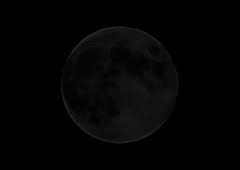
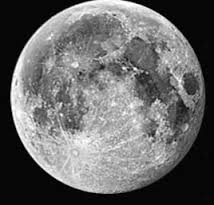
Why does the moon appear to shine?
Because it reflects it's on light
Because it makes it's own light
Because it reflects light from the sun
Because it reflects light from Earth

This picture represents (a)

This picture represents (a)
A __________ ___________eclipse occurs when the Sun’s surface is completely blocked out by the Moon.
Total Solar
Partial Solar

In the diagram above, a _______________ eclipse is occurring.
Lunar
Solar

