
 Worksheets
Seatwork 4: Newton's Laws of Motion
Total questions: 20
Worksheet time: 2hrs 40mins
In a frictionless vacuum, a 10 kg body is moving horizontally at a velocity of +10 m/s. How much net force is needed to keep the body moving in the same speed and direction?
0 N
1 N
10 N
100 N
Which of the following statements on Newton’s Laws of Motion is FALSE?
Both force and weight are measured in Newtons.
Action and reaction forces are both exerted by a single body
In a weightless environment like space, it requires force to set a body in motion.
A lighter body will have greater acceleration than a heavier one when applied with a similar force.
Which of the following statements on Newton’s Laws of Motion is TRUE?
Force is required to keep an object in motion.
Inertia is the natural tendency of matter to resist motion.
The presence of a net force on a body means that it is accelerating.
The reaction force follows after an action force is applied on a body.
You are in the front seat of a fast-moving jeep when you notice a mosquito flying directly into the windshield and splattering. Which of the following statements on the given scenario is TRUE?
Both bodies received the same force during the interaction.
Both bodies received the same acceleration after the interaction.
The jeepney has more mass; hence, the force exerted on it is greater.
The jeepney has more mass; hence, the force received by it is greater.
Using Newton’s First Law of Motion, determine which of the following statements is FALSE?
Unbalanced force is needed to accelerate an object from rest.
Matter has a natural tendency to go back to a resting state/position.
The Law of Inertia is applicable to both moving and non-moving objects.
When a net force is absent, a moving object will continue moving at a constant speed in the same direction.
A net force of 22.8 N is exerted on a cart which made it accelerate at a rate of 7.29 m/s2. What is the mass of the cart?
0.32 kg
3.13 kg
22.8 kg
166.21 kg
A net force of 210.9 N is exerted on a table that has a mass of 63 kg. What is the acceleration of the table?
0.30 m/s2
3.35 m/s2
33.5 m/s2
35 m/s2
A ball is accelerating at a rate of 5.73 m/s2. Say that the mass of the ball is doubled and the net force on it is tripled, what would be its new acceleration?
2.87 m/s2
3.82 m/s2
5.73 m/s2
8.60 m/s2
A ball is accelerating at a rate of 11.25 m/s2. Say that the mass of the ball is tripled and the net force on it is halved, what would be its new acceleration?
1.88 m/s2
5.63 m/s2
11.25 m/s2
16.88 m/s2
A 0.58 kg object was initially at rest when it accelerated at a rate of 21 m/s2. What would be the net force applied on the object?
0.03 N
10.5 N
12.18 N
36.21 N
For every action, there is an equal and opposite force of interaction.
True
False
Keeping the force constant, increasing the mass will increase the acceleration of an object.
True
False
An object will change its state of motion if an unbalanced force was applied to it.
True
False
___ _____ is the sum of all forces acting on an object.
(a)
(a) is the tendency of an object to resist acceleration.
A ball thrown straight up has zero velocity at its highest point. The ball ________ in that state.
Has Zero Net Force
Has a non-zero Net Force
Is accelerating
Is flying
What Law of Motion best explains why you tend to lean back when a car moves forward and you tend to lean forward when a car brakes?
1st Law: Law of Inertia
2nd Law: Law of Acceleration
3rd Law: Law of Action-Reaction
What Law of Motion best explains why the water bottle rocket flew up in the air?
1st Law: Law of Inertia
2nd Law: Law of Acceleration
3rd Law: Law of Action-Reaction
Why do the Action-Reaction forces of two objects don't cancel each other out?
Because they are in the same direction.
Because the forces act on different objects.
Because they are equal in magnitude and opposite in direction.
Because they are simultaneous.
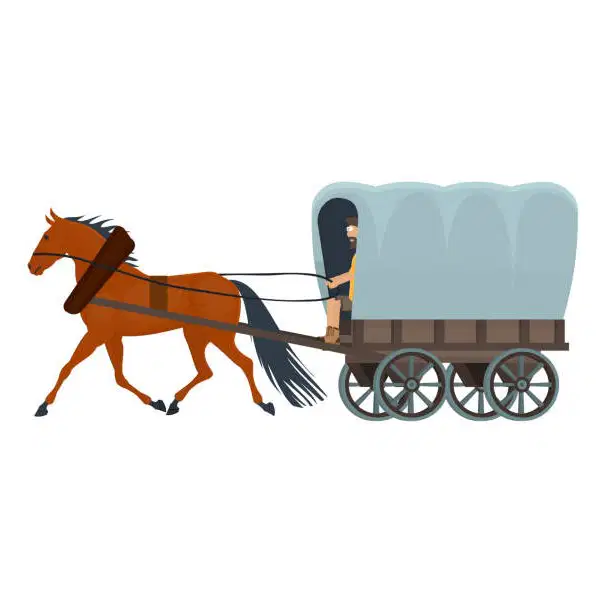
A horse is hitched to a wagon with frictionless wheels. Since the wagon pulls back on the horse just as hard as the horse pulls on the wagon, the wagon will still experience a net force which causes it to accelerate in the direction of the horse (west). Which of these FBD accurately shows the forces on the wagon?



