
 Worksheets
Year 8 paper 1 Quiz
Total questions: 160
Worksheet time: 2hrs 42mins

Protein
Dairy
Carbohydrates
Fruit and Vegetables

Fruit
Vegetables
Carbohydrates
Dairy

Protein
Carbohydrates
Fats and Sugars
Dairy

Fats
Protein
Carbohydrate
Dairy
Which of these are food groups in a balanced diet?
Protein
Carbohydrate
Dairy
Lipids / Fats
Vitamins and Minerals
Carbohydrates are needed for ...
Growth and Repair
Energy
Hydration
Insulation
Proteins are needed for ...
Growth and Repair
Energy
Hydration
Insulation
Lipids are needed for ...
Growth and Repair
Energy
Hydration
Insulation
Protect Organs
Why do we need fibre in our diet?
Growth and Repair
To prevent constipation
Insulation
Bread is high in
lipids / fats
protein
carbohydrate
water
Butter is high in
lipids / fats
protein
carbohydrate
water
Which of the following tests for starch?
Iodine
Benedict's
Biuret
Emulsion
Which of the following tests for protein?
Iodine
Benedicts
Biuret
Emulsion
Which of the following tests for glucose?
Iodine
Benedicts
Biuret
Emulsion
When starch is present iodine turns...
purple
blue-black
orange
brick red
When protein is present Biuret turns...
purple
blue-black
orange
brick red
A negative test for starch will cause Iodine to stay...
orange/red
blue
black
brick red
A negative test for protein will cause Biuret to stay...
brick red
blue
black
orange
A negative test for glucose will cause Benedicts to stay...
brick red
blue
black
orange
In this experiment, you must put your test tubes into a hot water bath
Benedict's Test
Biurets Test
Iodine Test
Ethanol Emulsion Test

This photo represents a
negative test for glucose
negative test for protein
positive test for starch
positive test for glucose

The test tubes in the photo represent a negative and positive result for
Benedict's with glucose
Biuret with protein
Iodine with starch
Ethanol with fat


*Biuret's = purplish/violet; *Benedict's = orange; *Sudan III = yellow; *Iodine = black.
Which biomolecules were present in the mystery solution?

This is a positive result for .....
protein
bread
fats / lipids
the carbohydrate, starch
If you drop iodine solution on bread, it changes to Black. What does this show?
Bread contains protein
Bread contains sugar
Bread contains starch
Bread contains lipids?
A reagent is.....
a substance you add in chemical analysis
the products of a chemical reaction
the chemical that you end up with at he end
a food test

What does this hazard symbol represent
Flammable
Toxic
Hazardous
Corrosive

what does this safety symbol mean?
irritant
impossible
impractical
can only be used by people with names starting with I
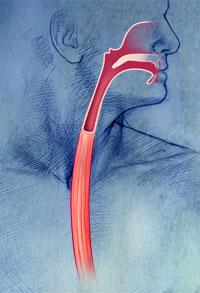


The PROCESS by which food is broken down
digestion
enzyme

Which organ releases digestive enzymes into the small intestine?
pancreas
small intestine
esophagus
salivary glands
What organ is responsible for the majority of the absoption that occurs in the digestive system?
large intestine
small intestine
stomach
oral cavity
Which of the following is an accessory organ of the digestive system?
stomach
small intestine
esophagus
liver
Which organ stores and releases bile?
liver
gallbladder
pancreas
Which organ makes bile?
liver
gallbladder
pancreas
What organ is responsible for the absorption of water and movement of waste?
large intestine
small intestine
stomach
oral cavity
What carries food from the pharynx to the stomach?
larynx
trachea
esophagus
bronchioles
What enzyme is found in saliva that starts digesting carbohydrates?
amylase
chyme
pepsin
bile
What are the rhythmic muscular contractions of your esophagus called to help food move along?
swallowing
peristalsis
inertia contractions
paralysis
What does the pancreas do?
produces digestive enzymes to break down proteins and fats
produces sodium bicarbonate to neutralize stomach acid
regulates our blood sugar levels
all answers are correct

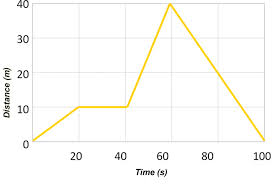

Match the description to the graph:
"The car is coming back."


Match the description to the graph:
"The car is traveling at a constant speed."

Segment B-C The bus is _________________.
at rest
returning (to original position)
moving forward
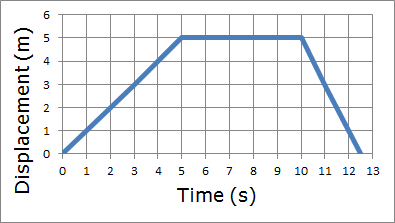

Describe the motion of the object during Portion D of the trip?
It is stopped.
It is slowing down.
It is moving at constant speed
How long was the object stopped during Portion D?
1 second
2 seconds
3 seconds
4 seconds


The units of force are
Newtons
Kilograms
N/m2
Pressure is equal to force divided by what
area
mass
time
Army tank tracks are useful for travelling through the mud because..
they decrease the force the vehicle exerts on the ground
they increase the force the vehicle exerts on the ground
they decrease the pressure the vehicle exerts on the ground
Where would you find the largest pressure?
Under a snowshoe
At the tip of a pin
The units of pressure are
N
N/m2
m2
Why does a knife exert a large pressure on a tomato?
Because it has a large area
Because it has a small area
Would you rather stand on one nail or 100 nails?
1
100
Pressure =
me, now I am in Y8
force x area
force / area
How do you increase pressure?
Make the area bigger
Make the area smaller
Make the force smaller
How do you decrease pressure?
Make the area bigger
Make the area smaller


An object will sink in a fluid if
gravity is stronger than buoyant force
buoyant force is stronger than gravity
a fluid can be a gas or a liquid
if the object is solid
An object weighing 30 N displaces a volume of water with a weight 20 N. What will the object do?
It will sink
It will float
It will fly
None of these answers
Buoyancy is the ability to
Sink
Float
Negative buoyancy (object's weight is stronger) means an object will
sink
float
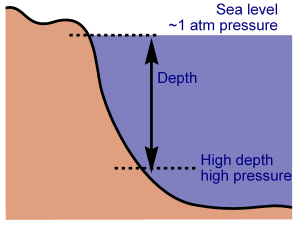
When you increase your depth under water, the water pressure on your body
increases
decreases
stays the same

Diagram shows the design of a dam. Why does the thickness of the dam increase with its depth?
The design of this structure is stronger.
Water pressure increases with depth.
The cost of construction is lower.
Water pressure acts uniformly in all directions.
What is pressure?
The amount of force exerted on a surface
The surface area of an object
The weight of an object
An object will float on water if it is
less dense than water.
more dense than water.
the same density as water.


Which physical quantity will increase when the diver dives deeper?


How do you Calculate Pressure
Force(N)/Area(m2)
Force(kg)/Area(mi2)
Area(m2)/Force(N)
Can be beaten into thin sheets
Ductile
Sonorous
Malleable
Flexible
Can be drawn into wires
Ductile
Sonorous
Malleable
Flexible
When you hit it, it rings like a bell.
Ductile
Sonorous
Malleable
Flexible
Can bend easily without breaking
Ductile
Sonorous
Malleable
Flexible
Another word for shiny
Ductile
Sonorous
Malleable
Lustrous
The only 3 magnetic metals are:
Iron
Cobalt
Magnesium
Nickel
Metals are poor conductors of electricity
True
False
Metals are good conductors of heat
True
False
Most metals are brittle
True
False
The chemical symbol for iron
Ir
Fe
I
Fn
The only liquid metal at the room temperature
Francium
Sodium
Mercury
Cobalt
Chemical symbol for Gold
Go
G
Au
Mn
Which one is not a metal?
Magnesium
Nickel
Mercury
Nitrogen
Which one is NOT a property of most metals?
Ductile
Malleable
Magnetic
Sonorous
The majority of elements in the periodic table are
metals
non-metals
Metals are poor conductors of heat
true
false
The property of metals that describes their excellent ability to pass on electrical charge
thermal conductor
malleable
sonorous
electrical conductor
Copper wire can be bent without breaking. This means that it is
sonorous
flexible
ductile
malleable
Most metals can be stretched into long wires. What is the name of this property of metals?
ductile
malleable
brittle
sonorous
Which metal is NOT magnetic?
copper
iron
cobalt
nickel


Which of these are made from atoms that are chemically bonded together?
(tick all that apply)
elements
mixtures
compounds
molecules

Element, mixture, or compound?
element
mixture
compound

Element, mixture, or compound?
element
mixture
compound

How many molecules are in this picture?
1
2
3
4
How many elements are in this picture?
1
2
3
4
How many compounds are in this picture?
1
2
3
4

What do you see in this picture?
A pure element
A pure compound
A mixture of two elements
A mixture of two compounds
A mixture of an element and a compound

What do you see in this picture?
A pure element
A pure compound
A mixture of two elements
A mixture of two compounds
A mixture of an element and a compound

K is the symbol for the element...
(a)

In the Periodic Table, metals are found on the...
left side
right side
middle

Name the compound formed from the following elements:
sulfur, iron
(a)

Name the compound formed from the following elements:
carbon, oxygen, copper
(a)
How many different types of elements are found in
CuSO4?
(Type only in numbers!)
(a)
How many atoms in total are found in
CuSO4?
(Type only in numbers!)
(a)

Which technique can be used to get sea salt from seawater?
filtration
evaporation
distillation
chromatography

Name the equipment labelled 5.
(a)

Based on the chromatogram, the mixture contains...
(tick all that apply)
dye 1
dye 2
dye 3

Sugar is added to water. The water is the...
solute
solvent
solution
saturated
Which of the following is NOT a solution?


Which of these does NOT increase the solubility of a solute?
Increasing the temperature
Stirring
Adding more solvent
Adding more solute

Which symbol shows a chemical reaction has occured?
A
B
C
D
A physical change is the same as a chemical change
TRUE
FALSE

Identify the product(s) in this word equation
Sodium
Sodium chloride
Sodium and Chlorine
Sodium and sodium chloride
In a word equation the REACTANTS
Are written on the right hand side of the arrow
Are produced in a chemical reaction
Are always the same
Are the substances that react together

The products in this reaction are?
Two solids
One solid and one gas
Three solids and a gas
Two solids and a gas
The new substances formed in a chemical reaction are called
Reactants
Atoms
Products
Reagents

What are the reactants in this word equation?
Carbon dioxide and oxygen
Carbon dioxide and water
Oxygen and glucose
Oxygen and water
In a chemical reaction...
New atoms are created
Atoms rearrange
Atoms are destroyed
Nothing Happens

In this chemical reaction zinc is a...
Product
Reactant
Neither

Magneisum reacts with oxygen to form magnesium oxide. The correct word equation is...
A
B
C
D

Iron reacts with sulfur to produce iron(II) sulfide. Choose the correct word equation.
iron + solid → iron sulfide
iron + sulfur → iron sulfide
iron sulfide + iron→ sulfur
sulfur + iron sulfide → iron

Sodium reacts with chlorine to produce sodium chloride. Choose the correct word equation.
sodium chloride → chlorine + sodium
sodium + carbon dioxide → sodium carbonate
sodium + chlorine → sodium chloride

