
 Worksheets
Circle of Life check up
Total questions: 40
Worksheet time: 26mins
What is the definition of a hypothesis?
A prediction using prior scientific knowledge
What you change in an experiment
The title of an investigation
The average

TRUE OR FALSE?
Adaptation is the process which enable animals or organisms to adjust to their environment in order to survive.
TRUE
FALSE

What is Behavioural adaptation?
The actions of an animal that enables them to live in their environment
When an animal chooses to live in an environment because its fun
The way the animal or organisms body functions
Internal features of an animal or organism that enables them to survive

What is Structural adaptation?
The structure of the animals skeleton
Internal/cellular features of animals enabling them to survive in their environment
The way the environment is built for the animal to live in it
Physical features of animals enabling them to survive in their environment

What is Physiological adaptation?
The way the animal thinks about things
Physical features of animals enabling them to survive in their environment
Internal/cellular features of an animal enabling them survive in their environment
The way the animal behaves or acts in their environment

A penguin has a layer of flubber to protect itself from extreme cold temperatures. What kind of adaptation is this?
Behavioural
Structural
Physiological

Bears hibernate in the winter to avoid the cold and preserve energy.
What kind of adaptation is this?
Behavioural
Structural
Physiological

Snakes produce venom is ward off enemies and capture their prey.
What kind of adaptation is this?
Behavioural
Structural
Physiological
Scientists classify consumers into Carnivores, Herbivores, and Omnivores based on how they meet their need for ___.
Food
Water
Shelter
Air
A carnivore is an ____.
Organism that eats only meat
Organism that eats only plants
Organism that eats all things - meat and plants.
A herbivore is an ____.
Organism that eats only meat
Organism that eats only plants
Organism that eats all things - meat and plants.
An omnivore is an ____.
Organism that eats only meat
Organism that eats only plants
Organism that eats all things - meat and plants.
Organism that makes its own food
consumer
producer
decomposer
predator
Organism that eats other things for food
consumer
producer
decomposer
prey
Passing of energy, in the form of food, from one organism to another
food cycle
food network
food chain
food system
Overlapping food chains
food cycle
food network
food system
food web
Amount of energy in a food pyramid transferred from one level to the next
0%
10%
78%
100%


the largest classification category
Kindgom
Phylum
Order
Species

Which group of animals are warm blooded?
Aves and Mammalia
Reptilia and Amphibia
Mammalia and Pisces
Which animal group drinks its mother's milk?
Reptiles
Birds
Mammals
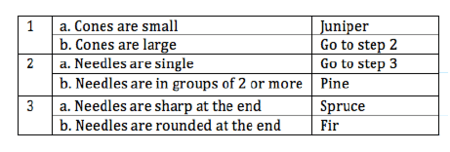
How many options should every branch in a dichotomous key have?
1
2
3
4
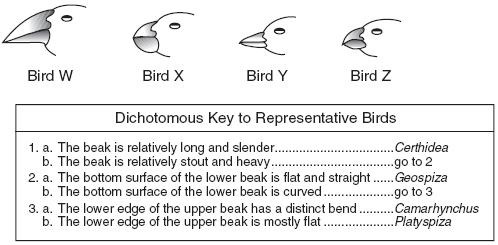


Which of the following features are used to classify a centipede (select all that apply)?
Has wings
Has no wings
Has more than 8 legs
Has a shell
An abiotic factor is
Living
Non-living
Both
Neither
A biotic factor is
Living
Non-living
Both
Neither

What type of factor is this?
Abiotic
Biotic
Which abiotic factor would be the main reason a polar bear not live in the desert?
Salt concentration
pH
Temperature
Light

